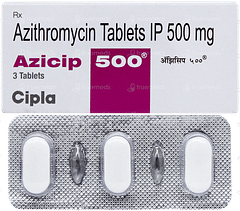
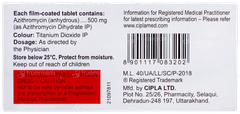
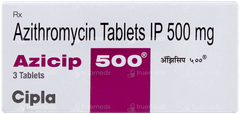
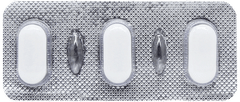
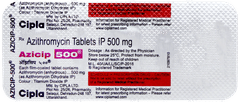

 Composition
Azicip 500 Tablet is a prescription antibiotic for infections caused by bacteria susceptible to azithromycin. Depending on diagnosis and local resistance, it may treat certain throat, chest, skin or sexually transmitted infections. A clinician chooses the antibiotic based on the suspected organism and patient factors. Azithromycin is not suitable for every bacterial infection, including many urinary infections. Antibiotics are unnecessary for viral coughs and colds. Do not use leftover tablets for new symptoms.
Take Azicip 500 Tablet with water according to your doctor's instructions. It can generally be taken with or without food, although food may reduce stomach discomfort. Swallow the tablet whole without crushing it. Follow the prescribed treatment duration and do not change the dose yourself. Separate aluminium- or magnesium-containing antacids according to the product's dosing instructions. If a dose is missed, seek advice without taking double doses.
Common side effects of Azicip 500 Tablet include nausea, vomiting, diarrhoea, abdominal pain, indigestion and headache. Dizziness, altered taste and mild skin rash may also occur. Most digestive symptoms are temporary. Contact your doctor if diarrhoea becomes severe or persists. Seek urgent care for fainting, palpitations, yellowing of the skin or eyes, severe rash or breathing difficulties. Antibiotic-associated colitis can develop during treatment or after the antibiotic course.
Before taking Azicip 500 Tablet, tell your doctor about liver disease, previous jaundice with azithromycin or abnormal heart rhythms. Mention low blood potassium or magnesium and medicines that prolong the QT interval. Certain antiarrhythmics, anticoagulants and other medicines may require review. Discuss pregnancy and breastfeeding with your doctor when relevant. Avoid driving if you experience dizziness. Report persistent fever or worsening infection symptoms, because another treatment may be needed.