

- Medicines
- Personal Care
- Skin Cream
- Sunscreen
- Face Wash
- Skin and Body Soap
- Acne Care
- Body Lotions
- Moisturising Lotion
- Moisturising Cream
- Mosquito Repellent
- Moisturising Gel
- Body Wash
- Hair Oils
- Hair Shampoo
- Hair Conditioners
- Hair Supplements
- Hair Colour
- Hair Serum
- Hair Mask
- Hair Solutions
- Baby Diapers and Wipes
- Baby Lotion and Moisturising Cream
- Baby Bath Essentials
- Baby Skin Care
- Baby and Infant Food
- Baby Healthcare
- Women Multivitamins
- Ovulation Test Kit and Women Intimate Care
- Sanitary Pads
- Nutritional Drinks
- Condoms
- Lubricants
- Massage Gels
- Personal Body Massagers
- Men Performance Booster
- Sexual Health Supplements
- Massage Oils
- Ayurveda
- Tooth Paste
- Mouth Ulcer Gel
- Mouthwash
- Toothache and Gum Pain
- Tooth Brush
- Gargle Solution
- Orthopaedic Supports
- Adult Diapers
- Footwear
- Mobility and Support Accessories
- Urinary Support and Care
- Health Conditions
- Bone and Joint Care
- Digestive Care
- Eye Care
- Pain Relief
- Smoking Cessation
- Liver Care
- Stomach Care
- Cold and Cough
- Heart Care
- Kidney Care
- Piles, Fissures & Fistula
- Respiratory Care
- Mental Wellness
- Derma Care
- Pre and Probiotics
- Acidity
- Gas
- Constipation
- Loose Motion/Diarrhoea
- Digestive Fibres
- Digestive Enzymes
- Eye Lubricant Drops
- Lens Solution
- Safety Eye Wear
- Eye Cream
- Eye Vitamins and Supplements
- Eye Drops
- Eye Ointment and Gel
- Nicotine Patch
- Nicotine Gum
- Nicotine Lozenges
- Cough Syrups
- Chest Rubs and Balms
- Nasal Spray
- Lozenges
- Inhalant Capsules
- Cold and Cough Tablets
- Vitamins & Supplements
- Diabetes Care
- Healthcare Devices
- Homeopathic Medicine
- Health Guide
Singhnad Guggul
Singhnad Guggul, also known as Simhanada Guggulu, is a classical Ayurvedic herbo-mineral formulation prepared with guggul resin, Triphala, castor oil and purified sulphur. In Ayurveda, it is traditionally used to support joint comfort and mobility and aid digestion. It should be used under the guidance of a qualified Ayurvedic practitioner and is not a substitute for prescribed medical treatment.
 50
50Last updated on : 28 Aug, 2026
Read time : 11 mins
What is Singhnad Guggul?
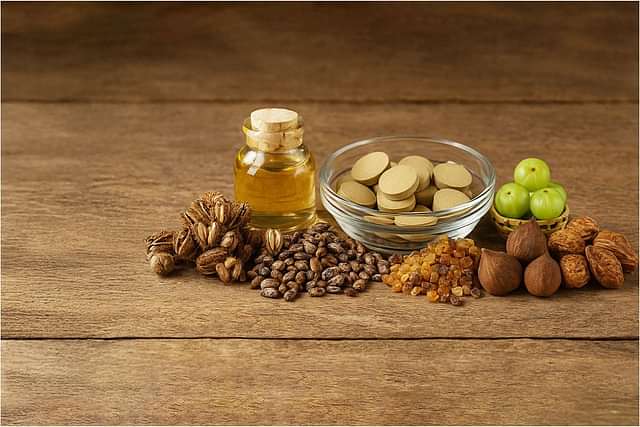
Singhnad Guggul, also called Simhanada Guggulu, takes its name from the Sanskrit simhanada (lion's roar), a term traditionally used in Ayurveda to describe a formulation associated with strong action. It is a classical herbo-mineral preparation described in Ayurvedic texts (Meenu et al., 2021), prepared by combining guggul resin from the Commiphora mukul tree with Triphala (Amalaki, Haritaki and Bibhitaki), castor oil and purified sulphur (Shuddha Gandhaka) (Pandey et al., 2012).
According to Ayurvedic understanding, Singhnad Guggul is traditionally associated with Vata and Pitta dosha and is used to support joint comfort and digestion (Pandey et al., 2012; Meenu et al., 2021). Claims about supporting the body's detoxification processes should be understood as traditional Ayurvedic concepts rather than established clinical effects.
Key Facts
| Feature | Details |
| Formulation name | Singhnad Guggul |
| Formulation type | Classical herbo-mineral tablet (guggulu preparation)
|
| Composition | Guggul (Commiphora mukul), Triphala (Amalaki, Haritaki, Bibhitaki), castor oil (Ricinus communis) and purified sulphur (Shuddha Gandhaka)
|
| Classical proportion | Approximately 144 g each of Haritaki, Bibhitaki and Amalaki, 192 g castor oil, 144 g Shuddha Guggulu and 48 g purified sulphur per traditional preparation method; the exact proportions should be verified against the specific classical reference before publication
|
| Also known as | Simhanada Guggulu, Singhnad Guggulu, Singhnad Vati
|
| Key active compounds | Guggulsterones (from Guggulu), ricinoleic acid (from castor oil), and various polyphenols and tannins from Triphala |
| Dosha action | Traditionally understood to pacify Vata and Pitta dosha |
| Traditional uses | Traditionally used to support joint comfort and mobility and digestive function
|
| Common forms | Tablet
|
| General dosage | Follow the dose and duration advised by a qualified Ayurvedic practitioner; do not self-prescribe
|
| Best taken | With warm water, generally after meals, or as directed by a practitioner
|
| Key safety note | Use during pregnancy or breastfeeding, and in people with heart, blood pressure, kidney or other chronic conditions, only after consultation with a qualified healthcare professional. |
Alternative Names of Singhnad Guggul
Singhnad Guggul is a classical formulation whose name is transliterated from Sanskrit rather than translated. The variations below are spelling variants of the same formulation rather than separate regional names.
- Simhanada Guggulu
- Singhnad Guggulu
- Singhnad Vati
Composition of Singhnad Guggul
Chemical Constituents of Singhnad Guggul
Singhnad Guggul's properties are traditionally and pharmacologically associated with compounds present in its individual ingredients. Reported constituents include:
- Guggulsterones: from Guggulu resin (Shah et al., 2012)
- Ricinoleic acid: from castor oil
- Tannins and other polyphenols: from Triphala (Peterson et al., 2017)
- Sulphur-containing compounds: associated with purified sulphur (Mundugaru et al., 2021)
The exact chemical composition of the finished formulation may vary depending on the raw materials and traditional processing methods. Vitamin C should not be listed as a key constituent of the finished Singhnad Guggul formulation without formulation-specific analytical evidence.
How is Singhnad Guggul Made?
Here are the steps to prepare Simhanada Guggul:
- Take 144 grams each of Haritaki, Bibhitaki, and Amla in coarse powder form.
- Boil the powders in water to make a decoction. Reduce the liquid to 1/4th of the original volume.
- Filter the decoction and add 192 grams of castor oil (Eranda Tail).
- While heating, add 48 grams of purified sulphur (Saugandhika) and 144 grams of Shuddha Guggulu.
- Stir the mixture continuously until it thickens.
- Form the mixture into tablets and dry them under sunlight.
Key Health Benefits of Singhnad Guggul
Singhnad Guggul was found to be a versatile Ayurvedic remedy. It acts on inflamed joints, helps the body detox effectively, and improves digestion. It also helps with skin disorders. In Ayurveda, it is used to enhance the health and vitality of the body. It assists in illnesses and prevents future problems. It does this by enhancing digestion and eliminating toxins.
1. Arthritis and Joint Disorders
In Ayurveda, Singhnad Guggul is traditionally used for managing arthritis, gout, and joint stiffness (Pandey et al., 2012). Its herbal-mineral ingredients, particularly Guggul and Triphala, are believed to help reduce Ama (toxins) and balance Vata and Pitta doshas, which are often linked to joint problems. Regular use under medical supervision may support joint flexibility, reduce stiffness, and promote mobility in chronic inflammatory conditions.
2. Detoxification
One of the essential functions of Singhnad Guggul is to purify the body, primarily through the removal of toxins (Ama in Ayurveda) that tend to settle in the joints, muscles, and digestive system (Meenu et al., 2021). According to Ayurvedic concepts, many chronic ailments originate from the accumulation of Ama in the body, including ailments such as arthritis, indigestion, and skin disorders. Singhnad Guggul contains numerous herbs that collectively help cleanse the bloodstream, lower toxin levels, and enhance the body’s well-being.
Specifically, the Triphala component, which consists of Haritaki, Bibhitaki, and Amla, works as a pure filter that can quickly purify the colon and support healthy digestion. Shuddha Guggulu and purified sulphur effectively detoxify the blood and lymphatic system. They help detoxify the body. This cleansing effect is vital. It supports joint health and prevents various disorders from recurring.
3. Digestive Health
Singhnad Guggul is a powerful medicine when it comes to digestive health (Meenu et al., 2021). It boosts digestion by stimulating the digestive fire (Agni). In Ayurveda, Agni is the basis of digestive metabolism and is believed to help prevent the formation of toxins. Its use is helpful in conditions such as constipation, gas, and bloating. There may be improvements in digestion with the use of Singhnad Guggul, especially for those who experience digestive problems such as acute indigestion or constipation.
The castor oil used in the formulation also has a soothing effect on bowel movements, making them smooth and easy. This not only helps digestion but also helps eliminate waste products from the body, which is considered important in avoiding the accumulation of toxins associated with joint and skin issues.
4. Involvement in Skin Diseases
Singhnad Guggul is traditionally used in Ayurveda for eczema, psoriasis, and chronic itching (Meenu et al., 2021). It is believed to work by purifying the blood and reducing toxin build-up. The presence of Shuddha Gandhaka (purified sulphur) and Triphala may help reduce inflammation and promote clearer skin.
Common Uses of Singhnad Guggul
Singhnad Guggul is an Ayurvedic formulation mainly used to manage arthritis, gout, and joint stiffness. It is known for reducing swelling, easing pain, and supporting mobility in inflammatory joint conditions. Its mild purgative effect is believed to aid detoxification and promote the elimination of accumulated toxins (Ama) from the body. Some of its common uses are mentioned below (Meenu et al., 2021):
- Management of Rheumatoid Arthritis: Singhnad Guggul provides enhanced relief from joint pain, swelling, and rigidity in rheumatoid arthritis. The medicine has cleansing and anti-inflammatory effects, which assist in managing symptoms and joint flexibility.
- Gout and Hyperuricaemia: It can lower uric acid levels and lessen gout symptoms, including inflammation and joint pain.
- Skin Conditions: It is also used to manage skin diseases such as eczema and psoriasis and help cleanse the body and blood.
- Digestive Disorders: It can also be used to reduce constipation and bloating, helping the stomach digest better by promoting bowel movements.
Precautions While Taking Singhnad Guggul
Singhnad Guggul contains Guggulu, castor oil and purified sulphur, so the following precautions should be considered.
Pregnancy
There is insufficient reliable safety information on Singhnad Guggul during pregnancy. Avoid use unless specifically recommended and supervised by a qualified doctor or Ayurvedic practitioner.
Breastfeeding
Safety information during breastfeeding is limited. Consult a doctor before using Singhnad Guggul while breastfeeding.
Heart Conditions and Blood Pressure
People with heart disease, high or low blood pressure, or other cardiovascular conditions should consult a doctor before using Singhnad Guggul, as its safety in these conditions has not been adequately established.
Kidney Conditions and Ingredient Allergies
People with kidney disease or a known allergy to any listed ingredient should consult a doctor before use. A sulfonamide-antibiotic allergy does not automatically indicate an allergy to elemental sulphur.
How to Use Singhnad Guggul
- Take 1-2 tablets or consult a doctor’s advice on the proper use.
- It is best taken with warm water, preferably after a meal.
- Patients with rheumatoid arthritis frequently use it, and systematic usage tends to reduce joint pains and enhance flexibility.
- It must be remembered that the dosage of any of these remedies should be taken with the advice of an expert Ayurvedic doctor.
Recommended Dosage of Singhnad Guggul
Dosage should be determined by a qualified Ayurvedic practitioner based on your age, health condition and medical history. The general guidance below should be confirmed with a practitioner before use and should not be used for self-dosing.
Children
Singhnad Guggul is not generally recommended for children. If considered necessary, it should be used only under the direct supervision of a qualified Ayurvedic practitioner experienced in paediatric care.
Teenagers
There is limited safety information on the use of Singhnad Guggul in teenagers. Use should only be considered under the guidance of a qualified Ayurvedic practitioner.
Adults
Traditional practice may recommend 1 to 2 tablets twice daily with warm water after meals. However, the appropriate dose and duration should be determined by a qualified practitioner based on individual assessment.
Elderly
Older adults, particularly those with heart, blood pressure or kidney conditions, should be assessed individually. A practitioner may recommend a different dose or closer monitoring based on their health status.
Disclaimer: This information is for general education only and is not a substitute for professional medical advice. Dosage varies by individual health condition. Consult a qualified Ayurvedic practitioner or doctor before starting Singhnad Guggul, and do not use it as a replacement for prescribed treatment.
Side Effects of Singhnad Guggul
Singhnad Guggul may cause side effects in some people, particularly if taken in higher amounts or if an individual is sensitive to any of its ingredients. The following effects should be monitored.
Digestive Discomfort
Mild stomach upset, abdominal discomfort, gas or loose stools may occur. The castor oil content may contribute to loose stools in some people.
Gastric Irritation
Some people may experience acidity, heartburn or a burning sensation in the stomach. Stop use and consult a doctor if these symptoms persist or become severe.
Allergic Reactions
A rash, itching or swelling may occur in people who are sensitive to an ingredient. Stop use and seek prompt medical attention if signs of a significant allergic reaction occur.
Interaction of Singhnad Guggul With Other Drugs
Singhnad Guggul may interact with some medicines, although evidence for specific interactions with the finished formulation is limited. Tell your doctor or pharmacist about all medicines and supplements you take before starting it.
Blood-Thinning Medicines
Guggul may affect blood clotting or interact with medicines that influence bleeding risk. People taking anticoagulants or antiplatelet medicines should consult a doctor before using Singhnad Guggul and should not combine them without medical supervision.
Thyroid Medicines
Guggul has been studied for potential effects on thyroid function, although the clinical significance of these effects remains uncertain. People taking thyroid medicines should consult their doctor before using Singhnad Guggul, particularly if thyroid function is being closely monitored.
Other Arthritis or Digestive Medicines
There is limited evidence on interactions between Singhnad Guggul and other arthritis or digestive medicines. Consult a doctor or pharmacist before combining treatments to avoid unnecessary duplication or unwanted effects.
Storage of Singhnad Guggul
Store Singhnad Guggul in an airtight container in a cool, dry place, away from direct sunlight and moisture. Keep it out of the reach and sight of children. Do not use it beyond the expiry date printed on the pack.
Key Takeaways
- Singhnad Guggul is a classical Ayurvedic herbo-mineral formulation traditionally used to support joint comfort, mobility and digestive function.
- It is prepared from Guggulu, Triphala, castor oil and purified sulphur.
- Traditional use includes support for joint stiffness, gout-related symptoms and occasional digestive discomfort, but it should be used alongside appropriate medical care rather than as a replacement for prescribed treatment.
- Safety information is limited for pregnancy and breastfeeding. People with heart, blood pressure, kidney or other chronic conditions should consult a doctor before use.
- Always consult a qualified Ayurvedic practitioner or doctor before starting Singhnad Guggul to confirm the appropriate dose, duration and suitability, and to check for possible side effects or interactions.
FAQs
Is It Safe to Use Simhanad Guggulu?
What is the Mechanism of Action for Simhanad Guggulu?
What Conditions Is Simhanad Guggulu Commonly Used For?
What Ingredients Make Up Singhnad Guggulu?
References
- Meenu, M., Chetan, S., & Shraddha, S. (2021). Vivid action of Simhanada Guggulu in the management of Amavata (rheumatoid arthritis): A review. International Journal of Health Sciences and Research, 11(6), 126–129. https://doi.org/10.52403/ijhsr.20210617
- Mundugaru, R., Ballal, S. R., Bhat, S., & Basavaiah, R. (2021). Chronic toxicity studies of Gandhaka Rasayana: A herbo-mineral preparation used in Ayurvedic practice. Journal of Ayurveda and Integrative Medicine. https://doi.org/10.1016/j.jaim.2021.05.011
- Pandey, S. A., Joshi, N. P., & Pandya, D. M. (2012). Clinical efficacy of Shiva Guggulu and Simhanada Guggulu in Amavata (rheumatoid arthritis). Ayu, 33(2), 247–254. https://doi.org/10.4103/0974-8520.105246
- Shah, R., Gulati, V., & Palombo, E. A. (2012). Pharmacological properties of guggulsterones, the major active components of gum guggul. Phytotherapy Research, 26(11), 1594–1605. https://doi.org/10.1002/ptr.4647
- Peterson, C. T., Denniston, K., & Chopra, D. (2017). Therapeutic uses of Triphala in Ayurvedic medicine. Journal of Alternative and Complementary Medicine, 23(8), 607–614. https://journals.sagepub.com/doi/full/10.1089/acm.2017.0083


Explore other categories
Latest health articles





Top Health Essentials



Top-selling ayurvedic products












Disclaimer
Top-Selling Medicines:
...View more
Top-OTC medicines:
...View more
Top-selling healthcare devices:
...View more
Company
About UsHealth ArticleHealth StoriesHealth LibraryDiseases & Health ConditionsAyurvedaUnderstanding Generic MedicinesAll MedicinesAll BrandsNeed HelpFAQSecuritySavings CalculatorAdvertise with UsSubscribe
Registered Office Address
Grievance Officer
Download Truemeds


Contact Us
Our customer representative team is available 7 days a week from 9 am - 9 pm.
v4.28.13

2026 - Truemeds | All rights reserved. Our content is for informational purposes only. See additional information.

Our Payment Partners




