

- Medicines
- Personal Care
- Skin Cream
- Sunscreen
- Face Wash
- Skin and Body Soap
- Acne Care
- Body Lotions
- Moisturising Lotion
- Moisturising Cream
- Mosquito Repellent
- Moisturising Gel
- Body Wash
- Hair Oils
- Hair Shampoo
- Hair Conditioners
- Hair Supplements
- Hair Colour
- Hair Serum
- Hair Mask
- Hair Solutions
- Baby Diapers and Wipes
- Baby Lotion and Moisturising Cream
- Baby Bath Essentials
- Baby Skin Care
- Baby and Infant Food
- Baby Healthcare
- Women Multivitamins
- Ovulation Test Kit and Women Intimate Care
- Sanitary Pads
- Nutritional Drinks
- Condoms
- Lubricants
- Massage Gels
- Personal Body Massagers
- Men Performance Booster
- Sexual Health Supplements
- Massage Oils
- Ayurveda
- Tooth Paste
- Mouth Ulcer Gel
- Mouthwash
- Toothache and Gum Pain
- Tooth Brush
- Gargle Solution
- Orthopaedic Supports
- Adult Diapers
- Footwear
- Mobility and Support Accessories
- Urinary Support and Care
- Health Conditions
- Bone and Joint Care
- Digestive Care
- Eye Care
- Pain Relief
- Smoking Cessation
- Liver Care
- Stomach Care
- Cold and Cough
- Heart Care
- Kidney Care
- Piles, Fissures & Fistula
- Respiratory Care
- Mental Wellness
- Derma Care
- Pre and Probiotics
- Acidity
- Gas
- Constipation
- Loose Motion/Diarrhoea
- Digestive Fibres
- Digestive Enzymes
- Eye Lubricant Drops
- Lens Solution
- Safety Eye Wear
- Eye Cream
- Eye Vitamins and Supplements
- Eye Drops
- Eye Ointment and Gel
- Nicotine Patch
- Nicotine Gum
- Nicotine Lozenges
- Cough Syrups
- Chest Rubs and Balms
- Nasal Spray
- Lozenges
- Inhalant Capsules
- Cold and Cough Tablets
- Vitamins & Supplements
- Diabetes Care
- Healthcare Devices
- Homeopathic Medicine
- Health Guide
Sarivadyasava
Sarivadyasava is a classical Ayurvedic asava, a fermented liquid tonic built around Sariva (Indian sarsaparilla) along with a group of supporting herbs. In traditional Ayurvedic practice, it is used to support skin health, digestion, urinary comfort and general wellbeing, and to help balance Pitta dosha. It is usually taken as a diluted syrup after meals, under the guidance of a qualified Ayurvedic practitioner.
 50
Last updated on : 23 Sep, 2026
Read time : 16 mins
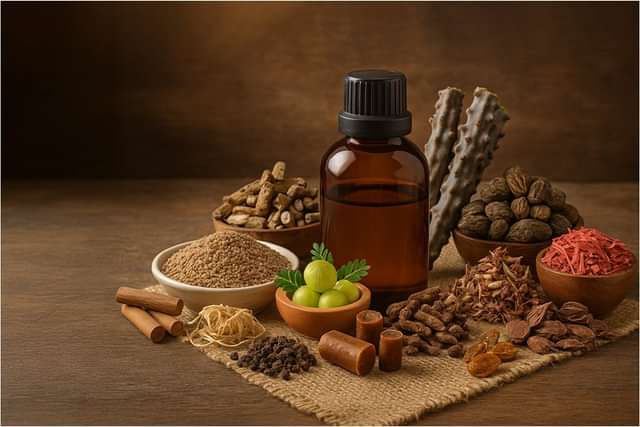
What is Sarivadyasava?
Sarivadyasava takes its name from Sariva (Hemidesmus indicus, or Indian sarsaparilla), the main herb in the formulation, combined with “asava”, the Ayurvedic term for a self-fermented liquid medicine prepared without heating. It is a classical formulation, traditionally referenced in the Bhaishajya Ratnavali, a well-known Ayurvedic compendium of formulations.
In Ayurveda, Sarivadyasava is traditionally described as a Raktashodhana (blood-purifying) and Pitta-pacifying formulation, mainly used to support skin, digestive and urinary health. It is considered predominantly bitter-astringent in taste (Tikta-Kashaya Rasa) with a cooling potency (Sheeta Virya), which reflects its traditional use in Pitta-related, heat-linked conditions. Evidence for these traditional uses in humans is limited, and it is not a substitute for medical treatment of infections, kidney disease or skin conditions that need a doctor's diagnosis.
Key Facts
| Feature | Details |
| Formulation name | Sarivadyasava
|
| Formulation type | Asava (self-fermented Ayurvedic liquid preparation, made without heating) |
| Classical reference | Bhaishajya Ratnavali |
| Composition | A group of 19 to 24 herbs, principally Sariva (Indian sarsaparilla), Musta, Guduchi, Lodhra and Haritaki
|
| Classical proportion | Sariva forms the largest single share of the herb mix; the remaining herbs are generally used in smaller, broadly similar parts, fermented with jaggery or raisins and Dhataki flower
|
| Also known as | Sariva Asava; Saribadyasavam (a South Indian spelling variant) |
| Key active compounds | Coumarins and triterpenoid saponins from Sariva; sesquiterpenes from Musta |
| Dosha action | Mainly Pitta-pacifying; also traditionally believed to help balance Vata and Kapha
|
| Traditional uses | Skin conditions, digestive discomfort, urinary comfort, general Pitta-related complaints
|
| Common forms | Syrup (liquid asava), taken diluted with water |
| General dosage | 10 to 30 ml (adults), diluted with an equal quantity of water, once or twice daily after meals
|
| Best taken | After meals, diluted with an equal quantity of water, as advised by a practitioner
|
| Key safety note | Not recommended in pregnancy or breastfeeding without medical advice; avoid in severe liver or kidney disease without supervision |
Alternative Names of Sarivadyasava
Sarivadyasava is a classical formulation whose name is a fixed Sanskrit term rather than something translated into other languages, so the list below covers its genuine spelling variants rather than different regional names.
- Sariva Asava: a shortened form used because Sariva (Indian sarsaparilla) is the main herb in the formulation.
- Saribadyasavam: a South Indian (Malayalam/Tamil) transliteration of the same classical name.
Composition of Sarivadyasava
Sarivadyasava combines the following classical herbs, fermented together to make the finished syrup.
- Sariva (Hemidesmus indicus) – Indian sarsaparilla, the primary herb
- Musta (Cyperus rotundus)
- Lodhra (Symplocos racemosa)
- Nyagrodha (Ficus benghalensis)
- Ashwattha (Ficus religiosa)
- Shati (Hedychium spicatum)
- Padmaka (Prunus cerasoides)
- Patha (Cissampelos pareira)
- Guduchi (Tinospora cordifolia)
- Ushira (Vetiveria zizanioides)
- Shweta Chandana (Santalum album)
- Rakta Chandana (Pterocarpus marsupium)
- Yavani (Trachyspermum ammi)
- Katurohini (Picrorhiza kurroa)
- Patra (Cinnamomum tamala)
- Sthula Ela (Amomum subulatum)
- Kushtha (Saussurea lappa)
- Svarnaparni (Cassia angustifolia)
- Haritaki (Terminalia chebula)
Chemical Constituents of Sarivadyasava
The formulation's traditional actions are linked to specific plant compounds contributed by its key herbs. Some of the most studied of these are listed below.
- Coumarins and 2-hydroxy-4-methoxybenzaldehyde: from Sariva (Hemidesmus indicus), studied for antioxidant and anti-inflammatory activity in laboratory research (Nandy et al., 2020).
- Triterpenoid saponins, including lupeol and beta-sitosterol: also from Sariva, studied for anti-inflammatory and immune-supporting activity in preclinical research (Nandy et al., 2020).
- Sesquiterpenes such as cyperene: from Musta (Cyperus rotundus), studied for antioxidant, antimicrobial and digestive-supporting activity in preclinical research (Peerzada et al., 2015).
- Alkaloids and bitter glycosides: from Guduchi (Tinospora cordifolia), studied for immune-modulating activity in laboratory and animal research (Sharma et al., 2012).
- Tannins and polyphenols: from Haritaki (Terminalia chebula) and Lodhra (Symplocos racemosa), traditionally associated with astringent and wound-supporting properties.
Medicinal Properties of Sarivadyasava
Sarivadyasava's character reflects several pharmacological properties studied in its key herbal ingredients, rather than proven effects of the finished formulation itself.
- Antioxidant: several constituent herbs, including Sariva and Musta, have shown free-radical-scavenging activity in laboratory studies (Nandy et al., 2020; Peerzada et al., 2015)
- Anti-inflammatory: traditionally used to soothe inflammation-related skin and digestive discomfort.
- Mild antimicrobial: Musta and related herbs are traditionally credited with supporting the formulation's use as a urinary-supportive preparation.
- Immunomodulatory: Guduchi has been studied for its potential to modulate immune activity (Sharma et al., 2012)
- Carminative and digestive: traditionally believed to support digestive fire and ease bloating.
- Cooling and Pitta-pacifying: traditionally used to soothe heat-related conditions.
- Mild astringent: tannin-rich ingredients are traditionally used to support wound and ulcer care.
These are traditionally supported and, for some ingredients, laboratory-studied actions, not confirmed clinical effects of Sarivadyasava as a finished product, and should be discussed with a qualified practitioner before use for a specific condition.
Key Health Benefits of Sarivadyasava
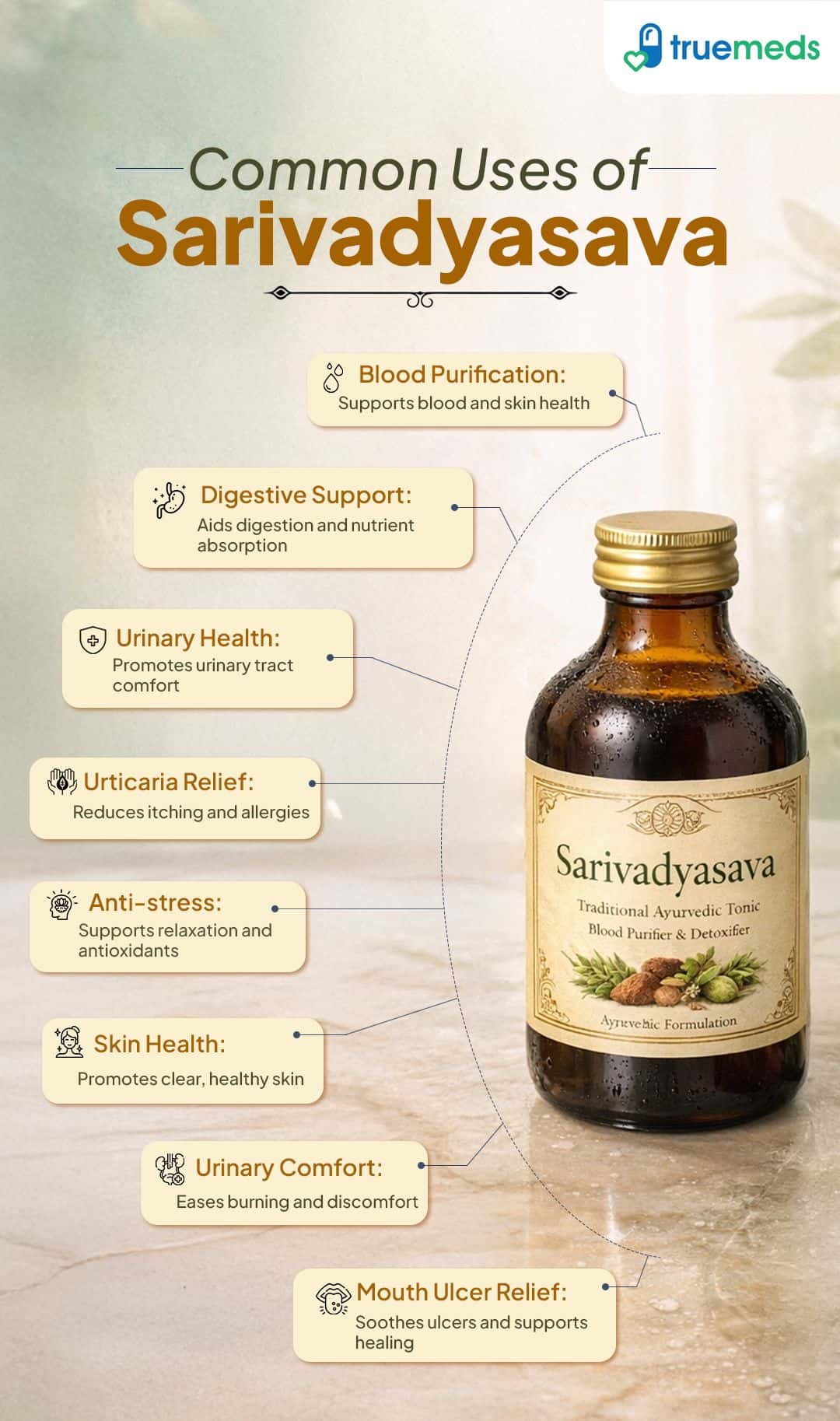
Sarivadyasava is traditionally used to support skin, digestive and urinary health, along with general wellbeing. It is also traditionally associated with Pitta balance, immune support and support for the liver and kidneys. However, evidence for the finished formulation is limited, so these traditional uses should not be considered established treatments for diagnosed medical conditions.
1. Blood Purification and Skin Support
Sarivadyasava is traditionally believed to support the body's natural blood-purifying processes, which in Ayurveda is linked to healthier skin. It may help as a complementary, traditional support for chronic skin conditions such as boils, ringworm and cracked skin, alongside standard dermatological care, rather than as a stand-alone cure.
2. Digestive Comfort
In Ayurveda, Sarivadyasava is traditionally believed to kindle digestive fire (Dipana) and support the breakdown of food (Pachana). It may help ease everyday indigestion, bloating and reduced appetite when used as directed. Persistent or severe digestive symptoms should always be assessed by a doctor rather than self-treated at home.
3. Urinary Comfort
Sarivadyasava is traditionally used for its cooling, mildly antimicrobial action, which may help ease discomfort linked to urinary tract infections, painful urination and a burning feeling while passing urine. Blood in the urine is a warning sign needing prompt medical assessment, not self-treatment with this or any herbal tonic.
4. Skin and Wound Healing Support
Sarivadyasava's traditional use for inflammation-related skin discomfort may help calm irritated skin in conditions such as contact dermatitis and scabies, when used alongside prescribed treatment. It is also traditionally associated with supporting the healing of slow-healing wounds and ulcers, though it does not replace proper wound assessment and medical care.
5. Calming and Wellbeing Support
Sarivadyasava is traditionally believed to have a calming effect on the mind and body, and may help support a general sense of balance during stressful periods. It is not a treatment for any diagnosed mental health condition, or for high or low blood pressure, which need proper medical management.
6. Immune Support (Rasayana)
In Ayurveda, Sarivadyasava is traditionally described as having Rasayana properties, and is traditionally used to support the body's natural resilience and immune balance over time. Guduchi, a key herb in this formulation, has been studied for immune-modulating activity (Sharma et al., 2012), though this reflects herb-level, not clinical, evidence.
7. Kidney and Liver Support
Sarivadyasava is traditionally used to support liver and urinary health, but evidence for these effects from the finished formulation is limited. It is traditionally linked to helping the body manage minor crystal formation in the urinary tract, though it is not a treatment for diagnosed kidney stones or disease.
8. Pitta Balance
Ayurveda describes Sarivadyasava as a Pitta-pacifying formulation, traditionally used to help soothe conditions linked to excess heat in the body, such as skin rashes and digestive irritation. This cooling action is a traditional Ayurvedic classification rather than a measured clinical effect, and results can vary between individuals.
9. Wound and Ulcer Support
Sarivadyasava is traditionally believed to support the body's natural healing response in slow-healing wounds and ulcers, used as a complementary measure alongside proper wound care. Non-healing ulcers, especially in people with diabetes or poor circulation, need prompt medical assessment rather than reliance on herbal tonics alone at home.
Common Uses of Sarivadyasava
In traditional Ayurvedic practice, Sarivadyasava is used for skin, urinary and digestive concerns, as well as general wellbeing. The points below describe when it is traditionally used, rather than repeating its proposed actions.
1. During Flare-Ups of Chronic Skin Conditions
In traditional Ayurvedic practice, Sarivadyasava is used during flare-ups of long-standing skin conditions such as eczema or persistent acne, usually alongside a dermatologist's treatment rather than instead of it. It is not used for sudden, severe skin reactions, which need urgent medical attention.
2. Alongside Treatment for Urinary Tract Infections
Practitioners sometimes use Sarivadyasava as a traditional, supportive measure once a urinary tract infection has been diagnosed and is being treated with appropriate antibiotics. It is not intended to replace antibiotic treatment or a doctor's diagnosis of a suspected infection.
3. During Spells of Sluggish Digestion
Sarivadyasava is traditionally used for short spells of poor appetite, bloating or sluggish digestion, particularly when these are traditionally attributed to excess Pitta. It is not intended for persistent digestive symptoms, unexplained weight loss or severe abdominal pain, all of which need medical evaluation.
4. As Part of a Longer-Term Wellness Routine
Some Ayurvedic practitioners include Sarivadyasava in a longer-term routine to traditionally support skin health and general resilience over weeks or months, rather than as a short-term or emergency remedy.
5. For Minor Mouth Ulcers and Bad Breath
This tonic is traditionally taken as part of general Ayurvedic care for minor mouth ulcers and bad breath associated with digestive imbalance. Ulcers that do not heal within two weeks, or that keep recurring, should be checked by a doctor or dentist.
Precautions While Taking Sarivadyasava
A few groups of people need to be more careful with Sarivadyasava than others. The precautions below should be read before starting it.
- Talk to a doctor or Ayurvedic practitioner first: especially important during pregnancy, while breastfeeding, or if you take regular medication.
- Check for known allergies: stop use and seek medical advice if you notice a rash, itching or swelling after taking it.
- Be cautious with liver or kidney disease: if you have a diagnosed liver or kidney condition, use Sarivadyasava only if advised by a doctor or Ayurvedic practitioner.
- Take extra care with diabetes: this formulation may contain natural sugars from the fermentation process, so people with diabetes should check with their doctor before use.
- Never exceed the stated dose: taking more than recommended may increase the risk of digestive side effects.
- Seek urgent medical advice for warning symptoms: blood in the urine, severe pain, fever, or symptoms of a sexually transmitted infection all need prompt medical assessment and should never be self-treated with this or any herbal tonic.
Note: This information does not replace advice from a qualified doctor or Ayurvedic practitioner. Always seek personalised medical guidance before starting Sarivadyasava, particularly if you are pregnant, breastfeeding, older, on other medication, or living with a long-term health condition.
How to Use Sarivadyasava
Sarivadyasava is available in one form, a liquid syrup. The steps below explain how to take it correctly.
Taking the Syrup
Measure the prescribed amount, usually 10 to 30 ml for adults, using a measuring cup rather than guessing the quantity. Dilute it with an equal quantity of clean water and drink it after a meal, once or twice a day, or as advised by your Ayurvedic practitioner. Avoid taking it undiluted unless advised by your practitioner. Shake the bottle gently before use, as a small amount of natural sediment can form in fermented preparations like this one.
Herbs Traditionally Used With Sarivadyasava
In traditional Ayurvedic practice, Sarivadyasava is sometimes combined with other classical formulations depending on the condition being addressed. The table below lists formulations commonly paired with it, which should be confirmed with a qualified practitioner before individual use.
| Formulation | Traditional Role Alongside Sarivadyasava |
| Punarnavarishta | Another fermented Ayurvedic tonic, traditionally combined with Sarivadyasava to support healthy fluid balance and general kidney comfort, particularly where mild swelling or sluggish urination is also present alongside skin concerns. |
| Chandraprabha Vati | A classical tablet formulation traditionally paired with Sarivadyasava for urinary tract comfort, as both are traditionally believed to support healthy urine flow and a soothing, cooling action on the urinary tract when used together under guidance. |
| Gokshuradi Guggulu | Traditionally used alongside Sarivadyasava in Ayurvedic practice for urinary tract support, particularly where a practitioner is also addressing minor crystal or stone-related discomfort as part of an overall plan. |
| Kamdudha Ras | Sometimes used alongside Sarivadyasava by Ayurvedic practitioners for Pitta-related skin and digestive conditions. Blood in the urine always needs prompt medical evaluation first, regardless of any herbal combination a practitioner may suggest. |
Recommended Dosage of Sarivadyasava
Dosage should be adjusted for age, and should always be confirmed with a qualified practitioner rather than taken as a fixed rule.
| Age Group | Guidance |
| Children (under 12 years) | Not generally recommended without direct guidance from a paediatrician or Ayurvedic practitioner; if advised, doses are much lower than the adult dose and should be determined individually. |
| Teenagers (12 to 18 years) | Typically the lower end of the adult range, around 5 to 15 ml diluted with an equal quantity of water, only under medical or Ayurvedic supervision. |
| Adults | 10 to 30 ml, diluted with an equal quantity of water, once or twice daily after meals, or as directed by an Ayurvedic practitioner. |
| Elderly | Often started at the lower end of the adult range, as older adults may be more sensitive to its effects or be taking other medicines; a practitioner should individualise the dose based on overall health and any liver, kidney or heart conditions. |
Note: This dosage information is general guidance only and does not replace a personalised recommendation from a qualified Ayurvedic practitioner or doctor.
Side Effects of Sarivadyasava
Sarivadyasava may cause side effects in some people, particularly if taken incorrectly or in higher amounts than recommended.
Digestive Disturbances
Taking more than the recommended dose may cause nausea, bloating or diarrhoea. Persistent symptoms should be checked by a doctor.
Allergic Skin Reactions
A small number of people may be sensitive to one of the herbal ingredients and develop a skin rash or itching. Stop use and seek medical advice if this happens.
Throat or Digestive Irritation
Taking Sarivadyasava undiluted, without mixing it with water, may irritate the throat or digestive lining. Dilute it as directed before drinking.
Interaction of Sarivadyasava With Other Drugs
Sarivadyasava may affect how some other medicines work. The points below are general precautions based on its herbal ingredients, and should be discussed with your doctor if you take any of these medicines regularly.
Diabetes Medicines
Guduchi, one of the herbs in this formulation, has been studied for its potential effects on blood sugar, so taking Sarivadyasava alongside diabetes medication could theoretically add to its effect. Monitor blood sugar closely and speak to your doctor before combining the two.
Blood Pressure Medicines
There is no formulation-specific research on how Sarivadyasava interacts with blood pressure medicines. As a general precaution, tell your doctor you are taking it if you are being treated for blood pressure.
Blood-Thinning Medicines
Some herbs used in Ayurvedic formulations can affect blood clotting. As formulation-specific data is not available for Sarivadyasava, people on blood-thinning medicines should check with their doctor before starting it.
Storage of Sarivadyasava
Store Sarivadyasava in its original, tightly closed bottle, in a cool, dry place away from direct sunlight and heat. It does not usually need refrigeration. Keep it out of reach of children, check the expiry date before use, and do not use it if you notice an unusual smell, colour or taste.
Key Takeaways
- Sarivadyasava is a classical Ayurvedic asava traditionally used to support skin, digestive and urinary comfort, and to help balance Pitta dosha.
- It may help as a traditional, complementary support for chronic skin conditions, sluggish digestion and general immune resilience, alongside standard medical care rather than in place of it.
- It may cause side effects, and people who are pregnant, breastfeeding, elderly, on regular medication, or living with liver, kidney or heart conditions should check with a doctor or Ayurvedic practitioner first.
- The typical adult dose is 10 to 30 ml, diluted with equal water, once or twice daily after meals; children, teenagers and elderly people need individually adjusted doses.
- Blood in the urine, fever, severe pain or symptoms of a sexually transmitted infection always need prompt medical assessment rather than home management with this tonic.
FAQs
Should Sarivadyasava be taken before or after meals?
Can Sarivadyasava help with skin problems like acne or eczema?
Is Sarivadyasava useful for varicose veins?
Is Sarivadyasava safe to take during pregnancy?
Can Sarivadyasava be taken alongside allopathic medicines?
How long does it take to work, and how long can it be used?
Does Sarivadyasava treat kidney stones or kidney disease?
What should I do if I notice blood in my urine while using Sarivadyasava?
References
- Nandy, S., Mukherjee, A., Pandey, D. K., Ray, P., & Dey, A. (2020). Indian sarsaparilla (Hemidesmus indicus): Recent progress in research on ethnobotany, phytochemistry and pharmacology. Journal of Ethnopharmacology, 254, 112609. https://doi.org/10.1016/j.jep.2020.112609
- Peerzada, A. M., Ali, H. H., Naeem, M., Latif, M., Bukhari, A. H., & Tanveer, A. (2015). Cyperus rotundus L.: Traditional uses, phytochemistry, and pharmacological activities. Journal of Ethnopharmacology, 174, 540–560. https://doi.org/10.1016/j.jep.2015.08.012
- Sharma, U., Bala, M., Kumar, N., Singh, B., Munshi, R. K., & Bhalerao, S. (2012). Immunomodulatory active compounds from Tinospora cordifolia. Journal of Ethnopharmacology, 141(3), 918–926. https://doi.org/10.1016/j.jep.2012.03.027
Explore other categories
Latest health articles




Top Health Essentials



Top-selling ayurvedic products













Disclaimer
Top-Selling Medicines:
...View more
Top-OTC medicines:
...View more
Top-selling healthcare devices:
...View more
Company
About UsHealth ArticleHealth StoriesHealth LibraryDiseases & Health ConditionsAyurvedaUnderstanding Generic MedicinesAll MedicinesAll BrandsNeed HelpFAQSecuritySavings CalculatorAdvertise with UsSubscribe
Registered Office Address
Grievance Officer
Download Truemeds


Contact Us
Our customer representative team is available 7 days a week from 9 am - 9 pm.
v4.28.19

2026 - Truemeds | All rights reserved. Our content is for informational purposes only. See additional information.

Our Payment Partners




