

- Medicines
- Personal Care
- Skin Cream
- Sunscreen
- Face Wash
- Skin and Body Soap
- Acne Care
- Body Lotions
- Moisturising Lotion
- Moisturising Cream
- Mosquito Repellent
- Moisturising Gel
- Body Wash
- Hair Oils
- Hair Shampoo
- Hair Conditioners
- Hair Supplements
- Hair Colour
- Hair Serum
- Hair Mask
- Hair Solutions
- Baby Diapers and Wipes
- Baby Lotion and Moisturising Cream
- Baby Bath Essentials
- Baby Skin Care
- Baby and Infant Food
- Baby Healthcare
- Women Multivitamins
- Ovulation Test Kit and Women Intimate Care
- Sanitary Pads
- Nutritional Drinks
- Condoms
- Lubricants
- Massage Gels
- Personal Body Massagers
- Men Performance Booster
- Sexual Health Supplements
- Massage Oils
- Ayurveda
- Tooth Paste
- Mouth Ulcer Gel
- Mouthwash
- Toothache and Gum Pain
- Tooth Brush
- Gargle Solution
- Orthopaedic Supports
- Adult Diapers
- Footwear
- Mobility and Support Accessories
- Urinary Support and Care
- Health Conditions
- Bone and Joint Care
- Digestive Care
- Eye Care
- Pain Relief
- Smoking Cessation
- Liver Care
- Stomach Care
- Cold and Cough
- Heart Care
- Kidney Care
- Piles, Fissures & Fistula
- Respiratory Care
- Mental Wellness
- Derma Care
- Pre and Probiotics
- Acidity
- Gas
- Constipation
- Loose Motion/Diarrhoea
- Digestive Fibres
- Digestive Enzymes
- Eye Lubricant Drops
- Lens Solution
- Safety Eye Wear
- Eye Cream
- Eye Vitamins and Supplements
- Eye Drops
- Eye Ointment and Gel
- Nicotine Patch
- Nicotine Gum
- Nicotine Lozenges
- Cough Syrups
- Chest Rubs and Balms
- Nasal Spray
- Lozenges
- Inhalant Capsules
- Cold and Cough Tablets
- Vitamins & Supplements
- Diabetes Care
- Healthcare Devices
- Homeopathic Medicine
- Health Guide
Scabies
Scabies is a common and highly contagious skin infestation that affects millions of people worldwide. It is caused by a microscopic mite known as Sarcoptes scabiei var. Hominis, which burrows into the skin, leading to intense itching and a characteristic rash. Scabies spreads primarily through prolonged skin-to-skin contact with an infected person, but it can also be transmitted by sharing contaminated items such as clothing, towels, or bedding. While often mistakenly linked to poor hygiene, scabies can affect anyone, regardless of age, social background, or cleanliness. In this article, we’ll delve into the key aspects of scabies disease, including its causes, symptoms, types, and available treatments, to help you recognise and address this widespread condition effectively.
 50
50Last updated on : 26 May, 2026
Read time : 13 mins
Overview of Disease
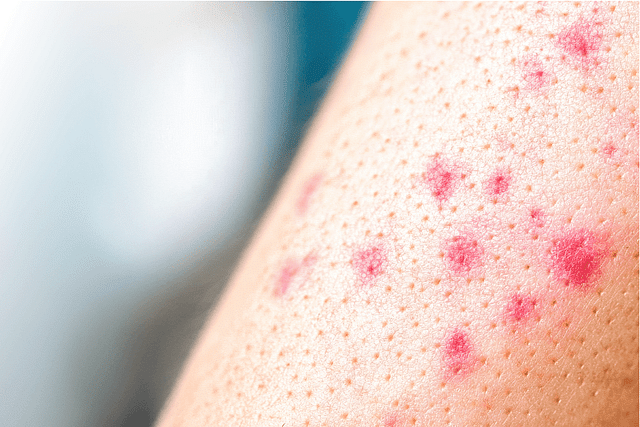
Scabies is a highly contagious skin condition that affects millions of people globally. Caused by the microscopic mite Sarcoptes scabiei, variety Hominis, scabies can lead to severe itching and a distinctive rash on the skin. The condition is transmitted through close skin-to-skin contact with an infected individual or by sharing infested personal items such as clothing, towels, or bedding. Despite being associated with poor hygiene, scabies can affect anyone, irrespective of age, socioeconomic status, or personal cleanliness (WHO, 2023). In this article, we will explore the various aspects of scabies, including its causes, symptoms, types, and treatment options, to help you better understand and manage this common skin infestation.
What is Scabies Disease?
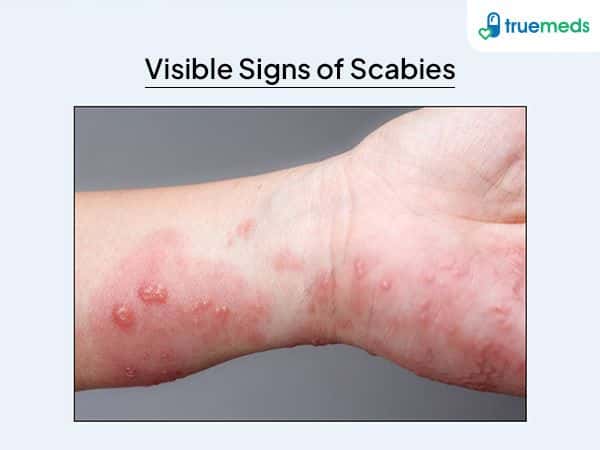
Scabies is a skin infestation caused by the tiny mite Sarcoptes scabiei. These mites burrow into the upper layer of the skin, where they live and lay eggs, leading to intense itching and a pimple-like rash. The rash typically appears in skin folds and other warm areas of the body, such as between the fingers, on the wrists, elbows, knees, armpits, waist, buttocks, and shoulder blades. In infants and young children, the rash may also develop on the head, face, neck, palms, and soles of the feet (CDC, 2024).
Key Factors about Scabies
| Category | Details |
| Also Referred to as |
|
| Commonly Occurs In |
|
| Affected Organ |
|
| Type |
|
| Common Signs |
|
| Consulting Specialist |
|
| Treatment Procedures |
|
| Managed By |
|
| Mimicking Condition |
|
Types of Scabies
There are three main types of scabies, each with its own specific features:
- Typical scabies: This is the most common form of scabies, causing an itchy rash on the hands, wrists, and other common spots on the body. The rash usually consists of small, red, itchy bumps and thin, irregular burrow tracks.
- Nodular scabies: In this type, the infestation leads to the development of itchy, raised bumps or nodules, particularly around the genitals, armpits, or groin. These nodules are considered a hypersensitivity reaction to the presence of the female mite.
- Norwegian scabies (crusted scabies): This is a more severe and highly contagious form of scabies that usually affects individuals with weakened immune systems. It is characterised by thick, crusted skin lesions that contain thousands of mites and eggs. Unlike typical scabies, the rash associated with crusted scabies may not cause itching.
Symptoms of Scabies
1. Common symptoms
- Intense itching: The most common symptom of scabies is intense itching, especially at night. This is caused by the body's allergic reaction to the Sarcoptes scabiei mite, its eggs, and faeces.
- Rash: Scabies often presents with a pimple-like, itchy rash. The rash commonly appears between fingers, in skin folds of the wrist, elbow, knee, or armpit, and on the penis, nipples, waist, buttocks, and shoulder blades.
- Burrows: Tiny raised, crooked lines on the skin surface are a characteristic sign of scabies. These are actually the burrows of the scabies mites.
- Specific areas affected: Scabies rash and symptoms commonly affect the wrists, elbows, armpits, nipples, penis, waist, buttocks, and the area between fingers.
2. Symptoms in infants and children
- Widespread rash: In infants and small children with scabies, the rash can be more widespread, covering most of the body, including palms, soles, and scalp.
- Irritability: Babies with scabies are often irritable and may have difficulty eating or sleeping owing to the discomfort caused by the infestation.
3. Severe forms
- Crusted (Norwegian) scabies: A more severe and highly contagious form of scabies, crusted or Norwegian scabies is characterised by thick skin crusts containing thousands of mites and eggs. This form is often seen in people with weakened immune systems.
Causes of Scabies
1. Primary Cause
- Sarcoptes scabiei mites: Scabies is primarily caused by an infestation of tiny, eight-legged mites called Sarcoptes scabiei. These mites burrow into the top layer of human skin to live and feed, causing the characteristic symptoms of scabies.
2. Transmission
- Direct skin-to-skin contact: The most common method of transmission for scabies is direct skin-to-skin contact, including sexual contact.
- Infested furniture, clothes, and bedding: Though less common, scabies mites can also be spread through contact with infested items like furniture, clothes, and bedding.
Risk Factors
1. Demographic and environmental factors
- Close living conditions: Scabies outbreaks are common in institutional settings such as hospitals, boarding schools, long-term care facilities, and refugee or internally displaced person camps due to overcrowding and increased skin-to-skin contact.
- Age: Scabies can affect people of all ages, but it is most common in children and the elderly. Young children are at higher risk due to their close contact with others in daycare or school settings. The elderly are more susceptible due to weakened immune systems and the likelihood of living in long-term care facilities.
- Compromised immune system: Individuals with weakened immune systems, such as those with HIV/AIDS, cancer, or organ transplant recipients, are at higher risk for contracting scabies and developing crusted scabies.
2. Behavioral Factors
- Skin-to-skin contact: Direct skin contact with an infected person, especially if they have an itchy rash, significantly increases the risk of transmission. This includes sexual contact, holding hands, or sharing a bed.
- Sharing personal items: Scabies mites can survive for a short period on clothing, bedding, or towels. Sharing these items with an infested person increases the risk of contracting scabies.
Complications
Scabies can lead to several complications if left untreated or improperly managed:
- Secondary bacterial infections: Scabies can pave the way for secondary bacterial infections, particularly with Streptococcus pyogenes and Staphylococcus aureus. These infections can manifest as impetigo, cellulitis, and in severe cases, secondary bacterial infection may lead to post-streptococcal glomerulonephritis or sepsis (Uzun et al., 2024).
- Persistent itching and insomnia: Even after successful treatment, patients may experience persistent itching for 2-4 weeks due to the immune system's reaction to dead mites and their products. This can lead to sleeplessness and may require additional treatments like antihistamines or topical steroids.
- Community outbreaks: Untreated or improperly treated scabies can spread rapidly within communities, especially in closed environments such as residential aged care facilities and schools, leading to outbreaks.
- Postscabietic reactions: Patients may experience reactions like Id reactions (auto-eczematisation) and epidermal changes due to topical treatments, which can prolong the recovery period.
Prevention of Scabies
1. Hygiene and cleanliness
- Regular handwashing: Frequent handwashing with soap and warm water, especially after direct contact with an infected person or their belongings, can help prevent the spread of scabies mites.
- Avoiding shared items: Do not share clothing, bedding, or towels with someone who has scabies. If you suspect contamination, wash these items in hot water and dry them on high heat to kill the mites.
- Cleaning the environment: Vacuum carpets, upholstered furniture, and car seats to remove any fallen mites. Consider using a steam cleaner for added effectiveness.
2. Early diagnosis and treatment
- Seek medical attention: If you suspect that you or a family member has scabies, consult a doctor for proper diagnosis and treatment. Early intervention can prevent the spread of the infestation.
- Treat all close contacts: When one person in a household is diagnosed with scabies, all household members and close contacts should be treated simultaneously, even if they do not have symptoms. This helps prevent re-infestation (WHO, 2023).
3. Awareness and education
- Know the signs and symptoms: Educate yourself and others about the signs and symptoms of scabies, such as intense itching (especially at night), a pimple-like rash, and threadlike burrows in the skin.
- Spread awareness: If you or someone in your family has scabies, inform close contacts, such as friends, classmates, or colleagues, so they can watch for symptoms and seek treatment if necessary.
Diagnosis & Tests
1. Clinical diagnosis
- Visual inspection: In many cases, a doctor can diagnose scabies based on the appearance of the rash and the presence of burrows. They will visually inspect the skin, looking for characteristic signs of scabies infestation.
- Symptom review: The doctor will also ask about symptoms such as intense itching (especially at night), the location of the rash, and any potential exposure to scabies.
2. Microscopic examination
- Skin scraping: To confirm the diagnosis, the doctor may take a skin scraping from an affected area, such as a burrow. This sample is then examined under a microscope to look for mites, their eggs, or fecal matter (CDC, 2024).
- Ink test: In some cases, the doctor may apply ink to the affected area and then wipe it off. If burrows are present, the ink will seep into them, making them more visible.
3. Differential diagnosis
- Rule Out Other Conditions: Scabies symptoms can be similar to other skin conditions, such as eczema, psoriasis, or contact dermatitis. The doctor will consider these possibilities and may perform additional tests to rule them out.
4. Challenges in diagnosis
- Atypical presentations: In some cases, especially in infants, the elderly, or those with weakened immune systems, scabies may present atypically, making diagnosis more challenging.
- Delayed symptoms: It can take up to 6 weeks for symptoms to appear after initial infestation, which may delay diagnosis and treatment.
Treatment & Management
Scabies is treated using topical scabicidal medications or oral antiparasitic medication to eliminate mites. Since mites spread across different areas, treatment must be applied to the entire body, not just the affected areas. Additionally, all household members or close contacts should be treated simultaneously to prevent reinfestation.
1. Topical Scabicidal Agents
- Permethrin 5% Cream: Permethrin 5% cream is applied to all areas of the body from the neck down and washed off after 8–14 hours. A single application is effective, though two applications, each about one week apart, may be necessary to eliminate all mites (Uzun et al., 2024).
- Lindane: Although FDA-approved for scabies treatment, lindane is not recommended as first-line therapy. Lindane is not currently available in the United States. Due to potential neurotoxicity, its use should be restricted to patients who have failed treatment with or cannot tolerate other medications that pose less risk. It is contraindicated in premature infants, individuals with uncontrolled seizure disorders, and conditions that may increase seizure risk.
- Benzyl Benzoate (10–25%): Benzyl Benzoate can be effective, but may cause skin irritation.
2. Oral Antiparasitic Treatment
- Ivermectin: Ivermectin is used for severe infestations like crusted scabies or for immunocompromised patients. The safety of ivermectin has not been established in pregnant women or children weighing less than 15 kg.
3. Additional Treatment Options
- Topical Antipruritic Agent: Crotamiton (10%) provides relief from itching along with scabies treatment.
- Alternative Treatments: Sulfur ointment (5–10%) is safe for infants under 2 months and pregnant women. Malathion lotion (0.5%) is not FDA-approved for scabies treatment but has been used in some international guidelines, though published data on its efficacy is limited.
- Treatment for Associated Conditions: If secondary bacterial infections develop, appropriate antibiotic therapy should be administered.
How to Apply Topical Scabicidal Medications?
- Take a lukewarm shower and pat the skin dry.
- Apply a thin layer of cream/lotion to the entire body from the neck down. For infants and young children, also apply to the head, neck, face, and scalp, as scabies can affect these areas in this age group.
- Leave the medication on for 8–14 hours before washing it off.
- Reapply after 24 hours if necessary.
Living with Disease
Living with scabies requires a combination of good hygiene practices, treatment compliance, and symptom management:
- Hygiene and isolation: To prevent the spread of scabies, wash all bedding, towels, and clothes in hot water (at least 60°C) and dry them on a hot setting. Seal items that cannot be washed in a closed plastic bag for at least 72 hours to one week. Patients should avoid close contact with others for at least 24 hours after the first treatment.
- Treatment compliance: Treat all household contacts and recent sexual partners simultaneously to prevent reinfestation. Scabies treatment typically involves applying a scabicide cream or taking oral medication, with a repeat application usually required. Adherence to the treatment regimen is critical to avoid treatment failure.
- Managing symptoms: Intense itching can be managed with oral sedative antihistamines to improve sleep quality. However, be aware that these antihistamines can cause drowsiness and should be used with caution.
By following these guidelines, individuals with scabies can effectively manage the condition and prevent its transmission to others.
When to See a Doctor?
There are certain situations when it is important to seek medical attention:
- Severe or persistent symptoms: If you experience severe itching, extensive rash, or symptoms that do not improve after self-treatment, consult your doctor for further evaluation and treatment.
- High-risk individuals: If you are immunocompromised, pregnant, elderly, or have a chronic skin condition, seek medical advice before starting any scabies treatment.
- Recurrent infections: If you experience repeated scabies infections despite proper treatment, consult your doctor to rule out other underlying health issues or to identify potential sources of reinfestation.
- Concerns about treatment: If you have any concerns or questions about the appropriate use of scabies medications or experience adverse reactions to treatment, contact your doctor for guidance.
Remember, prompt medical attention can help prevent complications and ensure effective management of scabies.
Key Takeaways
- Scabies is a contagious skin condition caused by the Sarcoptes scabiei mite, which burrows into the skin and lays eggs, causing an intensely itchy rash.
- Scabies is transmitted through close skin-to-skin contact or, less commonly, through sharing contaminated bedding or clothing.
- Symptoms of scabies include intense itching (especially at night), a pimple-like rash, and burrow tracks on the skin. Commonly affected areas include the wrists, elbows, armpits, webbing between fingers, nipples, waist, buttocks, and genital area.
- Diagnosis is typically based on the appearance of the rash and the presence of burrows. In some cases, skin scraping may be examined under a microscope to confirm the presence of mites or eggs.
- Treatment usually involves applying a scabicide cream or lotion (such as permethrin or benzyl benzoate) to the entire body from the neck down and leaving it on for the recommended time. Oral medications like ivermectin may be prescribed in some cases.
- To prevent reinfestation, it is essential to treat all close contacts simultaneously, wash bedding and clothing in hot water, and practice good hygiene.
FAQs
What is the primary reason for scabies?
Can scabies resolve without treatment?
For how long is scabies contagious?
Can scabies mites survive in mattresses?
What is the fastest way to treat scabies?
Can scabies cause serious health issues?
How can I remove scabies mites from my bed?
References
- Centers for Disease Control and Prevention. (2024). Scabies. https://www.cdc.gov/scabies/about/index.html
- World Health Organization. (2023). Scabies. https://www.who.int/news-room/fact-sheets/detail/scabies
- Uzun, S., Durdu, M., Yürekli, A., Mülayim, M. K., Akyol, M., Velipaşaoğlu, S., Ergin, Ş., Ergin, C., Mumcuoğlu, K. Y., Taylan-Özkan, A., Kalaycı, M., Tekin, B., Balevi, A., Ertaş, R., Kalkan, G., Aslan, E., Akdoğan, N., & Aksoy, B. (2024). Clinical practice guidelines for the diagnosis and treatment of scabies. International Journal of Dermatology, 63(12), 1642-1656. https://doi.org/10.1111/ijd.17327
- Mitchell, E., Wallace, M., Marshall, J., Whitfeld, M., & Romani, L. (2024). Scabies: Current knowledge and future directions. Frontiers in Tropical Diseases, 5, 1429266. https://doi.org/10.3389/fitd.2024.1429266
- Al-Dabbagh, J., Younis, R., & Ismail, N. (2023). The currently available diagnostic tools and treatments of scabies and scabies variants: An updated narrative review. Medicine, 102(21), e33805. https://doi.org/10.1097/MD.0000000000033805
Check Related Salts
Latest health articles

Top Health Essentials
























Disclaimer
Top-Selling Medicines:
...View more
Top-OTC medicines:
...View more
Company
About UsHealth ArticleHealth StoriesHealth LibraryDiseases & Health ConditionsAyurvedaUnderstanding Generic MedicinesAll MedicinesAll BrandsNeed HelpFAQSecuritySavings CalculatorAdvertise with UsSubscribe
Registered Office Address
Grievance Officer
Download Truemeds


Contact Us
Our customer representative team is available 7 days a week from 9 am - 9 pm.
v4.28.19

2026 - Truemeds | All rights reserved. Our content is for informational purposes only. See additional information.

Our Payment Partners