

- Medicines
- Personal Care
- Skin Cream
- Sunscreen
- Face Wash
- Skin and Body Soap
- Acne Care
- Body Lotions
- Moisturising Lotion
- Moisturising Cream
- Mosquito Repellent
- Moisturising Gel
- Body Wash
- Hair Oils
- Hair Shampoo
- Hair Conditioners
- Hair Supplements
- Hair Colour
- Hair Serum
- Hair Mask
- Hair Solutions
- Baby Diapers and Wipes
- Baby Lotion and Moisturising Cream
- Baby Bath Essentials
- Baby Skin Care
- Baby and Infant Food
- Baby Healthcare
- Women Multivitamins
- Ovulation Test Kit and Women Intimate Care
- Sanitary Pads
- Nutritional Drinks
- Condoms
- Lubricants
- Massage Gels
- Personal Body Massagers
- Men Performance Booster
- Sexual Health Supplements
- Massage Oils
- Ayurveda
- Tooth Paste
- Mouth Ulcer Gel
- Mouthwash
- Toothache and Gum Pain
- Tooth Brush
- Gargle Solution
- Orthopaedic Supports
- Adult Diapers
- Footwear
- Mobility and Support Accessories
- Urinary Support and Care
- Health Conditions
- Bone and Joint Care
- Digestive Care
- Eye Care
- Pain Relief
- Smoking Cessation
- Liver Care
- Stomach Care
- Cold and Cough
- Heart Care
- Kidney Care
- Piles, Fissures & Fistula
- Respiratory Care
- Mental Wellness
- Derma Care
- Pre and Probiotics
- Acidity
- Gas
- Constipation
- Loose Motion/Diarrhoea
- Digestive Fibres
- Digestive Enzymes
- Eye Lubricant Drops
- Lens Solution
- Safety Eye Wear
- Eye Cream
- Eye Vitamins and Supplements
- Eye Drops
- Eye Ointment and Gel
- Nicotine Patch
- Nicotine Gum
- Nicotine Lozenges
- Cough Syrups
- Chest Rubs and Balms
- Nasal Spray
- Lozenges
- Inhalant Capsules
- Cold and Cough Tablets
- Vitamins & Supplements
- Diabetes Care
- Healthcare Devices
- Homeopathic Medicine
- Health Guide
Kidney Stones
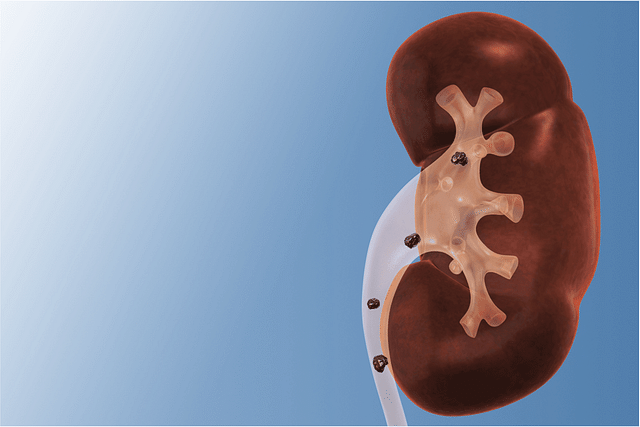
Kidney stones (nephrolithiasis, urolithiasis) are crystalline mineral aggregates that form in the renal collecting system or elsewhere in the urinary tract. Common stone constituents include calcium (usually calcium oxalate and/or calcium phosphate), uric acid, struvite (magnesium ammonium phosphate) and cystine. Stones may be asymptomatic or cause severe pain, haematuria, urinary obstruction, and—if complicated by infection—fever and sepsis (Leslie et al., 2024). Treatment options vary depending on the size and type of stone, ranging from increased hydration to surgical intervention.
 50
50Last updated on : 27 Apr, 2026
Read time : 17 mins
Overview of Disease
Kidney stone disease is common and is rising in many regions worldwide; lifetime risk varies by geography but is frequently reported as between 10–15% in high-incidence countries. Complications include acute urinary obstruction, urinary tract infection (which can progress to urosepsis), and, with prolonged obstruction, impaired renal function. Early recognition and appropriate management reduce morbidity. Understanding the causes, symptoms, and available treatment options for kidney stones is crucial for effective management and prevention.
What are Kidney Stones?
Kidney stones are solid masses that form when certain substances in the urine become too concentrated, leading to the crystallisation of minerals like calcium and oxalate. These stones can vary in size, and over time, the minerals continue to crystallise and combine, eventually forming a solid mass that can cause blockages and irritation in the urinary tract. Kidney stones can be smooth or jagged and may cause severe pain, bleeding, and other complications if not addressed promptly.
Key Factors about Kidney Stones
| Category | Details |
| Also Referred to as | Nephrolithiasis, Urolithiasis, Renal Calculi, Urinary Stones |
| Commonly Occurs In | Adults (peak incidence generally in the 30s–50s), with a higher historical prevalence in men than women, though the male-to-female gap has narrowed. Family history (hereditary predisposition), metabolic disorders, obesity, dehydration, and prior stone episodes increase risk. Stones are uncommon in premature infants; paediatric nephrolithiasis has a different epidemiology and requires specialist assessment |
| Affected Organ | Kidneys, Ureters, Bladder |
| Type | Calcium, struvite, uric acid, cystine |
| Common Signs | Severe back/side pain, blood in urine, fever, chills, vomiting, nausea, abdominal pain |
| Consulting Specialist | Urologist, Nephrologist |
| Treatment Procedures | Shock wave lithotripsy, Ureteroscopy, Surgery, Preventive medication |
| Managed By | NSAIDs (ibuprofen, naproxen) |
| Mimicking Condition | Appendicitis, Gallstones, Pyelonephritis |
Types of Kidney Stones
Kidney stones are classified based on their chemical composition. The main types include:
1. Calcium Oxalate and Calcium Phosphate Stones (the majority of kidney stones)
- Calcium-containing stones account for the majority of stones (commonly reported as 70–85% overall). Most of these are predominantly calcium oxalate (CaOx), sometimes mixed with calcium phosphate (CaP). Exact proportions vary by population and centre; clinicians generally treat calcium stones as the commonest category and evaluate for hypercalciuria and modifiable risk factors.
- Calcium stones form due to high levels of calcium in the urine, which may result from excessive dietary absorption, kidney dysfunction, or metabolic disorders.
2. Struvite or Magnesium Ammonium Phosphate Stones (10% of kidney stones)
- Struvite stones, also called infection stones or triple phosphate stones, are made of magnesium ammonium phosphate and form in alkaline urine.
- Struvite (infection) stones form in alkaline urine in the presence of urease-producing bacteria (most classically Proteus spp., but also some Klebsiella spp., Staphylococcus saprophyticus, Pseudomonas spp., and others). These stones can grow rapidly and form large staghorn calculi if the infection is not controlled.
- Struvite stones can grow rapidly and lead to staghorn calculi, a large, branching stone that fills the renal pelvis.
3. Uric Acid Stones (5–10% of kidney stones)
Uric acid stones form due to excess uric acid in the urine, often caused by:
- High-purine diets (rich in red meat, shellfish, and organ meats)
- Low urine pH (acidic urine)
- Low urine volume (dehydration)
- Medical conditions such as gout or chemotherapy treatments
Uric acid stones are commonly radiolucent on plain abdominal KUB X-ray (not visible or poorly visible), so non-contrast CT (which detects virtually all stone types) or ultrasound is preferred when radiolucency is suspected. Plain X-ray may miss uric acid stones.
4. Cystine Stones (Less than 1% of kidney stones)
Cystine stones are rare and occur in individuals with cystinuria, a genetic disorder affecting amino acid transport.
- Cystinuria causes excess cystine excretion in urine, leading to the formation of cystine crystals.
- These stones tend to recur and are resistant to conventional treatments.
5. Drug-Induced Kidney Stones (Less than 1% of kidney stones)
Certain medications can contribute to kidney stone formation by altering urine composition or directly crystallising in the urine.
- Drug-induced stones are uncommon but important. Examples include indinavir and atazanavir (protease inhibitors that can precipitate in urine), triamterene and sulfonamide antibiotics (which can crystallise), topiramate (may promote calcium phosphate stones via metabolic effects), and excessive vitamin C (can increase oxalate). Guaifenesin is rarely implicated. Always review medication history when evaluating recurrent or unusual stones.
Managing kidney stones involves identifying the underlying cause, making dietary changes, increasing fluid intake, and using medications or surgical interventions when necessary.
Early Signs of Disease
The early signs of kidney stones can be subtle and may not always be noticeable. However, some common early indicators include:
- Pain in the side, back, lower abdomen, or groin
- Burning sensation or pain during urination
- Frequent urination
- Persistent urge to urinate
- Cloudy or foul-smelling urine
- Blood in the urine (haematuria)
- Nausea and vomiting
- Fever and chills may indicate a concomitant urinary tract infection or urosepsis, especially in the presence of obstructing stones; this is a medical emergency requiring urgent medical assessment.
If you experience any of these early signs, it is essential to consult your doctor for a proper diagnosis and treatment plan.
Symptoms of Kidney Stones
Kidney stones can be of different sizes. Small stones usually pass easily without causing problems. However, larger stones can get stuck in the kidneys or urinary tract, leading to severe, cramping pain in the back and sides. The pain may also move to the lower belly or groin. The pain can be short or long-lasting and may come and go, but it is often very intense.
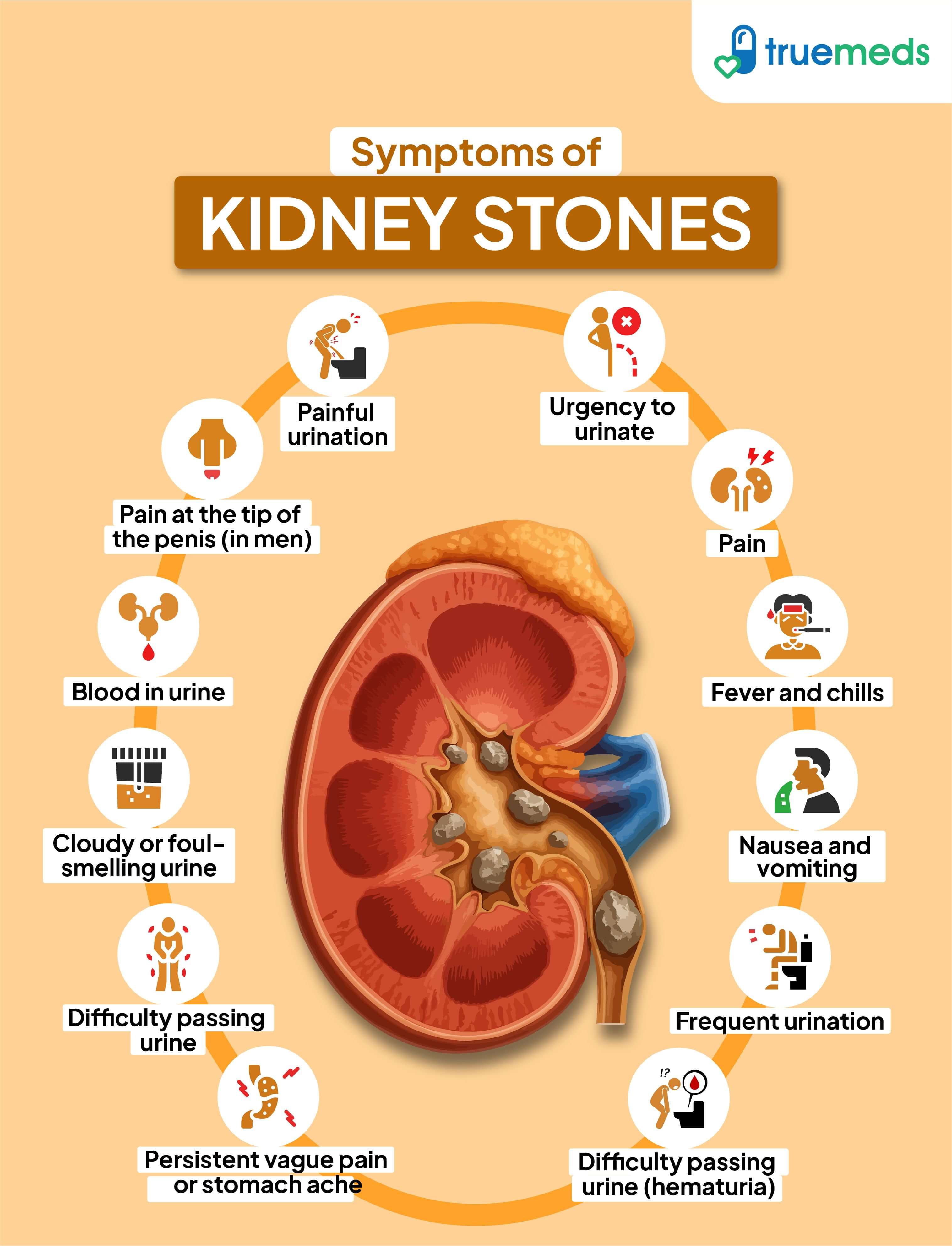
As kidney stones progress, they can cause a range of symptoms that may vary in intensity and frequency. Common symptoms of kidney stones include:
- Pain: Kidney stones can cause intense pain, typically felt in the back or side, just below the ribs. This pain often radiates towards the lower abdomen and groin. The discomfort may come and go in waves, and its intensity can vary depending on the size and movement of the stones.
- Painful urination: When kidney stones pass into the ureter, they can cause significant pain during urination. This sensation is often described as a sharp, burning feeling, and it can be accompanied by a frequent urge to urinate.
- Blood in urine: Blood in the urine may appear pink, red, or brown due to irritation or damage caused by the stones as they move through the urinary tract.
- Cloudy or foul-smelling urine: Urine that is cloudy or has an unpleasant odour can signal the presence of kidney stones. This change in urine appearance or smell often results from an infection or the accumulation of minerals.
- Nausea and vomiting: Kidney stones can lead to nausea and vomiting, primarily due to severe pain and an autonomic response.
- Frequent urination: An increased frequency of urination, especially in small amounts, can occur due to irritation of the urinary tract.
- Urgency to urinate: A strong, persistent urge to urinate may occur, often with little urine output.
- Fever and chills: These symptoms suggest a possible urinary tract infection and require urgent medical evaluation.
- Difficulty passing urine: In rare cases, stones can completely obstruct urine flow, which is a medical emergency.
- Pain at the urethral meatus or tip of the penis: This may occur when a stone is passing distally through the ureter or urethra and may be associated with dysuria.
- Persistent dull abdominal pain: Some kidney stones may cause a vague, ongoing ache that can be mistaken for other abdominal conditions.
The type and severity of symptoms vary depending on the size and location of the stone.
Stages of Kidney Stones
The development and progression of kidney stones involve several stages:
- Formation: Kidney stones form when minerals in the urine crystallise and accumulate, creating a solid mass.
- Passage: Small kidney stones may pass through the urinary tract without causing significant pain or discomfort. However, larger stones can become lodged, leading to severe pain and bleeding.
- Blockage: If a kidney stone becomes stuck in the urinary tract, it can obstruct the flow of urine, resulting in intense pain, nausea, and vomiting.
Understanding these stages is essential for recognising the symptoms and seeking appropriate medical attention.
Causes of Kidney Stones
Kidney stones form when too much calcium, oxalate, or phosphorus builds up in the urine. Other reasons that can lead to kidney stone formation include:
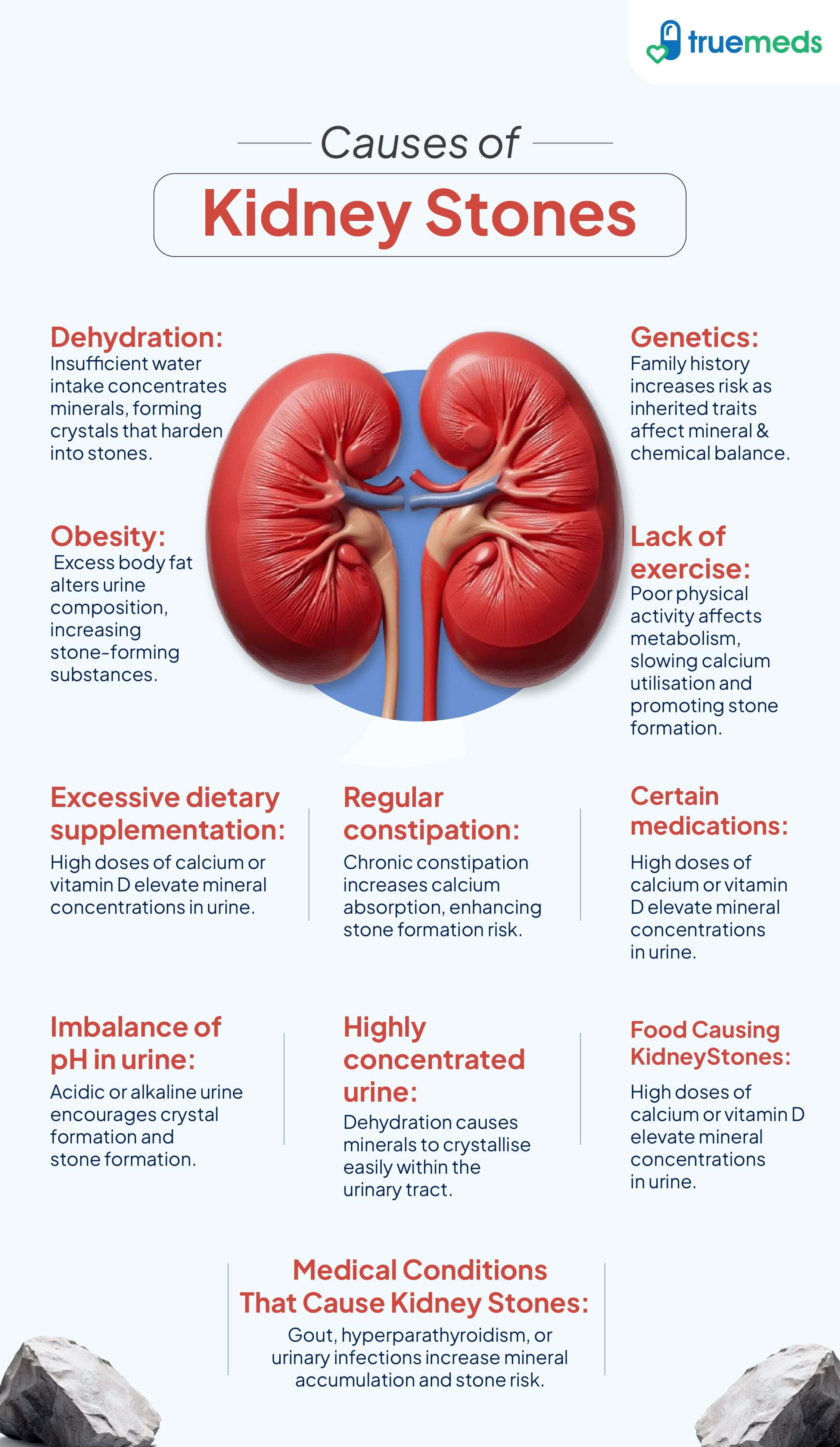
- Dehydration: Inadequate fluid intake leads to concentrated urine, which can cause minerals to crystallise and form stones. Ensuring sufficient hydration helps dilute urine and reduce the risk of stone formation.
- Genetics: Family history plays a significant role in the likelihood of developing kidney stones. Genetic predispositions can affect how the body processes minerals and waste products, making some people more susceptible to stone formation.
- Obesity: Being overweight or obese can increase the risk of kidney stones. Excess body weight is associated with changes in urine composition, such as higher calcium and uric acid levels, which contribute to stone formation.
- Metabolic and environmental contributors: Risk factors include low fluid intake (leading to concentrated urine), high dietary sodium, high animal-protein diets, obesity, and certain metabolic disorders (e.g., hyperparathyroidism, hyperuricosuria). Some medications can increase stone risk (e.g., indinavir, atazanavir, triamterene, topiramate, and high-dose vitamin C), while other medicines (e.g., thiazide diuretics) are used to reduce urinary calcium excretion and prevent calcium stones. Routine lack of exercise and constipation are not established direct causes of stone formation; focus prevention on hydration, dietary modification, and management of underlying metabolic conditions. Discuss any supplements (e.g., calcium or vitamin D) with your clinician to balance bone health and stone risk.
Food Causing Kidney Stones
Certain foods and drinks can increase the risk of developing kidney stones, such as:
- Foods high in dietary oxalate (e.g., spinach, rhubarb, nuts, beets, bran): It can contribute to calcium oxalate stones in susceptible individuals. However, dietary calcium binds intestinal oxalate, and adequate dietary calcium may reduce oxalate absorption and help prevent stones; therefore, unless specifically advised after metabolic testing, do not adopt a low-calcium diet without clinician guidance.
- High sodium intake: Salty foods and a diet high in sodium can increase the risk of developing calcium stones.
- Animal protein: Animal proteins, such as red meat, poultry, and eggs, can raise uric acid levels, contributing to uric acid stones.
Medical Conditions That Cause Kidney Stones
Several medical conditions can increase the likelihood of developing kidney stones, including:
- Gout, an inflammatory form of arthritis, can increase the risk of uric acid stones.
- Inflammatory bowel diseases, such as Crohn's disease and ulcerative colitis, can cause kidney stones due to changes in the digestive process.
- Hyperparathyroidism, a condition that causes excessive parathyroid hormone production, can lead to calcium stones.
- Recurrent urinary tract infections can contribute to the formation of struvite stones.
Risk Factors
The risk factors for kidney stones include:
- Men have a higher lifetime risk compared to females
- Previous kidney stones
- Certain medical conditions, such as hyperparathyroidism, gout (hyperuricaemia), malabsorptive states, and inflammatory bowel disease (increasing oxalate absorption), prior urinary tract anatomical abnormalities or infections (predisposing to struvite stones). Prior stone history is also a significant risk factor. HIV per se is not a common direct cause of stones, although some antiretroviral medicines (e.g., indinavir) can cause stones. Discuss individual risk factors with your clinician.
- Family history
- Obesity
- Digestive diseases and surgeries, including gastric bypass, inflammatory bowel disease, or chronic diarrhoea
- Recurrent urinary tract infections (UTIs)
Complications
Kidney stones can lead to several complications if not treated promptly. These complications may include:
- Obstructing stones can cause urinary stasis, predisposing to infection; infected obstructed systems can rapidly progress to life-threatening urosepsis—this is a medical emergency requiring urgent decompression (stent or nephrostomy) and intravenous antibiotics.
- Prolonged obstruction from stones can impair kidney function and potentially cause permanent damage.
- Swelling of the kidney (hydronephrosis) due to the buildup of urine when stones block urine flow.
- Persistent or severe pain can occur if stones are not treated, affecting quality of life.
- In severe cases, ongoing obstruction and damage can lead to loss of kidney function.
- Failure to address the underlying causes of stone formation can result in the development of additional stones.
- Scarring of the ureter due to stone passage can lead to narrowing and difficulty in urine flow.
Prevention of Kidney Stones
1. Drink Enough Water
Aim for sufficient fluid intake to produce a urine output of about 2.0–2.5 L/day (often requiring intake greater than plain “8 glasses,” depending on climate and activity). Individual targets vary; patients with prior stones are often advised to maintain urine volume ≥2.0–2.5 L/day to reduce recurrence risk.
2. Reduce Sodium Intake
High sodium levels can lead to increased calcium in the urine, raising the risk of stone formation. Reducing salt intake in food helps maintain a balanced mineral composition in the urine.
3. Limit Animal Protein
Eating too much meat, fish, and shellfish increases uric acid levels, which can contribute to kidney stone formation. A balanced diet with moderate protein intake is recommended.
4. Maintain a Healthy Weight
Excess body weight is linked to a higher risk of kidney stones. A healthy lifestyle with regular exercise and a nutritious diet helps prevent stone development.
5. Manage Underlying Health Conditions
Certain conditions, like gout, hyperparathyroidism, and inflammatory bowel disease, can increase the risk of kidney stones. Proper management of these conditions can help reduce the chances of stone formation.
Diagnosis & Tests
Diagnosing kidney stones typically involves a combination of medical history, physical examination, and various diagnostic tests. The process for diagnosis includes:
- Physical examination: The initial step in diagnosing kidney stones involves discussing symptoms, medical history, and any family history of stones. A physical examination may include checking for tenderness in the abdomen and lower back to assess pain and potential obstruction.
- Urinalysis: This tests a urine sample for signs of kidney stones. It checks for the presence of blood, crystals, and other substances that indicate stone formation or related complications.
- Imaging tests: These are crucial for visualising the stones and assessing their size and location. Common imaging methods include:
- Imaging: Non-contrast CT (low-dose CT KUB) is the most sensitive test for detecting urinary stones and is preferred in many acute settings. Ultrasound is commonly used (especially in pregnancy and initial evaluation), but it is less sensitive for small ureteral stones. Plain abdominal radiography (KUB X-ray) detects many but not all stones (it may miss radiolucent stones such as uric acid stones), and IVP has largely been replaced by CT and ultrasound. The choice of imaging should consider clinical context, radiation exposure, pregnancy, and resource availability EAU Guidelines (2024).
- Blood tests: Blood tests measure levels of minerals and waste products in the blood, such as calcium, uric acid, and creatinine. Abnormal levels can indicate conditions contributing to stone formation or impaired kidney function.
By recognising the symptoms and utilising appropriate diagnostic tests, doctors can accurately identify kidney stones and develop an effective treatment plan tailored to the individual's needs.
Treatment & Management
The approach to treating kidney stones depends on their size, type, and location. While small stones may pass naturally with increased fluid intake, larger stones often require medical intervention.
1. Small Kidney Stones (≤5 mm)
Many small stones (commonly ≤5–6 mm) pass spontaneously with conservative management (adequate analgesia and hydration). Patients are advised to maintain fluid intake to achieve urine output targets (≈2.0–2.5 L/day). Routine prescription of excessive fluid intake (e.g., 4–5 L/day) is not necessary for all patients and should be individualised.
Medical expulsive therapy (alpha-blockers such as tamsulosin or silodosin) may be considered for selected distal ureteral stones, but benefits vary depending on stone size and location (Jung et al., 2022).
Medications:
1. Analgesia
NSAIDs (e.g., ibuprofen, naproxen) are often first-line analgesics for renal colic when not contraindicated because they reduce ureteric smooth muscle spasm and pain; opioids may be required for severe pain.
2. Medical expulsive therapy
Alpha-blockers (e.g., tamsulosin, silodosin) can be considered to facilitate passage of distal ureteral stones (evidence is mixed and benefits depend on stone size and location).
3. Stone prevention
For recurrent stones, pharmacologic prevention is individualised:
- Thiazide diuretics (e.g., hydrochlorothiazide, chlorthalidone, indapamide) reduce urinary calcium
- Potassium citrate increases urinary citrate and alkalinises urine
- Allopurinol reduces uric acid production
4. Uric Acid Synthesis Inhibitors
For stones formed due to high uric acid levels, medications like Allopurinol help reduce uric acid production and prevent stone formation.
5. Alkalinising Agents
These help in urine alkalization, making it easier to dissolve certain stones. Examples include:
6. Combined Treatment Therapy
Management of metabolic causes is individualised. Common, evidence-based strategies include dietary modification, potassium citrate for hypocitraturia or uric acid stones, thiazide diuretics for hypercalciuria, and allopurinol for hyperuricosuria. Combination supplement regimens are not standard first-line therapy and should only be used under specialist guidance after a comprehensive metabolic evaluation.
7. Thiazide Diuretics
For those prone to calcium-based stones, thiazide diuretics like:
These medicines help reduce calcium excretion, decreasing stone formation.
2. Large Kidney Stones
Indications for procedural intervention include large stone burden, persistent pain despite conservative care, obstruction with infection, solitary kidney or deteriorating renal function, and failure of conservative measures.
Procedural options include extracorporeal shock wave lithotripsy (ESWL), ureteroscopy (URS), and percutaneous nephrolithotomy (PCNL) for large (>20 mm) or complex stones, according to the EAU Guidelines (2024).
Surgical Procedures:
- Shock Wave Lithotripsy (SWL): A non-invasive procedure that uses shock waves to break stones into smaller pieces.
- Ureteroscopy (URS): A minimally invasive procedure using a scope to locate and remove stones.
- Percutaneous Nephrolithotomy (PCNL): A surgical procedure for large or complex stones involving a small incision in the back.
The choice of treatment depends on the stone’s size, location, and the patient’s overall health. Early diagnosis and timely intervention help prevent complications.
When to See a Doctor?
Seek prompt medical attention for severe, uncontrolled pain, persistent vomiting, fever or rigours (which may suggest infection), inability to pass urine, or symptoms of obstruction. Fever with a suspected obstructing stone is a medical emergency and requires urgent decompression and antibiotic therapy.
These symptoms may indicate kidney stones or other serious urinary tract conditions requiring urgent evaluation. Additionally, if you have a history of kidney stones and are experiencing symptoms again, or if you have a family history, you should consult a doctor. They can diagnose the condition using imaging tests such as X-rays, CT scans, or ultrasound and develop an appropriate treatment plan based on the size and location of the stone, as well as other health factors.
Early detection and treatment can help prevent complications and improve outcomes.
Key Takeaways
- Kidney stones can be treated using various procedures, including shock wave lithotripsy (SWL), ureteroscopy, percutaneous nephrolithotomy, and, in selected cases, laparoscopic surgery.
- The choice of treatment depends on the size, location, and composition of the stones, as well as the patient’s overall health.
- Medications can help manage symptoms, prevent recurrence, and treat associated conditions like urinary tract infections.
- Seek medical attention if you experience severe pain, nausea, vomiting, frequent urination, or difficulty urinating.
- Early detection and treatment help prevent complications and improve outcomes.
FAQs
What is the best treatment for kidney stones?
What is kidney stone pain like?
How do I support kidney health naturally?
What are the first warning signs of kidney stones?
Is kidney stone a life-threatening condition?
Is it common to have recurring kidney stones?
How long does it take to pass a kidney stone?
How common are kidney stones?
Are there any home remedies for kidney disease?
References
- Leslie, S. W., Ahmed, A., & Elnahas, A. (2024). Renal calculi, nephrolithiasis. In StatPearls. StatPearls Publishing. https://www.ncbi.nlm.nih.gov/books/NBK442014/
- European Association of Urology Guidelines Panel. (2024). EAU Guidelines on Urolithiasis 2024 (limited update). European Association of Urology. https://d56bochluxqnz.cloudfront.net/documents/full-guideline/EAU-Guidelines-on-Urolithiasis-2024.pdf
- Shastri, S., & Goldfarb, D. S. (2023). Kidney stone pathophysiology, evaluation, and management. American Journal of Kidney Diseases, 81(5), 651–665. https://pubmed.ncbi.nlm.nih.gov/37565942/
- Zeng, G., & Yang, C. (2023). Kidney stone prevention: Current evidence and guidelines. Current Opinion in Urology, 33(4), 285–293. https://www.sciencedirect.com/science/article/pii/S2161831323002715
- Jung, H. D., et al. (2022). Silodosin versus tamsulosin for medical expulsive therapy: Systematic review and meta-analysis. Medicina (Kaunas), 58(12), 1794. https://www.mdpi.com/1648-9144/58/12/1794
Check Related Salts
Browse Other Conditions
Latest health articles

Top Health Essentials

















Disclaimer
Top-Selling Medicines:
...View more
Top-OTC medicines:
...View more
Company
About UsHealth ArticleHealth StoriesHealth LibraryDiseases & Health ConditionsAyurvedaUnderstanding Generic MedicinesAll MedicinesAll BrandsNeed HelpFAQSecuritySavings CalculatorAdvertise with UsSubscribe
Registered Office Address
Grievance Officer
Download Truemeds


Contact Us
Our customer representative team is available 7 days a week from 9 am - 9 pm.
v4.28.18

2026 - Truemeds | All rights reserved. Our content is for informational purposes only. See additional information.

Our Payment Partners




