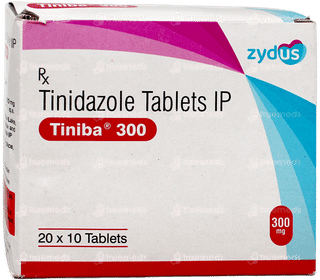
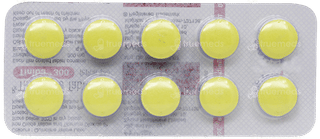
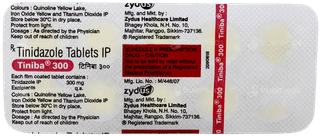
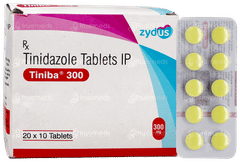
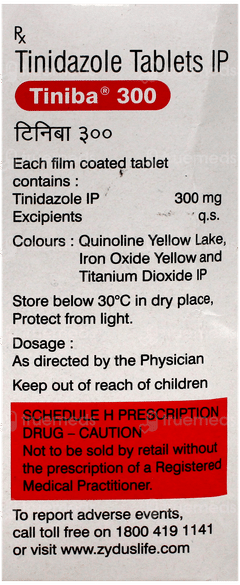
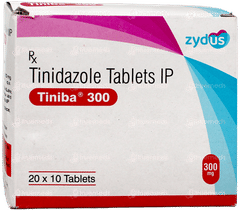
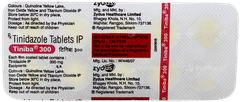


 Composition
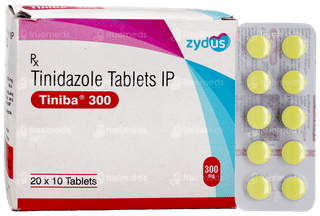
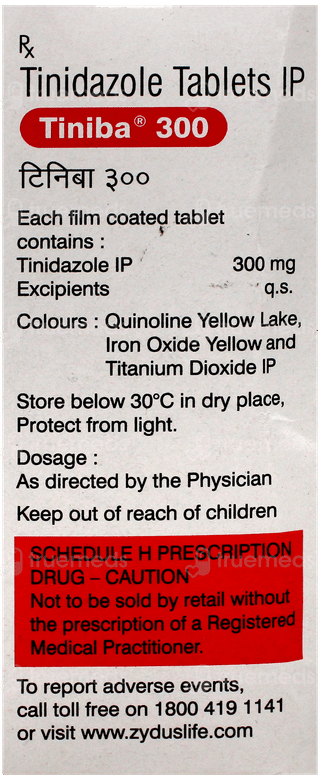
Tiniba 300 Tablet is used to treat parasitic and bacterial infections of the gut, mouth and gums, urinary tract and genital area. This includes diarrhoea or dysentery caused by parasites. It may also be used to prevent infection after surgery. It is a prescription tablet. It does not treat colds or flu. See a doctor soon if you have a rash, fits or numbness.
Take Tiniba 300 Tablet with water, with food. Take it whole; do not chew or crush it. Follow your doctor's prescribed dose and duration. Complete the full course even if you feel better. Avoid alcohol during treatment and for three days after the last dose, as it can cause flushing, vomiting and a fast heartbeat. Drink oral rehydration solution (ORS) if you have loose motions. Do not double a missed dose.
Common side effects of Tiniba 300 Tablet include a bad taste, nausea, vomiting, loss of appetite, headache, dizziness, stomach pain and dark urine. Mild effects may settle during treatment. Inform your doctor if symptoms persist or worsen. Get emergency help if you have fits, numbness or tingling, severe stomach pain, yellow skin or eyes, a severe skin reaction or swelling of the face. Never increase or reduce your dose without medical advice.
Before using Tiniba 300 Tablet, tell your doctor about blood disorders, liver disease, nerve problems, fits (seizures) or kidney disease. Mention all medicines, supplements and herbal products you take, especially warfarin, lithium, phenytoin and phenobarbital. Do not use it in the first three months of pregnancy. Consult your doctor if you are pregnant later or breastfeeding. Do not drive if dizzy.