

- Medicines
- Personal Care
- Skin Cream
- Sunscreen
- Face Wash
- Skin and Body Soap
- Acne Care
- Body Lotions
- Moisturising Lotion
- Moisturising Cream
- Mosquito Repellent
- Moisturising Gel
- Body Wash
- Hair Oils
- Hair Shampoo
- Hair Conditioners
- Hair Supplements
- Hair Colour
- Hair Serum
- Hair Mask
- Hair Solutions
- Baby Diapers and Wipes
- Baby Lotion and Moisturising Cream
- Baby Bath Essentials
- Baby Skin Care
- Baby and Infant Food
- Baby Healthcare
- Women Multivitamins
- Ovulation Test Kit and Women Intimate Care
- Sanitary Pads
- Nutritional Drinks
- Condoms
- Lubricants
- Massage Gels
- Personal Body Massagers
- Men Performance Booster
- Sexual Health Supplements
- Massage Oils
- Ayurveda
- Tooth Paste
- Mouth Ulcer Gel
- Mouthwash
- Toothache and Gum Pain
- Tooth Brush
- Gargle Solution
- Orthopaedic Supports
- Adult Diapers
- Footwear
- Mobility and Support Accessories
- Urinary Support and Care
- Health Conditions
- Bone and Joint Care
- Digestive Care
- Eye Care
- Pain Relief
- Smoking Cessation
- Liver Care
- Stomach Care
- Cold and Cough
- Heart Care
- Kidney Care
- Piles, Fissures & Fistula
- Respiratory Care
- Mental Wellness
- Derma Care
- Pre and Probiotics
- Acidity
- Gas
- Constipation
- Loose Motion/Diarrhoea
- Digestive Fibres
- Digestive Enzymes
- Eye Lubricant Drops
- Lens Solution
- Safety Eye Wear
- Eye Cream
- Eye Vitamins and Supplements
- Eye Drops
- Eye Ointment and Gel
- Nicotine Patch
- Nicotine Gum
- Nicotine Lozenges
- Cough Syrups
- Chest Rubs and Balms
- Nasal Spray
- Lozenges
- Inhalant Capsules
- Cold and Cough Tablets
- Vitamins & Supplements
- Diabetes Care
- Healthcare Devices
- Homeopathic Medicine
- Health Guide
Seborrhoeic Dermatitis
Seborrhoeic dermatitis is a common inflammatory skin condition that causes an itchy, flaky rash on oily areas of the body, such as the scalp, face, and chest. It is believed to be caused by an interplay of skin microflora (particularly Malassezia species), sebum, and individual susceptibility. The condition can affect people of all ages, with symptoms varying in severity depending on the flare-up.
 50
50Last updated on : 08 May, 2026
Read time : 11 mins
Overview of Disease
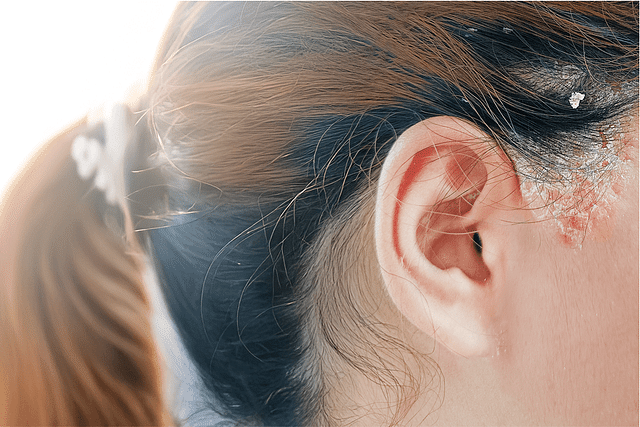
Seborrhoeic dermatitis, a prevalent non-contagious skin condition, affects many individuals, causing discomfort and sometimes embarrassment due to its visible symptoms. It is characterised by scaly, red patches on the skin, particularly in areas with a high concentration of sebaceous glands, such as the scalp, face, and chest.
While the exact cause remains unclear, dermatologists believe that a combination of factors, including the presence of yeast on the skin (particularly Malassezia spp.) and the production of sebum (an oily substance produced by skin glands) contribute to the development of seborrhoeic dermatitis. The condition can affect individuals of all ages, with symptoms varying in severity and location.
What is Seborrhoeic Dermatitis?
Seborrhoeic dermatitis, also known as seborrhoea, is a chronic skin condition that forms scaly patches with oily, dandruff-like flakes. The exact cause of seborrhoeic dermatitis is not fully understood, but it is thought to be influenced by various factors such as stress, hormonal changes, and certain medical conditions.
Key Factors about Seborrhoeic Dermatitis
| Category | Details |
| Also Referred to as | Dandruff, cradle cap, seborrhoea, seborrhoeic eczema |
| Commonly Occurs In | Infants, adults between 30 and 60 years of age, especially males |
| Affected Organ | Scalp, face, eyebrows, eyelids, ears, upper back, chest, groin, and armpits |
| Common Signs | Flaking skin, dandruff, patchy or flaky white/yellow scales, itchiness, redness, and greasy skin |
| Consulting Specialist | Dermatologist |
| Managed By | Topical antifungal medicines (ketoconazole, zinc pyrithione, or selenium sulphide), anti-inflammatory agents (e.g., low-potency corticosteroids), and keratolytic agents (salicylic acid) |
Symptoms of Seborrhoeic Dermatitis
The symptoms of seborrhoeic dermatitis can vary depending on factors such as age, race, and the severity of the flare-up. Some of the most common symptoms associated with the condition include:
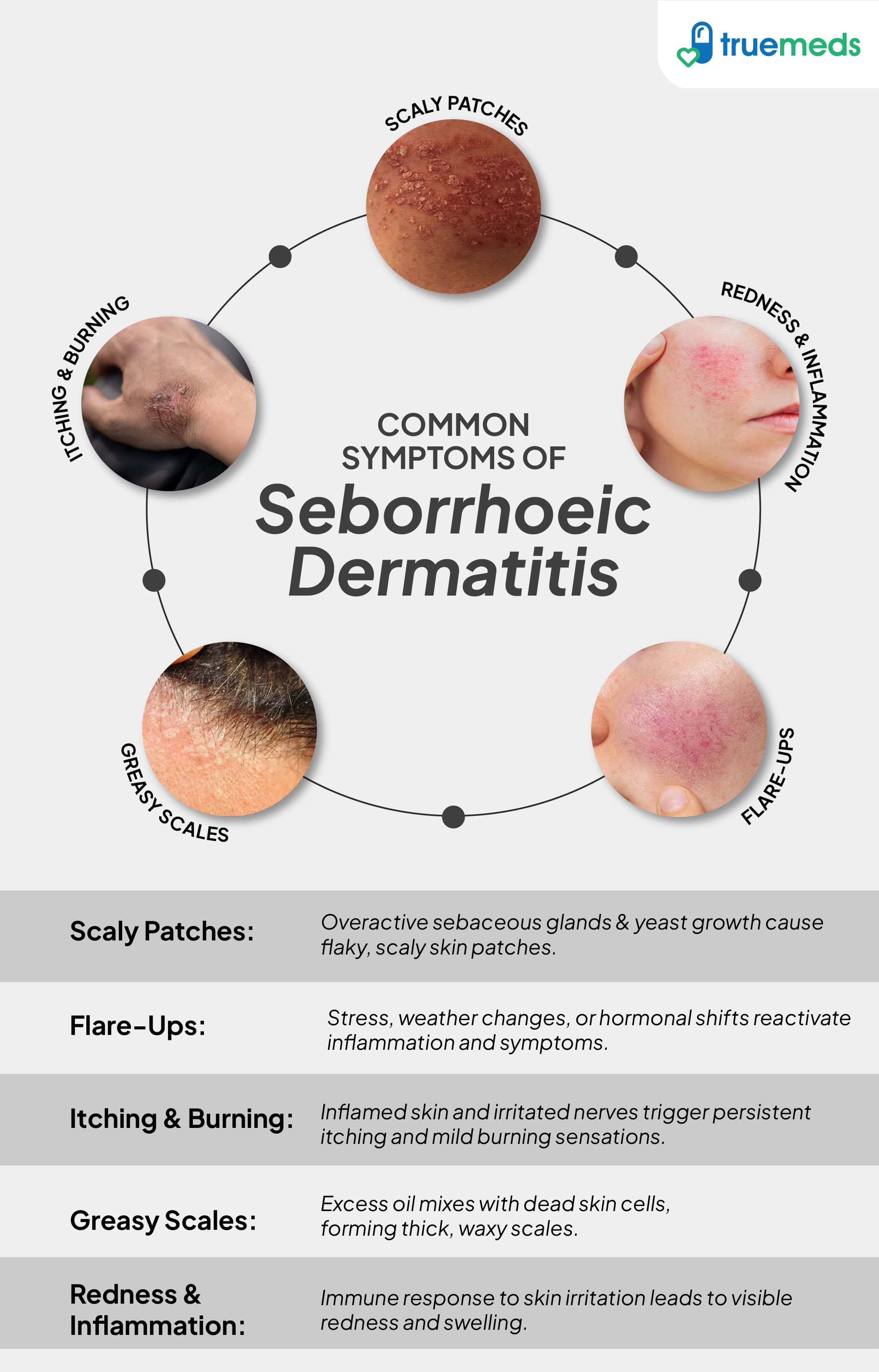
- Scaly Patches: The appearance of oily, dandruff-like flakes on the scalp, face, and body folds is a hallmark of seborrhoeic dermatitis.
- Redness and Inflammation: Affected areas may become red, swollen, and inflamed, indicating an active flare-up.
- Itching and Burning: Pruritus, or itching, is a common symptom, especially when the scalp is affected. Patients may also report burning sensations in the affected areas.
- Greasy Scales: In infants, seborrhoeic dermatitis often manifests as firm, greasy scales on the scalp, particularly on the crown and frontal regions.
- Flare-ups: Symptoms of seborrhoeic dermatitis can flare up, then clear, only to return later. The frequency and duration of flare-ups can vary from person to person.
Stages of Seborrhoeic Dermatitis
Seborrhoeic dermatitis can manifest in two distinct stages (Tucker & Masood, 2024):
- Infantile Seborrhoeic Dermatitis (ISD): This stage occurs during the first few weeks of life and typically resolves spontaneously by the first year. It is characterised by the presence of firm, greasy scales on the crown and frontal regions of the scalp.
- Adult Seborrhoeic Dermatitis (ASD): This chronic form of the disease follows a relapsing and remitting pattern, meaning that symptoms may come and go over time. It is more common in adults aged 30 to 60 and is characterised by erythematous (red) patches with fine scaling and sometimes yellowish crusting.
As the condition progresses, it can lead to various symptoms that may cause discomfort and impact an individual's quality of life.
Causes of Seborrhoeic Dermatitis
Seborrhoeic dermatitis is believed to be caused by a combination of genetic and environmental factors. Some of these factors include:
- Sebum Overproduction: One of the key contributors to the development of seborrhoeic dermatitis is the overproduction of sebum, an oily substance secreted by the sebaceous glands. This excess sebum can irritate the skin and lead to inflammation.
- Presence of Yeast on the Skin: Another factor is the overgrowth of a yeast called Malassezia, which naturally occurs on the skin's surface. This yeast feeds on the sebum, multiplying and causing skin irritation. Additionally, impaired immune responses to Malassezia and disruption of the skin's microbiota can also contribute to the development of seborrhoeic dermatitis.
- Immune System Susceptibility: The immune system's response to the yeast and possibly the sebum itself can also contribute to inflammation and the development of seborrhoeic dermatitis symptoms.
While the exact causes of seborrhoeic dermatitis are not fully understood, these factors are thought to play a significant role in the onset and progression of this condition.
Risk Factors
Several risk factors can increase the likelihood of developing seborrhoeic dermatitis or exacerbate its symptoms. Some of these factors include (DermNet, 2024):
- Hormonal Changes: Changes in hormones, especially in infants and during puberty or menopause, can contribute to seborrhoeic dermatitis.
- Stress or Fatigue: Stress is another factor that can exacerbate the symptoms of the disease.
- Genetics: Genetic predisposition, particularly if there is a family history of seborrhoeic dermatitis, is a prevalent risk factor.
- Medical Conditions: Individuals with conditions such as Parkinson’s disease, HIV/AIDS, and neurological disorders are at higher risk.
- Medications: Medicines including psoralen, interferon, and lithium can worsen the symptoms of seborrhoeic dermatitis.
- Environmental Factors: Cold, dry weather, seasonal changes, and heavy alcohol consumption can also trigger this skin condition.
Prevention of Seborrhoeic Dermatitis
Due to the chronic nature of seborrhoeic dermatitis, complete prevention may not be possible. However, several measures can be taken to reduce the occurrence and severity of flare-ups. Some of these measures are listed below:
- Skin Hygiene: Maintaining good skin hygiene is crucial, as regular washing with gentle cleansers can help regulate oil production and reduce Malassezia yeast growth. For those with scalp involvement, using anti-dandruff shampoos containing ingredients such as salicylic acid, zinc pyrithione, or ketoconazole can be beneficial for managing symptoms.
- Stress Management: Managing stress is another important aspect of preventing seborrhoeic dermatitis flare-ups. Engaging in relaxation techniques, such as deep breathing exercises, meditation, or yoga, can help reduce stress levels and minimise their impact on the skin.
- Avoiding Harsh Products: Avoiding harsh products, such as soaps, detergents, and chemicals, can help reduce skin irritation and prevent symptom exacerbation.
- Avoiding Extreme Weather Conditions: Taking steps to avoid extreme weather, such as cold, dry conditions, can also help minimise the risk of developing seborrhoeic dermatitis.
Diagnosis & Tests
Diagnosing seborrhoeic dermatitis typically involves a combination of clinical examination and sometimes additional tests to rule out other conditions.
- Physical Examination: The diagnosis is usually made based on the characteristic appearance and location of the rash, which affects areas rich in sebaceous glands. The rash is often red, itchy, and scaly.
- Medical History: Your doctor will ask about your medical history to identify any underlying conditions that might be contributing to the dermatitis, such as psoriasis, eczema, or fungal infections.
- Skin Biopsy: In some cases, a skin scraping or biopsy may be performed to rule out other conditions such as psoriasis or fungal infections. Fungal culture is not routinely required but may be done in atypical cases. Once a diagnosis is made, an appropriate treatment plan can be formulated.
Treatment & Management
Seborrhoeic dermatitis is managed through a combination of topical and systemic treatments aimed at reducing inflammation, controlling yeast overgrowth, alleviating symptoms, and preventing flare-ups. The treatment approach depends on the severity and location of the condition.
1. Corticosteroids
- Hydrocortisone: A mild steroid used to reduce inflammation, redness, and itching in seborrhoeic dermatitis.
- Betamethasone: A potent corticosteroid that helps control severe inflammation and flaking in affected skin areas.
- Clobetasol: A very potent steroid used for short-term use only in severe or resistant cases.
- Mometasone: A moderately potent steroid that reduces itching and inflammation while being safer for sensitive areas.
2. Antifungal Medications
- bAn antifungal that targets Malassezia yeast, a key contributor to seborrhoeic dermatitis.
- Clotrimazole: Broad-spectrum antifungal that helps reduce fungal load on the skin and improve scaling.
- Ciclopirox: An antifungal and anti-inflammatory agent effective against yeast-associated seborrhoeic dermatitis.
- Miconazole: Treats fungal infections on the skin surface, helping reduce symptoms of seborrhoeic dermatitis.
3. Topical Immunomodulators
- Non-steroidal agents that help reduce inflammation with fewer long-term side effects than corticosteroids. Common examples include:
- Tacrolimus: A non-steroidal immunomodulator that reduces inflammation, especially useful for facial seborrhoeic dermatitis.
- Pimecrolimus: An alternative to steroids for long-term control of inflammation in sensitive skin areas.
4. Keratolytic Agents
- Salicylic acid: A keratolytic that helps exfoliate dead skin cells and reduce scaling.
- Lactic acid: A mild exfoliant that improves skin texture and hydration in affected areas.
- Selenium sulphide: A topical agent that reduces scalp flaking and yeast overgrowth in dandruff and seborrhoeic dermatitis.
5. Systemic Medications (in severe or resistant cases)
- Itraconazole: An oral antifungal used in persistent or recurrent seborrhoeic dermatitis by reducing fungal growth systemically.
- Fluconazole: A systemic antifungal that helps manage moderate to severe cases by targeting Malassezia yeast.
- Terbinafine: Not commonly used for seborrhoeic dermatitis but may be considered in selected cases.
- Isotretinoin: Reserved for severe, refractory cases with significant seborrhoea.
6. Supportive & Natural Remedies
- Aloe vera, tea tree oil, and coconut oil may help soothe symptoms, but evidence is limited and they should not replace medical treatment.
- Stress management, adequate sleep, and dietary adjustments (e.g., reducing sugar and yeast intake) may also reduce flare-ups.
While these treatments help manage the condition, seborrhoeic dermatitis often requires ongoing care. A dermatologist can recommend the most effective regimen based on the severity and location of the symptoms.
Living with Disease
Living with seborrhoeic dermatitis can be challenging, but there are several strategies to help manage symptoms and prevent flare-ups.
- Maintaining a regular skincare routine is crucial, including washing affected areas with a gentle cleanser and using lukewarm water.
- After washing, pat the skin dry and apply a moisturiser while the skin is slightly damp.
- Using medicated shampoos, creams, or lotions containing ingredients such as salicylic acid, coal tar, zinc pyrithione, ketoconazole, or selenium sulphide can help control symptoms.
- Limited sunlight exposure may help in some individuals, but excessive exposure should be avoided, and sunscreen should be used.
- Lifestyle changes such as stress management, regular sleep, and relaxation techniques may help reduce symptom severity.
- Avoid using skin and hair products that contain alcohol, as these can worsen the condition.
- Being aware of triggers such as weather changes and irritating products can help in managing flare-ups.
When to See a Doctor?
If symptoms of seborrhoeic dermatitis do not respond to self-care or over-the-counter treatments, it is important to seek medical advice. Here are some signs or symptoms that will necessitate a visit to a doctor:
- If the condition worsens or signs of infection, such as increased redness, pain, fluid drainage, or pus are present, consult a doctor immediately.
- Additionally, if new symptoms appear or existing symptoms worsen, such as increased itching, redness, or scaling, it is crucial to seek further evaluation and treatment from a doctor.
- For individuals with underlying health conditions like Parkinson's disease, traumatic brain injury, stroke, or HIV/AIDS, working closely with a doctor is necessary to manage seborrhoeic dermatitis effectively.
Key Takeaways
- Seborrhoeic dermatitis is a chronic skin condition characterised by scaly patches with oily, dandruff-like flakes.
- A combination of factors, including the presence of Malassezia yeast and sebum production, contributes to its development.
- Factors such as stress, hormonal changes, and certain medical conditions may trigger or worsen symptoms.
- Topical medicines are the mainstay of treatment, supported by lifestyle measures.
FAQs
What is the primary reason behind seborrhoeic dermatitis?
How can one manage seborrhoeic dermatitis symptoms?
Is there a cure for seborrhoeic dermatitis?
Is seborrhoeic dermatitis considered a fungal infection?
Are there any specific foods that worsen seborrhoeic dermatitis?
Can nutritional deficiencies lead to seborrhoeic dermatitis?
Does using coconut oil aggravate seborrhoeic dermatitis?
Can consuming curd help alleviate the symptoms of seborrhoeic dermatitis?
How can one naturally manage seborrhoeic dermatitis at home?
References
- Tucker, D., & Masood, S. (2024). Seborrhoeic dermatitis. StatPearls. https://www.ncbi.nlm.nih.gov/books/NBK551707/
- DermNet. (2024). Seborrhoeic dermatitis. https://dermnetnz.org/topics/seborrhoeic-dermatitis
- MedlinePlus. (2025). Seborrhoeic dermatitis. https://medlineplus.gov/ency/article/000963.htm
- Wikramanayake, T. C., Borda, L. J., Miteva, M., & Paus, R. (2019). Seborrhoeic dermatitis—Looking beyond Malassezia. Experimental Dermatology, 28(9), 991–1001. https://onlinelibrary.wiley.com/doi/10.1111/exd.14006
Latest health articles

Top Health Essentials













Disclaimer
Top-Selling Medicines:
...View more
Top-OTC medicines:
...View more
Company
About UsHealth ArticleHealth StoriesHealth LibraryDiseases & Health ConditionsAyurvedaUnderstanding Generic MedicinesAll MedicinesAll BrandsNeed HelpFAQSecuritySavings CalculatorAdvertise with UsSubscribe
Registered Office Address
Grievance Officer
Download Truemeds


Contact Us
Our customer representative team is available 7 days a week from 9 am - 9 pm.
v4.28.13

2026 - Truemeds | All rights reserved. Our content is for informational purposes only. See additional information.
Our Payment Partners