

- Medicines
- Personal Care
- Skin Cream
- Sunscreen
- Face Wash
- Skin and Body Soap
- Acne Care
- Body Lotions
- Moisturising Lotion
- Moisturising Cream
- Mosquito Repellent
- Moisturising Gel
- Body Wash
- Hair Oils
- Hair Shampoo
- Hair Conditioners
- Hair Supplements
- Hair Colour
- Hair Serum
- Hair Mask
- Hair Solutions
- Baby Diapers and Wipes
- Baby Lotion and Moisturising Cream
- Baby Bath Essentials
- Baby Skin Care
- Baby and Infant Food
- Baby Healthcare
- Women Multivitamins
- Ovulation Test Kit and Women Intimate Care
- Sanitary Pads
- Nutritional Drinks
- Condoms
- Lubricants
- Massage Gels
- Personal Body Massagers
- Men Performance Booster
- Sexual Health Supplements
- Massage Oils
- Ayurveda
- Tooth Paste
- Mouth Ulcer Gel
- Mouthwash
- Toothache and Gum Pain
- Tooth Brush
- Gargle Solution
- Orthopaedic Supports
- Adult Diapers
- Footwear
- Mobility and Support Accessories
- Urinary Support and Care
- Health Conditions
- Bone and Joint Care
- Digestive Care
- Eye Care
- Pain Relief
- Smoking Cessation
- Liver Care
- Stomach Care
- Cold and Cough
- Heart Care
- Kidney Care
- Piles, Fissures & Fistula
- Respiratory Care
- Mental Wellness
- Derma Care
- Pre and Probiotics
- Acidity
- Gas
- Constipation
- Loose Motion/Diarrhoea
- Digestive Fibres
- Digestive Enzymes
- Eye Lubricant Drops
- Lens Solution
- Safety Eye Wear
- Eye Cream
- Eye Vitamins and Supplements
- Eye Drops
- Eye Ointment and Gel
- Nicotine Patch
- Nicotine Gum
- Nicotine Lozenges
- Cough Syrups
- Chest Rubs and Balms
- Nasal Spray
- Lozenges
- Inhalant Capsules
- Cold and Cough Tablets
- Vitamins & Supplements
- Diabetes Care
- Healthcare Devices
- Homeopathic Medicine
- Health Guide
Keratosis Pilaris
Keratosis pilaris (KP) is a very common, benign disorder of follicular keratinisation that produces small, rough, follicular papules often described as "goose-flesh" or "chicken skin." It is thought to result from the formation of keratin plugs in hair follicle openings and associated abnormalities of epidermal barrier function (Pennycook, 2023). While the exact cause is unknown, it is believed to be associated with genetic factors and other skin conditions.
 50
50Last updated on : 10 Jun, 2026
Read time : 14 mins
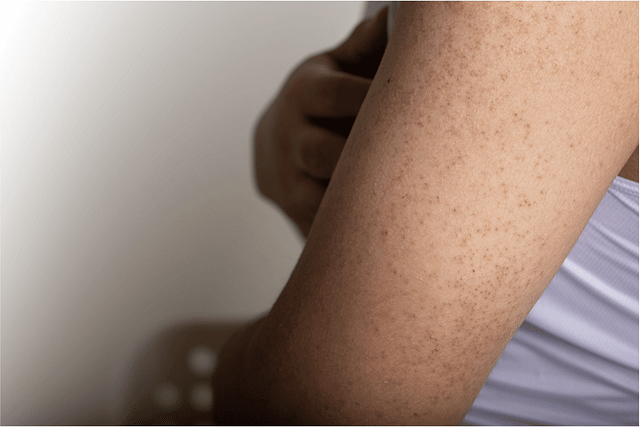
Overview of Disease
Keratosis pilaris is a benign skin condition that causes small, hard bumps to appear on the skin, particularly on the upper arms, thighs, cheeks, and buttocks. This condition is benign and often requires no medical treatment; symptoms frequently improve after adolescence for many people, but KP can persist into adulthood for others and does not reliably resolve by a specific age (Pennycook, 2023). Proper skin care, including moisturising and exfoliation, can improve the appearance of keratosis pilaris.
What is Keratosis Pilaris?
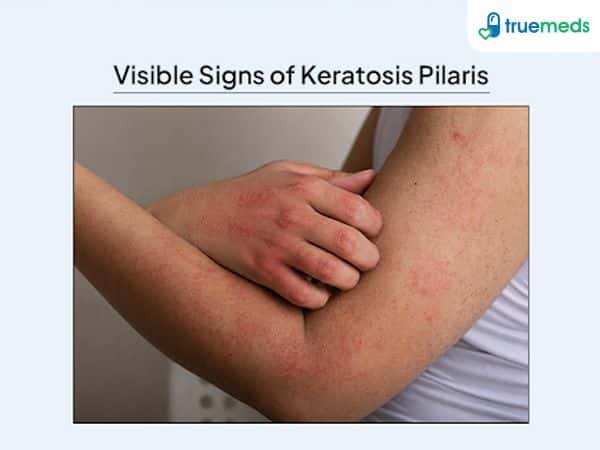
Keratosis pilaris is a common skin condition that affects many people. The condition is caused by the accumulation of keratin, a protein that forms the epidermis (skin's outer layer), hair, and nails. This buildup forms a plug that blocks the openings of hair follicles, leading to small, rough bumps on the skin.
The exact cause of KP is not fully understood. Genetic factors contribute — loss-of-function variants in the filaggrin (FLG) gene are associated with KP in some populations and with related disorders of barrier function (for example, ichthyosis vulgaris and atopic dermatitis) — but FLG mutations are not the sole explanation and do not cause KP in all cases. Rather than a simple "overproduction" of keratin, KP reflects abnormal follicular keratinisation and epidermal barrier differences (Salava et al., 2022).
Apart from genetic factors, other skin conditions such as atopic dermatitis and ichthyosis also play a role in the development of this condition. Dry skin tends to worsen keratosis pilaris, and hormonal changes can cause flare-ups during pregnancy and puberty.
Key Factors about Keratosis Pilaris
| Category | Details |
| Also Referred to as | Follicular keratosis, chicken skin |
| Commonly Occurs In | Adolescents and young children; more common in families with a history of the condition |
| Affected Organ | Skin, particularly around hair follicles |
| Common Signs | Small, painless bumps resembling goose bumps; dry, rough skin; slight pinkness around bumps; bumps on upper arms, thighs, cheeks, or buttocks |
| Consulting Specialist | Dermatologist |
| Managed By |
|
Symptoms of Keratosis Pilaris
Keratosis pilaris, often called "chicken skin," is a common and harmless skin condition that can develop at any age, though it is more frequently seen in young children. It is characterised by small, slightly raised, flesh-coloured or reddish bumps on the skin, commonly appearing on the upper arms, thighs, cheeks, or buttocks. While these bumps can make the skin feel uneven, they typically do not cause pain or itching. Common signs include:
- Tiny, painless bumps on the upper arms, thighs, cheeks, or buttocks.
- Dry, rough skin in the areas where bumps appear.
- Symptoms that worsen during dry, low-humidity conditions, especially in winter.
- Bumps that feel like sandpaper or resemble goosebumps or “strawberry skin.”
In most cases, you’ll notice these rough patches without any other discomfort. However, some people experience:
- Itchy or dry skin: often on the upper arms, thighs, or buttocks, making the skin feel tight or irritated.
- Irritated bumps: friction or scratching may increase inflammation, erythema, or post-inflammatory hyperpigmentation. Persistent rubbing can cause irritation or secondary dermatitis, but the term "frictional lichenoid dermatitis" is not a typical label used specifically for KP.
- Worsening in cold, dry weather: dry air often intensifies the rough texture and appearance.
These symptoms can resemble other skin conditions such as eczema, psoriasis, allergies, or fungal infections. If the bumps persist or cause concern, it’s best to consult a healthcare provider for proper diagnosis and advice.
Causes of Keratosis Pilaris
Keratosis pilaris occurs due to an abnormal keratinisation process, where dead skin cells and excess keratin build up to block hair follicles. This blockage results in rough, bumpy patches on the skin.
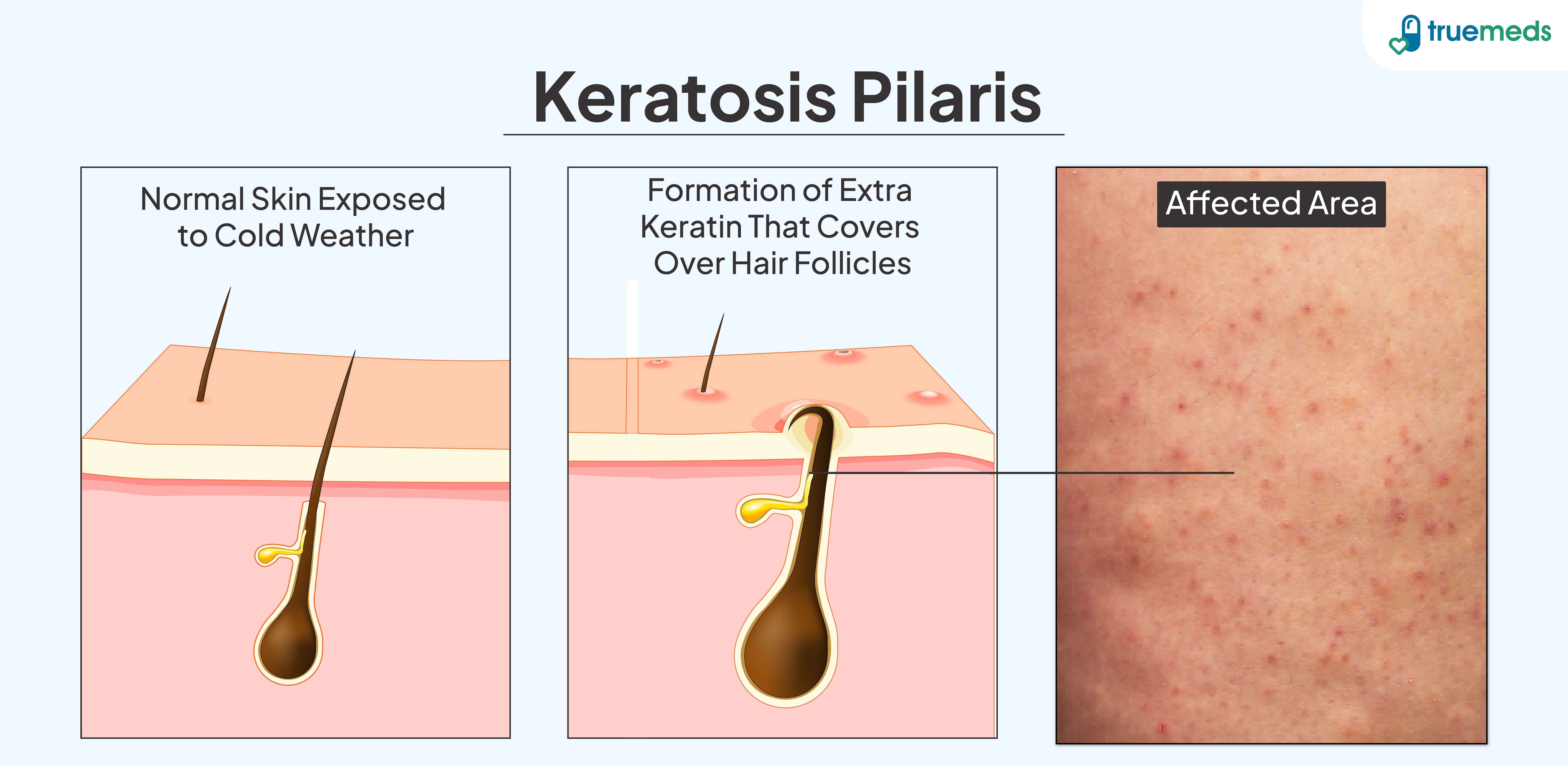
The exact cause is not fully understood, but several factors are believed to contribute, including:
- Genetic factors: It often runs in families, increasing your likelihood of developing the condition.
- Dry skin: Can worsen the appearance of keratosis pilaris.
- Skin conditions: People with eczema or similar skin issues are more prone to keratosis pilaris.
- Reported associations: KP is most strongly associated with other disorders of keratinisation and barrier dysfunction (for example, ichthyosis vulgaris and atopic dermatitis), and a familial tendency is common. Associations with obesity and, less consistently, metabolic conditions have been reported in some studies, but causal links are not well established. There is limited or inconsistent evidence linking KP directly to vitamin A deficiency, diabetes mellitus, hypothyroidism, or Cushing’s syndrome; these conditions are not considered primary causes of KP.
- Certain medical conditions: Such as hypothyroidism, diabetes, and Cushing’s disease, have been reported in association but are not primary causes.
- Obesity: It may be associated in some studies, but a direct causal link is not well established.
- Allergies and asthma: May coexist, particularly in individuals with atopic tendencies.
While keratosis pilaris is harmless and non-contagious, understanding these causes can help in managing and reducing its symptoms.
Prevention of Keratosis Pilaris
Preventing keratosis pilaris involves a combination of skincare routines and lifestyle adjustments. Some of these prevention strategies are listed below:
- Moisturise Regularly: Dry skin commonly worsens KP. Use emollients and moisturisers containing keratolytic/moisturising agents such as urea or lactic acid; alpha-hydroxy acids (AHAs) can also be helpful. Apply moisturiser after bathing while skin is damp to improve hydration.
- Use Mild Cleansers: Using mild cleansers that do not contain soap is also recommended, as harsh soaps can strip the skin of its natural oils and worsen the condition.
- Maintain a Humid Environment: Using a humidifier can help add moisture to the air, which is particularly beneficial during dry winter months when keratosis pilaris tends to worsen.
- Avoid Irritating Products: Skip self-tanners and other products that can make the bumps more visible or irritate the skin further.
- Gentle Exfoliation: Regular, gentle exfoliation using a loofah, buff puff, or rough washcloth can help remove dead skin cells without irritating the skin.
Diagnosis & Tests
Diagnosing keratosis pilaris is usually done through a simple physical examination. Your healthcare provider can identify it by looking at the location and texture of the bumps. Additional tests are rarely needed. However, they may recommend an allergy test or a skin biopsy if the diagnosis is uncertain.
Common Locations:
- KP typically affects the extensor surfaces such as the upper arms and thighs, and may involve the cheeks (particularly in children), buttocks, and sometimes the trunk. Involvement directly under the eyes is uncommon; if lesions are periocular, a careful evaluation should rule out other causes.
Key Characteristics:
- Painless: If a bump hurts when touched, it may be another condition.
- Dry or itchy: The surrounding skin may feel tight, flaky, or irritated.
- Rough texture: The bumps often feel coarse, like sandpaper.
- Discolouration: Bumps may vary in colour: skin-toned, red, white, brown, or black, depending on your natural skin tone.
Recognising these traits can help you distinguish keratosis pilaris from other skin conditions. If unsure, a healthcare professional can offer clarity and treatment options.
Treatment & Management
Keratosis pilaris is a chronic skin condition that requires ongoing care. Treatment focuses on reducing the appearance of bumps and improving skin texture. Various self-care measures, topical treatments, and medical procedures can help manage the condition effectively.
1. Self-Management
- Moisturise the skin daily with a fragrance-free, cream-based moisturiser.
- Avoid tight or abrasive clothing that can cause friction and irritation.
- Use soap-free body cleansers to prevent skin dryness.
- Avoid hot and prolonged baths or showers, as they can strip moisture from the skin.
- Do not pick at the bumps, as this can lead to inflammation or scarring.
- Use a humidifier to add moisture to the air and prevent excessive skin dryness.
2. Topical Treatments
- Agents such as azelaic acid or topical lightening agents may be used for residual hyperpigmentation in selected cases, but combination creams that include topical corticosteroids (e.g., hydroquinone-mometasone-tretinoin combinations) should be avoided for routine KP management because of potential steroid adverse effects. Treating pigmentation should be individualised and supervised by a clinician.
- Tretinoin (a retinoid) aids in exfoliating dead skin cells, unclogging pores, and improving skin texture.
- Pimecrolimus and Tacrolimus are topical immunomodulators that help reduce inflammation and itching, especially in cases with significant redness.
3. Other Treatments
- Laser and light therapies: Some laser modalities (e.g., long-pulsed alexandrite, Nd: YAG, or pulsed dye laser) and intense pulsed light have shown benefit for reducing redness and improving texture in small trials, but outcomes are variable, and the evidence base is modest. These procedures may help some patients but are not curative; discuss potential benefits, costs, and risks with a dermatologist.
- Exfoliation: Chemical keratolytics such as lactic acid, glycolic acid (AHAs), salicylic acid (a BHA), and urea are commonly used to reduce follicular plugging. Topical retinoids (e.g., tretinoin) promote cell turnover and may help, but can cause irritation in some patients. Physical exfoliation (loofahs, scrubbers) should be gentle because aggressive mechanical scrubbing can worsen inflammation. Azelaic acid is primarily an anti-inflammatory/depigmenting agent rather than a keratolytic.
Being consistent with the treatment plan is essential, as it may take several weeks or months to see noticeable improvements. If symptoms worsen, consulting a dermatologist for personalised advice is recommended.
Living with Disease
Living with keratosis pilaris can be challenging, but by following the tips and making necessary lifestyle adjustments, you can effectively manage keratosis pilaris and minimise its impact on your daily life.
1. Managing Dry Skin
Dry skin can worsen your symptoms of keratosis pilaris. You can manage dry skin in the following ways:
- Do not Scratch or Rub the Bumps: Avoid scratching or rubbing the bumps, as this can lead to irritation and potentially permanent scars. If the itching becomes unbearable, try applying a cold compress or using an over-the-counter anti-itch cream to alleviate the discomfort.
- Use Moisturisers: Apply moisturiser several times a day, especially after bathing or showering, to keep your skin hydrated.
- Use Warm Water: When showering or bathing, use warm water instead of hot water, as the latter can strip the skin of its natural oils and exacerbate keratosis pilaris. Limit your time in the water to prevent further drying of the skin.
- Use a Humidifier: Dry air can worsen keratosis pilaris. Using a humidifier in your home can help add moisture to the air and keep your skin hydrated.
2. Gentle Exfoliation
Gently exfoliating or removing your affected skin can also have a beneficial effect:
- Gentle physical exfoliation: Very gentle physical exfoliation may temporarily smooth roughness for some people, but mechanical scrubs, loofahs, and abrasive pads can aggravate inflammation or cause microtrauma. Chemical keratolytics (urea, lactic acid, salicylic acid) are generally preferred as first-line exfoliating strategies. If physical exfoliation is used, do so very gently and sparingly.
- Try a Chemical Exfoliant: Products containing AHAs or beta-hydroxy acids (BHAs) can help exfoliate the skin and improve the appearance of keratosis pilaris. Start with a low concentration and gradually increase as tolerated. However, always consult your doctor before using such products on your skin.
3. Choosing the Right Clothing
Keep the following points in mind regarding the right clothing for keratosis pilaris:
- Wear Loose, Breathable Fabrics: Tight clothing can trap heat and moisture, which can irritate the skin and worsen keratosis pilaris symptoms. Opt for loose-fitting, breathable fabrics made from natural fibres like cotton to reduce friction and allow your skin to breathe.
- Avoid Rough, Irritating Materials: Rough fabrics like wool can irritate your skin and exacerbate keratosis pilaris. Choose soft, smooth materials that are gentle on your skin.
4. Maintaining a Healthy Lifestyle
Try to incorporate the following lifestyle modifications:
- Stay Hydrated: Drinking plenty of water helps keep your skin hydrated from the inside out. Aim for at least eight glasses of water per day.
- Eat a Balanced Diet: A diet rich in fruits, vegetables, whole grains, and healthy fats can help support healtahy skin. Some studies suggest that omega-3 fatty acids may be beneficial for keratosis pilaris.
- Manage Stress: Stress can worsen skin conditions like keratosis pilaris. Practice stress-reducing techniques like meditation, deep breathing, or yoga to help manage stress levels.
When to See a Doctor?
While keratosis pilaris is a harmless skin condition, there may be times when you need to consult a doctor.
- See a clinician if lesions are painful, show signs of infection (increasing pain, warmth, swelling, pus), if you have marked cosmetic concerns, or if the diagnosis is uncertain. A clinician can confirm KP, exclude mimics (e.g., folliculitis, keratinocyte disorders), and advise on safer, evidence-based treatment options.
- Additionally, if you have any concerns about your skin or are unsure whether you have keratosis pilaris or another skin condition, it's always best to consult a doctor. They can provide an accurate diagnosis and advise you on the best course of action. Your doctor can also guide you on the most effective treatment options for keratosis pilaris and help you manage your symptoms effectively.
Key Takeaways
- Keratosis pilaris is a harmless skin condition that is not contagious or infectious.
- The condition is more common in people with dry skin or eczema and tends to run in families.
- Various treatment options like gentle exfoliation, moisturising, and using keratolytic agents (salicylic acid or lactic acid) can help manage the symptoms and improve the appearance of the skin.
- If your symptoms persist or worsen despite self-care measures, it's essential to consult a doctor for further advice and treatment.
FAQs
What leads to the development of keratosis pilaris?
What are some effective treatments for managing keratosis pilaris symptoms?
Is there a link between vitamin deficiencies and keratosis pilaris?
What methods can be used to remove excess keratin from the skin?
Are there any dietary factors that may contribute to keratosis pilaris?
Can losing weight help alleviate keratosis pilaris symptoms?
Is coconut oil effective in removing excess keratin from the skin?
What natural approaches can help reduce keratin buildup?
Will keratosis pilaris ever completely go away?
References
- Pennycook, K. B. (2023). Keratosis pilaris. In StatPearls. StatPearls Publishing. Retrieved from https://www.ncbi.nlm.nih.gov/books/NBK546708/
- Salava, A., et al. (2022). Keratosis pilaris and filaggrin loss-of-function mutations in patients with atopic dermatitis. The Journal of Dermatology, 49(4), 456–463. https://doi.org/10.1111/1346-8138.16477
- Piquero-Casals, J., et al. (2021). Urea in dermatology: a review of its role as an emollient and keratolytic agent. Journal of Dermatological Treatment, 32(7), 1–12. https://www.ncbi.nlm.nih.gov/pmc/articles/PMC8611129/
- Li, M., et al. (2022). Efficacy and safety of long-pulsed 755-nm alexandrite laser for keratosis pilaris: a split-body randomised clinical trial. Lasers in Surgery and Medicine, 54(6), 832–840. https://www.ncbi.nlm.nih.gov/pmc/articles/PMC9357583/
Latest health articles

Top Health Essentials













Disclaimer
Top-Selling Medicines:
...View more
Top-OTC medicines:
...View more
Company
About UsHealth ArticleHealth StoriesHealth LibraryDiseases & Health ConditionsAyurvedaUnderstanding Generic MedicinesAll MedicinesAll BrandsNeed HelpFAQSecuritySavings CalculatorAdvertise with UsSubscribe
Registered Office Address
Grievance Officer
Download Truemeds


Contact Us
Our customer representative team is available 7 days a week from 9 am - 9 pm.
v4.28.13

2026 - Truemeds | All rights reserved. Our content is for informational purposes only. See additional information.

Our Payment Partners