

- Medicines
- Personal Care
- Skin Cream
- Sunscreen
- Face Wash
- Skin and Body Soap
- Acne Care
- Body Lotions
- Moisturising Lotion
- Moisturising Cream
- Mosquito Repellent
- Moisturising Gel
- Body Wash
- Hair Oils
- Hair Shampoo
- Hair Conditioners
- Hair Supplements
- Hair Colour
- Hair Serum
- Hair Mask
- Hair Solutions
- Baby Diapers and Wipes
- Baby Lotion and Moisturising Cream
- Baby Bath Essentials
- Baby Skin Care
- Baby and Infant Food
- Baby Healthcare
- Women Multivitamins
- Ovulation Test Kit and Women Intimate Care
- Sanitary Pads
- Nutritional Drinks
- Condoms
- Lubricants
- Massage Gels
- Personal Body Massagers
- Men Performance Booster
- Sexual Health Supplements
- Massage Oils
- Ayurveda
- Tooth Paste
- Mouth Ulcer Gel
- Mouthwash
- Toothache and Gum Pain
- Tooth Brush
- Gargle Solution
- Orthopaedic Supports
- Adult Diapers
- Footwear
- Mobility and Support Accessories
- Urinary Support and Care
- Health Conditions
- Bone and Joint Care
- Digestive Care
- Eye Care
- Pain Relief
- Smoking Cessation
- Liver Care
- Stomach Care
- Cold and Cough
- Heart Care
- Kidney Care
- Piles, Fissures & Fistula
- Respiratory Care
- Mental Wellness
- Derma Care
- Pre and Probiotics
- Acidity
- Gas
- Constipation
- Loose Motion/Diarrhoea
- Digestive Fibres
- Digestive Enzymes
- Eye Lubricant Drops
- Lens Solution
- Safety Eye Wear
- Eye Cream
- Eye Vitamins and Supplements
- Eye Drops
- Eye Ointment and Gel
- Nicotine Patch
- Nicotine Gum
- Nicotine Lozenges
- Cough Syrups
- Chest Rubs and Balms
- Nasal Spray
- Lozenges
- Inhalant Capsules
- Cold and Cough Tablets
- Vitamins & Supplements
- Diabetes Care
- Healthcare Devices
- Homeopathic Medicine
- Health Guide
Ear Pain
Ear pain, also called an earache, can happen for many reasons (Coulter, 2024). It might be a sign of an ear infection or another health problem. The medical term for ear pain is otalgia. The pain can feel dull, sharp, mild, or strong, and it may come and go (Coulter, 2024). Many causes of earache are self-limited, but patients should seek medical review if symptoms are severe (intense pain or high fever), if there is persistent or progressive pain, or if symptoms do not improve within 48–72 hours, particularly in young children. Immediate medical review is recommended for infants under 6 months, severe systemic illness, or any neurologic signs..
 50
50Last updated on : 04 May, 2026
Read time : 14 mins

Overview of Disease
Ear pain, medically known as otalgia, can range from mild to severe and may be accompanied by other symptoms such as fever, hearing loss, or ear discharge. One of the most common causes of ear pain is otitis media, an infection of the middle ear. Understanding the symptoms, causes, and treatment options for ear pain is essential for effective management and relief.
Key Factors about Ear Pain
| Category | Details |
| Also Referred as | Otalgia |
| Commonly Occurs In | Children (especially after upper respiratory infections), Individuals who swim frequently, or have excessive moisture in the ear canal |
| Affected Organ | Middle ear, eardrum, external auditory canal, and eustachian tube |
| Type | Primary otalgia, Secondary or referred otalgia (Coulter, 2024) |
| Common Signs | Red, inflamed, or cloudy tympanic membrane; Pain; Fever; Hearing loss; Otorrhoea (if eardrum is perforated); Red and swollen external auditory canal; Discharge |
| Consulting Specialist | Ear, Nose, and Throat (ENT) doctor or otolaryngologist, Paediatrician |
| Treatement Procedures | Antibiotics, Pain relief medications, Myringotomy (for fluid drainage in some cases), Antibiotic ear drops, Cleaning the ear canal, Oral antibiotics (for severe cases) |
| Managed By | Paediatrician, ENT specialist, Primary care physician |
| Mimiciking Condition | Paediatrician, ENT specialist, Primary care physician |
Symptoms of Ear Pain
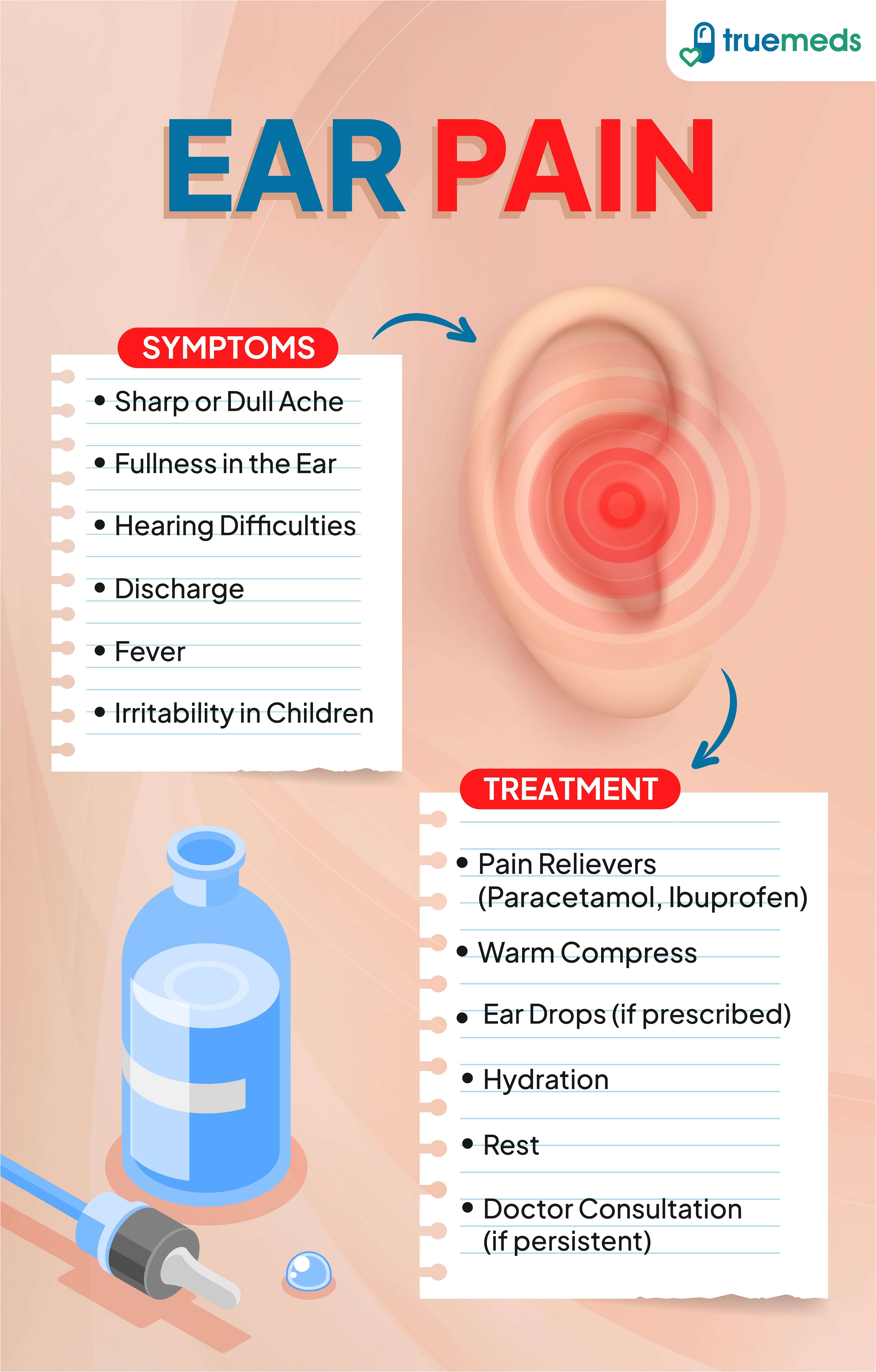
Ear pain usually feels like pressure in the ear. It can start slowly or suddenly and may be very strong.
Common signs and symptoms include:
- Sharp or dull pain in one or both ears
- Difficulty hearing due to fluid or blockage in the ear
- Discharge from the ears (otorrhea)
- Jaw pain
- Sore throat
- Itching
- Redness and swelling around the ear
In children, additional symptoms may be present, such as:
- Fever
- Irritability
- Headache
- Loss of appetite
- Nighttime restlessness
- Disorientation
- Scratching or pulling on the ears
If you or your child experiences persistent ear pain or any of these symptoms, it is important to seek medical attention for proper diagnosis and treatment. Left untreated, ear infections can lead to more serious complications.
Causes of Ear Pain
The eustachian tube connects the middle ear to the back of the throat and helps equalise pressure and drain middle-ear secretions. When it becomes obstructed (for example, with upper respiratory infection or allergic congestion), fluid can accumulate in the middle ear and predispose to otitis media.
Some of the most common causes include:
- Ear Infections: Ear infections are a frequent cause of otalgia and can affect the outer ear (otitis externa), middle ear (otitis media), or rarely the inner ear. In children, acute otitis media is the most common infectious cause of ear pain; otitis externa is especially common in swimmers and adults and is the predominant outer-ear infectious presentation.
- Earwax Buildup: Excessive earwax can block the ear canal and cause pain.
- Foreign Objects: Insertion of foreign objects into the ear can cause pain and potentially lead to infection.
- Sinus Infections: Sinusitis can cause referred pain in the ears due to the shared nerve pathways.
- Allergies: Allergic reactions can lead to congestion and ear pain.
- Dental Issues: Problems such as caries, abscesses, or pulpitis can cause referred pain in the ears.
- Temporomandibular Joint (TMJ) Syndrome: Disorders of the TMJ can cause pain in the ears and jaw.
- In adults, ear pain may more frequently represent referred otalgia (for example, dental, temporomandibular joint, or pharyngeal causes) or otitis externa; however, primary ear infections (including otitis externa and acute otitis media) still occur and should be considered based on history and exam.
- The pain you feel in the ear may actually come from another area.
- Possible sources of pain include:
- Teeth problems
- Jaw joint (temporomandibular joint) issues
- Throat infections or irritation
Ear pain in a child or infant is often caused by an infection. Other possible causes include:
- Irritation of the ear canal from cotton swabs
- Soap or shampoo trapped in the ear
Risk Factors
Several factors can increase the risk of developing ear pain (otalgia). These include:
- Age: Children between 6 months and 2 years are more prone to ear pain and infections due to their shorter and narrower eustachian tubes.
- Allergies: Allergic reactions can lead to congestion, blocking the Eustachian tubes, and causing fluid buildup in the middle ear.
- Exposure to tobacco smoke: Children exposed to household smoking have a significantly higher chance of experiencing painful ear problems.
- Cold and sinus infections: These conditions can cause swelling and blockage of the eustachian tubes, increasing the risk of ear infections.
- Infant practices: Bottle feeding, especially when lying down, is associated with a greater risk of ear infection compared to breastfeeding. Infants and young children who use pacifiers have a higher risk of ear infections.
- Recent illness or ear infection: Having a recent illness or ear infection can make an individual more susceptible to another ear infection.
- Gender: Some epidemiologic studies report a modest male predominance in acute otitis media incidence in young children, but sex is a relatively weak risk factor compared with age, daycare attendance, exposure to tobacco smoke, and feeding practices.
- Low birth weight: Infants born with a low birth weight are more likely to develop ear infections.
- Limited access to healthcare: Delayed treatment due to lack of access to healthcare can increase the risk of complications.
- Daycare attendance: Children attending daycare have a higher exposure to pathogens, increasing their risk of ear infections.
Understanding these risk factors can help in identifying individuals who may be more susceptible to ear pain and ear infections. Early recognition and appropriate management can prevent complications and ensure better outcomes.
Complications
While most cases of ear pain resolve without serious consequences, some individuals may experience complications, especially if the underlying cause is not addressed promptly. Potential complications of ear pain include:
- Hearing loss: Chronic ear infections can lead to hearing loss, which is usually temporary but can occasionally be permanent.
- Speech or language delay: Children with chronic fluid in the middle ear may experience delays in speech or language development.
- Mastoiditis: An infection of the mastoid bone, located behind the ear, can occur as a complication of an untreated ear infection.
- Meningitis: In rare cases, a bacterial ear infection can spread to the membranes covering the brain and spinal cord, causing meningitis.
- Ruptured eardrum: Increased pressure from fluid buildup in the middle ear can cause the eardrum to rupture, leading to hearing loss and ear discharge.
- Chronic suppurative otitis media: This condition, characterised by persistent ear discharge and hearing loss, can develop as a result of untreated ear infections.
- Petrous apicitis and malignant otitis externa: These are rare but serious complications. Malignant otitis externa (necrotising otitis externa) typically occurs in older adults with diabetes or immunocompromise and is most commonly caused by Pseudomonas aeruginosa; it requires prolonged systemic anti-pseudomonal therapy and specialist care. Petrous apicitis is a rare intracranial complication of acute otitis media that also requires urgent ENT and often neurosurgical management.
Recognising the signs and symptoms of ear pain and seeking timely medical care can help prevent these complications. If you experience severe ear pain, high fever, or persistent symptoms, consult your doctor for an accurate diagnosis and appropriate treatment.nt symptoms, consult your doctor for an accurate diagnosis and appropriate treatment.
Prevention of Ear Pain
Preventing ear pain involves a combination of lifestyle changes, hygiene practices, and medical interventions. Here are some strategies for preventing ear infections:
1. Practice Good Hygiene
- Avoid inserting objects into the ear canal, such as cotton swabs or fingernails, as this can damage the eardrum or push earwax further into the canal.
- After swimming or bathing, gently dry your ears with a soft towel or use a hair dryer on a low setting to remove excess moisture.
- Practice good hand hygiene to prevent the spread of infections.
2. Preventing Ear Infections
- Stay up to date with vaccinations, particularly the pneumococcal and influenza vaccines, which can help prevent ear infections.
- Avoid exposure to secondhand smoke, as it increases the risk of ear infections, especially in children.
- Breastfeed infants, as breast milk contains antibodies that can help protect against ear infections.
3. Noise Protection
- Use earplugs or noise-cancelling headphones when exposed to loud noises, such as at concerts or while using power tools.
- Follow the "60/60 rule" when using earphones: listen at no more than 60% of the maximum volume for no more than 60 minutes at a time.
4. Travel Precautions
- When flying, chew gum, swallow, or yawn during takeoff and landing to help equalise pressure in the ears.
- If you have a cold or allergies, consider using decongestants or nasal sprays before flying to prevent ear pain due to pressure changes.
By implementing these preventive measures, the risk of developing ear pain and otitis media can be significantly reduced, promoting better ear health in children and adults alike.
Diagnosis & Tests
The diagnosis of ear pain involves a comprehensive physical examination and various tests to determine the underlying cause. Your doctor will begin by thoroughly examining your ear, including the auricle (outer ear) and the area around the ear. They will use an otoscope, a specialised instrument with a light and magnifying lens, to inspect the ear canal and eardrum. In some cases, earwax may need to be removed to get a clear view of the eardrum.
During the examination, your doctor may use a pneumatic otoscope to assess the movement of the eardrum. This helps in diagnosing conditions like middle ear infections, where fluid buildup behind the eardrum can restrict its normal movement. Additionally, various hearing tests may be conducted, such as:
- Whispered and spoken voice tests
- Tuning fork tests
- Audiometry
- Tympanometry
- Otoacoustic emission (OAE) tests
These tests help in evaluating your hearing and identifying the type of hearing problem, such as conductive or sensorineural hearing loss. Tympanometry, in particular, measures the mobility of the eardrum and the pressure within the middle ear by changing the air pressure in the ear canal. This test is useful for detecting fluid buildup behind the eardrum.
Another diagnostic tool is acoustic reflectometry, which measures the amount of sound reflected from the eardrum, aiding in the detection of fluid in the middle ear. In selected cases, a clinician may perform tympanocentesis (a needle puncture of the tympanic membrane to aspirate middle-ear fluid for culture). Tympanostomy (ventilation) tubes are a separate procedure in which a small tympanostomy tube is placed through the eardrum to provide long-term ventilation and drainage for recurrent or persistent middle-ear effusion.
The examination may also include palpation of the temporomandibular joint (TMJ), inspection of the nose and throat, and examination of the cranial nerves to rule out other potential causes of ear pain. By conducting a thorough evaluation, your doctor can accurately diagnose the cause of your ear pain and recommend appropriate treatment options.
Treatment & Management
Ear pain can occur due to infections, inflammation, or earwax buildup. Choosing the right ear pain medicine depends on the cause and severity. Below are common medicines and treatments used to relieve ear pain effectively.
1. Medications
- Antibiotics: For bacterial acute otitis media, amoxicillin is the first-line oral antibiotic in most cases. Macrolides (for example, azithromycin) are reserved for patients with immediate beta-lactam allergy or when coverage for typical pathogens cannot be achieved with first-line agents. The decision to start antibiotics depends on age, severity, laterality (unilateral vs bilateral), and presence of systemic features; in many children, a period of observation (48–72 hours) is considered to assess for spontaneous improvement before starting antibiotics (Mulvaney et al., 2023).
- Pain Relief: Over-the-counter medications like paracetamol or ibuprofen help manage ear pain and fever. Additionally, lidocaine ear drops can provide localised pain relief for certain types of ear pain and is to be used only if tympanic membrane is intact.
2. Middle Ear Infections
- Acute Otitis Media: Treatment typically involves antibiotics such as amoxicillin + Clavulanic Acid and pain relief. In mild cases, doctors may recommend monitoring the condition before starting antibiotics.
- Otitis Media with Effusion: If fluid buildup in the middle ear occurs without an active infection, watchful waiting is often advised. However, if the condition persists, a doctor may consider ventilation tubes to drain the fluid and prevent complications (Mulvaney et al., 2023).
3. External Ear Infections
- Swimmer's Ear (Otitis Externa): Topical therapy is the mainstay. Combination topical antibiotic/steroid ear drops (for example, ciprofloxacin plus dexamethasone or ofloxacin) are commonly used and provide effective bacterial treatment and inflammation control; systemic antibiotics are rarely needed unless there is cellulitis extending beyond the ear canal or significant immunocompromise. Avoid aminoglycoside drops (e.g., neomycin) if there is a tympanic membrane perforation due to ototoxicity risk. In severe canal oedema, a wick can be used to deliver topical drops. (ENT UK, 2022).
4. Other Treatments
- Ear Wax Removal: If earwax buildup is causing pain, doctors may recommend using carbamide peroxide ear drops to soften the wax, followed by irrigation or manual removal.
Specialist Referral: In cases of persistent or severe ear pain, referral to an ENT (ear, nose, and throat) specialist or audiologist may be necessary for further evaluation and management.
When to See a Doctor?
If you are experiencing ear pain or otalgia, it is important to know when to seek medical attention. While some cases of ear pain may resolve on their own, certain situations warrant a visit to your doctor. Here are some key instances when you should consider seeing your healthcare provider:
- Severe or persistent ear pain that lasts more than a day or two
- Ear pain accompanied by a high fever (above 38°C or 100.4°F)
- Discharge or fluid draining from the ear
- Hearing loss or muffled hearing
- Dizziness or vertigo
- Swelling or redness around the ear
- Difficulty moving the outer ear or pain when gently pulling on the earlobe
If you have a cold or upper respiratory infection and develop ear pain, it may be a sign of an ear infection. While some ear infections clear up without treatment, it is essential to consult your doctor if the pain persists or worsens. They can assess the severity of the infection and recommend appropriate treatment, such as antibiotics for bacterial infections.
Key Takeaways
- Ear pain, also known as otalgia, is a common symptom that can have various causes, from infections to injuries.
- Common causes of ear pain include middle ear infections, swimmer's ear, earwax buildup, sinus infections, TMJ disorders, and referred pain from dental issues or tonsillitis.
- Most cases of ear pain can be managed with home remedies like over-the-counter pain medication, warm compresses, and ear drops.
- See your doctor promptly if you have severe or persistent ear pain, fever, fluid drainage from the ear, hearing loss, dizziness, or facial numbness.
- Timely medical care can help diagnose the underlying cause of ear pain and prevent complications.
FAQs
What are some effective ways to alleviate ear pain?
Which over-the-counter medications are most effective for treating ear aches?
How can I sleep comfortably when experiencing ear pain?
What are the common reasons for experiencing pain inside the ear?
Which ear drops are most effective for alleviating ear pain?
What is the quickest way to treat an ear infection?
Which antibiotic is most effective for treating ear infections?
References
- Coulter, J. (2024). Otalgia. In StatPearls. StatPearls Publishing. Retrieved from https://www.ncbi.nlm.nih.gov/books/NBK549830/
- Mulvaney, C. A., et al. (2023). Antibiotics for otitis media with effusion (OME) in children. Cochrane Database of Systematic Reviews, CD015254. https://www.cochranelibrary.com/cdsr/doi/10.1002/14651858.CD015254.pub2/full
- El Feghaly, R. E., et al. (2023). New insights into the treatment of acute otitis media: diagnostic and stewardship considerations. Clinical Infectious Diseases / Pediatrics (narrative review). Retrieved from https://www.ncbi.nlm.nih.gov/pmc/articles/PMC10231305/
- ENT UK. (2022). Otitis Externa: UK guidelines for management. ENT UK. https://www.entuk.org/_userfiles/pages/files/guidelines/global%20ent%20guidelines/otitis_externa.pdf
- Centers for Disease Control and Prevention. (2021). Watchful waiting for ear infections (patient information). CDC. https://www.cdc.gov/antibiotic-use/pdfs/watchfulwaitingear-p.pdf
Browse Other Conditions
Latest health articles

Top Health Essentials






















Disclaimer
Top-Selling Medicines:
...View more
Top-OTC medicines:
...View more
Company
About UsHealth ArticleHealth StoriesHealth LibraryDiseases & Health ConditionsAyurvedaUnderstanding Generic MedicinesAll MedicinesAll BrandsNeed HelpFAQSecuritySavings CalculatorAdvertise with UsSubscribe
Registered Office Address
Grievance Officer
Download Truemeds


Contact Us
Our customer representative team is available 7 days a week from 9 am - 9 pm.
v4.28.13

2026 - Truemeds | All rights reserved. Our content is for informational purposes only. See additional information.

Our Payment Partners