

- Medicines
- Personal Care
- Skin Cream
- Sunscreen
- Face Wash
- Skin and Body Soap
- Acne Care
- Body Lotions
- Moisturising Lotion
- Moisturising Cream
- Mosquito Repellent
- Moisturising Gel
- Body Wash
- Hair Oils
- Hair Shampoo
- Hair Conditioners
- Hair Supplements
- Hair Colour
- Hair Serum
- Hair Mask
- Hair Solutions
- Baby Diapers and Wipes
- Baby Lotion and Moisturising Cream
- Baby Bath Essentials
- Baby Skin Care
- Baby and Infant Food
- Baby Healthcare
- Women Multivitamins
- Ovulation Test Kit and Women Intimate Care
- Sanitary Pads
- Nutritional Drinks
- Condoms
- Lubricants
- Massage Gels
- Personal Body Massagers
- Men Performance Booster
- Sexual Health Supplements
- Massage Oils
- Ayurveda
- Tooth Paste
- Mouth Ulcer Gel
- Mouthwash
- Toothache and Gum Pain
- Tooth Brush
- Gargle Solution
- Orthopaedic Supports
- Adult Diapers
- Footwear
- Mobility and Support Accessories
- Urinary Support and Care
- Health Conditions
- Bone and Joint Care
- Digestive Care
- Eye Care
- Pain Relief
- Smoking Cessation
- Liver Care
- Stomach Care
- Cold and Cough
- Heart Care
- Kidney Care
- Piles, Fissures & Fistula
- Respiratory Care
- Mental Wellness
- Derma Care
- Pre and Probiotics
- Acidity
- Gas
- Constipation
- Loose Motion/Diarrhoea
- Digestive Fibres
- Digestive Enzymes
- Eye Lubricant Drops
- Lens Solution
- Safety Eye Wear
- Eye Cream
- Eye Vitamins and Supplements
- Eye Drops
- Eye Ointment and Gel
- Nicotine Patch
- Nicotine Gum
- Nicotine Lozenges
- Cough Syrups
- Chest Rubs and Balms
- Nasal Spray
- Lozenges
- Inhalant Capsules
- Cold and Cough Tablets
- Vitamins & Supplements
- Diabetes Care
- Healthcare Devices
- Homeopathic Medicine
- Health Guide
Vertigo
Vertigo is a condition characterised by a sensation of spinning, swaying, or feeling off balance. It is a type of dizziness in which individuals feel as though they or their surroundings are moving when there is no actual movement. Vertigo can significantly impact daily life, causing difficulty in maintaining balance and performing everyday tasks.
 50
50Last updated on : 08 Apr, 2026
Read time : 13 mins

Overview of Disease
Vertigo is a symptom that affects millions of people worldwide, causing a sensation of spinning or imbalance. It can be disorienting and distressing, often leading to difficulty in carrying out daily activities.
While vertigo itself is not a specific condition, it can be a sign of various underlying health issues, particularly those related to the inner ear or central nervous system (brain).
Understanding the causes, symptoms, and available treatment options for vertigo is crucial for effectively managing this condition and improving the quality of life.
What is Vertigo?
Vertigo is not a standalone condition but a symptom that can arise from different underlying causes. It is primarily associated with problems in the vestibular system, located in the inner ear, which plays a vital role in maintaining balance.
The vestibular system includes the semicircular canals and the otolith organs (utricle and saccule), which detect head movements in relation to gravity. When there is a disruption or dysfunction in this system, it can lead to the sensation of vertigo.
Key Factors about Vertigo
| Category | Details |
| Also Referred as | Dizziness, spinning sensation, feeling of motion |
| Commonly Occurs In | All ages, more common in women and older adults |
| Affected Organ | Inner ear (vestibular system), brain |
| Type | Peripheral and Central Vertigo |
| Common Signs | Feeling of Spinning, Tilting, Swaying, Nausea, Vomiting, Nystagmus, Headache |
| Consulting Specialist | Ear, Nose and Throat (ENT) specialist, Neurologist |
| Treatment Procedures | Vestibular Rehabilitation, Canalith Repositioning Manoeuvres, Medication, Surgery |
| Managed By | Antivertigo medications (Betahistine & Cinnarizine), Antiemetics (Promethazine & Ondansetron), Vestibular suppressants (antihistamines, benzodiazepines, and anticholinergics), and treatment of the underlying cause (e.g., infections, neurological conditions) |
| Mimicking Condition | Lightheadedness, presyncope, other forms of dizziness |
Symptoms of Vertigo
Vertigo can affect individuals in various ways, with symptoms ranging from mild discomfort to severe disruptions in daily life. Some of the common signs include:
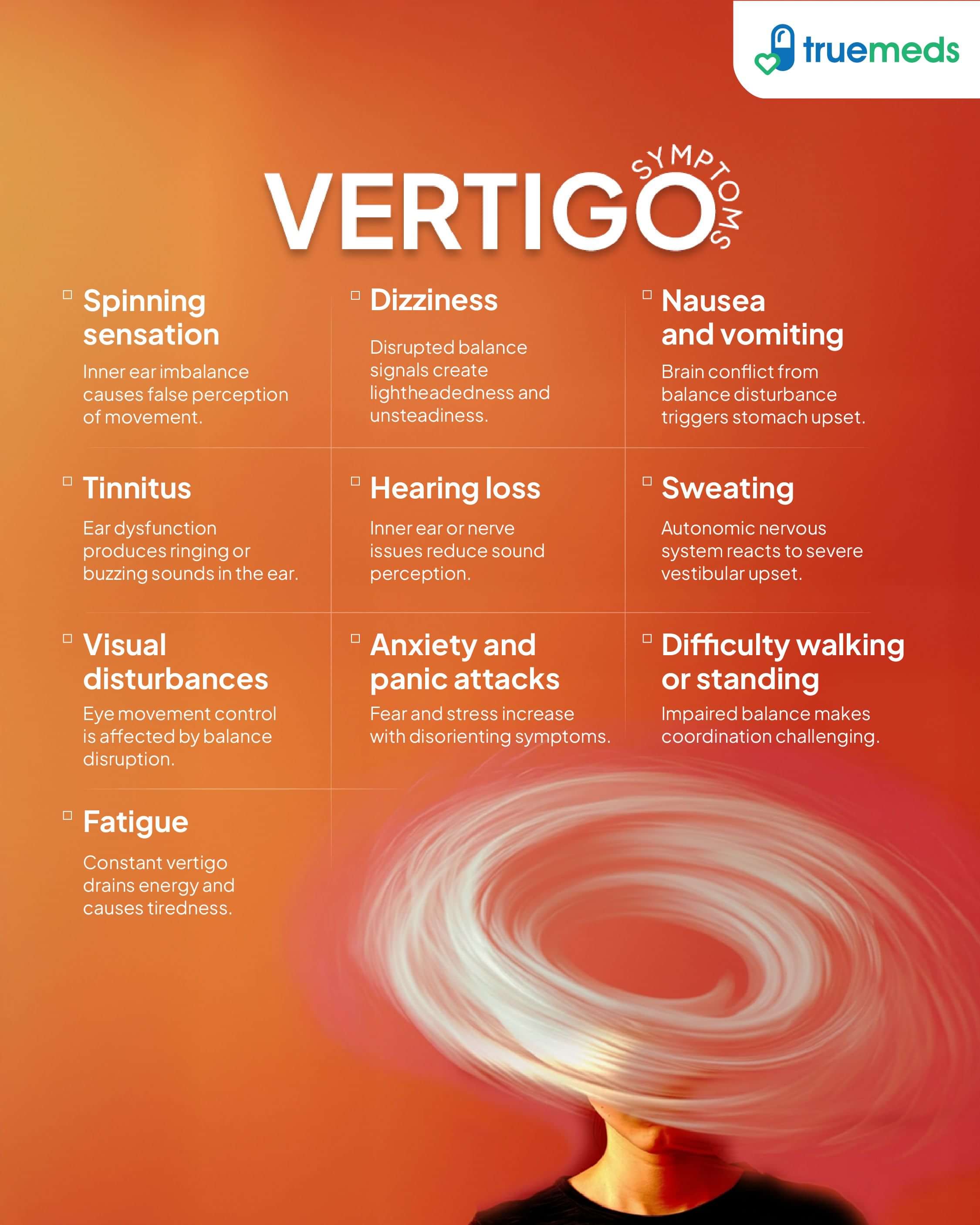
- Spinning sensation: The hallmark of vertigo is a false feeling of movement, often described as a spinning or whirling sensation. This can be brief or last for several minutes to hours.
- Dizziness: Many individuals experience a general sense of dizziness or lightheadedness, which can vary in intensity. This may be accompanied by feelings of unsteadiness or a sensation of being off-balance.
- Nausea and vomiting: The conflicting signals in the brain can lead to gastrointestinal distress. Nausea can range from mild to severe and may sometimes lead to vomiting.
- Tinnitus: Some individuals may experience ringing or buzzing in the ears. This symptom can be intermittent or constant, depending on the underlying cause.
- Hearing loss: Vertigo can sometimes be associated with changes in hearing, such as muffled sounds or decreased auditory perception. This can occur in one ear or both.
- Sweating: Episodes of vertigo can trigger increased sweating, often as a physiological response to the distress caused by the condition.
- Visual disturbances: Some individuals may experience blurred vision or trouble focusing, often referred to as oscillopsia. These disturbances occur due to the brain's difficulty in processing visual information during episodes.
- Anxiety and panic attacks: The sensation of vertigo can lead to feelings of anxiety or panic in some individuals. This can exacerbate symptoms and create a cycle of fear surrounding future episodes.
- Difficulty walking or standing: Balance issues may lead to difficulties in walking or standing upright. This increases the risk of falls, especially in older adults.
- Fatigue: Following an episode, individuals may experience fatigue or feel drained. This can result from the physical and mental strain of dealing with vertigo symptoms.
Causes of Vertigo
Vertigo, a sensation of spinning or dizziness, can be caused by various factors affecting the inner ear or the brain. The most common causes include: (MedlinePlus Medical Encyclopedia)
- Benign paroxysmal positional vertigo (BPPV): BPPV occurs when tiny calcium particles in the inner ear become dislodged and disrupt the balance system. This often triggers brief episodes of vertigo with specific head movements.
- Meniere's disease: This condition is characterised by a buildup of fluid in the inner ear, leading to episodes of vertigo, tinnitus, hearing loss, and a feeling of fullness in the ear. The exact cause of Ménière's disease remains unclear (Hopkins Medicine).
- Vestibular neuritis: An inflammation of the vestibular nerve, often caused by a viral infection, vestibular neuritis can result in sudden, severe vertigo, usually accompanied by nausea and balance difficulties.
- Labyrinthitis: This is an inflammation of the inner ear structures, often due to infection. It can cause vertigo along with hearing loss and other auditory symptoms.
- Migrainous vertigo: Some individuals experience vertigo as a symptom of migraine. This type of vertigo can occur with or without a headache and may be triggered by certain visual or sensory stimuli.
- Acoustic neuroma: This noncancerous tumour grows on the vestibulocochlear nerve, affecting balance and hearing. As it presses on the nerve, it can cause vertigo, tinnitus, and hearing loss.
- Stroke or transient ischemic attack (TIA): In some cases, vertigo can indicate a stroke or TIA, particularly if accompanied by other neurological symptoms like weakness, confusion, or difficulty speaking.
- Multiple sclerosis (MS): MS can affect the central nervous system, leading to various symptoms, including vertigo. The condition can cause lesions that impact balance and coordination.
- Head injury: Trauma to the head can damage the structures involved in balance, resulting in vertigo. This can occur immediately after the injury or develop over time.
Risk Factors
Several factors can increase the likelihood of developing vertigo, including:
- Age (more common in older adults)
- Gender (more common in women)
- History of migraines
- Family history
- Previous head injury
- Chronic illnesses such as diabetes, hypertension, and cardiovascular disease
- Certain medications, particularly those that affect the inner ear or nervous system
- High levels of stress and anxiety
- Lack of physical activity
Complications
If left untreated or poorly managed, vertigo can lead to several complications that can significantly impact an individual's quality of life. Some of the potential complications include:
- Increased risk of falls: Vertigo significantly raises the risk of falls, which can result in serious injuries such as hip fractures and head trauma. The unsteady feeling can make it challenging to maintain balance.
- Interference with daily activities: Vertigo can interfere with daily tasks and activities, particularly those that are hazardous, such as driving or operating heavy machinery.
- Decreased physical fitness: Avoidance of physical activity due to vertigo can lead to decreased fitness levels, which may contribute to further balance issues and a decline in overall health.
- Chronic dizziness: For some individuals, vertigo may become a chronic issue, leading to ongoing dizziness that can be debilitating and difficult to manage over time.
- Anxiety and depression: Chronic vertigo can contribute to the development of anxiety and depression due to the unpredictability of episodes and the impact on daily functioning.
- Underlying health issues: In some cases, vertigo may indicate underlying health problems, such as neurological conditions or cardiovascular issues. Failure to address these can lead to more severe health complications.
Proper diagnosis and treatment of the underlying cause of vertigo are essential to prevent complications and maintain overall well-being.
Prevention of Vertigo
While not all cases of vertigo can be prevented, several steps may help reduce the risk or manage the symptoms:
- Avoid triggers: If certain movements or activities consistently trigger vertigo, it may be helpful to avoid or modify them.
- Manage stress: Stress can exacerbate vertigo symptoms. Engaging in stress-reduction techniques such as meditation, deep breathing, or yoga may be beneficial.
- Maintain a healthy lifestyle: Eating a balanced diet, staying hydrated, exercising regularly, and getting enough sleep can help promote overall health and may reduce the risk of vertigo.
- Treat underlying conditions: Addressing underlying health issues, such as high blood pressure, diabetes, or cardiovascular disease, can help reduce vertigo episodes related to these conditions.
- Practice balance exercises: Regularly engaging in balance exercises, such as tai chi or specific vestibular rehabilitation exercises, can help improve balance and reduce the risk of falls.
- Avoid sudden movements: When possible, avoid sudden head movements or changes in position, particularly if these have triggered vertigo in the past.
Diagnosis & Tests
Diagnosing vertigo involves a combination of medical history, physical examination, and specific tests to determine the underlying cause of the condition. The tests include:
- Physical examination: During the physical examination, the doctor will assess balance and coordination. They will also check for nystagmus, which is an involuntary eye movement that can indicate vestibular issues.
- Dix-Hallpike manoeuvre: This test is specifically used to diagnose benign paroxysmal positional vertigo (BPPV) (Talmud et al., 2023). The patient’s head is turned 45 degrees to one side and then quickly laid back with the head off the edge of the examination table; if vertigo and nystagmus occur, it suggests BPPV.
- Head movement testing: Simple head movements can be performed to see if they trigger vertigo in patients suspected of having BPPV. This can help confirm the diagnosis based on the patient’s reactions during the test.
- Posturography: This test assesses balance by having the patient stand on a platform under various conditions. It measures how well the patient can maintain balance in response to different sensory inputs.
- Romberg test: In this test, the patient stands with their feet together and eyes closed to evaluate balance. Difficulty maintaining stability during this test can indicate underlying vestibular dysfunction.
- Electronystagmography (ENG) or videonystagmography (VNG): These tests measure involuntary eye movements to detect abnormalities in the inner ear. They help identify the type and cause of dizziness by analysing how the eyes respond to head movements.
- Magnetic resonance imaging (MRI): An MRI may be ordered to rule out central causes of vertigo, such as stroke, brain tumours, or multiple sclerosis. This imaging can provide critical information about the brain’s structure and identify any underlying conditions.
- Audiometric tests: These tests assess the function of the inner ear and the nerve connecting it to the brain. They can help determine if hearing loss is contributing to the symptoms of vertigo.
- Head impulse test: This test evaluates the coordination between the eyes and inner ears by quickly rotating the patient’s head. The response of the eyes during this test can reveal issues with the vestibular system.
Treatment & Management
The treatment of vertigo is customised based on the underlying cause and may involve a combination of lifestyle changes, medications, and specific therapies. Key treatment approaches include:
1. Canalith Repositioning Procedure (Epley Manoeuvre)
For Benign Paroxysmal Positional Vertigo (BPPV), a series of head manoeuvres known as the Canalith Repositioning Procedure can help move dislodged inner ear particles to a less sensitive area, thereby alleviating symptoms.
2. Vestibular Rehabilitation
- Vestibular Rehabilitation Therapy (VRT) involves specific exercises designed to help the brain adapt to conflicting signals from the inner ear and other balance-related systems.
- This therapy enhances balance, reduces dizziness, and improves overall function.
3. Medications for Symptom Relief
- Antihistamines such as Cinnarizine, Dimenhydrinate, Diphenhydramine, and Promethazine help reduce dizziness and nausea by suppressing inner ear signals.
- Anticholinergics, including Atropine and Hyoscine (scopolamine), help manage motion sickness and vertigo-related nausea.
- Antiemetics like Prochlorperazine, Thiethylperazine, Metoclopramide, Domperidone, and Ondansetron effectively control vomiting and nausea associated with vertigo.
- Vasodilators such as Betahistine and Codergocrine improve inner ear circulation, reducing vertigo episodes.
- Diuretics, including Acetazolamide, Thiazides, and Furosemide, help reduce fluid buildup in the inner ear, particularly in conditions like Ménière's disease.
- Anxiolytics and Antidepressants, such as Diazepam and Amitriptyline, may be prescribed to manage stress-related dizziness and chronic vertigo symptoms.
- Corticosteroids like Dexamethasone, Hydrocortisone, and Methylprednisolone help reduce inflammation in the inner ear, particularly in vestibular neuritis.
4. Surgical Intervention
- In rare cases, surgery may be required to correct structural abnormalities in the inner ear or treat conditions such as acoustic neuroma or Ménière's disease.
- Surgical procedures are typically considered only when other treatment options have failed.
5. Lifestyle Modifications
- Avoiding known triggers, such as sudden movements or bright lights, can help minimise vertigo episodes.
- Managing stress, maintaining adequate hydration, getting sufficient sleep, and following a balanced diet can contribute to overall symptom relief.
- Proper diagnosis and a personalised treatment plan are crucial for effectively managing vertigo and improving the quality of life.
When to See a Doctor?
If you experience vertigo symptoms that are severe, recurrent, or accompanied by additional symptoms, it is crucial to consult a doctor. Seek immediate medical attention if you have:
- Sudden, severe vertigo or dizziness
- Vertigo accompanied by a severe headache, fever, double vision, or hearing loss
- Difficulty walking or maintaining balance
- Numbness or weakness in your face, arms, or legs
- Slurred speech or difficulty speaking
- Chest pain or an irregular heartbeat
- Ongoing vomiting
- Seizures
- Sudden hearing loss
Your doctor will conduct a thorough physical examination and may recommend additional tests, such as an MRI, CT scan, or balance tests, to determine the underlying cause of your vertigo.
Key Takeaways
- Vertigo is a sensation of spinning or dizziness that can be caused by various factors, including inner ear disorders, brain tumours, stroke, or certain medicines.
- Common symptoms of vertigo include a spinning sensation, loss of balance, nausea, vomiting, and headaches.
- Treatment for vertigo depends on the underlying cause and may include medications, vestibular rehabilitation therapy, or surgery in severe cases.
- Lifestyle changes, such as avoiding triggers, managing stress, and practising balance exercises, can help manage vertigo symptoms.
- If you experience severe, recurrent, or prolonged vertigo symptoms, or if your vertigo is accompanied by additional symptoms such as a severe headache or hearing loss, seek immediate medical attention.
- Early diagnosis and treatment of vertigo can help manage symptoms effectively and improve your quality of life.
FAQs
What is the most common cause of vertigo?
Benign paroxysmal positional vertigo (BPPV) is the most common cause of vertigo, triggered by dislodged calcium deposits in the inner ear canals.
How can vertigo be managed or treated?
Treatment for vertigo varies based on the underlying cause and may include repositioning manoeuvres, medications, vestibular rehabilitation, and lifestyle modifications.
What should one consume during vertigo episodes?
Is vertigo a warning sign?
Vertigo, particularly central vertigo, can be a warning sign for serious conditions like stroke, multiple sclerosis, tumours, vestibular migraine, or blood vessel disease.
Can high BP cause vertigo?
Is vertigo a serious problem?
Vertigo can range from a mild annoyance to a debilitating condition, and its severity depends on the underlying cause and individual circumstances.
Which drink stops vertigo?
Which fruit is good for vertigo?
References
- Stanton, M., & Freeman, A. M. (2025). Vertigo. In StatPearls. StatPearls Publishing. https://www.ncbi.nlm.nih.gov/books/NBK482356/
- MedlinePlus Medical Encyclopedia. (2023). Dizziness and vertigo. https://medlineplus.gov/dizzinessandvertigo.html
- Healthdirect. (n.d.). Vertigo. https://www.healthdirect.gov.au/vertigo
- NHS. (2023). Vertigo. https://www.nhs.uk/conditions/vertigo/
- MedlinePlus Medical Encyclopedia. (n.d.). Vertigo-associated disorders. https://medlineplus.gov/ency/article/001432.htm
- Meniere disease. (2024). Johns Hopkins Medicine. https://www.hopkinsmedicine.org/health/conditions-and-diseases/menieres-disease
- Talmud, J. D., Coffey, R., Hsu, N. M., & Edemekong, P. F. (2023). Dix-Hallpike maneuver. In StatPearls. StatPearls Publishing. https://www.ncbi.nlm.nih.gov/books/NBK459307/
Check Related Salts
Latest health articles

Top Health Essentials






























Disclaimer
Top-Selling Medicines:
...View more
Top-OTC medicines:
...View more
Company
About UsHealth ArticleHealth StoriesHealth LibraryDiseases & Health ConditionsAyurvedaUnderstanding Generic MedicinesAll MedicinesAll BrandsNeed HelpFAQSecuritySavings CalculatorAdvertise with UsSubscribe
Registered Office Address
Grievance Officer
Download Truemeds


Contact Us
Our customer representative team is available 7 days a week from 9 am - 9 pm.
v4.28.16

2026 - Truemeds | All rights reserved. Our content is for informational purposes only. See additional information.

Our Payment Partners