

- Medicines
- Personal Care
- Skin Cream
- Sunscreen
- Face Wash
- Skin and Body Soap
- Acne Care
- Body Lotions
- Moisturising Lotion
- Moisturising Cream
- Mosquito Repellent
- Moisturising Gel
- Body Wash
- Hair Oils
- Hair Shampoo
- Hair Conditioners
- Hair Supplements
- Hair Colour
- Hair Serum
- Hair Mask
- Hair Solutions
- Baby Diapers and Wipes
- Baby Lotion and Moisturising Cream
- Baby Bath Essentials
- Baby Skin Care
- Baby and Infant Food
- Baby Healthcare
- Women Multivitamins
- Ovulation Test Kit and Women Intimate Care
- Sanitary Pads
- Nutritional Drinks
- Condoms
- Lubricants
- Massage Gels
- Personal Body Massagers
- Men Performance Booster
- Sexual Health Supplements
- Massage Oils
- Ayurveda
- Tooth Paste
- Mouth Ulcer Gel
- Mouthwash
- Toothache and Gum Pain
- Tooth Brush
- Gargle Solution
- Orthopaedic Supports
- Adult Diapers
- Footwear
- Mobility and Support Accessories
- Urinary Support and Care
- Health Conditions
- Bone and Joint Care
- Digestive Care
- Eye Care
- Pain Relief
- Smoking Cessation
- Liver Care
- Stomach Care
- Cold and Cough
- Heart Care
- Kidney Care
- Piles, Fissures & Fistula
- Respiratory Care
- Mental Wellness
- Derma Care
- Pre and Probiotics
- Acidity
- Gas
- Constipation
- Loose Motion/Diarrhoea
- Digestive Fibres
- Digestive Enzymes
- Eye Lubricant Drops
- Lens Solution
- Safety Eye Wear
- Eye Cream
- Eye Vitamins and Supplements
- Eye Drops
- Eye Ointment and Gel
- Nicotine Patch
- Nicotine Gum
- Nicotine Lozenges
- Cough Syrups
- Chest Rubs and Balms
- Nasal Spray
- Lozenges
- Inhalant Capsules
- Cold and Cough Tablets
- Vitamins & Supplements
- Diabetes Care
- Healthcare Devices
- Homeopathic Medicine
- Health Guide
Meniere's Disease
Menière’s disease is a chronic idiopathic inner-ear disorder characterised by recurrent spontaneous episodes of vertigo, fluctuating low-to-medium frequency sensorineural hearing loss, tinnitus, and aural fullness. It most commonly presents unilaterally but may affect both ears in some patients. The leading pathologic correlate is endolymphatic hydrops (distension of the endolymphatic spaces), but the exact cause remains unclear. Clinical presentation and course vary widely between individuals (AAO-HNS, 2020).
 50
50Last updated on : 06 Jul, 2026
Read time : 13 mins

Overview of Disease
Meniere's disease is a complex condition that impacts the inner ear, leading to a range of symptoms and affecting an individual's quality of life. The disorder is named after the French physician Prosper Ménière, who first described the condition in 1861.
The precise cause of Meniere's disease remains unclear. However, it is thought to involve a disturbance in the fluid balance within the inner ear structures. These structures, known as the labyrinth, are responsible for hearing and balance.
What is Meniere's Disease?
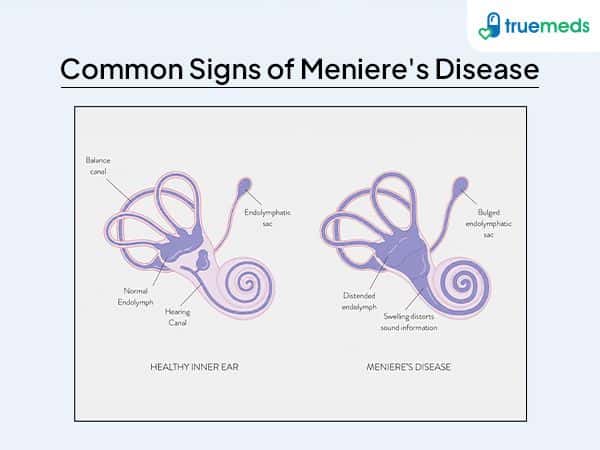
Meniere's disease is an inner ear disorder that primarily affects balance and hearing. The condition is marked by vertigo, tinnitus, and fluctuating hearing loss. Additionally, individuals with Meniere's disease often experience a feeling of fullness or pressure in the affected ear. These symptoms are thought to be associated with the buildup of fluid within the inner ear, specifically in the labyrinth.
The labyrinth consists of the cochlea, which is responsible for hearing, and the vestibular system, which helps maintain balance. In Meniere's disease, an excess of fluid called endolymph accumulates in these structures. This leads to the characteristic symptoms of the condition.
Menière’s disease can occur at any age, but most commonly begins in early to mid-adulthood (commonly between the third and fifth decades of life). Onset after age 60 is less common. The condition typically begins by affecting one ear, but over time, it can progress to both ears in some cases. Although the exact cause of Meniere's disease remains unknown, several factors may contribute to its development. These factors include genetic predisposition, autoimmune disorders, and viral infections.
Key Factors about Meniere's Disease
| Category | Details |
| Also Referred to as | Meniere's syndrome, endolymphatic hydrops |
| Commonly Occurs In | Adults between 40 and 60 years of age |
| Affected Organ | The inner ear, specifically the labyrinth |
| Type | Disorder of the inner ear |
| Common Signs | Severe dizziness (vertigo), tinnitus, hearing loss, feeling of fullness or congestion in the ear |
| Consulting Specialist | Otolaryngologist (ENT specialist) |
| Treatment Procedures | Medications, behavioural changes, middle ear injections, and surgery |
| Managed By | Diuretics (e.g., hydrochlorothiazide, acetazolamide); Antihistamines (e.g., meclizine, dimenhydrinate); Antiemetics (e.g., prochlorperazine, promethazine) for acute attacks; Intratympanic Injections (gentamicin or corticosteroids) |
| Mimicking Condition | Benign paroxysmal positional vertigo (BPPV), vestibular migraine, and acoustic neuroma (vestibular schwannoma) |
Symptoms of Meniere's Disease
Meniere's disease is a disorder of the inner ear that can cause a range of distressing symptoms. The most common symptoms include:
- Vertigo: This is a sensation of spinning or feeling like the world around you is rotating. Vertigo in Meniere's disease can last from 20 minutes to several hours. It may become severe enough to cause nausea and vomiting.
- Tinnitus: Many people with Meniere's disease experience tinnitus. This is characterised by ringing, buzzing, roaring, or other sounds in the ear when no external sound is present.
- Hearing Loss: Fluctuating hearing loss, particularly in low frequencies, is another hallmark symptom of Meniere's disease. Over time, this hearing loss may become permanent.
- Aural Fullness: Patients often report a feeling of fullness or pressure in the affected ear, which may occur before or during episodes of vertigo.
These symptoms often occur together in an attack, which can be highly disruptive to daily life. Understanding the causes and risk factors can help in managing this condition.
Stages of Meniere's Disease
Menière’s disease has a variable natural history rather than a rigid 3-stage progression. Typical patterns reported include: initial episodic attacks of vertigo with fluctuating hearing that may stabilise, progress or, in some patients, lead to persistent vestibular hypofunction and progressive permanent hearing loss. Over time, vertigo attacks may decrease in frequency for some patients while permanent sensorineural hearing loss may increase; however, individual courses vary widely. Prognostication is imprecise, and patients should be counselled about variable outcomes.
1. Early Stage
In the early stage of Meniere's disease, individuals typically experience vertigo, tinnitus, and fluctuating hearing loss. These episodes can be separated by periods where symptoms may subside or seem to disappear entirely. The duration of these episodes can range from 20 minutes to several hours. While the symptoms can be quite disabling, individuals may have minimal impact on their daily life between these episodes.
2. Middle Stage
As Meniere's disease progresses to the middle stage, episodes tend to become more frequent and may last longer. The hearing loss that was initially fluctuating may become more permanent. Additionally, balance issues may persist between episodes of vertigo, indicating a growing impact on the individual's vestibular system.
3. Late Stage
In the late or end-stage of Meniere's disease, vertigo may decrease in frequency or even stop altogether. However, by this stage, individuals often experience significant permanent hearing loss in the affected ear(s). The damage to the inner ear structures also leads to persistent balance problems. This can significantly impact daily activities and quality of life.
Understanding these stages can help individuals and healthcare professionals better manage the condition and anticipate potential changes in symptoms over time. Early diagnosis and appropriate treatment can help minimise the impact of Meniere's disease on an individual's life and slow the progression of the condition.
Causes of Meniere's Disease
The exact cause of Menière’s disease remains unknown. The pathological hallmark is endolymphatic hydrops, but hydrops can be seen in other conditions and is not diagnostic on its own. Contributing/associated factors proposed in the literature include genetic susceptibility (family aggregation in a minority), immune/inflammatory mechanisms in some patients, prior otologic insults (trauma, otitis media), and possibly viral triggers in a subset. However, high-quality evidence linking a single cause to most cases is lacking.
Clinical evaluation should focus on documenting symptoms and excluding alternative diagnoses. Further research is ongoing to better understand the underlying mechanisms of the disease.
Risk Factors
While anyone can develop Meniere's disease, certain factors may increase an individual's risk:
- Age: Meniere's disease most commonly affects adults between the ages of 40 and 60 years. However, it can occur at any age, including in children and younger adults.
- Family History: Individuals with a family history of Meniere's disease are at a higher risk of developing the condition themselves. This suggests that genetic factors may play a role in susceptibility.
- Head Trauma: Trauma to the head, such as from a car accident or severe blow, has been associated with an increased risk of developing Meniere's disease.
- Comorbid Conditions: Certain medical conditions, such as migraine, allergies, and autoimmune disorders, may also increase the risk of developing Meniere's disease. The exact relationship between these conditions and Meniere's disease is not yet fully understood.
Recognising these risk factors can help in early diagnosis and management of Meniere's disease. However, one or more of these risk factors does not necessarily mean that an individual will develop the condition.
Complications
Meniere's disease can lead to several complications that can impact an individual's quality of life and pose specific health risks.
Unexpected Vertigo Attacks
- Sudden Loss of Balance: Meniere's disease can cause sudden and severe vertigo, leading to a sudden loss of balance. This increases the risk of falls and accidents.
- Emotional Impact: The unpredictability of vertigo can lead to significant anxiety and stress, affecting the individual's overall quality of life.
Permanent Hearing Loss
- Irreversible Hearing Loss: Meniere's disease may cause permanent hearing loss over time, which is particularly concerning when it affects only one ear.
- Impact on Communication: This loss can severely impact the individual's ability to hear and communicate effectively.
Risk of Falls and Accidents
- Dangerous Falls: The sudden loss of balance associated with vertigo increases the likelihood of dangerous falls and serious injuries.
- Hazardous Activities: The unpredictability of vertigo makes tasks such as driving or operating heavy machinery particularly risky. This poses dangers to both the individual and others.
Emotional and Psychological Toll
- Increased Anxiety and Depression: The unpredictable symptoms of Meniere's disease can lead to heightened anxiety and depression.
- Fatigue and Emotional Stress: Individuals may experience significant fatigue and emotional stress.
- Need for Comprehensive Care: Addressing these complications effectively requires a treatment approach that encompasses both the physical and psychological aspects of the disease.
Prevention of Meniere's Disease
While there is no definitive way to prevent Meniere's disease, some lifestyle adjustments and dietary changes can help manage the symptoms. These measures may help reduce the frequency and severity of episodes:
- Dietary measures: Many clinicians advise sodium restriction (e.g., <2 g sodium/day) and reduction of caffeine and alcohol as a pragmatic first-line measure, but high-quality evidence for benefit is limited and inconsistent. Specific avoidance of food-containing tyramine (e.g., aged cheeses, cured meats) has limited evidence and is not a universally recommended component of standard care. Discuss any dietary changes with your clinician.
By making these lifestyle changes, individuals with Meniere's disease can better manage their symptoms. However, these measures do not prevent the onset of the disease. Early diagnosis is also crucial for effective management of the condition.
Diagnosis & Tests
Diagnosing Meniere's disease involves a combination of clinical evaluation, patient history, and specific tests to rule out other conditions. The diagnostic process includes:
- Definite Menière’s disease: Two or more spontaneous episodes of vertigo, each lasting 20 minutes to 12 hours; audiometrically documented low- to medium-frequency sensorineural hearing loss in one ear on at least one occasion; fluctuating aural symptoms (hearing, tinnitus, or fullness) in the affected ear; and symptoms not better accounted for by another vestibular diagnosis.
- Probable Menière’s disease: Similar criteria, but may lack audiometric confirmation or have shorter or less typical episodes.
- Routine Workup: Includes audiometry, symptom history, and a targeted neurologic examination. MRI is recommended to exclude central causes or retrocochlear lesions when indicated. Tests such as VNG/ENG evaluate vestibular function (AAO-HNS, 2020). Electrocochleography (ECoG) or MRI with delayed gadolinium can support the presence of endolymphatic hydrops, but are not required for diagnosis in routine practice.
- Imaging: MRI of the brain (including the internal auditory canals and brainstem) with contrast is recommended when red flags or atypical features are present to exclude vestibular schwannoma, stroke, demyelinating disease, or other central causes. High-resolution CT is usually not helpful for the membranous labyrinth but may be used if bony pathology is suspected.
Accurate diagnosis of Meniere's disease is essential for developing an effective treatment plan and managing the condition. This helps to prevent complications and improve the patient's quality of life.
Treatment & Management
Managing Meniere’s disease involves a combination of medications, lifestyle modifications, and, in severe cases, surgical interventions. The goal of management is to reduce vertigo frequency and severity, manage tinnitus, and preserve hearing where possible.
Medications for Meniere’s Disease
Several medications are used to control the symptoms of Meniere’s disease:
- Acute attack drugs (short term): Vestibular suppressants and antiemetics (e.g., meclizine, dimenhydrinate, prochlorperazine) relieve vertigo symptoms acutely but are not recommended for long-term daily use because they may impair central compensation.
- Betahistine: Used widely for vertigo control; it is not a true vestibular suppressant. Randomised trial data are heterogeneous, and the overall certainty of benefit is low to moderate. Some guideline panels consider it an option; others note insufficient high-quality evidence. Monitor for adverse effects (mainly gastrointestinal) (AAO-HNS, 2020).
- Diuretics: Sodium-restricted diet ± diuretic therapy (e.g., thiazide diuretics; spironolactone in some regimens) are commonly recommended by clinicians; evidence from randomised trials is limited. Acetazolamide is sometimes used, but evidence is limited.
- Intratympanic injections: For patients with unilateral, medically refractory, disabling vertigo, intratympanic gentamicin is highly effective for vertigo control but may worsen hearing (risk of permanent hearing loss). Intratympanic corticosteroids are less risky for hearing and may improve vertigo control in some patients, but data suggest they may be less effective for durable vertigo suppression than gentamicin. Discuss risks and benefits and hearing outcomes with patients before proceeding (Wu et al., 2024).
- Other: Vestibular rehabilitation therapy for persistent imbalance; psychological support for anxiety or depression when needed (Rezaeian et al., 2023).
When to See a Doctor?
Seek urgent medical attention if vertigo is associated with focal neurologic deficits (weakness, diplopia, slurred speech), sudden hearing loss, or if vertigo persists despite initial symptomatic measures. For recurrent attacks affecting quality of life, consult an otolaryngologist/vestibular specialist to confirm diagnosis and discuss management options (dietary measures, medication trials, intratympanic injections, rehabilitation, or surgery).
Early diagnosis and intervention can help manage the symptoms of Meniere's disease and reduce the risk of progression of hearing loss and balance dysfunction. Your doctor may perform tests like audiometry, VNG/ENG, or MRI to confirm the diagnosis and rule out other possible causes.
Key Takeaways
- Meniere's disease is a disorder of the inner ear characterised by vertigo, fluctuating hearing loss, tinnitus, and aural fullness.
- The exact cause of Meniere's disease is unknown, but it may be related to abnormal fluid accumulation in the inner ear.
- Management of Meniere's disease involves a combination of lifestyle modifications, medications, and, in some cases, surgical interventions.
- Medications used to treat Meniere's disease include diuretics, antihistamines, vestibular suppressants, and intratympanic injections.
- If you experience recurring vertigo, tinnitus, hearing loss, or fullness in the ear, it is essential to consult a doctor for proper diagnosis and treatment.
FAQs
What is Meniere's disease, and what are its main symptoms?
What are the causes of Meniere's disease?
How do doctors diagnose Meniere's disease?
Is Meniere's disease a lifelong condition?
What treatments are available for managing the symptoms of Meniere's disease?
Can Meniere's disease cause permanent hearing loss?
Are there any specific triggers that can aggravate Meniere's disease symptoms?
How does Meniere's disease impact balance and vertigo?
Is there a cure for Meniere's disease?
What lifestyle modifications can help manage Meniere's disease symptoms?
References
- American Academy of Otolaryngology—Head and Neck Surgery Foundation. (2020). Clinical Practice Guideline: Ménière’s Disease. American Academy of Otolaryngology. https://www.entnet.org/quality-practice/quality-products/clinical-practice-guidelines/menieres-disease/
- Wu, X., et al. (2024). Comparative efficacy of intratympanic gentamicin and intratympanic corticosteroid in the treatment of Menière’s disease: a systematic review and meta-analysis. Journal of Otology/PMC. https://pmc.ncbi.nlm.nih.gov/articles/PMC11424416/
- Rezaeian, A., Zarei, M., & Rezaei, M. (2023). The effect of vestibular rehabilitation in Menière’s disease: a systematic review and meta-analysis. Journal of Vestibular Research. 2023. https://pubmed.ncbi.nlm.nih.gov/37341761/
- Gao, W., et al. (2024). Restriction of salt, alcohol, and coffee intake and Ménière's disease: a Mendelian randomization study. Frontiers in Nutrition, 2024. https://www.frontiersin.org/articles/10.3389/fnut.2024.1460864/
Check Related Salts
Browse Other Conditions
Latest health articles

Top Health Essentials

























Disclaimer
Top-Selling Medicines:
...View more
Top-OTC medicines:
...View more
Company
About UsHealth ArticleHealth StoriesHealth LibraryDiseases & Health ConditionsAyurvedaUnderstanding Generic MedicinesAll MedicinesAll BrandsNeed HelpFAQSecuritySavings CalculatorAdvertise with UsSubscribe
Registered Office Address
Grievance Officer
Download Truemeds


Contact Us
Our customer representative team is available 7 days a week from 9 am - 9 pm.
v4.28.20

2026 - Truemeds | All rights reserved. Our content is for informational purposes only. See additional information.

Our Payment Partners




