

- Medicines
- Lab Tests
- Personal Care
- Skin Cream
- Sunscreen
- Face Wash
- Skin and Body Soap
- Acne Care
- Body Lotions
- Moisturising Lotion
- Moisturising Cream
- Mosquito Repellent
- Moisturising Gel
- Body Wash
- Hair Oils
- Hair Shampoo
- Hair Conditioners
- Hair Supplements
- Hair Colour
- Hair Serum
- Hair Mask
- Hair Solutions
- Baby Diapers and Wipes
- Baby Lotion and Moisturising Cream
- Baby Bath Essentials
- Baby Skin Care
- Baby and Infant Food
- Baby Healthcare
- Women Multivitamins
- Ovulation Test Kit and Women Intimate Care
- Sanitary Pads
- Nutritional Drinks
- Condoms
- Lubricants
- Massage Gels
- Personal Body Massagers
- Men Performance Booster
- Sexual Health Supplements
- Massage Oils
- Ayurveda
- Tooth Paste
- Mouth Ulcer Gel
- Mouthwash
- Toothache and Gum Pain
- Tooth Brush
- Gargle Solution
- Orthopaedic Supports
- Adult Diapers
- Footwear
- Mobility and Support Accessories
- Urinary Support and Care
- Health Conditions
- Bone and Joint Care
- Digestive Care
- Eye Care
- Pain Relief
- Smoking Cessation
- Liver Care
- Stomach Care
- Cold and Cough
- Heart Care
- Kidney Care
- Piles, Fissures & Fistula
- Respiratory Care
- Mental Wellness
- Derma Care
- Pre and Probiotics
- Acidity
- Gas
- Constipation
- Loose Motion/Diarrhoea
- Digestive Fibres
- Digestive Enzymes
- Eye Lubricant Drops
- Lens Solution
- Safety Eye Wear
- Eye Cream
- Eye Vitamins and Supplements
- Eye Drops
- Eye Ointment and Gel
- Nicotine Patch
- Nicotine Gum
- Nicotine Lozenges
- Cough Syrups
- Chest Rubs and Balms
- Nasal Spray
- Lozenges
- Inhalant Capsules
- Cold and Cough Tablets
- Vitamins & Supplements
- Diabetes Care
- Healthcare Devices
- Homeopathic Medicine
- Health Guide
Cucumber
Cucumber (Cucumis sativus) is a water-rich fruit of the gourd family that is eaten as a vegetable. It is used raw in salads and raita, and as fresh juice, to contribute to fluid intake and add freshness to meals. Fresh slices are also applied to the skin and around the eyes in traditional home care. Cucumber is valued mainly as a hydrating, low-calorie food in everyday cooking.
 50
Last updated on : 09 Nov, 2026
Read time : 17 mins
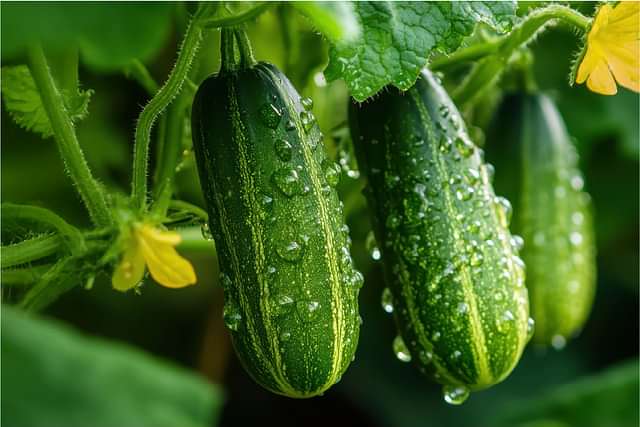
What is Cucumber?
The botanical name Cucumis sativus includes the Latin word sativus, which means cultivated, and reflects cucumber's long history as a cultivated crop. Cucumber is native to India and is now grown in many parts of the world (Javid et al., 2024). In Ayurveda, it is known as Trapusa and is placed in the Shaka varga, the group of vegetables (Changade & Ulemale, 2015). The Charaka Samhita and the Sushruta Samhita traditionally describe cucumber as a diuretic food, meaning one that promotes the flow of urine (Changade & Ulemale, 2015).
Ayurvedic descriptions characterise cucumber as Madhura (sweet) in Rasa, Sheeta (cooling) in Virya and Madhura (sweet) in Vipaka. Its Gunas are described as Laghu (light) and Ruksha (dry). According to Ayurvedic principles, cucumber is traditionally said to pacify Pitta dosha, the dosha associated with heat, and to increase Vata and Kapha doshas (Changade & Ulemale, 2015). Because of this cooling nature, cucumber is traditionally eaten in hot weather.
Key Facts
| Feature | Details |
| Botanical name | Cucumis sativus L. |
| Family | Cucurbitaceae (gourd family) |
| Also known as | Kheera (Hindi), Trapusa (Sanskrit) |
| Origin | India |
| Part eaten | Fruit, eaten as a vegetable |
| Ayurvedic classification | Rasa: Madhura (sweet). Virya: Sheeta (cooling). Vipaka: Madhura (sweet). Guna: Laghu (light) and Ruksha (dry). Dosha action: traditionally considered to pacify Pitta and may increase Vata and Kapha. Varga: Shaka (vegetables). |
| Key nutrients | Water (about 95 g per 100 g), vitamin K (about 16 µg per 100 g), potassium (147 mg per 100 g) and small amounts of vitamin C |
| Common forms | Raw slices, salad, raita, fresh juice, infused water, and slices or juice applied to the skin |
| Typical serving | About 1 cup of sliced cucumber (approximately 100 g) |
| Best eaten | Fresh and washed, with meals or as a snack |
| Key safety note | Discard any cucumber that tastes unusually bitter. People with pollen or melon allergies may experience allergic reactions to cucumber. People taking warfarin should maintain a consistent intake of vitamin K-containing foods. |
Alternative Names of Cucumber
Cucumber is known by the following botanical, English and Indian-language names.
- Botanical name: Cucumis sativus L.
- English: Cucumber
- Hindi and Urdu: Kheera
- Sanskrit: Trapusa (also written Trapusha)
- Marathi: Tavsini
- Tamil: Vellarikai
- Malayalam: Vellari
- Punjabi: Khira
Chemical Constituents of Cucumber
The following compounds have been reported in Cucumis sativus in phytochemical studies (Mukherjee et al., 2013).
- Cucurbitacins (A, B, C, D, E and I): Bitter triterpenoid compounds that are present in small amounts in cultivated cucumbers and at higher levels in bitter-tasting fruit (Khan et al., 2022; Poison Control, n.d.)
- Flavonoids, including vitexin and other apigenin-based compounds: Plant compounds that show antioxidant activity in laboratory tests (Khan et al., 2022)
- Cucumerin: A bioactive compound reported in cucumber (Khan et al., 2022)
- Phenolic acids: Antioxidant compounds found in many plant foods (Khan et al., 2022)
- Tannins: Astringent plant compounds that have also shown antioxidant activity (Sahu & Sahu, 2015)
- Saponins: Plant compounds with soap-like properties reported in cucumber fruit (Sahu & Sahu, 2015)
- Phytosterols: Plant sterols that are structurally similar to cholesterol (Sahu & Sahu, 2015)
Nutritional Value of Cucumber
The table below shows the nutrient content of raw cucumber with the peel, per 100 g (USDA, 2022).
Nutrient | Amount per 100 g |
Energy | 16 kcal |
Water | 95.9 g |
Protein | 0.62 g |
Fat | 0.18 g |
Carbohydrate | 2.95 g |
Fibre | 0.5 g |
Total sugars | 1.67 g |
Calcium | 16 mg |
Iron | <0.25 mg |
Magnesium | 10.1 mg |
Phosphorus | 23 mg |
Potassium | 170 mg |
Sodium | 2 mg |
Zinc | 0.20 mg |
Vitamin C | 2.8 mg |
Vitamin K | 24 µg |
Medicinal Properties of Cucumber
Studies of Cucumis sativus extracts have reported the following properties.
- Antioxidant, which may help neutralise free radicals.
- Anti-inflammatory, which may reduce inflammatory responses.
- Antimicrobial, which has shown activity against some bacteria and fungi in laboratory tests.
- Analgesic, which may reduce pain responses in animals.
- Carminative, which may help relieve intestinal gas.
- Antacid, which may reduce stomach acidity.
- Diuretic, which is traditionally described in Ayurvedic literature.
These actions may be associated with flavonoids, tannins and other plant compounds found in cucumber (Idemudia & Enogieru, 2024). Most findings come from cell and animal experiments that used concentrated extracts, so the results cannot be assumed to apply when cucumber is eaten as food in normal amounts. The carminative and antacid effects were observed only under laboratory conditions (Sahu & Sahu, 2015). Evidence in humans is limited, and these properties should not be interpreted as proven health benefits or as a substitute for medical treatment or advice.
Key Health Benefits of Cucumber
Cucumber (Cucumis sativus) is botanically a fruit but is commonly consumed as a vegetable. It contains approximately 95% water and provides dietary fibre, vitamin K, potassium and various plant compounds. These nutrients contribute to hydration and normal body functions, while its antioxidant and other biological properties have also been investigated in experimental research.
1. Supports Hydration
Cucumber has a high water content, which contributes to daily fluid intake and helps maintain normal urine production. Adequate hydration supports the urinary system by promoting regular urine flow. However, there is insufficient evidence in humans that eating cucumber or drinking cucumber juice prevents urinary tract infections (UTIs), eliminates harmful bacteria or treats existing infections. A suspected UTI requires appropriate medical assessment and treatment.
2. Potential Effects on Inflammation
Cucumber contains bioactive compounds that have been investigated for antioxidant and anti-inflammatory activity. Some experimental studies suggest that these compounds may influence biological pathways involved in inflammatory responses. However, there is insufficient evidence in humans to establish that eating cucumber reduces inflammation, relieves gout-related pain or treats arthritis. It should not replace prescribed treatment for inflammatory joint conditions.
3. May Help Soothe Sun-Exposed Skin
Cucumber's high water content and cooling sensation may provide temporary comfort when applied to the skin. Its moisture content may help soothe minor skin irritation and dryness. However, there is insufficient evidence in humans that cucumber heals sunburn or repairs UV-related skin damage. Cool compresses and appropriate sunburn care are more established approaches to managing sun-exposed skin.
4. May Help Soothe Irritated Skin
Cucumber extracts are used in some skincare preparations because of their moisturising and soothing properties. Their water content and certain plant compounds may help temporarily reduce skin dryness and discomfort. Some experimental research has also investigated their anti-inflammatory activity. However, there is insufficient evidence in humans to establish that applying cucumber juice prevents acne, controls excess sebum production or treats inflammatory skin conditions.
5. Supports Normal Bone Health
Cucumber provides vitamin K, a nutrient involved in the activation of proteins that regulate bone metabolism. Vitamin K contributes to normal bone maintenance, while other nutrients, including calcium and vitamin D, also play important roles in bone health. However, cucumber alone does not provide sufficient nutrients to prevent osteoporosis or fractures. Bone health depends on an overall balanced diet and other lifestyle factors.
6. Contains Compounds Studied for Antioxidant Activity
Cucumber contains small amounts of phenolic and flavonoid compounds that have shown antioxidant activity in laboratory studies. It has not been demonstrated that eating cucumber prevents or treats cancer.
7. May Contribute to Cardiovascular Health
Cucumber is naturally low in sodium and provides potassium, a mineral that contributes to the maintenance of normal blood pressure. Its low energy content also makes it a suitable addition to a balanced diet. However, the potassium content of cucumber is relatively modest, and there is insufficient evidence that eating it independently lowers blood pressure, reduces cholesterol or prevents cardiovascular disease.
8. A Low-Carbohydrate Food Option
Cucumber is low in carbohydrates and contains a high proportion of water, making it a suitable vegetable for people monitoring their carbohydrate intake. Its dietary fibre also contributes to digestive health. These nutritional characteristics can make cucumber a useful part of a balanced eating plan for people with diabetes. However, there is insufficient evidence in humans that cucumber directly lowers blood glucose, improves insulin sensitivity or prevents diabetes-related complications.
9. May Help Maintain Skin Moisture
Cucumber is commonly used in skincare products because its high water content and cooling properties may provide temporary hydration and soothe the skin. Its antioxidant compounds have also been investigated for their potential role in protecting cells against oxidative stress. However, there is insufficient evidence in humans that cucumber reduces dark circles, provides lasting relief from puffiness, improves skin elasticity or reverses signs of skin ageing.
Common Uses of Cucumber
Cucumber is used in the following ways in food, traditional practice and personal care.
Cooling Food During Hot Weather
In Ayurveda, cucumber is eaten in hot weather because its Sheeta (cooling) Virya is believed to pacify Pitta dosha, the dosha associated with heat (Changade & Ulemale, 2015). It is commonly served raw or chilled as part of summer meals.
Everyday Salads and Raita
Raw cucumber is widely eaten in salads, raita, sandwiches and chaat. It is also blended with water or yoghurt to make cool drinks. These uses are culinary and provide fluid and flavour rather than medicinal effects.
Traditional Diuretic Food
The Charaka Samhita and the Sushruta Samhita describe cucumber as a diuretic food, meaning one that promotes urine flow (Changade & Ulemale, 2015). This is a traditional description, and evidence in humans confirming this effect is limited.
Fresh Slices for Puffy Eyes and Sun-Exposed Skin
Chilled cucumber slices are traditionally placed over the eyes and on sun-exposed skin because they feel cool and moist (Khan et al., 2022). This may provide temporary comfort. Severe sunburn, blistering or persistent skin problems need medical assessment.
Ingredient in Skincare Products
Cucumber extract is added to creams, face packs and facial products because of its high water content and soothing properties (Javid et al., 2024). Product claims vary, and a patch test on a small area of skin is advisable before first use.
Precautions While Taking Cucumber
- Consumption: Cucumber is an edible vegetable, and its extracts are not toxic. They may be used occasionally for medicinal purposes, though evidence of their extended medicinal use is limited.
- Skin Application: It is generally safe for topical application, but some people may develop skin rashes such as erythema or mild skin inflammation.
- Special Precautions: Due to limited research on medicinal doses, pregnant or breastfeeding women are advised to consume cucumbers in regular food amounts. Also, people with cucumber allergies and individuals with specific fruit allergies like kiwi, melons, or latex should avoid cucumbers.
How to Use Cucumber
Cucumber can be prepared in several ways. Wash the cucumber under running water before using it in any of the following forms.
Eating Raw Cucumber in a Salad
- Wash the cucumber under running water and slice it thinly, with or without the peel.
- Mix the slices with chopped tomato, onion and coriander leaves.
- Add lemon juice, a little salt and, if desired, a small amount of olive oil.
- Serve fresh.
Preparing Cucumber Raita
- Wash the cucumber and grate it or chop it finely.
- Whisk plain curd until smooth.
- Stir in the cucumber, a pinch of roasted cumin powder and a little salt.
- Chill briefly and serve.
Making Fresh Cucumber Juice
- Wash the cucumber thoroughly. If it tastes unusually bitter, spit it out and discard the cucumber.
- Cut the cucumber into pieces. Peeling is optional.
- Blend the pieces with a small amount of water and strain the juice if preferred.
- Drink the juice soon after preparing it, without added sugar. Refrigerate any remainder and use it within one day.
Infusing Water With Cucumber
- Wash the cucumber and cut it into thin slices.
- Place the slices in a clean jug of drinking water.
- Refrigerate the jug for one to two hours.
- Drink the water on the same day.
Applying Cucumber Slices to the Skin
- Test a small area of skin on the forearm first and wait for any reaction before using cucumber on the face.
- Wash the cucumber and cut it into thin slices. Chill the slices in the refrigerator.
- Place the slices over closed eyes or lightly on clean skin for about 10 minutes.
- Rinse the skin with water. Stop use if redness, itching or burning occurs.
Herbs Traditionally Used With Cucumber
Cucumber is commonly combined with the following herbs in Indian cooking.
Herb | How It Is Traditionally Used With Cucumber |
Mint (Pudina) | Fresh mint leaves are commonly added to cucumber raita, chaas and salads to make a cool, refreshing dish for hot weather. Mint is used here as a culinary herb, and the pairing is not a medical treatment. |
Cumin (Jeera) | Roasted cumin powder is traditionally sprinkled over cucumber raita and salads for its aroma and flavour. In Indian home cooking, cumin is also associated with digestive comfort, although evidence in humans is limited. |
Coriander Leaves (Dhania) | Chopped coriander leaves are often mixed into cucumber salads and raita to add freshness and colour. In Indian cooking, the herb is used mainly for its flavour, and this pairing is a culinary tradition and not a treatment. |
Recommended Dosage of Cucumber
There is no official recommended daily amount for cucumber. The amounts below are illustrative food portions for each age group and can be adjusted by a doctor or dietitian.
Age Group | Typical Amount | Guidance |
Children (up to 12 years) | About 25 to 50 g, for example a few thin batons or a quarter of a cup of grated cucumber | For children under 5 years, cut cucumber into narrow batons or grate it, and supervise eating to reduce the risk of choking. |
Teenagers (13 to 17 years) | About 50 to 100 g, up to 1 cup of sliced cucumber | Eat as part of meals or as a snack, and wash the cucumber before eating. |
Adults (18 to 59 years) | About 100 to 200 g, which is 1 to 2 cups of sliced cucumber
| Eat with meals or as a snack. Concentrated juice or extracts should not be taken regularly in large amounts without medical advice. |
Elderly (60 years and above) | About 50 to 100 g, up to 1 cup of sliced cucumber | Cut into small pieces or grate if chewing is difficult. People taking warfarin should maintain a consistent vitamin K intake and follow their clinician's advice. Those advised to restrict fluid or potassium intake should also follow their doctor's recommendations. |
Side Effects of Cucumber
Cucumber is generally well tolerated in food amounts. The following effects can occur in some people.
Bloating and Wind
Some people may notice bloating, belching or wind after eating raw cucumber, particularly in large amounts or with the peel. Smaller portions eaten with a meal may help reduce these symptoms. Consult a doctor if discomfort is frequent or severe.
Allergic Reactions
Cucumber can cause itching or swelling of the lips, mouth or throat, a condition called oral allergy syndrome, mainly in people with pollen allergy (Mastrorilli et al., 2019). More widespread allergic reactions have been reported in a small proportion of cases. Seek urgent medical help for breathing difficulty or swelling of the face or throat.
Illness From Bitter Cucumber
Cucumber with a very bitter taste can contain high levels of cucurbitacins and may cause nausea, vomiting, diarrhoea and abdominal pain within minutes to hours (Poison Control, n.d.). Do not eat unusually bitter cucumber. Seek medical attention if fluids cannot be kept down or if symptoms are severe or last longer than a day.
Skin Irritation
Applying cucumber to the skin may cause redness, itching or mild inflammation in sensitive people. A patch test before first use is advisable, and use should stop if irritation occurs.
Interaction of Cucumber With Other Drugs
Cucumber has few documented interactions with medicines. The following points are important.
Warfarin and Other Vitamin K Antagonists
Cucumber with the peel provides about 24 µg of vitamin K per 100 g (USDA, 2020). Vitamin K affects how warfarin works, and sudden changes in vitamin K intake can alter the effect of the medicine (NIH Clinical Center, 2012). People taking warfarin should keep their intake of cucumber consistent from day to day, have their INR checked as advised and tell their doctor before making a major dietary change.
Storage of Cucumber
Proper storage keeps cucumber fresh and reduces the risk of spoilage.
- Whole cucumbers: Store whole, unwashed cucumbers in the refrigerator, ideally in the vegetable compartment, and use them within a few days of purchase.
- Cut cucumber: Keep cut cucumber covered or in a closed container in the refrigerator and use it within one to two days.
- Washing: Wash cucumber under running water just before use rather than before storage.
- Spoilage: Discard cucumber that has become slimy, soft or mouldy, or that has an unpleasant smell.
Key Takeaways
- Cucumber is a water-rich, low-energy food that contributes to fluid intake, adds variety to meals and is a modest source of vitamin K.
- In Ayurveda, cucumber is traditionally described as sweet, cooling and Pitta-pacifying, and it may increase Vata and Kapha.
- Laboratory and animal studies suggest that cucumber extracts may have antioxidant and anti-inflammatory activity, but evidence in humans is limited, and cucumber is not a treatment for any disease.
- Bitter-tasting cucumber should be discarded, and people with pollen or melon allergies should be cautious.
- People taking warfarin should keep their cucumber intake consistent, and anyone with a medical condition or taking regular medicines should consult a doctor before consuming large amounts of cucumber juice or extracts.
FAQs
What is the best time to eat cucumber?
How much cucumber should I eat daily?
Should I peel cucumber?
Are cucumbers a fruit or vegetable?
Is cucumber high in fibre?
Can cucumber help in weight loss?
Is it okay to eat cucumber on an empty stomach?
What are the benefits of cucumber juice?
Is Cucumber juice beneficial for the skin?
Can we eat cucumber at night?
References
- Changade, J. V., & Ulemale, A. H. (2015). Rich source of nutraceutical: Cucumis sativus (cucumber). International Journal of Ayurveda and Pharma Research, 3(7), 93–96. https://ijapr.in/index.php/ijapr/article/view/120
- Idemudia, O. U., & Enogieru, A. B. (2024). Phytochemical and pharmacological activities of Cucumis sativus: An updated review. Tropical Journal of Natural Product Research, 8(7), 7612–7623. https://doi.org/10.26538/tjnpr/v8i7.1
- Javid, H., Fatima, U., Rukhsar, A., Hussain, S., Bibi, S., Bodlah, M. A., Shahzad, H. H., Dilshad, M., Waqas, M., & Sharif, A. (2024). Phytochemical, nutritional and medicinal profile of Cucumis sativus L. (cucumber). Food Science and Engineering, 5(2). https://doi.org/10.37256/fse.5220244795
- Khan, A., Mishra, A., Hasan, S. M., Usmani, A., Ubaid, M., Khan, N., & Saidurrahman, M. (2022). Biological and medicinal application of Cucumis sativus Linn.: Review of current status with future possibilities. Journal of Complementary and Integrative Medicine, 19(4), 843–854. https://doi.org/10.1515/jcim-2020-0240
- Mastrorilli, C., Cardinale, F., Giannetti, A., & Caffarelli, C. (2019). Pollen-food allergy syndrome: A not so rare disease in childhood. Medicina, 55(10), Article 641. https://doi.org/10.3390/medicina55100641
- Mukherjee, P. K., Nema, N. K., Maity, N., & Sarkar, B. K. (2013). Phytochemical and therapeutic potential of cucumber. Fitoterapia, 84, 227-236. https://doi.org/10.1016/j.fitote.2012.10.003
- NIH Clinical Center. (2012). Important drug and food information: Warfarin (Coumadin) and vitamin K. National Institutes of Health. https://webharvest.gov/congress115th/20190108233809/http://www.cc.nih.gov/ccc/patient_education/drug_nutrient/coumadin1.pdf
- Poison Control. (n.d.). Toxic squash syndrome: If it’s bitter, it’s not dinner. https://www.poison.org/articles/toxic-squash-syndrome-if-it-s-bitter-it-s-not-dinner
- Sahu, T., & Sahu, J. (2015). Cucumis sativus (cucumber): A review on its pharmacological activity. Journal of Applied Pharmaceutical Research, 3(1), 4-9. https://doaj.org/article/130e20d0c7af458c868cc1d9a48ef777
- U.S. Department of Agriculture, Agricultural Research Service. (2020). FoodData Central: Cucumber, with peel, raw (FDC ID 2346406) [SR Legacy]. https://fdc.nal.usda.gov/food-details/2346406/nutrients



Explore other categories
Latest health articles





Top Health Essentials


Top-selling ayurvedic products













Disclaimer
Top-Selling Medicines:
...View more
Top-OTC medicines:
...View more
Top-selling healthcare devices:
...View more
Company
About UsHealth ArticleHealth StoriesHealth LibraryDiseases & Health ConditionsAyurvedaUnderstanding Generic MedicinesAll MedicinesAll BrandsNeed HelpFAQSecuritySavings CalculatorAdvertise with UsSubscribe
Registered Office Address
Grievance Officer
Download Truemeds


Contact Us
Our customer representative team is available 7 days a week from 9 am - 9 pm.
v4.28.24

2026 - Truemeds | All rights reserved. Our content is for informational purposes only. See additional information.

Our Payment Partners




