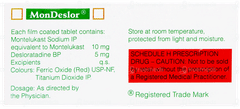

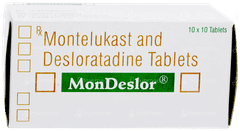
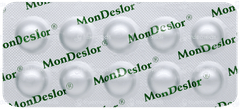
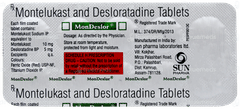

 Composition
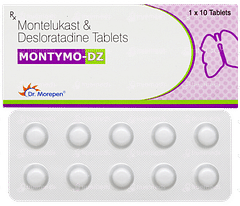
Mondeslor Tablet is used for allergic rhinitis when the doctor considers both ingredients necessary. It may help relieve seasonal or persistent nasal allergy symptoms, including sneezing, itching and nasal discharge. Desloratadine also has an established role in relieving urticaria, although this combination should not automatically be considered necessary for uncomplicated hives. Montelukast may be used separately in asthma management, but Mondeslor Tablet is not a rescue treatment for sudden asthma symptoms.
Take Mondeslor Tablet exactly as prescribed by your doctor. Swallow the tablet whole with water, with or without food. Follow the prescribed treatment duration and do not increase the amount independently. Avoid combining it with other allergy medicines without medical advice. Reduce exposure to known allergens where practical. If you experience new mood changes, disturbing dreams, agitation or unusual behaviour, stop taking the medicine and contact your doctor promptly. Seek emergency help for suicidal thoughts or behaviour.
Possible side effects of Mondeslor Tablet include headache, dry mouth, tiredness, dizziness and abdominal discomfort. Some patients may experience nausea or sleep disturbances. Montelukast has been associated with serious neuropsychiatric reactions, including anxiety, aggression, depression, nightmares and suicidal thoughts. These reactions can occur in people without previous mental health problems. Seek immediate medical advice if concerning mood or behaviour changes develop. Severe allergic reactions, including facial swelling or breathing difficulty, require emergency care.
Before taking Mondeslor Tablet, tell your doctor about liver or kidney impairment, previous psychiatric symptoms, seizures or allergies to either ingredient. Mention other medicines, including rifampicin, phenobarbital and gemfibrozil. Discuss pregnancy and breastfeeding before treatment. Montelukast should generally be reserved for allergic rhinitis when alternative treatments have not worked adequately or cannot be tolerated. Your doctor should assess the benefits and risks of treatment and review whether both ingredients remain necessary.