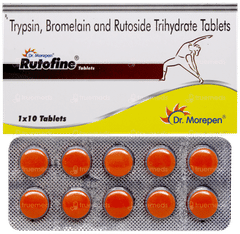

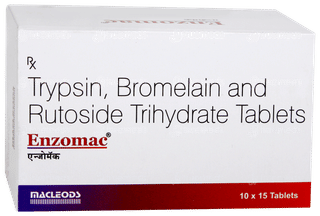

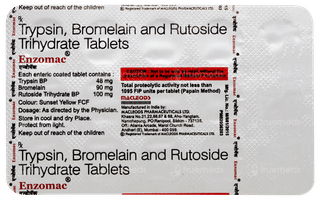
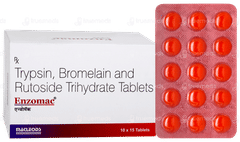
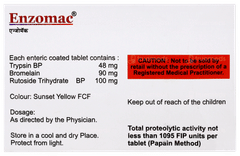

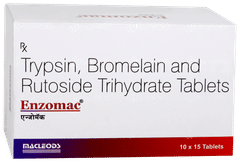



 Composition
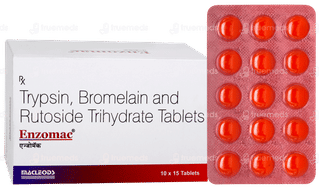
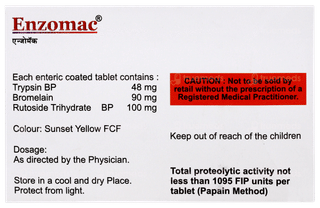
Enzomac Tablet may be prescribed as additional treatment for swelling and discomfort associated with injuries, musculoskeletal conditions or selected surgical and dental procedures. Its ingredients have been investigated for their potential effects on inflammation and tissue recovery. However, the available evidence does not establish that the combination reliably accelerates healing or replaces established pain management. Treatment should address the underlying injury or condition. Your doctor will decide whether the combination offers a suitable additional option.
Take Enzomac Tablet exactly as prescribed by your doctor. Swallow the tablet whole with water and follow the product-specific instructions about food. Do not crush or chew it unless your pharmacist confirms that the formulation permits this. Follow the prescribed treatment duration and avoid increasing the amount independently. Resting an injured area initially and gradually returning to movement as advised may support recovery. Seek reassessment if pain or swelling increases, persists or is accompanied by fever.
Possible side effects of Enzomac Tablet include nausea, abdominal discomfort, diarrhoea and other digestive disturbances. Some patients may experience skin rash or allergic reactions, particularly if they are sensitive to bromelain or related substances. Bromelain may increase bleeding risk when combined with certain medicines. Report unusual bruising, nosebleeds or prolonged bleeding to your doctor. Seek urgent medical attention for facial swelling, breathing difficulty or a severe allergic reaction. Persistent gastrointestinal symptoms also require medical advice.
Before taking Enzomac Tablet, tell your doctor about bleeding disorders, stomach ulcers or previous allergic reactions to pineapple, bromelain or other ingredients. Mention anticoagulants, antiplatelet medicines and anti-inflammatory painkillers because of potential bleeding concerns. Inform your doctor before planned surgery or dental procedures. Discuss pregnancy and breastfeeding before treatment because reliable safety information for this combination is limited. Children should receive it only following medical assessment. Your doctor should review whether supportive enzyme treatment is appropriate for your condition.