

- Medicines
- Personal Care
- Skin Cream
- Sunscreen
- Face Wash
- Skin and Body Soap
- Acne Care
- Body Lotions
- Moisturising Lotion
- Moisturising Cream
- Mosquito Repellent
- Moisturising Gel
- Body Wash
- Hair Oils
- Hair Shampoo
- Hair Conditioners
- Hair Supplements
- Hair Colour
- Hair Serum
- Hair Mask
- Hair Solutions
- Baby Diapers and Wipes
- Baby Lotion and Moisturising Cream
- Baby Bath Essentials
- Baby Skin Care
- Baby and Infant Food
- Baby Healthcare
- Women Multivitamins
- Ovulation Test Kit and Women Intimate Care
- Sanitary Pads
- Nutritional Drinks
- Condoms
- Lubricants
- Massage Gels
- Personal Body Massagers
- Men Performance Booster
- Sexual Health Supplements
- Massage Oils
- Ayurveda
- Tooth Paste
- Mouth Ulcer Gel
- Mouthwash
- Toothache and Gum Pain
- Tooth Brush
- Gargle Solution
- Orthopaedic Supports
- Adult Diapers
- Footwear
- Mobility and Support Accessories
- Urinary Support and Care
- Health Conditions
- Bone and Joint Care
- Digestive Care
- Eye Care
- Pain Relief
- Smoking Cessation
- Liver Care
- Stomach Care
- Cold and Cough
- Heart Care
- Kidney Care
- Piles, Fissures & Fistula
- Respiratory Care
- Mental Wellness
- Derma Care
- Pre and Probiotics
- Acidity
- Gas
- Constipation
- Loose Motion/Diarrhoea
- Digestive Fibres
- Digestive Enzymes
- Eye Lubricant Drops
- Lens Solution
- Safety Eye Wear
- Eye Cream
- Eye Vitamins and Supplements
- Eye Drops
- Eye Ointment and Gel
- Nicotine Patch
- Nicotine Gum
- Nicotine Lozenges
- Cough Syrups
- Chest Rubs and Balms
- Nasal Spray
- Lozenges
- Inhalant Capsules
- Cold and Cough Tablets
- Vitamins & Supplements
- Diabetes Care
- Healthcare Devices
- Homeopathic Medicine
- Health Guide
Vitiligo
Vitiligo is an autoimmune disorder that causes the skin to lose pigment, resulting in white patches (Rosmarin et al., 2020). While vitiligo is primarily cosmetic, it can have psychological impacts, such as low self-esteem and depression, owing to concerns about appearance. Recognising the symptoms and seeking appropriate vitiligo treatment can help manage the condition effectively.
 50
50Last updated on : 06 May, 2026
Read time : 10 mins
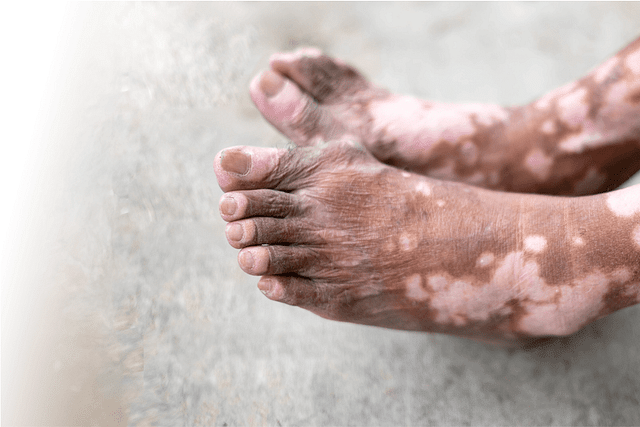
Overview of Disease
Vitiligo is a chronic autoimmune disorder that causes patches of skin to lose pigment or colour, resulting in depigmented white patches. It affects approximately 1% of the global population and can occur at any age, though it often begins before the age of 20. The condition is more noticeable in individuals with darker skin tones. In this article, we will delve into the causes, symptoms, and available treatment options for vitiligo.
What is Vitiligo?
Vitiligo is a disease characterised by the destruction of melanocytes, the skin cells responsible for producing melanin, the pigment that gives skin its colour. In many cases, this occurs because the body’s immune system attacks melanocytes, leading to patches of skin losing their colour and turning white. The condition can affect any part of the body, including the skin, hair, and mucous membranes.
Key Factors about Vitiligo
| Category | Details |
| Also Referred as | Leucoderma |
| Commonly Occurs In | Individuals between 10-30 years of age Vitiligo affects individuals of all genders at similar rates |
| Affected Organ | Skin Hair Mucous membranes (mouth, nose, genital, and rectal areas) |
| Type | Nonsegmental vitiligo Segmental vitiligo Focal vitiligo Acrofacial vitiligo Mucosal vitiligo Universal vitiligo Mixed type vitiligo |
| Common Signs | Patchy loss of skin colour Premature whitening or greying of hair Loss of colour in mucous membranes |
| Consulting Specialist | Dermatologist |
| Treatement Procedures | Topical corticosteroids Immunomodulators Phototherapy Depigmentation therapy Skin grafting |
| Managed By | Corticosteroids: betamethasone and clobetasol Vitamin D3 analogs: calcipotriol and tacalcitol Methotrexate Topical medications: methoxsalen, tioxasalen, psoralen, valerate, fluticasone propionate, and triamcinolone Phototherapy Depigmentation Surgery |
Types of Vitiligo
Vitiligo is categorised into several types based on the pattern and extent of depigmentation:
- Generalised (nonsegmental) vitiligo: The most common type, characterised by widespread and randomly distributed areas of depigmentation across the body, often appearing symmetrically.
- Segmental (unilateral) vitiligo: A less common type where depigmentation occurs on one side or segment of the body, such as one leg or one side of the face, and tends to stabilise after 6 to 12 months.
- Focal vitiligo: A type where there are a few scattered macules in one area, commonly seen in children.
- Acrofacial vitiligo: Depigmentation affecting the hands, feet, face, and areas around body openings.
- Mucosal vitiligo: Depigmentation limited to the mucous membranes.
- Universal vitiligo: A rare type where more than 80% of the body surface area is depigmented.
Mixed type vitiligo: A combination of segmental and generalised vitiligo.
Symptoms of Vitiligo
The symptoms of vitiligo can manifest in different ways:
- Patchy Loss of Skin Colour: The most noticeable symptom is the development of smooth white or light patches on the skin, known as macules or patches.
- Hair colour changes: Premature whitening or greying of scalp hair, eyelashes, eyebrows, or beard hair.
- Mucous membrane involvement: Loss of colour may affect the tissues lining the inside of the mouth and nose.
Some additional symptoms that may accompany vitiligo include:
- Itchy skin before depigmentation starts
- Eye involvement is uncommon, though rare cases of associated ocular inflammation have been reported.
Increased susceptibility to painful sunburns on affected skin areas (NIAMS, 2023).
Causes of Vitiligo
The exact cause of vitiligo, where pigment-producing cells (melanocytes) die or stop producing melanin, remains unclear. However, several factors are thought to play a role:
- Autoimmune condition: The immune system mistakenly attacks and destroys melanocytes
- Family history: Genetic predisposition, with about 30% of cases being hereditary
- Trigger events: Stress, severe sunburns, or exposure to certain chemicals can trigger or worsen vitiligo
- Other possible causes: Research suggests links to autoimmune disorders like type 1 diabetes, Addison's disease, and thyroid autoimmune disorders
In addition to these primary causes, some other factors that may contribute to the development of vitiligo include:
- Neurochemical factors, like an imbalance in neurotransmitters
- Oxidative stress leading to melanocyte damage or death
- Although once proposed, viral infections are not an established cause of vitiligo.
The complex interplay of genetic, environmental, and immunological factors likely underlies the pathogenesis of vitiligo. Understanding these causes aids in developing targeted therapies.
Risk Factors
Although the precise causes of vitiligo remain unclear, research has identified several risk factors and conditions that may be associated with its development:
- Genetic predisposition appears to play a role, as vitiligo can run in families, suggesting an inherited component.
- Autoimmune disorders, such as thyroid disease, diabetes, and rheumatoid arthritis, are often linked to vitiligo, indicating a potential autoimmune mechanism targeting melanocytes.
- Stress, both physical and emotional, has been implicated as a trigger for vitiligo onset or exacerbation.
- Skin trauma, including sunburns, cuts, or chemical exposures, may precipitate vitiligo in susceptible individuals.
- Exposure to certain chemicals, such as phenols found in hair dyes and industrial products, has been associated with an increased risk of developing vitiligo.
- Hormonal influences have been proposed but are not established risk factors.
- Vitamin deficiencies, especially vitamin B12, folate, and vitamin D, have been observed in some individuals with vitiligo.
Complications
Vitiligo can lead to several complications that extend beyond the skin. These may include:
- Increased risk of developing other autoimmune disorders, such as Type 1 diabetes, Addison's disease, psoriasis, rheumatoid arthritis, lupus, thyroid autoimmune disorders, and pernicious anaemia
- Eye problems, including inflammation of the iris and uveitis
- Heightened sensitivity to sunlight, making affected skin more vulnerable to sunburn; however, vitiligo itself is not associated with an increased risk of skin cancer.
- Psychological distress, such as low self-esteem, anxiety, and depression, stemming from the altered appearance of the skin (NIAMS, 2023).
- Possible auditory changes have been reported, though this is uncommon and not consistently demonstrated across studies.
Prevention of Vitiligo
As the exact causes of vitiligo are not fully understood, there are no guaranteed ways to prevent its onset. However, some strategies may help minimise triggers and manage the condition:
- Protect the skin from excessive sun exposure and sunburns by using broad-spectrum sunscreen with a high SPF, wearing protective clothing, and seeking shade during peak sunlight hours.
- Manage stress through relaxation techniques, such as deep breathing, meditation, yoga, or engaging in enjoyable activities.
- Avoid skin trauma, such as cuts, scrapes, or bruises, and take care when using hair dyes or other chemical products that may irritate the skin.
- Maintain a balanced diet rich in fruits, vegetables, whole grains, and lean proteins to support overall skin health and immune function.
- Consider supplementing with vitamin B12, folate, and vitamin D under the guidance of a doctor, especially if deficiencies are suspected or confirmed.
- Attend regular check-ups with a dermatologist to monitor skin health, discuss any concerns, and adjust treatment plans as needed.
- Address any underlying autoimmune conditions or hormonal imbalances in collaboration with relevant medical specialists.
- Educate oneself about vitiligo to better understand the condition, its triggers, and available management options.
While these measures may not completely prevent vitiligo, they can contribute to overall skin health and well-being. If signs of vitiligo do appear, prompt consultation with a dermatologist is essential for timely diagnosis and appropriate treatment.
Diagnosis & Tests
If you suspect you have vitiligo, your doctor will perform a thorough examination and may recommend certain tests to confirm the diagnosis:
- Physical examination: Your doctor will assess the location, size, and pattern of depigmented patches. They may use a Wood’s lamp (ultraviolet light examination) to highlight areas of pigment loss.
- Medical history review: Discussing your family history, autoimmune conditions, and exposure to potential trigger factors helps guide the diagnosis.
- Skin biopsy: In some cases, a small skin sample may be taken for microscopic examination to rule out other conditions and confirm melanocyte loss.
- Blood tests: Tests for thyroid function, vitamin B12 levels, and other autoimmune disorders may be ordered, as they can co-occur with vitiligo.
- Eye examination: An eye specialist (ophthalmologist) may check for signs of inflammation or other eye problems associated with vitiligo.
Treatment & Management
Managing and treating vitiligo involves multiple approaches aimed at stopping depigmentation, promoting repigmentation, and maintaining an even skin tone. Treatment strategies include:
1. Topical Medications
- Topical corticosteroids like Betamethasone Dipropionate, Clobetasol Dipropionate, and Mometasone Furoate can help restore pigmentation, especially in early-stage vitiligo affecting small patches on the face and neck.
- Topical immunomodulators such as Tacrolimus and Pimecrolimus are effective alternatives, particularly in sensitive areas where corticosteroids might not be suitable.
2. Systemic Medications
- In severe or rapidly progressing cases, short courses of oral corticosteroids may be prescribed to slow disease progression, but intravenous steroids are not routinely used.
3. Phototherapy & Light Therapy
- Narrow-band UVB phototherapy is a widely used treatment that can be effective alone or in combination with topical therapies. Regular sessions over several months may be required for noticeable results.
- Excimer laser therapy delivers targeted 308-nm monochromatic UVB light and is useful for small, localised patches (Rodrigues et al., 2017).
4. Surgical Options
- Miniature punch grafting, where small sections of pigmented skin are transplanted to affected areas, is a minimally invasive outpatient procedure performed under local anaesthesia.
5. Depigmentation Therapy
- For extensive vitiligo cases, monobenzone may be used to remove the remaining pigment, achieving a more uniform skin tone. This is a permanent treatment that requires careful consideration.
6. Antioxidant Support
- Antioxidants like Vitamin C, Vitamin E, and Superoxide Dismutase may help protect skin cells from oxidative stress, potentially supporting vitiligo management. However, it is not standard first-line therapy.
7. New & Emerging Therapies
- Ruxolitinib cream, a recently FDA-approved topical treatment, has shown promising results in treating facial vitiligo affecting less than 10% of the body.
Living with Disease
Managing vitiligo involves a multifaceted approach that encompasses medical treatments, lifestyle modifications, and emotional support.
- Treatment options may include the use of skin camouflage creams, topical steroid creams, phototherapy, and, in some cases, depigmentation or surgical skin grafting.
- Protecting the affected skin from sun exposure by using a high SPF sunscreen is crucial to minimise the risk of sunburn and reduce UV-related skin damage.
- Identifying and avoiding potential triggers, such as stressful events, skin damage, and exposure to certain chemicals, can help in managing vitiligo flare-ups.
- Seeking support from vitiligo organisations and joining support groups can provide valuable emotional support and practical advice for coping with the condition.
When to See a Doctor?
If you notice any of the following symptoms, it is essential to consult a doctor:
- Appearance of white patches on your skin, hair, or mucous membranes
- Development of eye inflammation, or uveitis
Key Takeaways
- Vitiligo is a non-contagious condition that cannot be transmitted to others.
- While there is currently no cure for vitiligo, various treatment options are available to manage the symptoms and improve the appearance of the affected skin.
- Vitiligo can be associated with other autoimmune disorders, eye problems, sun sensitivity, psychological distress, and potential hearing loss.
- Seeking medical advice, protecting the skin from sun exposure, identifying triggers, and obtaining emotional support are essential aspects of living with vitiligo.
FAQs
What is the primary reason behind vitiligo?
Is there a cure for vitiligo?
What can be done to prevent vitiligo from spreading?
Is vitiligo caused by any specific deficiency?
Which population is most affected by vitiligo?
Is it possible for anyone to develop vitiligo?
Can vitiligo resolve on its own without treatment?
References
- Rosmarin, D., Pandya, A. G., Lebwohl, M., Grimes, P., Hamzavi, I., Gottlieb, A. B., Butler, K., Kuo, F., Sun, K., Ji, T., Howell, M. D., & Harris, J. E. (2020). Ruxolitinib cream for treatment of vitiligo: a randomised, controlled, phase 2 trial. Lancet, 396(10244), 110–120. https://doi.org/10.1016/S0140-6736(20)30609-7
- Marzano, A. V., Alberti-Violetti, S., Maronese, C. A., Avallone, G., & Jommi, C. (2023). Vitiligo: Unmet need, management and treatment guidelines. Dermatology Practical & Conceptual, 13(4S2), e2023316S. https://doi.org/10.5826/dpc.1304S2a316S
- National Institute of Arthritis and Musculoskeletal and Skin Diseases (NIAMS). (2023). Vitiligo: Overview. https://www.niams.nih.gov/health-topics/vitiligo
- Rodrigues, M., Ezzedine, K., Hamzavi, I., Pandya, A. G., Harris, J. E., & Vitiligo Working Group. (2017). Current and emerging treatments for vitiligo. Journal of the American Academy of Dermatology, 77(1), 17–29. https://doi.org/10.1016/j.jaad.2016.11.010
- Alikhan, A., Felsten, L. M., Daly, M., & Petronic-Rosic, V. (2022). Vitiligo: A comprehensive review—Part II: Treatment options and management strategies. Journal of the American Academy of Dermatology, 86(5), 1017–1035.https://doi.org/10.1016/j.jaad.2021.11.015
Check Related Salts
Latest health articles

Top Health Essentials















Disclaimer
Top-Selling Medicines:
...View more
Top-OTC medicines:
...View more
Company
About UsHealth ArticleHealth StoriesHealth LibraryDiseases & Health ConditionsAyurvedaUnderstanding Generic MedicinesAll MedicinesAll BrandsNeed HelpFAQSecuritySavings CalculatorAdvertise with UsSubscribe
Registered Office Address
Grievance Officer
Download Truemeds


Contact Us
Our customer representative team is available 7 days a week from 9 am - 9 pm.
v4.28.11

2026 - Truemeds | All rights reserved. Our content is for informational purposes only. See additional information.

Our Payment Partners




