

- Medicines
- Personal Care
- Skin Cream
- Sunscreen
- Face Wash
- Skin and Body Soap
- Acne Care
- Body Lotions
- Moisturising Lotion
- Moisturising Cream
- Mosquito Repellent
- Moisturising Gel
- Body Wash
- Hair Oils
- Hair Shampoo
- Hair Conditioners
- Hair Supplements
- Hair Colour
- Hair Serum
- Hair Mask
- Hair Solutions
- Baby Diapers and Wipes
- Baby Lotion and Moisturising Cream
- Baby Bath Essentials
- Baby Skin Care
- Baby and Infant Food
- Baby Healthcare
- Women Multivitamins
- Ovulation Test Kit and Women Intimate Care
- Sanitary Pads
- Nutritional Drinks
- Condoms
- Lubricants
- Massage Gels
- Personal Body Massagers
- Men Performance Booster
- Sexual Health Supplements
- Massage Oils
- Ayurveda
- Tooth Paste
- Mouth Ulcer Gel
- Mouthwash
- Toothache and Gum Pain
- Tooth Brush
- Gargle Solution
- Orthopaedic Supports
- Adult Diapers
- Footwear
- Mobility and Support Accessories
- Urinary Support and Care
- Health Conditions
- Bone and Joint Care
- Digestive Care
- Eye Care
- Pain Relief
- Smoking Cessation
- Liver Care
- Stomach Care
- Cold and Cough
- Heart Care
- Kidney Care
- Piles, Fissures & Fistula
- Respiratory Care
- Mental Wellness
- Derma Care
- Pre and Probiotics
- Acidity
- Gas
- Constipation
- Loose Motion/Diarrhoea
- Digestive Fibres
- Digestive Enzymes
- Eye Lubricant Drops
- Lens Solution
- Safety Eye Wear
- Eye Cream
- Eye Vitamins and Supplements
- Eye Drops
- Eye Ointment and Gel
- Nicotine Patch
- Nicotine Gum
- Nicotine Lozenges
- Cough Syrups
- Chest Rubs and Balms
- Nasal Spray
- Lozenges
- Inhalant Capsules
- Cold and Cough Tablets
- Vitamins & Supplements
- Diabetes Care
- Healthcare Devices
- Homeopathic Medicine
- Health Guide
Vijaysar (Asana)
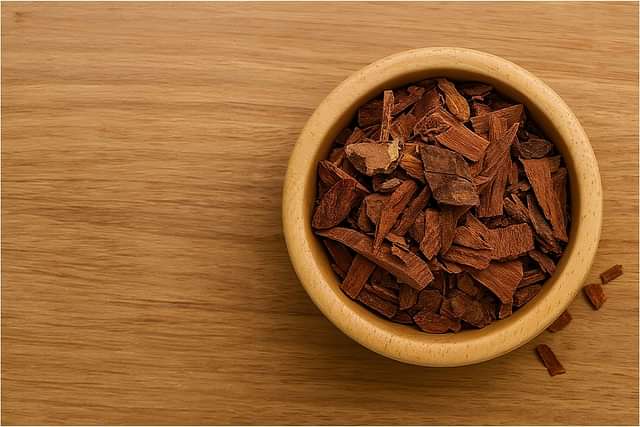
Vijaysar, known in Ayurveda as Asana, is the dried heartwood of Pterocarpus marsupium Roxb., a large deciduous tree native to the Indian subcontinent. In Ayurveda, it is described as a bitter and astringent Rasayana herb and is traditionally used in the management of Prameha (a group of urinary and metabolic disorders) and certain skin conditions. Vijaysar is commonly used as churna (powder), kwath (decoction), or by soaking drinking water overnight in a Vijaysar wooden tumbler, a traditional method of use.
 50
50Last updated on : 14 Aug, 2026
Read time : 20 mins
What is Vijaysar?
Several Sanskrit names for Vijaysar describe its appearance and traditional uses. Pitasara means "yellow heartwood", referring to the medicinally used inner wood, while Bandhukapushpa refers to its yellow flowers. The English names Indian kino and Malabar kino come from the dark red gum resin, known as kino, produced by the tree.
Pterocarpus marsupium Roxb. belongs to the Fabaceae (pea) family and is native to the dry deciduous forests of the Western Ghats, central India and the sub-Himalayan region, as well as parts of Nepal and Sri Lanka. Besides its traditional medicinal use, its durable timber is valued for furniture, agricultural implements and other woodworking applications. Due to habitat loss and overexploitation, the species is currently classified as Near Threatened.
In Ayurveda, the plant is known as Asana and is described using the following traditional properties:
- Rasa (Taste): Kashaya (astringent), Tikta (bitter), Katu (pungent)
- Guna (Qualities): Laghu (light), Ruksha (dry)
- Virya (Potency): Not clearly specified in the major classical texts
- Vipaka (Post-digestive Effect): Katu (pungent)
- Dosha Action: Traditionally considered to help balance Kapha and Pitta
- Traditional Actions (Karma): Rasayana (rejuvenative), Stambhana (astringent), Kushthaghna (traditionally used for skin disorders), and Raktashodhana (traditionally associated with blood purification)
- Classical Indications: Traditionally described for Prameha, Kushtha, Medodosha and Pandu (Nilesh & Harshad, 2022).
Key Facts
| Feature | Details |
| Botanical name | Pterocarpus marsupium Roxb. |
| Family | Fabaceae, also written as Leguminosae, subfamily Faboideae |
| Part used | Heartwood mainly. The bark and the red gum resin, known as kino, are also used. |
| Ayurvedic category | Rasayana and Stambhana dravya. Ayurvedic drug name Asana.
|
| Ayurvedic properties | Rasa: Kashaya, Tikta, Katu. Guna: Laghu, Ruksha. Vipaka: Katu. Dosha action: pacifies Kapha and Pitta.
|
| Key active compounds | Pterostilbene, marsupsin, pterosupin, (-)-epicatechin, liquiritigenin, kino tannic acid and related tannins |
| Traditional uses | Prameha (urinary and metabolic disorders), Kushtha (skin disorders), Medodosha, Pandu and Atisara |
| Common forms | Heartwood chips, powder (churna), decoction (kwatha), capsules, and water stored in a heartwood tumbler
|
| General dosage | Powder 3 g to 6 g daily. Decoction 50 ml to 100 ml. Aqueous heartwood extract was used at 2 g to 4 g daily in Indian clinical trials. |
| Best taken | Under the direction of a qualified practitioner. Anyone with diabetes should monitor blood glucose while taking it.
|
| Key safety note | May lower blood glucose. Do not start it alongside insulin or oral antidiabetic medicines without medical supervision, and never stop a prescribed medicine in order to take it. Avoid in pregnancy and breastfeeding.
|
Alternative Names of Vijaysar (Asana)
Vijaysar is known by different names across India and may appear under regional or Sanskrit names on Ayurvedic prescriptions and herbal products. Some of the most common names are listed below.
- Botanical name: Pterocarpus marsupium Roxb.
- Family: Fabaceae, also written as Leguminosae
- English: Indian kino tree, Malabar kino tree, East Indian kino
- Sanskrit: Asana, Bijaka, Pitasara, Bandhukapushpa, Priyaka, Sarjaka, Mahasarja
- Hindi: Bijasar, Bija, Vijayasar
- Marathi: Bibala, Vivala
- Gujarati: Biyo
- Bengali: Piyasal, Pitasal
- Odia: Piasal
- Tamil: Vengai
- Telugu: Vegisa, Peddagi, Yegi
- Kannada: Honne, Banga, Bijasara
- Malayalam: Venga
Chemical Constituents of Vijaysar
The heartwood of Vijaysar contains several bioactive phenolic compounds that have been the primary focus of pharmacological research. The principal constituents include:
- Pterostilbene: A naturally occurring stilbene compound structurally related to resveratrol.
- Marsupsin: A benzofuranone compound identified in the heartwood.
- Pterosupin: A C-glycoside compound found in the heartwood.
- (-)-Epicatechin: A flavan-3-ol antioxidant also found in foods such as tea and cocoa.
- Liquiritigenin and Isoliquiritigenin: Flavonoid compounds identified in the heartwood.
- Kino tannic acid and related tannins: Polyphenolic compounds responsible for the characteristic astringent taste of the heartwood.
- Kinoin and kino red: Natural pigments that give the gum resin (kino) its characteristic dark red colour.
Pterostilbene, marsupsin, pterosupin and (-)-epicatechin have been investigated for their potential effects on glucose metabolism in laboratory and animal studies. These are among the most widely studied constituents of Vijaysar, although evidence from human clinical trials remains limited (Manickam et al., 1997).
Medicinal Properties of Vijaysar
The properties below describe the pharmacological actions and traditional Ayurvedic uses of Vijaysar. They should not be interpreted as proven treatment effects.
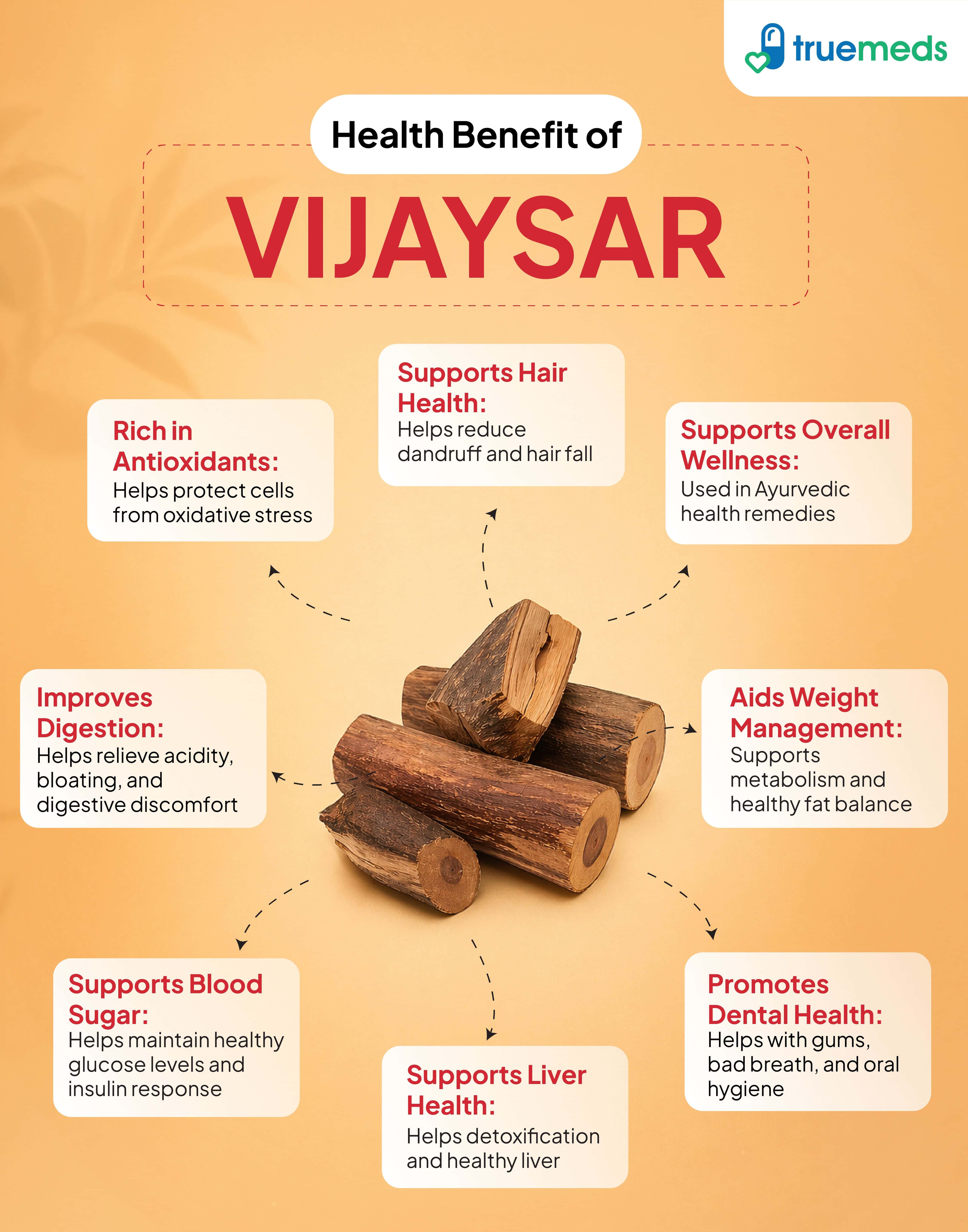
- Antihyperglycaemic: May help lower blood glucose levels.
- Astringent (Stambhana): Traditionally associated with helping firm loose stools and reducing excessive secretions.
- Anti-inflammatory: Reported in laboratory and animal studies.
- Antioxidant: Reported in laboratory studies.
- Antimicrobial: Reported for bark and leaf extracts in laboratory studies.
- Hepatoprotective: Reported in animal studies.
- Rasayana: Traditionally described in Ayurveda as a rejuvenative herb.
The glucose-lowering effects of Vijaysar have been investigated in human studies, including Indian clinical trials involving people with newly diagnosed type 2 diabetes. Most of the other reported properties are based on laboratory or animal research and have not been confirmed to provide clinical benefits in humans. These findings should be regarded as preliminary and should not be interpreted as evidence that Vijaysar can treat or prevent any disease.
Key Health Benefits of Vijaysar
Vijaysar has one use that has been investigated in human studies, while several other reported benefits come from traditional Ayurvedic practice or laboratory research. The sections below explain the current evidence for each.
May Support Blood Glucose Control
An Indian clinical study involving people with newly diagnosed, previously untreated type 2 diabetes found that an aqueous heartwood extract reduced fasting and post-meal blood glucose over 12 weeks, with a modest reduction in HbA1c from 9.8% to 9.4%. The study was conducted in untreated patients, so the findings do not show that Vijaysar is effective as an add-on to standard diabetes treatment. More high-quality clinical studies are needed.
May Help Firm Loose Stools
The heartwood contains tannins, which can bind to proteins in the lining of the gut and may help reduce excessive secretions. In Ayurveda, this property is described as Stambhana Karma, and Asana has traditionally been used for Atisara (diarrhoea). This traditional use has not yet been confirmed in modern clinical studies.
Traditionally Used for Skin Health
In Ayurveda, Asana is described as Kushthaghna (traditionally used for skin disorders) and Raktashodhana (traditionally associated with blood purification). It is included in several classical formulations used for chronic skin conditions and may be used both internally and externally under qualified Ayurvedic guidance (Nilesh & Harshad, 2022). However, there are currently no well-designed human clinical trials confirming these traditional uses.
Shows Antioxidant and Anti-Inflammatory Activity
Compounds such as pterostilbene, (-)-epicatechin and other flavonoids found in the heartwood have demonstrated antioxidant and anti-inflammatory activity in laboratory and animal studies. These findings help explain why Vijaysar continues to be researched, but they have not been shown to provide clinically proven health benefits in humans.
Disclaimer: Vijaysar is not a treatment for diabetes and should not replace prescribed medicines. If you have diabetes or take insulin or other blood glucose-lowering medicines, consult your doctor before using Vijaysar, as closer monitoring or adjustments to your treatment may be needed. Never stop or change prescribed medication without medical advice.
Common Uses of Vijaysar
Vijaysar is traditionally used in several Ayurvedic preparations and household practices. The uses below reflect traditional or common applications and should not be interpreted as proven clinical benefits.
Within Ayurvedic Management of Prameha
In Ayurveda, Asana is prescribed as part of the management of Prameha, a group of urinary and metabolic disorders. It is typically used alongside dietary changes, lifestyle measures and other Ayurvedic medicines, rather than as a standalone remedy. Treatment is individualised and should be supervised by a qualified Ayurvedic practitioner.
Overnight Water in a Vijaysar Wooden Tumbler
A well-known traditional practice is to soak drinking water overnight in a tumbler made from Vijaysar heartwood and drink the water the following morning. The amount of active compounds released into the water is not standardised and may vary depending on the age, quality and condition of the wood.
Used in Classical Ayurvedic Formulations
Asana is an ingredient in classical formulations such as Nyagrodhadi Churna and Asanadi Kwatha, where it is combined with other herbs traditionally used to support metabolic health and balance Kapha (Nilesh & Harshad, 2022).In Ayurvedic practice, Vijaysar is more commonly used as part of these multi-herb formulations than as a single-herb preparation.
External Application in Skin Complaints
In traditional practice, a paste prepared from the bark or heartwood has been applied externally to certain skin conditions, wounds and ulcers. This use is based on traditional Ayurvedic practice and has not been confirmed in well-designed clinical studies. Perform a patch test before external use and discontinue use if irritation or an allergic reaction develops.
Precautions While Taking Vijaysar
Vijaysar can lower blood glucose, which may be beneficial in the right setting but can also increase the risk of low blood sugar if used inappropriately. Read the precautions below before using it.
- Never stop, reduce or replace a prescribed diabetes medicine with Vijaysar. Doing so may allow blood glucose to rise to unsafe levels.
- If you take insulin or any blood glucose-lowering medicine, consult your doctor before starting Vijaysar, as the combination may increase the risk of hypoglycaemia (low blood sugar).
- Learn to recognise the signs of low blood sugar, including shakiness, sweating, hunger, a fast heartbeat, confusion, irritability or unusual drowsiness. Treat it promptly with a fast-acting source of glucose and seek medical advice.
- Monitor your blood glucose more frequently during the first few weeks of use and keep a record to share with your doctor.
- Stop taking Vijaysar at least two weeks before planned surgery, as changes in blood glucose control may affect your care during and after the procedure.
- Avoid Vijaysar during pregnancy and breastfeeding, as there is insufficient safety information for these groups.
- Do not give Vijaysar to children or adolescents unless advised by a doctor or a qualified Ayurvedic practitioner.
- Use Vijaysar with caution if you have chronic constipation, as its astringent properties may worsen the condition.
- If applying Vijaysar powder or paste to the skin, perform a patch test first, as contact reactions have been reported in some people.
- Tell your doctor or pharmacist about any herbal supplements you use, especially if you take medicines for diabetes or other long-term conditions.
Disclaimer: This is general safety information and not a substitute for advice from a registered medical practitioner or a qualified Ayurvedic physician. Anyone with diabetes should be under regular medical care.
How to Use Vijaysar
Vijaysar is available as heartwood powder, chips for decoction, wooden tumblers and capsules or tablets. Follow the instructions for the specific product you are using.
Preparing the Heartwood Powder
- Buy Vijaysar heartwood powder from a licensed manufacturer rather than grinding wood at home, as home preparation may not reliably separate the heartwood from the bark.
- Measure the powder with a kitchen scale where possible, as powder density can vary and affect the amount measured.
- Mix the measured dose with warm water and take it before meals or as advised by your doctor or qualified Ayurvedic practitioner.
- Take it at the same time each day to help monitor any changes in blood glucose levels.
Making a Decoction (Kwatha)
- Add the measured Vijaysar heartwood chips to water in a non-reactive pan.
- Simmer gently until the water reduces to about half its original volume.
- Strain the decoction and drink it while warm.
- Prepare a fresh decoction each time rather than storing leftovers.
Using a Wood Tumbler
- Rinse the tumbler and allow it to dry completely before first use.
- Fill the tumbler with drinking water at night and keep it covered until morning.
- Drink the water the following morning, then rinse the tumbler and allow it to dry before using it again.
- Do not leave water in the tumbler for more than one night, as prolonged moisture may encourage bacterial or mould growth.
- Replace the tumbler if it becomes cracked, develops an unusual smell, or no longer imparts any colour to the water.
Taking Capsules or Tablets
- Check the product label to confirm the amount of heartwood or extract per capsule, as the strength can vary between brands.
- Take the capsule with water and follow the dosage instructions provided on the label or advised by your practitioner.
- Avoid combining capsule products with Vijaysar powder or tumbler water on the same day unless advised, as the total intake may increase.
Recommended Dosage of Vijaysar
Measure the dose by weight rather than by spoonfuls or capsule counts, as product strengths vary considerably. The guidance below is general and should not replace advice from your doctor or a qualified Ayurvedic practitioner.
Children Under 12 Years
Vijaysar is not recommended for children as a home remedy. There is no established paediatric dose and insufficient safety data for this age group. Any use should be prescribed and monitored by a doctor or a qualified Ayurvedic practitioner.
Teenagers Aged 12 to 17 Years
There is no established dose for adolescents. If Vijaysar is prescribed, the dose is usually lower than the adult dose and blood glucose should be monitored closely. Teenagers with type 1 diabetes should not use Vijaysar as it does not replace insulin or treat the underlying insulin deficiency.
Adults
Heartwood powder is commonly taken at 3-6 g daily, while a decoction is typically taken at 50–100 ml daily. In Indian clinical studies, an aqueous heartwood extract was used at 2 g daily, with the dose increased to 3-4 g daily when blood glucose remained inadequately controlled. Extract and raw powder are not interchangeable by weight.
Older Adults
Start at the lower end of the adult range. Older people are more likely to be on several medicines, are more vulnerable to low blood sugar, and may not notice the early warning signs. Review the whole medicine list with a doctor before starting.
Disclaimer: Vijaysar should be taken only as advised by a registered medical practitioner or a qualified Ayurvedic physician. Do not increase the dose on your own, and do not use it in place of a prescribed medicine.
Side Effects of Vijaysar
Vijaysar was generally well tolerated in limited human studies, where no significant side effects were reported over up to 12 weeks. The effects below may occur and are particularly important to monitor if you also take medicines for diabetes.
Low Blood Sugar (Hypoglycaemia)
The main potential risk is hypoglycaemia, and it may increase if Vijaysar is combined with insulin or a blood glucose-lowering medicine. Watch for shakiness, sweating, hunger, a fast heartbeat, confusion or unusual drowsiness. Treat it immediately with glucose or a sugary drink, then contact your doctor.
Constipation
The heartwood is traditionally considered astringent, which may firm the stool. This may be helpful for people with loose stools but less suitable for those who already have constipation. Anyone prone to constipation should avoid it or use it only with the advice of a qualified healthcare practitioner.
Stomach Upset and Nausea
The bitter, astringent taste does not suit everyone, and some people may experience nausea or stomach discomfort, particularly on an empty stomach. Taking it with or shortly after food may help.
Allergic Skin Reactions
Redness, itching or swelling can follow contact with the powder, most often when it is applied as a paste. Patch test before any skin or scalp use, and stop at once if a reaction appears.
Headache and Light Headedness
This is usually associated with low blood glucose rather than being a direct effect of Vijaysar. If it happens repeatedly, check your glucose levels when it occurs and take the readings to your doctor.
Disclaimer: This list is not exhaustive, and the human safety data for Vijaysar covers short term use only. Report any unexpected reaction to your doctor or pharmacist and stop the herb in the meantime.
Storage of Vijaysar
The heartwood keeps well when dry and may deteriorate quickly when exposed to moisture. Store it as follows.
- Keep chips, powder and capsules in a tightly closed container away from direct sunlight.
- Store them in a cool, dry place, away from heat and moisture, such as not above the stove or beside the sink.
- Keep Vijaysar out of the reach and sight of children.
- Do not decant it into an unlabelled jar, because the original packaging provides the product strength, batch details and the expiry date.
- Discard powder that smells musty, has clumped or has changed colour.
- Rinse a wood tumbler after each use and let it dry fully in an upright position. A tumbler left damp can grow mould and should be discarded if mould develops.
- Buy from a licensed manufacturer with batch labelling. Vijaysar heartwood may be adulterated with Terminalia tomentosa or dried Butea monosperma gum (Bengal kino), which do not contain the same range of active compounds as Vijaysar.
Interaction of Vijaysar With Other Drugs
Almost every interaction with Vijaysar comes back to the same thing, its effect on blood glucose. Tell your doctor and pharmacist that you are taking it.
Insulin
Taking Vijaysar alongside insulin may lower blood glucose more than intended. Insulin doses are calculated based on your current blood glucose control, so adding a herbal product that may lower blood glucose without telling your doctor may increase the risk of hypoglycaemia. Do not start Vijaysar without discussing it with your doctor first.
Oral Diabetes Medicines
Sulfonylureas such as glimepiride and glibenclamide may carry a higher risk of hypoglycaemia when taken with Vijaysar. Metformin, gliptins and SGLT2 inhibitors may also increase the risk, although the likelihood is generally lower. Your doctor may want to adjust the dose or monitor you more closely.
Other Blood Glucose Lowering Herbs
Gudmar, karela, methi and jamun have traditionally been used to help support healthy blood glucose levels, and many commercial Ayurvedic products combine several of them. Check the ingredient list of anything else you take, because their effects may be additive, and the total dose can become difficult to monitor (Tiwari et al., 2014).
Medicines Around the Time of Surgery
Blood glucose is managed carefully before, during and after an operation. As a precaution, Vijaysar is generally recommended to be stopped at least two weeks before any planned procedure, and you should tell the surgical team if you have been taking it.
Iron Supplements and Iron Rich Meals
The heartwood is high in tannins, which may bind iron in the gut and reduce its absorption. Anyone taking iron for anaemia should separate the two by at least two hours.
Medicines Taken by Mouth in General
Tannins may bind to some medicines and reduce their absorption. Where timing matters, ask your pharmacist for advice on how to space Vijaysar and your regular tablets.
Disclaimer: This is not a complete list of interactions. Tell your doctor and pharmacist about every prescription medicine, over-the-counter product, and herbal preparation you take, including Vijaysar.
Herbs Traditionally Used With Vijaysar
| Herb | Why it is combined with senna |
| Gudmar | Gudmar is traditionally associated with the management of Prameha in Ayurveda and is traditionally believed to reduce the perception of sweetness. It is often combined with Vijaysar in commercial churnas, which is one reason the two are sometimes confused. |
| Karela | Bitter gourd is traditionally used for the same group of conditions and is also a common food. Combining it with Vijaysar may increase the overall blood glucose-lowering effect, so they should not be started together without medical advice, particularly by people taking diabetes medicines. |
| Jamun beej | The powdered seed is a traditional household remedy for Prameha and is astringent like Vijaysar. Traditional Ayurvedic formulations frequently pair Vijaysar heartwood with Jamun seed. |
| Haridra | Turmeric is added to Vijaysar preparations for skin conditions rather than metabolic conditions, supporting the traditional Kushthaghna and Raktashodhana actions described in Ayurveda. |
| Amalaki | Amalaki is included in many Rasayana formulations containing Vijaysar. It is traditionally considered cooling, which is believed to help balance the drying quality of the heartwood. |
Key Takeaways
- Vijaysar is the heartwood of Pterocarpus marsupium Roxb., known as Asana in Ayurveda. It has traditionally been used for conditions such as Prameha and skin disorders.
- Its key active compounds include pterostilbene, marsupsin, pterosupin and epicatechin, which are mainly found in the heartwood rather than the bark.
- Limited human studies in people with newly diagnosed type 2 diabetes have reported a modest reduction in blood glucose levels over up to 12 weeks. However, these studies did not show significant changes in cholesterol or other blood lipid levels.
- Vijaysar should not be used as a replacement for prescribed diabetes treatment. Do not stop or reduce any prescribed medicine in favour of Vijaysar unless advised by a healthcare professional.
- The main safety concern is low blood sugar, especially when used with insulin, sulfonylureas or other blood glucose-lowering herbs such as gudmar, karela or methi.
- Avoid using Vijaysar during pregnancy and breastfeeding, and in children unless advised by a healthcare professional. People who are prone to constipation should also avoid using it or seek advice from a qualified healthcare practitioner before use.
- Stop using Vijaysar at least two weeks before planned surgery and inform your surgical team that you have been taking it.
- If your blood glucose levels are not within your target range, consult your doctor rather than increasing the dose.
FAQs
Can Vijaysar replace my diabetes medicines?
Is water from a Vijaysar wood tumbler safe to drink?
How long can a Vijaysar tumbler be used?
Who should avoid Vijaysar?
Can Vijaysar cause low blood sugar?
Does Vijaysar lower cholesterol?
Is Vijaysar safe during pregnancy or breastfeeding?
Can Vijaysar be taken with other Ayurvedic herbs for the same purpose?
How long does Vijaysar take to show an effect?
References
- Manickam, M., Ramanathan, M., Jahromi, M. A. F., Chansouria, J. P. N., & Ray, A. B. (1997). Antihyperglycemic activity of phenolics from Pterocarpus marsupium. Journal of Natural Products, 60(6), 609–610. https://doi.org/10.1021/np9607013
- Nilesh, M., & Harshad, G. (2022). Review article on Vijaysar (Pterocarpus marsupium Roxb.): A multidimensional herb. AYUSHDHARA, 9(2), 138–142. https://doi.org/10.47070/ayushdhara.v9i2.885
- Tiwari, P., Mishra, B. N., & Sangwan, N. S. (2014). Phytochemical and pharmacological properties of Gymnema sylvestre: An important medicinal plant. BioMed Research International, 2014, Article 830285. https://doi.org/10.1155/2014/830285
Explore other categories
Latest health articles




Top Health Essentials




Top-selling ayurvedic products












Disclaimer
Top-Selling Medicines:
...View more
Top-OTC medicines:
...View more
Top-selling healthcare devices:
...View more
Company
About UsHealth ArticleHealth StoriesHealth LibraryDiseases & Health ConditionsAyurvedaUnderstanding Generic MedicinesAll MedicinesAll BrandsNeed HelpFAQSecuritySavings CalculatorAdvertise with UsSubscribe
Registered Office Address
Grievance Officer
Download Truemeds


Contact Us
Our customer representative team is available 7 days a week from 9 am - 9 pm.
v4.28.13

2026 - Truemeds | All rights reserved. Our content is for informational purposes only. See additional information.

Our Payment Partners




