

- Medicines
- Personal Care
- Skin Cream
- Sunscreen
- Face Wash
- Skin and Body Soap
- Acne Care
- Body Lotions
- Moisturising Lotion
- Moisturising Cream
- Mosquito Repellent
- Moisturising Gel
- Body Wash
- Hair Oils
- Hair Shampoo
- Hair Conditioners
- Hair Supplements
- Hair Colour
- Hair Serum
- Hair Mask
- Hair Solutions
- Baby Diapers and Wipes
- Baby Lotion and Moisturising Cream
- Baby Bath Essentials
- Baby Skin Care
- Baby and Infant Food
- Baby Healthcare
- Women Multivitamins
- Ovulation Test Kit and Women Intimate Care
- Sanitary Pads
- Nutritional Drinks
- Condoms
- Lubricants
- Massage Gels
- Personal Body Massagers
- Men Performance Booster
- Sexual Health Supplements
- Massage Oils
- Ayurveda
- Tooth Paste
- Mouth Ulcer Gel
- Mouthwash
- Toothache and Gum Pain
- Tooth Brush
- Gargle Solution
- Orthopaedic Supports
- Adult Diapers
- Footwear
- Mobility and Support Accessories
- Urinary Support and Care
- Health Conditions
- Bone and Joint Care
- Digestive Care
- Eye Care
- Pain Relief
- Smoking Cessation
- Liver Care
- Stomach Care
- Cold and Cough
- Heart Care
- Kidney Care
- Piles, Fissures & Fistula
- Respiratory Care
- Mental Wellness
- Derma Care
- Pre and Probiotics
- Acidity
- Gas
- Constipation
- Loose Motion/Diarrhoea
- Digestive Fibres
- Digestive Enzymes
- Eye Lubricant Drops
- Lens Solution
- Safety Eye Wear
- Eye Cream
- Eye Vitamins and Supplements
- Eye Drops
- Eye Ointment and Gel
- Nicotine Patch
- Nicotine Gum
- Nicotine Lozenges
- Cough Syrups
- Chest Rubs and Balms
- Nasal Spray
- Lozenges
- Inhalant Capsules
- Cold and Cough Tablets
- Vitamins & Supplements
- Diabetes Care
- Healthcare Devices
- Homeopathic Medicine
- Health Guide
Kutajghan Vati
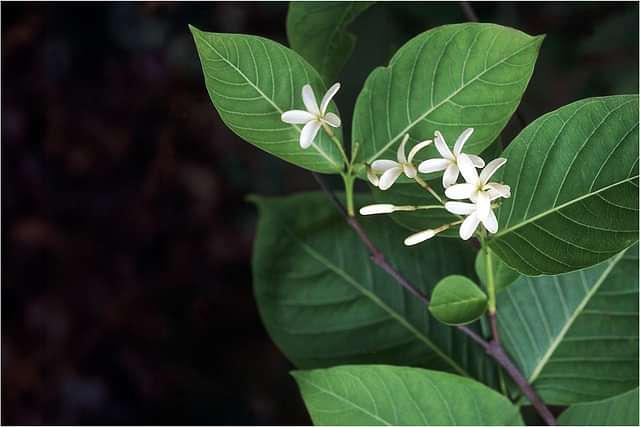
Kutajghan Vati is a classical Ayurvedic tablet (Vati) prepared from the bark extract of Kutaja (Holarrhena antidysenterica) and purified Ativisha (Aconitum heterophyllum) root. It is traditionally used to support the management of loose stools, diarrhoea (Atisara), dysentery (Pravahika) and digestive disorders such as Grahani, and to support normal bowel function and digestive comfort. It is best taken under the guidance of an Ayurvedic practitioner.
 50
50Last updated on : 28 Aug, 2026
Read time : 12 mins
What is Kutajghan Vati?
Kutajghan Vati takes its name from its principal ingredient, Kutaja (Holarrhena antidysenterica), a medicinal tree found across India, and "ghana", meaning a concentrated (solidified) extract. The bark of Kutaja is boiled into a decoction that is reduced to a solid extract, then combined with purified (Shodhita) Ativisha (Aconitum heterophyllum) root and rolled into tablets (Vati). The formulation is listed in the Ayurvedic Formulary of India, and Kutaja-based intestinal-absorbent (Grahi) preparations are described in Ayurvedic literature (Lather et al., 2010).
In Ayurvedic terms, the formulation is traditionally described as follows: its dominant tastes (Rasa) are Tikta (bitter) and Kashaya (astringent); its qualities (Guna) are Laghu (light) and Ruksha (dry); its potency (Virya) is Sheeta (cooling); and its post-digestive effect (Vipaka) is Katu (pungent). It is traditionally described as helping to balance aggravated Kapha and Pitta doshas, which is consistent with its traditional use for conditions involving excessive loss of fluid or mucus from the intestine.
Key Facts
| Feature | Details |
| Formulation name | Kutajghan Vati
|
| Formulation type | Vati (herbal tablet); classical Ayurvedic formulation
|
| Classical reference (text) | Listed in the Ayurvedic Formulary of India |
| Composition (ingredients) | Kutaja (Holarrhena antidysenterica) bark extract; purified Ativisha (Aconitum heterophyllum) root |
| Classical proportion | Kutaja bark extract in higher proportion with a smaller quantity of Ativisha |
| Also known as | Kutaja Ghana Vati, Kutajghana Vati, Kutaj Ghan Vati (spelling variants) |
| Key active compounds | Conessine, conessimine, isoconessimine, holarrhenine (Kutaja); atisine, atidine (Ativisha) |
| Dosha action | Traditionally described as balancing Kapha and Pitta |
| Traditional uses | Diarrhoea (Atisara), dysentery (Pravahika), Grahani (chronic digestive and bowel symptoms), and other intestinal complaints |
| Common forms | Tablet (Vati)
|
| General dosage | As directed by an Ayurvedic practitioner
|
| Best taken | With water, usually after meals, on a practitioner's advice
|
| Key safety note | Not for self-treatment of blood in the stools, high fever or severe/persistent diarrhoea. Avoid in pregnancy and breastfeeding unless advised. Children should be given it only under professional supervision. |
Alternative Names of Kutajghan Vati
Kutajghan Vati is a transliterated formulation name, so the variations below are alternative spellings of the same medicine rather than different names in each language:
- Kutaja Ghana Vati
- Kutajghana Vati
- Kutaj Ghan Vati
- Kutajaghan Vati
Chemical Constituents of Kutajghan Vati
The activity of Kutajghan Vati is attributed mainly to the alkaloids in its two ingredients (Lather et al., 2010; Nagarajan et al., 2015):
- Conessine, conessimine and isoconessimine, steroidal alkaloids from Kutaja bark, which have been studied for antidiarrhoeal and antimicrobial activities
- Holarrhenine and related kurchi alkaloids from Kutaja bark
- Atisine and atidine, diterpenoid alkaloids from purified Ativisha root
Ingredients of Kutajghan Vati
utajghan Vati is a two-herb formulation. Each ingredient contributes a specific role:
- Kutaja (Holarrhena antidysenterica) bark extract: the main ingredient. It is astringent (Kashaya) and is traditionally used to support normal bowel function and reduce excessive intestinal fluid loss.
- Ativisha (Aconitum heterophyllum) root, purified (Shodhita): a bitter digestive herb traditionally used to support appetite (Deepana) and digestion (Pachana) (Nagarajan et al., 2015).
- Together, they are traditionally used to support healthy bowel function and digestion. The formulation is traditionally described as balancing Kapha and Pitta.
How Kutajghan Vati is Made
Kutajghan Vati is prepared by traditional Ayurvedic methods. The main steps are:
- Collecting the raw materials: Kutaja bark (Holarrhena antidysenterica) as the main ingredient and Ativisha root (Aconitum heterophyllum) as the second. The bark is harvested and dried.
- Preparing the decoction (Kwath): The dried Kutaja bark is cut and boiled in water until the decoction is reduced to about one-fourth of its original volume.
- Filtering: The decoction is strained through clean cloth to remove the solid plant material.
- Purifying and powdering Ativisha: The Ativisha root is purified (Shodhita) and finely powdered.
- Mixing and heating: The Ativisha powder is added to the Kutaja decoction and heated with stirring until it forms a thick paste-like mass.
- Forming tablets: The cooled paste is rolled into small tablets (Vati).
- Drying and storage: The tablets are dried in the shade and kept in airtight containers.
Medicinal Properties of Kutajghan Vati
Kutajghan Vati is traditionally associated with the following properties and actions on the digestive system (Lather et al., 2010; Nagarajan et al., 2015):
- Antidiarrhoeal: may help reduce the frequency of loose stools.
- Astringent (Kashaya): may help reduce excessive intestinal secretions and support normal stool consistency.
- Antimicrobial and antiprotozoal: laboratory studies have shown activity against certain microorganisms and protozoa.
- Anti-inflammatory: may help reduce intestinal inflammation based on preclinical evidence.
- Carminative and digestive (Deepana, Pachana): traditionally used to support appetite and digestion.
- Anthelmintic: traditionally used for intestinal worm-related complaints.
These actions are based mainly on traditional use and laboratory or animal research. Good-quality human trials are limited, so the formulation should be used to support digestion rather than as a proven treatment, and under professional guidance.
Key Health Benefits of Kutajghan Vati
Kutajghan Vati is traditionally used mainly for digestive and bowel-related concerns, particularly diarrhoea, dysentery and irregular bowel habits. It is also used traditionally for conditions such as piles and intestinal infections, although clinical evidence for these uses remains limited. Its potential benefits and traditional uses are described below (Lather et al., 2010):
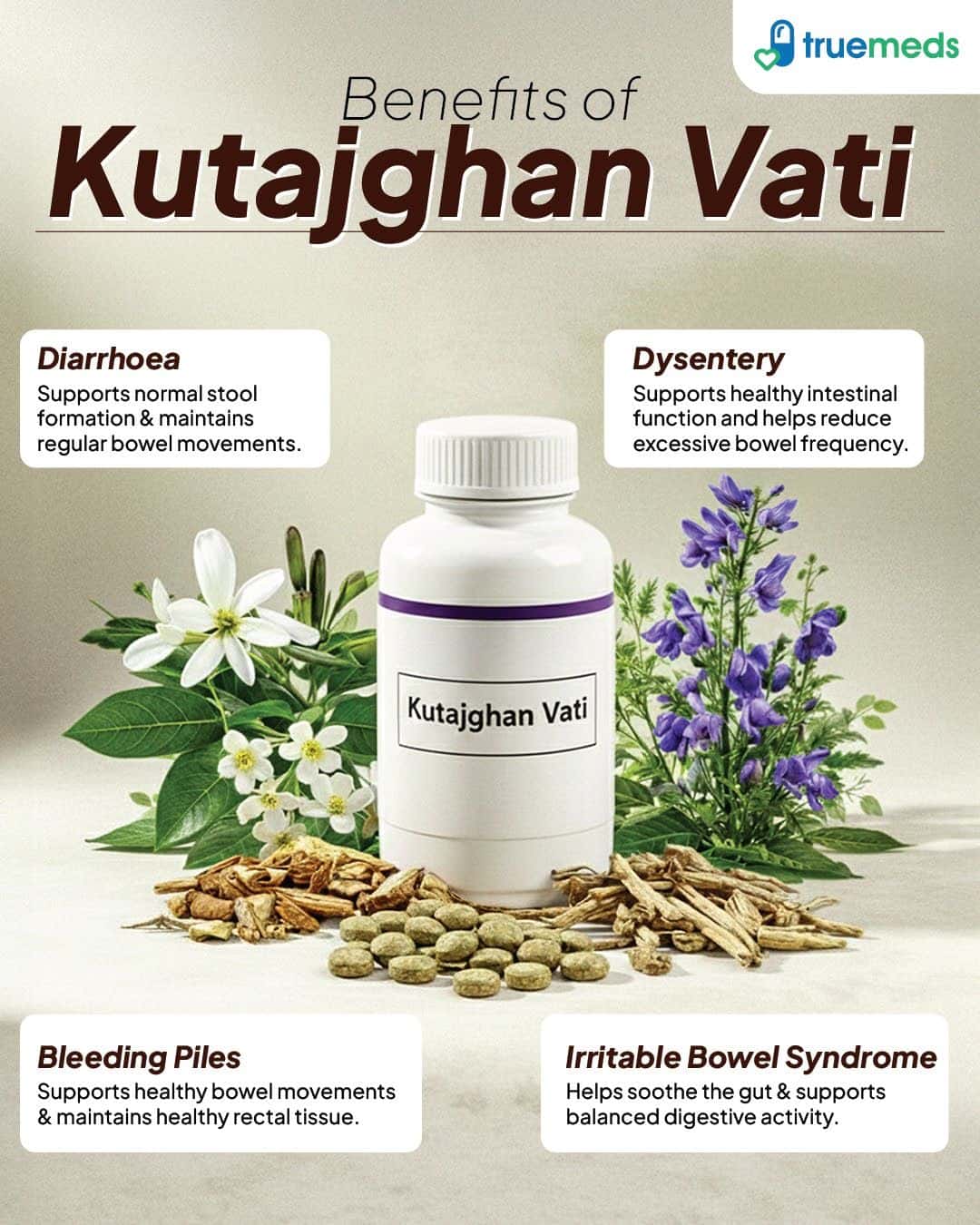
Diarrhoea (Atisara)
In Ayurveda, diarrhoea (Atisara) is linked to weak digestion and aggravated doshas that are traditionally believed to contribute to excess fluid in the intestine, causing loose stools. Kutajghan Vati is traditionally used to support digestion (Deepana and Pachana) and, through its astringent (Kashaya) and absorbent (Grahi) action, may help reduce excessive bowel secretions and support normal stool consistency.
Dysentery (Pravahika)
Dysentery (Pravahika) involves intestinal irritation with mucus, and sometimes blood, in the stools. Kutajghan Vati is traditionally used to support digestion and reduce excessive intestinal secretions, while its astringent action may help support intestinal comfort. Blood in the stools always needs medical assessment and should not be self-treated.
Irritable bowel syndrome (Grahani)
Irritable bowel syndrome (Grahani) is understood in Ayurveda as impaired digestive fire (Agni) leading to irregular bowel habits. Kutajghan Vati is traditionally used to support Agni and may help ease IBS-type symptoms such as cramps, bloating and alternating loose and hard stools. Evidence for its effectiveness in IBS is limited, and persistent symptoms should be reviewed by a doctor.
Inflammatory bowel disease
Some practitioners use Kutajghan Vati traditionally to support comfort in long-term bowel inflammation. However, inflammatory bowel disease (ulcerative colitis and Crohn's disease) is a serious condition that needs medical diagnosis and treatment. Kutajghan Vati is not a substitute for that care and should be used only with a doctor's guidance.
Piles (Arsha)
Piles (Arsha) can cause swelling and bleeding around the rectum. The astringent property of Kutajghan Vati is traditionally used to support bowel regularity and comfort. It does not treat the underlying condition, and any rectal bleeding must be assessed by a doctor to rule out other causes.
Intestinal infections
Kutaja alkaloids have shown antimicrobial and antiprotozoal activity in laboratory studies (Nagarajan et al., 2015). On this basis, Kutajghan Vati is traditionally used to support the gut during infective diarrhoea. These findings are preclinical and do not establish that the formulation can treat infections in humans. It is not a replacement for prescribed treatment when a specific infection has been diagnosed.
Support for the gut lining
Kutaja is traditionally described as having a wound-healing (Vranaropana) action, and the formulation is used to support the intestinal lining after irritation. Evidence for this is largely traditional and laboratory-based, so it should be seen as supportive rather than a proven treatment.
Common Uses of Kutajghan Vati
Kutajghan Vati is traditionally used in Ayurveda to support digestive and intestinal health, particularly when loose stools or other mild digestive disturbances occur. Its use is based primarily on Ayurvedic practice, and clinical evidence supporting its effectiveness for specific medical conditions is limited. It may be traditionally used under the guidance of an Ayurvedic practitioner for:
- Supporting bowel health during short episodes of loose stools
- Supporting digestive function when stools are irregular
- Providing traditional digestive support during recovery from mild intestinal upset
Kutajghan Vati is intended as a supportive Ayurvedic formulation and should not replace appropriate medical evaluation or treatment. Consult a doctor if diarrhoea is severe, persistent, recurrent, associated with blood in the stool, or accompanied by signs of dehydration.
Precautions While Taking Kutajghan Vati
Take the following precautions, and use Kutajghan Vati under the guidance of a qualified Ayurvedic practitioner:
- Pregnancy and breastfeeding: Safety has not been established. Avoid use during pregnancy and breastfeeding unless advised by a doctor.
- Children: Use only under practitioner supervision, because one ingredient (Ativisha) belongs to the Aconitum family and the dose needs to be carefully determined.
- Warning signs: Blood in the stools, high fever, severe or persistent diarrhoea, or signs of dehydration (extreme thirst, reduced urine, marked weakness) need medical care, not self-treatment.
- Constipation-prone individuals: Use with caution, as the astringent action may reduce bowel frequency or worsen constipation.
- Existing conditions and regular medicines: If you have a heart, kidney or other long-term condition, or take regular medicines, consult your doctor before use.
Do not exceed the advised amount. Excessive or prolonged use may increase the risk of adverse effects, so follow the recommended dose and duration (Lather et al., 2010).
Herbs Traditionally Used With Kutajghan Vati
In traditional practice, Kutajghan Vati is sometimes combined with the following, on a practitioner's advice:
Herb / anupana | Traditional role |
Musta (Cyperus rotundus) | Traditionally combined for diarrhoea and weak digestion; used to support appetite and digestive comfort alongside Kutaja. |
Bilva (Aegle marmelos) | Unripe Bilva is traditionally paired with Kutaja for chronic loose stools and dysentery, valued for its astringent, stool-supporting action on the gut. |
Dadima (Punica granatum rind) | Pomegranate rind is traditionally used with Kutaja to support the gut and maintain normal stool consistency in diarrhoea and dysentery, and to ease irritation. |
Takra (buttermilk) as anupana | Medicated buttermilk is a traditional carrier taken with or after the tablet to support digestion and is traditionally used as an anupana in loose-stool conditions. |
Recommended Dosage of Kutajghan Vati
Dosage depends on age, body strength and the condition being treated, so it should always be set by a qualified Ayurvedic practitioner. General guidance:
- Children: only on the advice of a practitioner, who will decide whether it is suitable and determine the appropriate dose. Not for self-administration.
- Teenagers: only under practitioner guidance, with the amount adjusted for age and individual needs.
- Adults: as directed by the practitioner, usually taken with water after meals.
- Older adults: start low and use under guidance, especially with heart, kidney or bowel conditions.
How to take it
- Take with water, after meals.
- Use the quantity and duration your practitioner advises.
- Do not continue long-term without a review.
Disclaimer: This is general information, not a prescription. Always consult a qualified Ayurvedic practitioner or doctor before use, as the correct amount varies from person to person.
Side Effects of Kutajghan Vati
Kutajghan Vati is generally well tolerated when used correctly. Possible side effects include:
Constipation
Its astringent action can slow bowel movements. Excessive or prolonged use may contribute to constipation, so people prone to hard stools should use it cautiously and under guidance.
Digestive discomfort
Large doses may cause bloating, gas or nausea in some people, particularly those with a sensitive stomach. Reducing the amount or stopping use may help these symptoms settle.
Allergic reaction
Rarely, an allergic reaction may occur. Stop the medicine and seek medical advice if you notice a rash, itching or swelling.
Interaction of Kutajghan Vati With Other Drugs
There is limited research on how Kutajghan Vati interacts with modern medicines. Tell your doctor about everything you take. Take particular care with:
Anti-diarrhoeal and bowel medicines
Combining Kutajghan Vati with other anti-diarrhoeal medicines or medicines that slow bowel movements may over-slow the bowel. Use only with medical advice.
Heart and blood-pressure medicines
Because Ativisha may affect cardiovascular function based on limited evidence, consult your doctor before combining it with heart or blood-pressure medicines.
Other regular medicines
If you take medicines for a long-term condition, ask your doctor or pharmacist before starting, as potential interactions should be checked rather than assuming that doses need to be spaced out.
Storage of Kutajghan Vati
Store Kutajghan Vati in a cool, dry place, away from direct sunlight and moisture. Keep the container tightly closed and out of the reach of children. Do not use it after the expiry date printed on the pack.
Key Takeaways
- Kutajghan Vati is a classical Ayurvedic tablet traditionally used to support the management of diarrhoea, dysentery and Grahani-related digestive symptoms.
- Its ingredients, Kutaja and purified Ativisha, are associated with astringent, antimicrobial and anti-inflammatory properties, based mainly on traditional use and laboratory research.
- It may help support normal stool consistency and digestion, but excessive or prolonged use can cause constipation.
- It is for short-term, supportive use under an Ayurvedic practitioner's guidance. Blood in the stools, high fever, severe or persistent diarrhoea, pregnancy, breastfeeding and use in children all need medical advice first.
FAQs
How should Kutajghan Vati be taken?
What is the difference between Kutajarishta and Kutajghan Vati?
Does Kutajghan Vati work for digestive problems?
Is Kutajghan Vati safe during pregnancy?
Can children take Kutajghan Vati?
Can I drink alcohol while taking Kutajghan Vati?
Is Kutajghan Vati habit-forming?
Does Kutajghan Vati help with IBS?
References
- Lather, A., Gupta, V., Bansal, P., Singh, R., & Chaudhary, A. K. (2010). Pharmacological potential of ayurvedic formulation: Kutajghan vati-A review. 1(2), 41–45. https://www.researchgate.net/publication/285776612_Pharmacological_potential_of_ayurvedic_formulationKutajghan_vati-A_review
- Nagarajan, M., Kuruvilla, G. R., Kumar, K. S., & Venkatasubramanian, P. (2015). Pharmacology of Ativisha, Musta and their substitutes. Journal of Ayurveda and Integrative Medicine, 6(2), 121–133. https://pmc.ncbi.nlm.nih.gov/articles/PMC4484047/
Other Ayurvedic Ingredients


Explore other categories
Latest health articles





Top Health Essentials



Top-selling ayurvedic products













Disclaimer
Top-Selling Medicines:
...View more
Top-OTC medicines:
...View more
Top-selling healthcare devices:
...View more
Company
About UsHealth ArticleHealth StoriesHealth LibraryDiseases & Health ConditionsAyurvedaUnderstanding Generic MedicinesAll MedicinesAll BrandsNeed HelpFAQSecuritySavings CalculatorAdvertise with UsSubscribe
Registered Office Address
Grievance Officer
Download Truemeds


Contact Us
Our customer representative team is available 7 days a week from 9 am - 9 pm.
v4.28.13

2026 - Truemeds | All rights reserved. Our content is for informational purposes only. See additional information.

Our Payment Partners