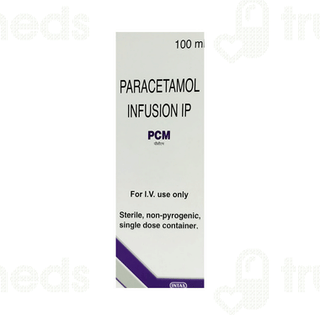
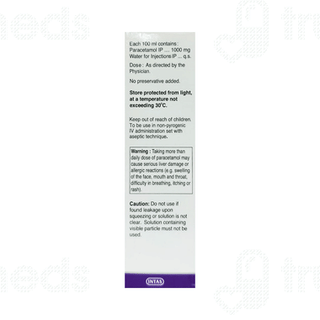
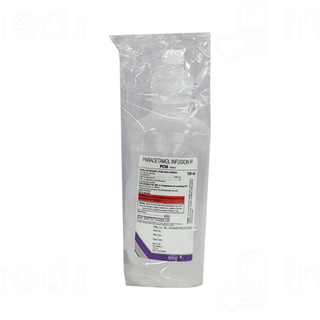
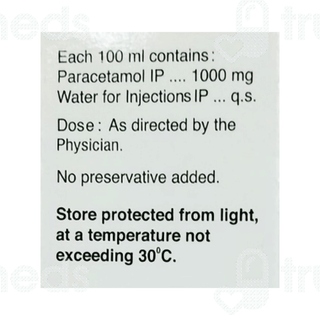

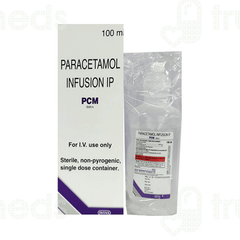
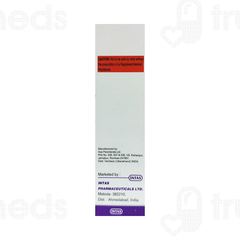
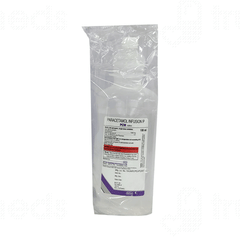
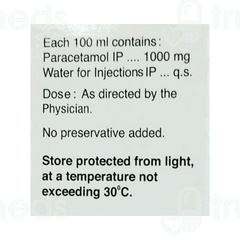
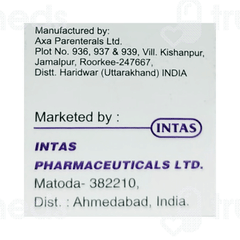


 Composition
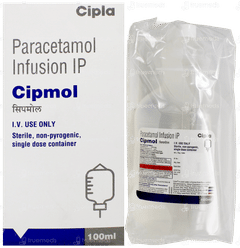
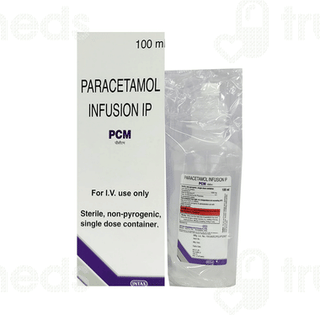
PCM Injection is prescribed for pain and fever management in hospital or clinical settings, particularly when oral treatment is unsuitable. It may be used after surgery or during acute illnesses requiring intravenous symptom control. Paracetamol helps reduce pain and elevated temperature but does not treat bacterial or viral infections. Your healthcare team will assess the cause of symptoms and determine whether additional treatment is required. Its use depends on the patient's clinical condition.
PCM Injection is administered directly into a vein by a trained healthcare professional, generally as an intravenous infusion. The prescribed amount depends on factors such as body weight, age, liver function and other paracetamol exposure. Do not attempt to administer this medicine yourself. Inform your healthcare team about any tablets, syrups or other medicines containing paracetamol. Your doctor will determine the appropriate treatment duration and monitor your response. Report discomfort during the infusion.
Possible side effects of PCM Injection include nausea, vomiting, headache and discomfort at the injection site. Some patients may experience low blood pressure during intravenous administration or changes in liver function tests. Rarely, serious allergic or skin reactions may occur. Excessive paracetamol exposure can cause severe liver damage, sometimes before obvious symptoms develop. Seek immediate medical attention for facial swelling, breathing difficulty, a widespread blistering rash or suspected overdose. Report persistent nausea or unusual weakness promptly.
Before receiving PCM Injection, tell your doctor about liver disease, heavy alcohol consumption, malnutrition or dehydration. Mention kidney impairment and previous allergic reactions to paracetamol. Report all medicines containing paracetamol to prevent accidental excessive exposure. Severe active liver disease may make this medicine unsuitable. Discuss pregnancy and breastfeeding with your healthcare team. The total amount of paracetamol from all routes must be considered when planning treatment. Your doctor will assess whether intravenous administration is necessary.