
 Composition
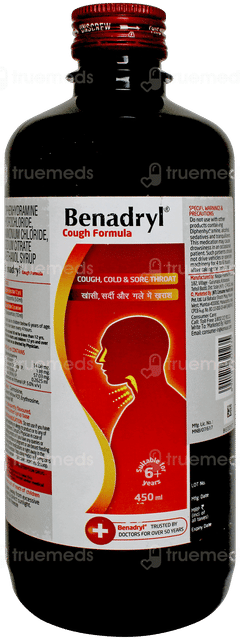
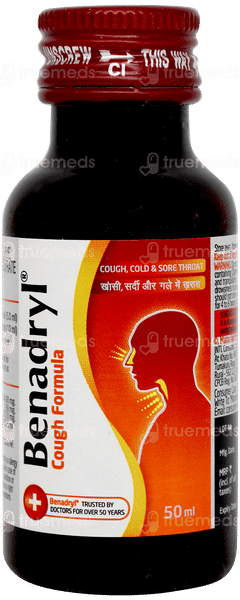
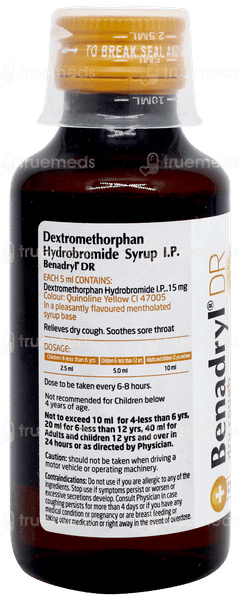
Benadryl DR Syrup contains dextromethorphan hydrobromide, an antitussive medicine used for temporary relief of dry, non-productive cough. Dextromethorphan acts on the cough centre in the brain to reduce the urge to cough. It may relieve coughing associated with common colds and minor throat or airway irritation. Take the syrup orally, following the product label or your doctor's instructions. Possible side effects include dizziness, drowsiness, nausea and stomach discomfort. Tell your doctor about asthma, chronic bronchitis or a cough producing excessive mucus. Avoid using it with monoamine oxidase inhibitors or certain antidepressants without medical assessment. Seek medical attention for breathing difficulties or a persistent cough.
Benadryl DR Syrup is used for short-term symptomatic relief of dry cough. It may reduce coughing associated with common colds and temporary irritation of the respiratory tract. However, it does not treat the underlying cause of an infection or speed recovery. It is unsuitable for suppressing every type of cough. Persistent cough, fever, wheezing or breathing difficulties require medical assessment. Cough associated with asthma or chronic respiratory disease should not be self-treated.
Take Benadryl DR Syrup exactly as directed on the label or by your doctor. Shake the bottle if instructed and measure the recommended amount using a suitable measuring device. Do not use a household spoon, as measurements may be inaccurate. Avoid exceeding the recommended amount or combining it with other cough preparations containing dextromethorphan. Follow age-specific instructions carefully. If symptoms persist or worsen, seek medical advice rather than continuing treatment without review.
Possible side effects of Benadryl DR Syrup include dizziness, drowsiness, nausea, vomiting and stomach discomfort. Some patients may experience nervousness, restlessness or reduced concentration. These effects are generally temporary, but persistent symptoms require medical advice. Excessive intake can cause serious neurological and cardiovascular complications. Seek emergency medical attention for severe confusion, seizures, breathing difficulties or loss of consciousness. Serotonin syndrome may occur when dextromethorphan interacts with certain medicines. Symptoms can include agitation, fever, tremors and muscle stiffness.
Before using Benadryl DR Syrup, tell your doctor about asthma, chronic bronchitis, liver disease or a persistent productive cough. Mention antidepressants, especially monoamine oxidase inhibitors, selective serotonin reuptake inhibitors and other serotonergic medicines. Do not use dextromethorphan with monoamine oxidase inhibitors or within 14 days of stopping them. Avoid alcohol and driving if you feel drowsy. Discuss pregnancy and breastfeeding before use. Children should receive this medicine only according to age-specific product guidance.