

- Medicines
- Personal Care
- Skin Cream
- Sunscreen
- Face Wash
- Skin and Body Soap
- Acne Care
- Body Lotions
- Moisturising Lotion
- Moisturising Cream
- Mosquito Repellent
- Moisturising Gel
- Body Wash
- Hair Oils
- Hair Shampoo
- Hair Conditioners
- Hair Supplements
- Hair Colour
- Hair Serum
- Hair Mask
- Hair Solutions
- Baby Diapers and Wipes
- Baby Lotion and Moisturising Cream
- Baby Bath Essentials
- Baby Skin Care
- Baby and Infant Food
- Baby Healthcare
- Women Multivitamins
- Ovulation Test Kit and Women Intimate Care
- Sanitary Pads
- Nutritional Drinks
- Condoms
- Lubricants
- Massage Gels
- Personal Body Massagers
- Men Performance Booster
- Sexual Health Supplements
- Massage Oils
- Ayurveda
- Tooth Paste
- Mouth Ulcer Gel
- Mouthwash
- Toothache and Gum Pain
- Tooth Brush
- Gargle Solution
- Orthopaedic Supports
- Adult Diapers
- Footwear
- Mobility and Support Accessories
- Urinary Support and Care
- Health Conditions
- Bone and Joint Care
- Digestive Care
- Eye Care
- Pain Relief
- Smoking Cessation
- Liver Care
- Stomach Care
- Cold and Cough
- Heart Care
- Kidney Care
- Piles, Fissures & Fistula
- Respiratory Care
- Mental Wellness
- Derma Care
- Pre and Probiotics
- Acidity
- Gas
- Constipation
- Loose Motion/Diarrhoea
- Digestive Fibres
- Digestive Enzymes
- Eye Lubricant Drops
- Lens Solution
- Safety Eye Wear
- Eye Cream
- Eye Vitamins and Supplements
- Eye Drops
- Eye Ointment and Gel
- Nicotine Patch
- Nicotine Gum
- Nicotine Lozenges
- Cough Syrups
- Chest Rubs and Balms
- Nasal Spray
- Lozenges
- Inhalant Capsules
- Cold and Cough Tablets
- Vitamins & Supplements
- Diabetes Care
- Healthcare Devices
- Homeopathic Medicine
- Health Guide
Keratoses
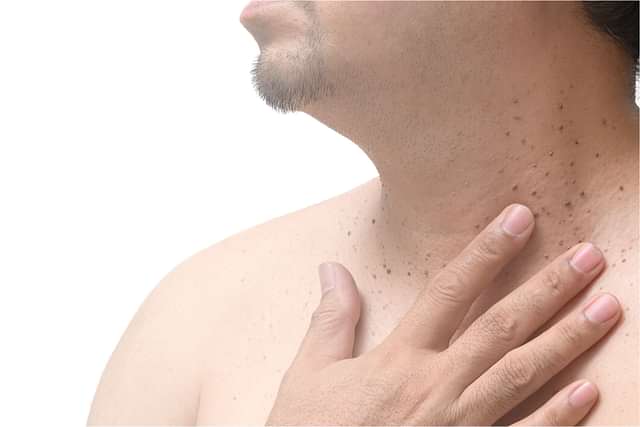
Keratoses are common, benign skin growths that appear as brown, black, or light tan spots on the skin. Actinic keratoses are precancerous and may progress to squamous cell carcinoma if untreated. They are caused by the abnormal proliferation of skin cells (epidermal keratinocytes) and tend to occur more frequently with age. They can be categorised into several types, with seborrhoeic keratosis and actinic keratosis being the most prevalent. While generally benign, some keratoses may require treatment for comfort or cosmetic reasons.
 50
50Last updated on : 27 Apr, 2026
Read time : 12 mins
Overview of Disease
Keratoses are among the most frequently encountered skin conditions, affecting people of all ages and skin types. These benign skin growths occur due to abnormal proliferation of epidermal keratinocytes, resulting in excessive keratin accumulation in the outer layer of the skin. Although keratoses are generally harmless, they can sometimes cause discomfort or cosmetic concerns, prompting individuals to seek treatment.
What are Keratoses?
Keratoses are noncancerous skin tumours that develop when skin cells called keratinocytes grow excessively. The exact cause of keratoses is unknown, but factors such as genetics, sun exposure, and hormonal changes are strongly associated with their development. Seborrhoeic keratosis has a notable genetic component, while actinic keratosis is primarily linked to UV exposure. Seborrhoeic keratosis, for example, often runs in families and is more prevalent in people over the age of 50, indicating a potential genetic link and the influence of ageing.
Key Factors about Keratoses
| Category | Details |
| Also Referred to as | Solar keratosis, sun keratosis (actinic keratosis); senile keratosis is an outdated term, and age spots are distinct conditions and not synonymous |
| Commonly Occurs In | Areas exposed to sunlight: face, head, neck, chest, back, arms, legs |
| Affected Organ | Skin |
| Type | Seborrhoeic and actinic keratosis |
| Common Signs | Rough, dry, scaly patches; hard, waxy, rough bumps; varied colours; raised surface; itchy |
| Consulting Specialist | Dermatologist |
| Managed By | Topical creams, ointments, cryosurgery, shave removal, and electrocautery |
Types of Keratoses
Keratoses are of several types, with seborrhoeic keratosis and actinic keratosis being the most prevalent:
- Seborrhoeic Keratosis: Seborrhoeic keratoses appear as round or oval growths with a waxy or scaly texture, ranging in colour from light tan to black. They commonly occur on various areas of the body, including the face, neck, chest, and back. They are more common in individuals over the age of 50 and are believed to have a potential genetic link.
- Actinic Keratosis: Actinic keratosis results from chronic UV exposure and manifests as rough, scaly patches or bumps. Fair-skinned individuals, those with a history of unprotected sun exposure, and older adults are at higher risk. Actinic keratosis is considered precancerous and may progress to squamous cell carcinoma if untreated (American Academy of Dermatology, 2025).
Symptoms of Keratoses
The symptoms of keratoses can vary depending on the type and stage of growth. Common signs to look out for include:
Individuals with seborrhoeic keratosis may notice the appearance of one or more skin growths that exhibit the following characteristics:
1. Seborrhoeic Keratosis
- Round or oval-shaped patches that are raised above the skin, with a "stuck-on" appearance.
- The patches can be brown, black, tan, pink, yellow, or white, and sometimes appear in numbers.
- The surface can be velvety, waxy, or rough, resembling a wart.
- Occasionally, these lesions can become irritated, itchy, or bleed.
2. Actinic Keratosis
- Symptoms include rough, dry, scaly patches or bumps, often on sun-exposed areas such as the face, ears, scalp, neck, hands, and forearms. Lesions may be skin-coloured, reddish-brown, or pink and can be flat or slightly raised (Morton et al., 2023).
- They may be itchy or tender and can range in size from a few millimetres to a few centimetres.
- Appear as flat or slightly raised patches or bumps on the outer layer of the skin.
- In some cases, lesions may develop a hard, wart-like texture.
- May exhibit colour variations, including shades of pink, red, or brown.
- May cause itching, burning, bleeding, or crusting.
- Develop as new patches or bumps, particularly on sun-exposed areas such as the head, neck, hands, and forearms.
Stages of Keratoses
Keratoses can be categorised into the following stages based on whether they are seborrhoeic or actinic:
1. Seborrhoeic Keratosis
Seborrhoeic keratosis is of the following three stages:
- Initial Stage: The appearance of small, faintly coloured patches that gradually grow and become more pronounced over time.
- Growth Stage: Lesions become more defined, taking on a "stuck-on" appearance, and can range in colour from light to dark brown, black, or even tan, pink, or white.
- Established Stage: Lesions are fully developed and can be flat or raised, with a velvety, waxy, or rough texture.
2. Actinic Keratosis
Actinic keratosis, on the other hand, can be categorised into preclinical stage, clinical stage, and progression stage:
- Preclinical Stage: UV damage accumulates over the years, leading to mutations in skin cells.
- Clinical Stage: The appearance of rough, scaly patches or bumps on sun-exposed areas, which can be flat or raised and vary in colour.
- Progression Stage: If left untreated, a small proportion of actinic keratoses may progress to squamous cell carcinoma, while many remain stable or regress (Nair & Nair, 2024).
Causes of Keratoses
Although the precise cause remains unknown, several factors are thought to contribute to the development of keratoses. Some of these factors include:
- Genetic Composition: Genetic components may play a role, with some individuals inheriting a predisposition to develop multiple seborrhoeic keratoses.
- Sun Exposure: Exposure to sunlight is a key contributing factor for actinic keratosis, while seborrhoeic keratosis is not directly caused by UV exposure.
- Hormonal Changes: Changes in your hormone levels, such as those experienced during pregnancy or oestrogen replacement therapy, may influence the development of keratoses.
- Age: The prevalence of these skin keratoses increases with age, suggesting that the natural ageing process is a contributing factor.
Risk Factors
Several risk factors can increase an individual's likelihood of developing keratoses. Some of these risk factors include:
- Age: Age is a significant factor, with most people developing these growths after the age of 50.
- Genetic Predisposition: Having a family history of keratoses increases the risk.
- Skin Tone: Individuals with lighter skin are at higher risk of actinic keratosis due to UV sensitivity, although keratoses can occur in all skin tones.
- Sun Exposure: Chronic UV exposure increases the risk of actinic keratosis and its progression to skin cancer.
- Hormonal Changes: Hormonal changes may also increase the risk of developing keratoses.
Diagnosis & Tests
Diagnosing keratoses typically involves the following steps or procedures:
- Physical Examination: A visual examination by a doctor is the first step in diagnosing the condition. The most common type, seborrhoeic keratosis, usually appears as brown, black, or tan growths that may have a warty, smooth, or flat appearance.
- Skin Biopsy: In some cases, if the diagnosis is uncertain or there are concerns about potential skin cancer, a skin biopsy may be performed. This involves removing a small sample of the growth for microscopic examination.
While there are no specific diagnostic tests for keratoses, additional testing may be recommended if the growth appears unusual or there are suspicions of malignancy. Proper diagnosis is crucial for determining the appropriate treatment and management of these benign skin growths.
Treatment & Management
Seborrhoeic keratoses are non-cancerous skin growths that typically do not require treatment unless they cause discomfort, become irritated, or present cosmetic concerns. Once a diagnosis is confirmed, the appropriate management approach can be selected based on individual needs.
Medical Treatments
1. Cryotherapy
- This involves freezing the lesion using liquid nitrogen, which causes it to blister and fall off within a few days to weeks. It is a common and effective treatment for smaller growths.
2. Shave Excision
- In this method, the lesion is numbed with a local anaesthetic, and a scalpel is used to shave off the keratosis. It provides instant removal and is useful for raised or thick lesions.
3. Electrocautery and Curettage
- This procedure uses electric current to burn off the lesion, often followed by scraping it away with a curette. It is useful for thicker or more persistent growths.
4. Laser Therapy
- Carbon dioxide (CO₂) lasers or Er: YAG lasers can be used to precisely remove lesions with minimal damage to surrounding tissue.
5. Topical Medications
While less commonly used, certain topical treatments may help in managing multiple or widespread lesions:
- Tazarotene cream (a topical retinoid): It promotes skin cell turnover, helping reduce the thickness of keratotic lesions over time.
- Hydrogen peroxide 40% topical solution: This is FDA-approved for raised seborrhoeic keratoses and works by causing controlled local tissue destruction.
- Imiquimod cream: It boosts the immune response and is not routinely recommended for seborrhoeic keratosis but may be considered in select cases.
- Diclofenac gel: An anti-inflammatory agent primarily used for actinic keratosis, with limited role in seborrhoeic keratosis.
Home & Self-Care Tips
- Avoid picking, scratching, or rubbing the lesions, as this can cause irritation, bleeding, or secondary infection.
- Keep the skin moisturised to reduce dryness and itchiness.
- Monitor the lesions for any sudden changes in colour, size, or shape, which could indicate the need for further evaluation.
Follow-Up
While seborrhoeic keratoses are benign, it’s essential to undergo regular skin checks, especially if new or unusual growths appear. A dermatologist should evaluate any rapidly changing or suspicious-looking lesion to rule out skin cancer.
Most treatment options are minor, outpatient procedures with excellent cosmetic outcomes and minimal recovery time.
Living with Disease
1. Seborrhoeic Keratosis
Seborrhoeic keratosis requires self-monitoring and care to ensure overall skin health.
- Individuals with multiple seborrhoeic keratoses should perform regular self-examinations to check for new growths or changes in existing ones. A sudden eruption of multiple seborrhoeic keratoses (Leser-Trélat sign) may indicate an underlying internal malignancy and warrants prompt medical evaluation.
- While generally harmless, it is advisable to avoid picking or scratching seborrhoeic keratoses to prevent bleeding, swelling, and potential infection.
- If these skin growths become bothersome due to their appearance or cause irritation from clothing, cosmetic removal by a dermatologist is an option.
2. Actinic Keratosis
Living with actinic keratosis requires vigilance and proactive measures to maintain skin health.
- Individuals with this condition should also perform regular self-examinations and attend annual check-ups with a dermatologist to monitor any changes in existing lesions or the appearance of new ones. Early intervention can prevent the progression into squamous cell carcinoma.
- Sun protection is crucial in preventing new actinic keratoses and reducing the risk of progression to skin cancer. Oral nicotinamide (vitamin B3) may help reduce the number of actinic keratoses in high-risk individuals (American Academy of Dermatology, 2025). This includes limiting sun exposure, especially during peak hours, using a broad-spectrum sunscreen with a high SPF, wearing protective clothing, and avoiding tanning beds.
- Most treatment options are minor, outpatient procedures with excellent cosmetic outcomes and minimal recovery time. However, cryotherapy may cause hypopigmentation or hyperpigmentation, especially in darker skin tones, and a biopsy may be required for any lesion with diagnostic uncertainty.
When to See a Doctor?
While many keratoses are benign and do not require immediate medical attention, there are certain situations where consulting a doctor is advisable.
- If you notice any new, rapidly growing, or changing skin growths, it is essential to have them evaluated by a dermatologist to rule out the possibility of skin cancer.
- Additionally, if your keratoses become painful, itchy, inflamed, or start bleeding, it is best to seek medical advice. Your doctor can assess the lesions and recommend appropriate treatment options, such as keratosis removal, if necessary.
- If you have a history of excessive sun exposure or a family history of skin cancer, regular check-ups with a dermatologist are recommended to monitor your skin health and detect any potential issues early on.
Key Takeaways
- Seborrhoeic keratoses are benign skin growths and do not typically transform into cancer. They are not considered premalignant lesions.
- Claims of malignant transformation are rare and usually represent misdiagnosis rather than true transformation. Any lesion that rapidly changes, bleeds, or ulcerates should be evaluated by a dermatologist to rule out malignancy.
- They can be broadly categorised into seborrhoeic keratosis (benign) and actinic keratosis (precancerous).
- Although generally harmless, keratoses can sometimes cause discomfort or cosmetic concerns, prompting individuals to seek treatment.
- Factors such as age, genetics, sun exposure, skin tone, and hormonal changes are thought to contribute to the development of keratoses.
- If treatment is desired, several options like cryotherapy, shave removal, electrocautery, and topical creams or ointments are available.
FAQs
What exactly is keratosis?
Can you list the various types of keratoses?
What factors contribute to the development of keratoses?
How can I tell the difference between benign and cancerous keratoses?
What are the typical symptoms of keratosis?
What diagnostic methods are used for keratosis?
What keratosis treatment options are available?
Is it possible to prevent keratosis?
Do keratoses have a genetic component?
When is it advisable to consult a doctor about keratosis?
References
- Barthelmann, S., & Zink, A. (2023). Seborrhoeic keratosis. Journal of the European Academy of Dermatology and Venereology, 37(4), 701–710. https://doi.org/10.1111/ddg.14984
- American Academy of Dermatology. (2025). Actinic keratosis. https://www.aad.org/member/clinical-quality/guidelines/actinic-keratosis
- Greco, M. J., & Zito, P. M. (2024). Seborrhoeic keratosis. In StatPearls. StatPearls Publishing. https://www.ncbi.nlm.nih.gov/books/NBK545285/
- Nair, P. A., & Nair, V. (2024). Prevention, diagnosis and treatment of actinic keratosis. Wiley Online Library. https://doi.org/10.1002/psb.2118
- Morton, C. A., et al. (2023). European consensus-based interdisciplinary guideline for diagnosis, treatment and prevention of actinic keratoses. Journal of the European Academy of Dermatology and Venereology, 37(1), 1–20. https://doi.org/10.1111/jdv.19897
Latest health articles

Top Health Essentials

























Disclaimer
Top-Selling Medicines:
...View more
Top-OTC medicines:
...View more
Company
About UsHealth ArticleHealth StoriesHealth LibraryDiseases & Health ConditionsAyurvedaUnderstanding Generic MedicinesAll MedicinesAll BrandsNeed HelpFAQSecuritySavings CalculatorAdvertise with UsSubscribe
Registered Office Address
Grievance Officer
Download Truemeds


Contact Us
Our customer representative team is available 7 days a week from 9 am - 9 pm.
v4.28.10

2026 - Truemeds | All rights reserved. Our content is for informational purposes only. See additional information.

Our Payment Partners