

- Medicines
- Personal Care
- Skin Cream
- Sunscreen
- Face Wash
- Skin and Body Soap
- Acne Care
- Body Lotions
- Moisturising Lotion
- Moisturising Cream
- Mosquito Repellent
- Moisturising Gel
- Body Wash
- Hair Oils
- Hair Shampoo
- Hair Conditioners
- Hair Supplements
- Hair Colour
- Hair Serum
- Hair Mask
- Hair Solutions
- Baby Diapers and Wipes
- Baby Lotion and Moisturising Cream
- Baby Bath Essentials
- Baby Skin Care
- Baby and Infant Food
- Baby Healthcare
- Women Multivitamins
- Ovulation Test Kit and Women Intimate Care
- Sanitary Pads
- Nutritional Drinks
- Condoms
- Lubricants
- Massage Gels
- Personal Body Massagers
- Men Performance Booster
- Sexual Health Supplements
- Massage Oils
- Ayurveda
- Tooth Paste
- Mouth Ulcer Gel
- Mouthwash
- Toothache and Gum Pain
- Tooth Brush
- Gargle Solution
- Orthopaedic Supports
- Adult Diapers
- Footwear
- Mobility and Support Accessories
- Urinary Support and Care
- Health Conditions
- Bone and Joint Care
- Digestive Care
- Eye Care
- Pain Relief
- Smoking Cessation
- Liver Care
- Stomach Care
- Cold and Cough
- Heart Care
- Kidney Care
- Piles, Fissures & Fistula
- Respiratory Care
- Mental Wellness
- Derma Care
- Pre and Probiotics
- Acidity
- Gas
- Constipation
- Loose Motion/Diarrhoea
- Digestive Fibres
- Digestive Enzymes
- Eye Lubricant Drops
- Lens Solution
- Safety Eye Wear
- Eye Cream
- Eye Vitamins and Supplements
- Eye Drops
- Eye Ointment and Gel
- Nicotine Patch
- Nicotine Gum
- Nicotine Lozenges
- Cough Syrups
- Chest Rubs and Balms
- Nasal Spray
- Lozenges
- Inhalant Capsules
- Cold and Cough Tablets
- Vitamins & Supplements
- Diabetes Care
- Healthcare Devices
- Homeopathic Medicine
- Health Guide
Hemorrhage
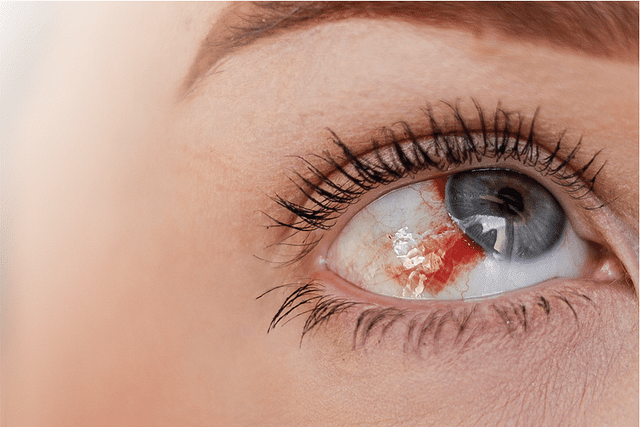
Haemorrhage means bleeding caused by a damaged blood vessel. This bleeding can happen inside the body (internal) or outside the body (external). The seriousness of a haemorrhage depends on where the bleeding happens and how much blood is lost Bonanno, 2022. It is important to identify and treat bleeding quickly to prevent serious health problems and help with recovery.
 50
50Last updated on : 04 May, 2026
Read time : 17 mins
Overview of Disease
Haemorrhage is a serious medical condition that involves the loss of blood from damaged blood vessels. It can happen within the body (internal haemorrhage) or outside the body (external haemorrhage). The extent of blood loss in a haemorrhage can vary greatly. In some cases, it may be relatively minor and pose little threat, while in others, the bleeding can be extensive and potentially life-threatening if not treated promptly.
What is Hemorrhage?
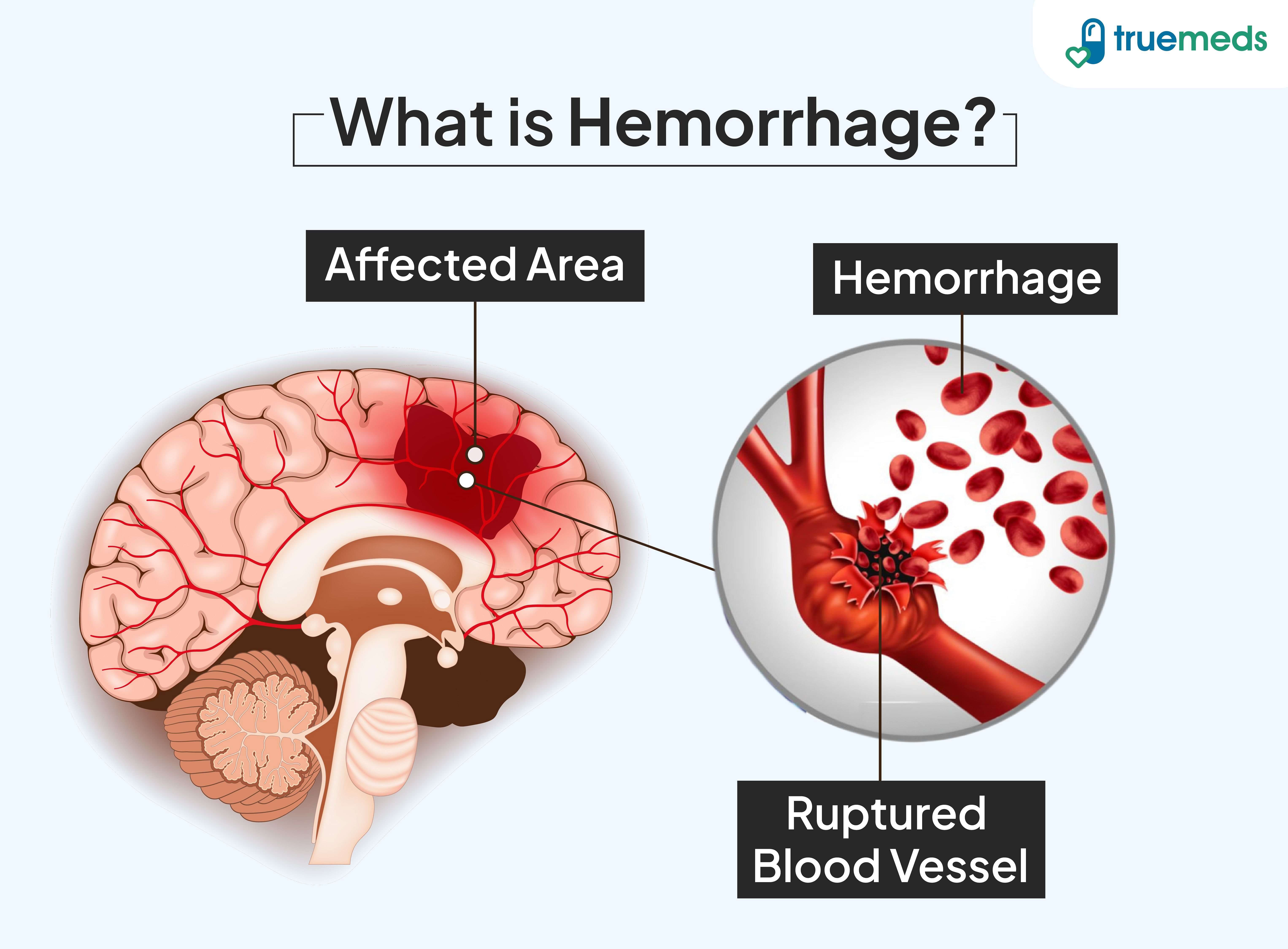
Haemorrhage refers to the loss of blood from a blood vessel due to injury or rupture. This bleeding may occur in two primary forms: it can either remain within the body, known as internal haemorrhaging, or it may be visible externally, usually through a wound or natural body opening such as the mouth, nose, or rectum. The extent of blood loss in a haemorrhage can vary greatly. In some cases, it may be relatively minor and pose little threat, while in others, the bleeding can be extensive and potentially life-threatening if not treated promptly.
Key Factors about Hemorrhage
| Category | Details |
| Also Referred as | Bleeding, haemorrhage, blood loss |
| Commonly Occurs In | Any body parts, including skin, brain, abdomen, chest, etc. |
| Affected Organ | Varies depending on the location (e.g., brain, lungs, abdomen) |
| Type | External or Internal |
| Common Signs | Dizziness, fatigue, breathing issues, altered mental status, vital sign fluctuations |
| Consulting Specialist | Emergency Medicine, Haematology, Neurology, General Surgery |
| Treatment Procedures | Depends on severity: first aid, hospital treatment, surgery, transfusions |
| Managed By | Tranexamic acid (for antifibrinolytic effect), vitamin K (for warfarin reversal), desmopressin (for von Willebrand disease), and blood products (packed red blood cells, fresh frozen plasma, platelets) as required for major haemorrhage |
| Mimicking Condition | Various conditions depending on symptoms (e.g., stroke for brain haemorrhage) |
Types of Hemorrhage
Haemorrhages can be classified based on their location and severity. The two main categories are external and internal haemorrhages.
- External Haemorrhage: It occurs when blood exits the body through a break in the skin or natural openings, such as a nosebleed or a cut. In these cases, prompt treatment is essential to stop the bleeding and clean the wound to prevent infection and further complications.
- Internal Haemorrhage: This type of haemorrhage happens when blood leaks into internal spaces, such as the abdominal, thoracic, or intracranial cavities. Unlike external bleeding, internal haemorrhages often require imaging tests for diagnosis. It may also require surgical intervention to stop the bleeding and prevent serious damage to internal organs.
Haemorrhages can also be classified based on the amount of blood volume lost:
- Class I: Up to 15% blood volume loss, usually asymptomatic; no specific intervention required.
- Class II: 15–30% loss, tachycardia, mild hypotension; may need IV fluids.
- Class III: 30–40% loss, hypotension, tachycardia, altered mental status; requires blood transfusion and rapid intervention.
- Class IV Haemorrhage: This is the most severe type, which involves more than 40% blood volume loss and requires immediate and aggressive medical intervention. Without prompt treatment, including resuscitation and possibly surgery, organ failure and death are likely (Rossaint et al., 2023).
Based on location, haemorrhages are classified into the following types:
1. Intracranial Haemorrhage
This type of bleeding occurs within the skull and can be life-threatening. It includes:
- Epidural Haemorrhage: Bleeding between the skull and dura mater (outer brain covering), often caused by head trauma.
- Subdural Haemorrhage: Bleeding between the dura mater and the brain, usually due to head injury or ruptured veins.
- Subarachnoid Haemorrhage: Bleeding into the space between the brain and the thin tissues covering it, often due to a ruptured aneurysm.
- Intracerebral Haemorrhage: Bleeding within the brain tissue itself, commonly associated with hypertension or stroke.
2. Gastrointestinal (GI) Haemorrhage
Bleeding that occurs anywhere in the digestive tract is classified as:
- Upper GI Bleeding: Originating from the oesophagus, stomach, or duodenum (e.g., ulcers, oesophageal varices).
- Lower GI Bleeding: Occurring in the small intestine, colon, or rectum (e.g., diverticulosis, haemorrhoids).
3. Pulmonary Haemorrhage
Bleeding in the lungs due to conditions like infections, trauma, or autoimmune diseases. It can cause difficulty breathing and coughing up blood (hemoptysis).
4. Retroperitoneal Haemorrhage
Bleeding in the space behind the abdominal cavity, often due to trauma, ruptured aneurysm, or anticoagulant therapy complications. It can be difficult to detect, as it does not cause visible external bleeding.
5. Intra-abdominal Haemorrhage
Bleeding inside the abdominal cavity, which can occur due to liver rupture, spleen injury, or ruptured aneurysms. It may lead to hypovolemic shock if not treated promptly.
6. Musculoskeletal Haemorrhage
Bleeding into muscles or joints is commonly seen in individuals with bleeding disorders like haemophilia. It can cause swelling, pain, and restricted movement.
7. Postpartum Haemorrhage
Excessive bleeding after childbirth can be primary (within 24 hours) or secondary (after 24 hours up to six weeks postpartum). Causes include uterine atony, retained placenta, or trauma during delivery.
Each type of haemorrhage requires prompt medical evaluation and intervention to prevent complications.
Symptoms of Hemorrhage
How you feel when losing blood depends on how much blood is lost and where the bleeding happens.
Mild Blood Loss (Class I - Up to 15%)
- Losing a small amount of blood usually does not cause symptoms.
Moderate Blood Loss (Class II - 15% to 30%)
The first signs may include:
- Feeling dizzy or lightheaded due to low blood pressure
- Feeling tired and weak
- Nausea and vomiting
- Shortness of breath and faster breathing
- A rapid heartbeat
Severe Blood Loss (More than 30%)
Losing too much blood can cause serious problems like:
- Confusion
- Seizures
- Fainting
- Life-threatening shock (Wohlgemut et al., 2024)
The symptoms of haemorrhage can vary depending on the location and severity of the bleeding.
External Haemorrhage: Visible bleeding may be heavy and difficult to control. Symptoms of shock may follow, including:
- Low blood pressure
- Rapid heart rate
- Cold, clammy skin
- Shallow breathing
- Dizziness or loss of consciousness
- Confusion
- Chest pain
- Weak pulse
Internal Haemorrhage: Symptoms may not be immediately visible but can include:
- Abdominal pain and swelling
- Blood in stool or urine
- Heavy vaginal bleeding (outside of menstruation)
- Vomiting blood
- Chest pain
- Shortness of breath
- Signs of shock may also appear.
Brain Haemorrhage: Symptoms can be severe and include:
- Sudden, intense “thunderclap” headaches
- Weakness or numbness
- Facial paralysis
- Nausea and vomiting
- Confusion and dizziness
- Seizures
- Difficulty swallowing
- Impaired or lost vision
- Balance and coordination problems
- Stiff neck
- Slurred speech
- Loss of consciousness
Prompt haemorrhage diagnosis and treatment are crucial to prevent serious complications.
Causes of Hemorrhage
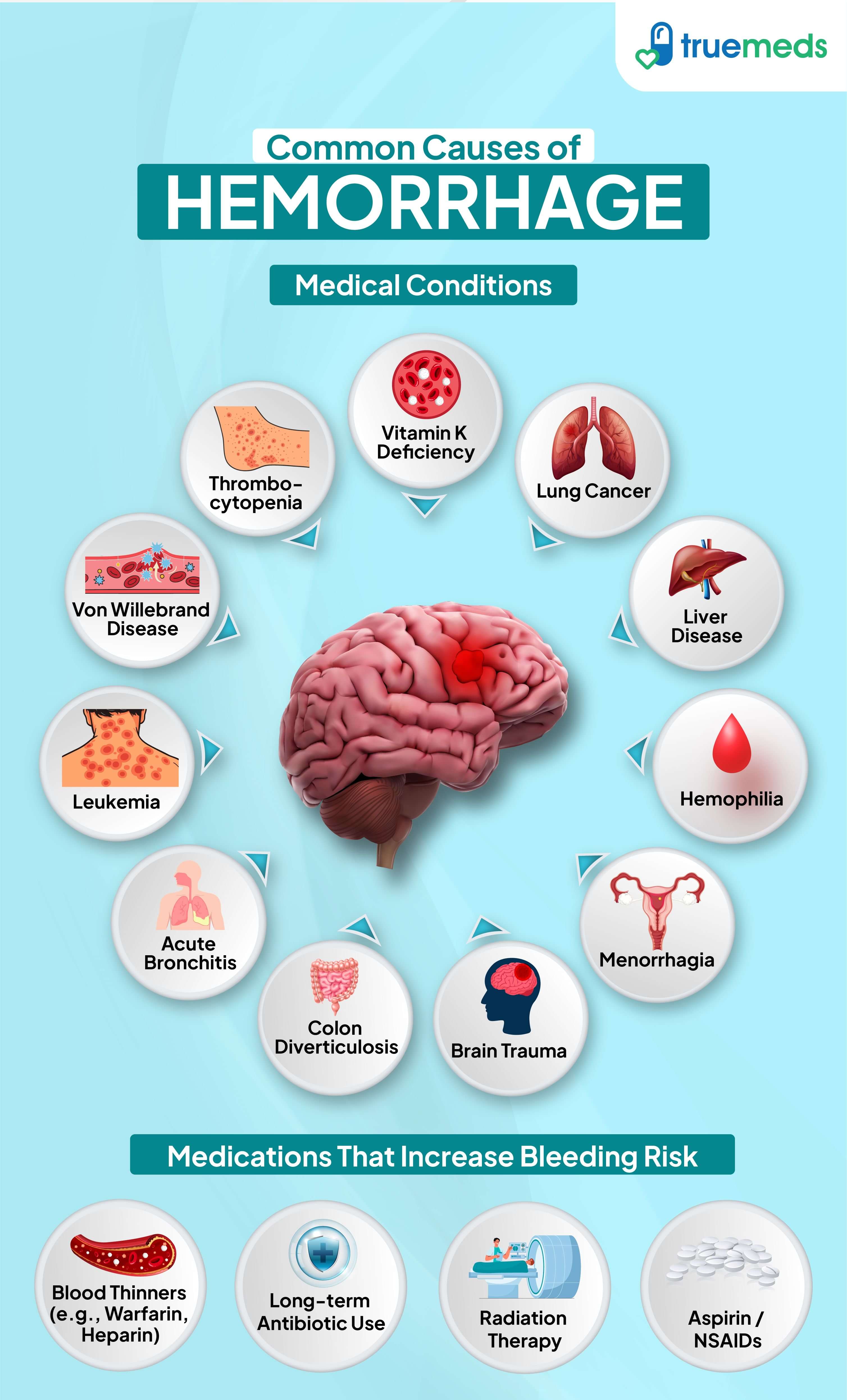
Damage to one or more blood vessels can cause a haemorrhage. The severity depends on the location of the bleeding and the size of the affected blood vessel.
Several factors and conditions can cause or increase the risk of a haemorrhage, including:
Medical Conditions That Can Cause Haemorrhage:
- Haemophilia: A genetic disorder that impairs blood clotting, leading to prolonged haemorrhage.
- Leukaemia: A type of blood cancer that affects the body's ability to produce normal blood cells, increasing bleeding risk.
- Liver Disease: Liver dysfunction can reduce clotting factors, causing excessive haemorrhage.
- Menorrhagia: Abnormally heavy or prolonged menstrual bleeding, often linked to conditions such as hormonal imbalance, uterine fibroids, or endometriosis.
- Thrombocytopenia: A condition with a low platelet count, making clot formation difficult.
- Von Willebrand Disease: A hereditary disorder affecting blood clotting due to a deficiency in von Willebrand factor.
- Vitamin K Deficiency: Vitamin K is essential for blood clotting, and its deficiency can cause excessive haemorrhage.
- Brain Trauma: Head injuries can lead to internal bleeding in the brain, increasing the risk of haemorrhage.
- Colon Diverticulosis: Small pouches in the colon can rupture, causing rectal haemorrhage.
- Lung Cancer: Tumours in the lungs can erode blood vessels, leading to coughing up blood.
- Acute Bronchitis: Severe inflammation of the airways can cause small blood vessels to rupture, leading to haemorrhage.
Medications That Can Cause or Increase Bleeding Risk:
- Blood Thinners: Medications like warfarin and heparin prevent clotting but can increase haemorrhage risk.
- Long-term Antibiotic Use: Prolonged antibiotic therapy can disrupt vitamin K production, affecting clotting.
- Radiation Therapy: Radiation treatment can damage blood vessels, leading to internal haemorrhage.
- Aspirin and NSAIDs: Nonsteroidal anti-inflammatory drugs can thin the blood and irritate the stomach lining, increasing haemorrhage risk.
If you are prescribed any of these medications, your doctor will inform you about potential haemorrhage risks and guide you in managing them.
Risk Factors
Several factors can elevate an individual's risk of experiencing haemorrhage.
- Age: Advancing age is associated with an increased likelihood, as blood vessels become more fragile over time.
- Hypertension: Hypertension, or high blood pressure, puts added strain on vessel walls.
- Smoking: Smoking damages blood vessels and raises blood pressure, further increasing risk.
- Alcohol Consumption: Excessive alcohol consumption can lead to liver disease, impairing the body's ability to form clots.
- Medications: Some medications, like anticoagulants and antiplatelets, can increase bleeding risk if not properly monitored.
- Family History: Individuals with a family history of haemorrhage or related conditions like aneurysms should be especially vigilant.
Regular check-ups, lifestyle modifications, and following treatment plans can help mitigate the risk of potentially life-threatening haemorrhage.
Complications
Haemorrhages, whether internal or external, can lead to a variety of serious and potentially life-threatening complications.
- Organ Failure: Severe blood loss reduces blood flow to vital organs like the brain, heart, liver, and kidneys, potentially causing organ failure.
- Brain Damage: Reduced blood flow and oxygen to the brain may lead to seizures, coma, and long-term cognitive or neurological damage. Untreated or severe haemorrhages can cause death due to excessive blood loss and resulting shock.
- Brain Haemorrhage Complications: Complications include breathing difficulties, trouble swallowing, seizures, memory loss, vision loss, and permanent neurological issues.
- Postpartum Haemorrhage Complications: Postpartum haemorrhage can lead to shock, Sheehan's syndrome, increased risk of deep venous thrombosis, infection, and organ failure.
- Subarachnoid Haemorrhage Complications: Complications include rebleeding, vasospasm, hydrocephalus, cognitive dysfunction, epilepsy, depression, anxiety, and PTSD.
- Long-Term Cognitive Issues: Haemorrhages can cause lasting cognitive difficulties, such as memory loss, poor task planning, and concentration issues.
- Emotional and Physical Complications: Emotional problems like depression, anxiety, PTSD, and physical disabilities like weakness and difficulty walking can persist after haemorrhage.
- Hypovolemic shock: Hypovolemic shock occurs when excessive blood loss reduces the volume of blood circulating in the body, leading to inadequate oxygen and nutrient delivery to organs. This can cause a rapid heartbeat, low blood pressure, confusion, cold and clammy skin, and organ failure if not treated immediately with blood transfusions and fluid replacement.
- Anaemia: Anaemia results from chronic or significant blood loss, leading to a reduced number of red blood cells and haemoglobin levels. This impairs the body's ability to carry oxygen, causing fatigue, weakness, dizziness, pale skin, and shortness of breath. Long-term anaemia may require iron supplements, dietary changes, or blood transfusions to restore normal blood levels.
- Death: If haemorrhage is severe and left untreated, it can result in fatal blood loss, leading to multi-organ failure and death. The body's inability to maintain circulation and oxygen supply can cause irreversible damage to the brain, heart, and other vital organs. Immediate medical intervention, such as stopping the bleeding, fluid resuscitation, and emergency surgery, is essential to prevent death.
Prompt haemorrhage diagnosis and treatment are critical to prevent these serious complications.
Prevention of Hemorrhage
Preventing haemorrhages involves addressing the underlying causes and risk factors.
- Avoiding Trauma: Engaging in safe practices during daily activities, sports, and driving can reduce the risk of bleeding.
- Managing Chronic Conditions: Properly managing health conditions like high blood pressure, diabetes, and liver or kidney diseases helps prevent haemorrhages.
- Preventing Brain Haemorrhages: Controlling high blood pressure is essential, as it is a leading cause of brain haemorrhages.
- Healthy Lifestyle Choices: Eating a balanced diet, exercising, limiting alcohol, and avoiding smoking can lower blood pressure and haemorrhage risk.
- Preventing Postpartum Haemorrhages: Receiving proper prenatal care, managing conditions like placenta previa, and having skilled medical support during delivery help prevent postpartum haemorrhages.
To help prevent haemorrhage complications, promptly seeking medical attention if symptoms occur is crucial.
Diagnosis & Tests
Prompt and accurate diagnosis is essential for effectively treating haemorrhages.
- Physical Examination: The diagnostic process typically begins with a physical examination and review of the patient's medical history. Doctors will assess haemorrhage symptoms like confusion, vision changes, seizures, severe headache, and numbness or weakness, depending on the suspected haemorrhage location.
- Imaging Tests: Imaging tests are commonly used to diagnose haemorrhages. A CT scan can quickly visualise bleeding in the brain or other body parts. MRI scans provide more detailed images and can detect smaller haemorrhages. Angiograms, which use X-rays and injected dye, can reveal problems with blood vessels that may be causing the bleeding (Bonanno, 2022).
- Blood Tests: Other diagnostic tests may include a complete blood count to check for anaemia and clotting tests to assess blood clotting ability.
- Lumbar Puncture: For suspected subarachnoid haemorrhages, a lumbar puncture (spinal tap) may be performed to look for blood in the cerebrospinal fluid.
The specific tests ordered will depend on the individual case and suspected haemorrhage type. A rapid and thorough diagnostic workup is essential to identify the haemorrhage location, cause, and severity in order to guide appropriate treatment.
Treatment & Management
The main focus of haemorrhage treatment is to stop the bleeding, address the underlying cause, and prevent complications. The treatment approach depends on the severity of the bleeding and whether it is external or internal. In most cases, a combination of first aid and medical intervention can effectively control blood loss.
First Aid for Haemorrhage
For minor external bleeding, basic first aid steps include:
- Cleaning the wound with mild soap, water, and a sterile cloth to prevent infection.
- Applying firm pressure to the wound with a clean cloth to slow bleeding.
- Covering the wound with a bandage to promote clotting and protect the area.
For severe external bleeding, immediate medical attention is necessary. If someone is bleeding heavily:
- Call emergency services right away.
- Cover the wound with a clean cloth to prevent contamination.
- If the bleeding is from an arm or leg, apply a tourniquet about 5–7 cm (2–3 inches) above the wound.
- If a tourniquet is unavailable, pack the wound with gauze or a clean cloth and apply direct pressure until help arrives.
In-Hospital Treatments for Severe Bleeding
Severe external bleeding and internal haemorrhages require urgent medical care. Healthcare professionals will assess the situation and may use the following treatments:
- Stitches (sutures) or staples: Used to close open wounds, stop bleeding, and reduce the risk of infection.
- Surgery: May be needed to repair damaged organs or blood vessels that are causing internal bleeding.
- Blood transfusion: Replaces lost blood to restore oxygen-carrying capacity; target haemoglobin is typically ≥7 g/dL in healthy adults and ≥9 g/dL in cardiac patients, with balanced ratios of red blood cells, plasma, and platelets in massive haemorrhage (Rossaint et al., 2023).
Medications
Medications are essential in managing haemorrhage by helping to control active bleeding, prevent additional blood loss, and treat the underlying causes. Here are some examples used in the treatment of haemorrhage:
1. Antifibrinolytic Agents
These medicines help prevent the breakdown of blood clots and are especially useful in trauma, surgery, or heavy menstrual bleeding.
- Tranexamic acid (TXA)
- Prevents excessive bleeding by inhibiting fibrinolysis; recommended for trauma and postpartum haemorrhage within 3 hours of bleeding onset to reduce mortality
- Used in trauma, postpartum haemorrhage, heavy menstrual bleeding, and surgeries
- Epsilon-aminocaproic acid
- Similar action to TXA; used in surgical bleeding and certain bleeding disorders
2. Haemostatic Agents and Coagulation Enhancers
These medicines promote clot formation or replace missing clotting factors.
- Desmopressin (DDAVP)
- Increases levels of von Willebrand factor (vWF) and factor VIII
- Used in mild haemophilia A, von Willebrand disease, and platelet function defects
- Recombinant clotting factors
- Factor VIII, IX: Used in haemophilia A and B
- Recombinant activated factor VII (rFVIIa): Used in severe bleeding in haemophilia with inhibitors or trauma
- Prothrombin Complex Concentrate (PCC)
- Contains clotting factors II, VII, IX, and X
- Used for rapid reversal of warfarin-associated bleeding
- Fresh Frozen Plasma (FFP)
- Provides all coagulation factors
- Used in coagulopathies and massive transfusion protocols
- Cryoprecipitate
- Rich in fibrinogen, factor VIII, vWF, and factor XIII
- Used in fibrinogen deficiency or disseminated intravascular coagulation (DIC)
3. Vitamin Therapy
- Vitamin K (Phytonadione)
- Essential for the synthesis of clotting factors II, VII, IX, and X
- Used to reverse warfarin effects or treat vitamin K deficiency
4. Volume and Pressure Stabilisers
- To maintain blood pressure and organ perfusion in hemorrhagic shock: IV fluids (crystalloids) such as normal saline or Ringer’s lactate, but limited to ≤1 L initially; balanced transfusion with blood products is preferred in severe cases
- Blood transfusions: Packed red blood cells (PRBCs) for severe blood loss
- Vasopressors (e.g., norepinephrine): In cases of ongoing shock after volume resuscitation
5. Topical Hemostatic Agents (for surgical or local bleeding)
- Oxidised cellulose (e.g., Surgicel)
- Gelatin sponges (e.g., Gelfoam)
- Thrombin spray or sealants: Promote local clotting
6. Reversal Agents for Anticoagulant-Associated Bleeding
- Idarucizumab: Reversal agent for dabigatran
- Andexanet alfa: Reverses rivaroxaban and apixaban
When to See a Doctor?
Seek immediate medical attention if you experience signs and symptoms of serious hemorrhage, such as:
Bleeding that won't stop after 10-15 minutes of direct pressure
Feeling dizzy, weak, or confused
Rapid heartbeat
Shortness of breath
Pain or swelling at the site of bleeding
Vomiting blood or material that looks like coffee grounds
Passing black, tarry stools
Severe headache or vision changes (may indicate bleeding in the brain)
Even if the bleeding seems to have stopped, it's important to get checked if you have experienced a significant hemorrhage. Internal bleeding may not be immediately apparent but can lead to serious complications. Your doctor can assess your condition, determine the cause of the bleeding, and recommend appropriate treatment. Don't delay seeking care, as prompt medical attention can be life-saving in cases of severe hemorrhage.
Key Takeaways
- Haemorrhage is the loss of blood from the circulatory system, which can be life-threatening if not managed promptly and effectively.
- Common causes include trauma, medical conditions affecting blood clotting, and certain medications.
- Symptoms depend on the location and severity of bleeding but may include external bleeding, pain, swelling, dizziness, rapid heartbeat, and shortness of breath.
- Management involves assessing the severity, providing first aid (direct pressure, elevation, tourniquets), and medical interventions like fluid resuscitation, blood transfusion, and surgical repair.
- Medications used to control haemorrhage include hemostatic agents, tranexamic acid, vitamin K, prothrombin complex concentrate, desmopressin, and recombinant factor VIIa.
- Seek immediate medical attention for signs of serious haemorrhage. This includes continuous bleeding, feeling dizzy or weak, rapid heartbeat, shortness of breath, severe pain, or passing black, tarry stools.
- Prompt recognition and appropriate management of haemorrhage can significantly improve patient outcomes and reduce the risk of complications.
FAQs
Can hemorrhages pose a threat to life?
Yes, hemorrhages can be life-threatening. Both internal and external bleeding can cause severe symptoms and complications, potentially leading to shock, organ failure, or death without prompt treatment.
What is the life expectancy with a hemorrhage?
Survival time with a hemorrhage depends on the severity of the bleeding, the location of the hemorrhage, and how quickly medical treatment is received. Severe internal bleeding can cause death within 6 hours if untreated.
Which type of hemorrhage is most deadly?
Intracranial hemorrhages (brain bleeds) are among the most fatal. They can cause permanent brain damage and death if not treated immediately by preventing oxygen from reaching brain tissues.
Is hemorrhage synonymous with blood loss?
Yes, hemorrhage refers to bleeding from a damaged blood vessel, resulting in either internal or external blood loss. The severity and consequences vary based on location and volume lost.
What first aid steps should be taken for a hemorrhage?
First aid for life-threatening external hemorrhage starts with checking scene safety, wearing PPE, and identifying signs of severe bleeding. Then, call emergency services, apply direct pressure or hemostatic dressings, and monitor the person's condition.
Can hemorrhages be managed at home?
Minor external bleeding can be managed at home using direct pressure and elevation. However, life-threatening or suspected internal hemorrhages require immediate medical attention rather than attempting home treatment.
Is it possible to cure a hemorrhage?
Hemorrhages can often be successfully treated with prompt medical intervention, including surgery, medications, or minimally invasive procedures. This depends on the underlying cause and severity of the bleeding.
What steps are involved in recovering from a hemorrhage?
Recovery from a hemorrhage depends on the cause, location, and severity. It may involve rest, medication, physical therapy, and follow-up care to address underlying conditions and prevent recurrence.
Can engaging in exercise help with hemorrhages?
Exercise is generally not recommended during an active hemorrhage, as it can potentially worsen bleeding. However, regular exercise may help prevent certain types of hemorrhages by promoting overall cardiovascular health.
What dietary changes are recommended after experiencing a hemorrhage?
Dietary recommendations after a hemorrhage may include iron-rich foods to replenish lost blood, staying hydrated, and avoiding alcohol and caffeine. Specific advice depends on the individual's condition and should be provided by a healthcare professional.
References
- Bonanno, F. G. (2022). Management of hemorrhagic shock: Physiology approach, timing and strategies. Journal of Clinical Medicine, 12(1), 260. https://doi.org/10.3390/jcm12010260
- Rossaint, R., et al. (2023). The European guideline on management of major haemorrhage. Critical Care, 27(1), 41. https://doi.org/10.1186/s13054-023-04327-7
- Shah, A. (2023). Major haemorrhage: Past, present and future. Anaesthesia, 78(1), 5–7. https://doi.org/10.1111/anae.15866
- Callum, J. L. (2025). How I manage a major haemorrhage. Blood, 145(20), 2245–2252.https://doi.org/10.1182/blood.2023022901
- Wohlgemut, J. M., et al. (2024). Identification of major haemorrhage in trauma patients. Trauma Surgery & Acute Care Open, 9(1), e001214. https://doi.org/10.1136/tsaco-2023-001214
Check Related Salts
Browse Other Conditions
Latest health articles
Top Health Essentials















Disclaimer
Top-Selling Medicines:
...View more
Top-OTC medicines:
...View more
Company
About UsHealth ArticleHealth StoriesHealth LibraryDiseases & Health ConditionsAyurvedaUnderstanding Generic MedicinesAll MedicinesAll BrandsNeed HelpFAQSecuritySavings CalculatorAdvertise with UsSubscribe
Registered Office Address
Grievance Officer
Download Truemeds


Contact Us
Our customer representative team is available 7 days a week from 9 am - 9 pm.
v4.28.21

2026 - Truemeds | All rights reserved. Our content is for informational purposes only. See additional information.

Our Payment Partners




