

- Medicines
- Personal Care
- Skin Cream
- Sunscreen
- Face Wash
- Skin and Body Soap
- Acne Care
- Body Lotions
- Moisturising Lotion
- Moisturising Cream
- Mosquito Repellent
- Moisturising Gel
- Body Wash
- Hair Oils
- Hair Shampoo
- Hair Conditioners
- Hair Supplements
- Hair Colour
- Hair Serum
- Hair Mask
- Hair Solutions
- Baby Diapers and Wipes
- Baby Lotion and Moisturising Cream
- Baby Bath Essentials
- Baby Skin Care
- Baby and Infant Food
- Baby Healthcare
- Women Multivitamins
- Ovulation Test Kit and Women Intimate Care
- Sanitary Pads
- Nutritional Drinks
- Condoms
- Lubricants
- Massage Gels
- Personal Body Massagers
- Men Performance Booster
- Sexual Health Supplements
- Massage Oils
- Ayurveda
- Tooth Paste
- Mouth Ulcer Gel
- Mouthwash
- Toothache and Gum Pain
- Tooth Brush
- Gargle Solution
- Orthopaedic Supports
- Adult Diapers
- Footwear
- Mobility and Support Accessories
- Urinary Support and Care
- Health Conditions
- Bone and Joint Care
- Digestive Care
- Eye Care
- Pain Relief
- Smoking Cessation
- Liver Care
- Stomach Care
- Cold and Cough
- Heart Care
- Kidney Care
- Piles, Fissures & Fistula
- Respiratory Care
- Mental Wellness
- Derma Care
- Pre and Probiotics
- Acidity
- Gas
- Constipation
- Loose Motion/Diarrhoea
- Digestive Fibres
- Digestive Enzymes
- Eye Lubricant Drops
- Lens Solution
- Safety Eye Wear
- Eye Cream
- Eye Vitamins and Supplements
- Eye Drops
- Eye Ointment and Gel
- Nicotine Patch
- Nicotine Gum
- Nicotine Lozenges
- Cough Syrups
- Chest Rubs and Balms
- Nasal Spray
- Lozenges
- Inhalant Capsules
- Cold and Cough Tablets
- Vitamins & Supplements
- Diabetes Care
- Healthcare Devices
- Homeopathic Medicine
- Health Guide
Stroke
Stroke is a serious medical condition that occurs when the blood supply to part of the brain is interrupted or reduced, leading to brain damage, disability, or even death. There are three main types of stroke: ischaemic stroke, haemorrhagic stroke, and transient ischaemic attack (TIA). Recognising the symptoms of stroke and seeking prompt medical attention is crucial for the best possible outcome.
 50
50Last updated on : 21 Apr, 2026
Read time : 18 mins

Overview of Disease
A stroke is a life-threatening medical emergency that requires immediate attention. It occurs when the blood supply to the brain is disrupted, causing brain cells to die within minutes due to a lack of oxygen and nutrients. Stroke can lead to permanent brain damage, disability, and, in some cases, death. In this article, we will delve into the details of stroke, including its types, symptoms, and the importance of timely treatment and prevention.
What is Stroke?
A stroke, often referred to as a "brain attack," occurs when the blood supply to the brain is disrupted, which can be due to a blockage in the arteries leading to the brain (ischaemic stroke) or a rupture of blood vessels within the brain (haemorrhagic stroke). Additionally, a transient ischaemic attack or TIA stroke serves as a warning sign, indicating a temporary disruption of blood flow that often precedes a full-blown stroke (Feigin et al., 2024). When brain cells are deprived of oxygen and nutrients, they begin to die within minutes, potentially leading to permanent brain damage or even death. Understanding the different types of stroke is essential for recognising symptoms and seeking appropriate medical care.
Key Factors about Stroke
| Category | Details |
| Also Referred to as | Cerebrovascular accident (CVA), brain attack, cerebrovascular insult (CVI) |
| Commonly Occurs In | Stroke risk increases with age, particularly after 65 years. Men have a higher age-specific incidence of stroke, while women have a higher lifetime risk and higher stroke-related mortality due to longer life expectancy (Feigin et al., 2024) |
| Affected Organ | Brain |
| Type | Ischaemic stroke and Haemorrhagic stroke |
| Common Signs | Sudden numbness or weakness, confusion, trouble speaking, trouble seeing, difficulty walking, severe headache |
| Consulting Specialist | Neurologist, Stroke Specialist |
| Treatment Procedures | Acute treatment, surgery, post-stroke rehabilitation, and prevention measures |
| Managed By | Thrombolytics (alteplase; tenecteplase in selected patients), antiplatelet agents, anticoagulants (for cardioembolic stroke), antihypertensives, lipid-lowering agents, and structured rehabilitation. |
| Mimicking Condition | Migraine, seizure, brain tumour, hypoglycaemia, conversion disorder |
Types of Stroke
There are two main types of stroke: ischaemic stroke and haemorrhagic stroke. A transient ischaemic attack (TIA) is a related condition characterised by transient neurological symptoms due to temporary cerebral ischaemia without evidence of acute infarction.
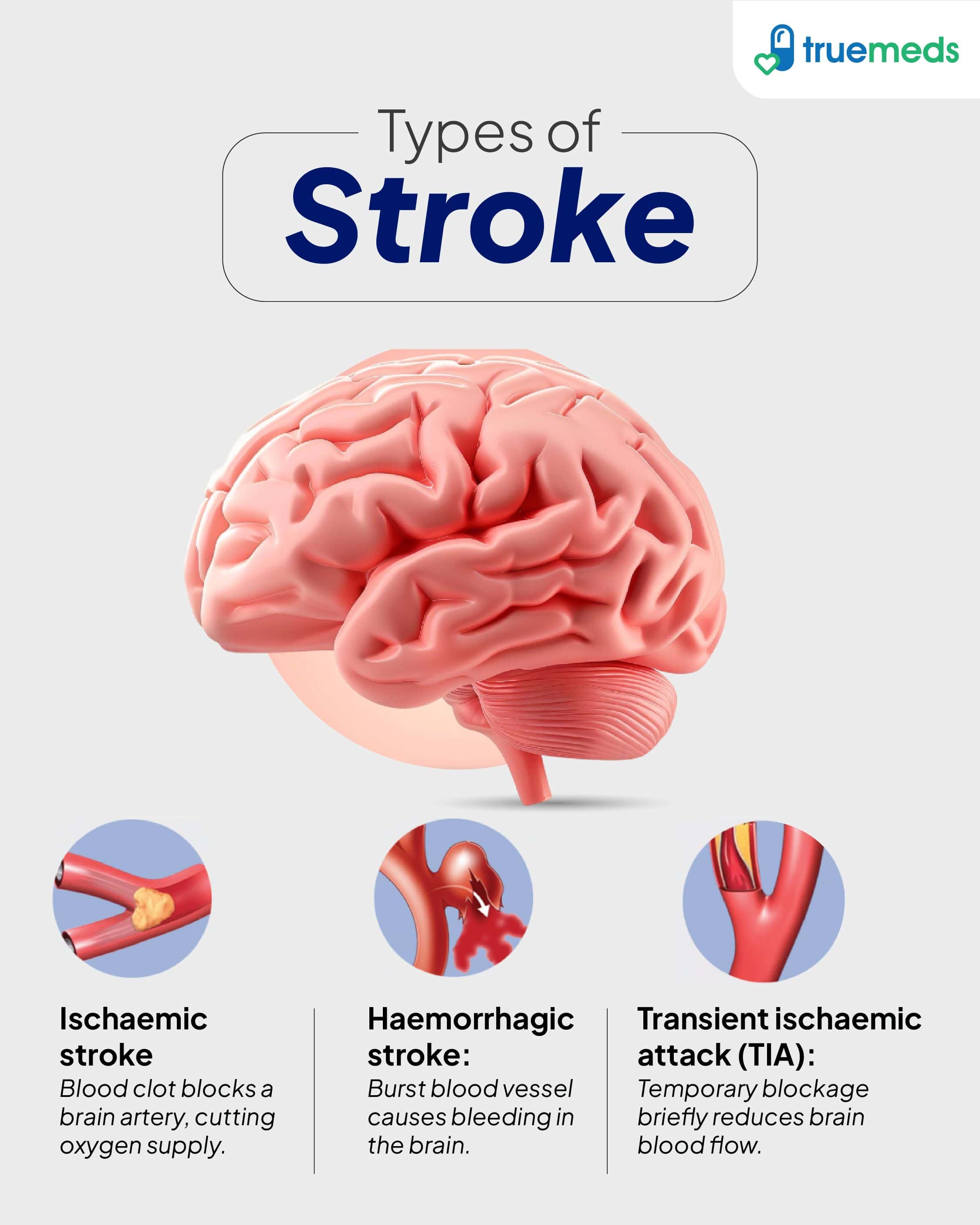
- Ischaemic Stroke: Accounting for about 80% of all strokes, ischaemic stroke occurs when a blood clot blocks a blood vessel in the brain. This can be caused by atherosclerosis, where fatty plaque and cholesterol build up in the arteries, or by a blood clot that forms elsewhere in the body and travels to the brain. Ischaemic stroke can be further classified into cerebral embolism (embolic stroke) and cerebral thrombosis (thrombotic stroke).
- Haemorrhagic Stroke: This type of stroke occurs when a blood vessel in the brain ruptures, causing bleeding into or around the brain. High blood pressure, physical trauma, blood-thinning medications, and aneurysms can all contribute to haemorrhagic stroke. There are two subtypes: intracerebral haemorrhagic (ICH) stroke, where bleeding occurs directly into the brain tissue, and subarachnoid haemorrhagic (SAH) stroke, where bleeding occurs in the space between the brain and the tissues that cover it.
- Transient Ischaemic Attack (TIA): Often called a "mini-stroke," TIA occurs when there is a temporary blockage of a blood vessel in the brain. The symptoms of TIA are similar to those of a full-blown stroke but typically last for a shorter period, usually less than an hour. Although TIA does not cause permanent brain damage, it is a warning sign of a potential future stroke and should not be ignored.
Symptoms of Stroke
Stroke symptoms often appear suddenly and can vary depending on the area of the brain affected. Common symptoms include:
- Weakness or numbness: This may occur on one side of the body, particularly in the face, arm, or leg.
- Speech and language difficulties: Slurred speech, difficulty speaking or understanding others, and confusion are common stroke symptoms.
- Vision problems: Stroke can cause sudden blurred vision, double vision, or loss of vision in one or both eyes.
- Balance and coordination issues: Dizziness, loss of balance, and trouble walking are often associated with stroke.
- Severe headache: A sudden, severe headache with no known cause may indicate a stroke, especially in the case of haemorrhagic stroke.
Stroke symptoms in women may also include fainting, general weakness, difficulty breathing, and sudden behavioural changes. Prompt recognition of these symptoms and immediate medical attention are crucial for successful stroke treatment and recovery.
How Stroke Affects Your Body?
The impact of a stroke depends on the area of the brain affected and the extent of the damage. Physical effects may include paralysis or numbness on one side of the body, difficulty walking, loss of balance, vision problems, and severe headaches. Cognitively, strokes can impair speech, understanding, and memory, and cause confusion. Emotional changes like depression and anxiety are also common in stroke survivors. Prompt stroke treatment is crucial to minimise these effects and improve the chances of stroke recovery.
Causes of Stroke
Strokes can result from a variety of factors, each contributing to the disruption of blood flow to the brain. Some of the causes include:
- Atherosclerosis: Atherosclerosis occurs when fatty deposits (plaque) accumulate in the arteries, narrowing them and restricting blood flow. This can lead to ischaemic strokes, where the blood supply to the brain is obstructed.
- Embolism: An embolism happens when a blood clot or debris from another part of the body travels to the brain and lodges in a blood vessel. This blockage can cut off blood flow, resulting in an ischaemic stroke.
- Aneurysm: Aneurysms are weakened areas in the walls of blood vessels that can bulge and potentially rupture. When they burst, they cause bleeding in the brain, leading to a haemorrhagic stroke.
- Arteriovenous malformation (AVM): AVMs are abnormal connections between arteries and veins in the brain. They can disrupt normal blood flow and may rupture, causing significant bleeding.
- Hypertension: Chronic high blood pressure, or hypertension, is a major risk factor for stroke. It can weaken blood vessel walls over time, increasing the likelihood of rupture and haemorrhagic strokes.
- Age: The risk of stroke increases significantly with age. Older adults are particularly vulnerable to both ischaemic and haemorrhagic strokes due to age-related changes in blood vessels and overall health.
- Family history: Having a family history of stroke can raise an individual’s risk, indicating a potential genetic predisposition to conditions that lead to stroke.
- Lifestyle factors: Unhealthy lifestyle choices, such as smoking, excessive alcohol consumption, physical inactivity, and poor dietary habits, contribute significantly to stroke risk by promoting conditions like high blood pressure and atherosclerosis.
- Medical conditions: Certain medical conditions, including diabetes, high cholesterol, and heart disease, are strong risk factors for stroke. These conditions can damage blood vessels and disrupt normal blood flow to the brain.
Risk Factors
Several risk factors can increase your likelihood of having a stroke, including:
- Age (risk increases with age)
- High blood pressure
- Heart disease (like coronary artery disease, heart valve defects, and atrial fibrillation)
- Diabetes
- Obesity
- Smoking
- Physical inactivity
- Family history of stroke
- Certain medications, like birth control pills or hormone therapies
Complications
Stroke can lead to a wide range of complications, depending on the area of the brain affected and the severity of the stroke. Some of the most common complications include:
- Paralysis or weakness: Paralysis or weakness on one side of the body is common, affecting mobility and independence.
- Difficulty with speech and language: Aphasia, or difficulty with speech and language, can occur following a stroke. This may manifest as challenges in speaking, understanding language, reading, or writing.
- Memory loss and cognitive issues: A stroke can lead to memory loss or difficulties with thinking and reasoning. These cognitive impairments can affect decision-making and problem-solving abilities.
- Emotional problems: Emotional challenges, including depression, anxiety, and mood swings, are common after a stroke. These issues can affect recovery and overall quality of life.
- Pain and sensory disturbances: Many stroke survivors may experience pain, numbness, or other sensory disturbances. These can range from mild discomfort to severe pain in the affected areas.
- Difficulty swallowing: Dysphagia, or difficulty swallowing, can arise post-stroke. This condition increases the risk of choking and can lead to nutritional challenges.
- Vision problems: Strokes can result in vision issues, including double vision or partial blindness. These problems may complicate rehabilitation efforts and daily tasks.
- Incontinence or constipation: Some individuals may experience incontinence or constipation following a stroke. These conditions can lead to further physical and emotional distress.
- Seizures: Seizures may occur in some stroke survivors, particularly if there has been significant brain damage. This can complicate recovery and necessitate additional medical treatment.
- Increased risk of future strokes: Survivors of a stroke face a higher risk of experiencing additional strokes in the future. Ongoing medical management and lifestyle changes are essential to mitigate this risk.
Prevention of Stroke
Preventing stroke involves a combination of lifestyle changes and managing health conditions. Some of the preventative measures include:
- Regular physical activity: Engage in at least 150 minutes (2 hours and 30 minutes) of moderate-intensity aerobic exercise each week. Activities such as brisk walking are highly recommended.
- Healthy diet: Adopt a diet rich in fruits, vegetables, whole grains, and healthy proteins and fats. Following dietary patterns like the Mediterranean or Dietary Approaches to Stop Hypertension (DASH) diets can significantly lower stroke risk.
- Maintaining a healthy weight: Maintain a healthy weight by calculating your Body Mass Index (BMI) and measuring your waist and hip circumference. This is crucial for overall health and stroke prevention.
- Managing health conditions: Effectively managing existing health conditions is critical for stroke prevention. Conditions such as high blood pressure, high cholesterol, diabetes, and heart disease can significantly increase the risk of stroke.
- Regular check-ups: Attending regular check-ups is important for monitoring your overall health. These visits allow for adjustments to your prevention plan as needed and ensure that any risk factors are being effectively managed. Adhering to prescribed medications is essential for controlling these risk factors.
Diagnosis & Tests
The diagnostic process typically involves a combination of physical examinations, imaging tests, and laboratory tests. These include:
- Neurological examination: The doctor will assess various functions, including motor skills, speech and language, vision, and reflexes. This examination helps identify potential neurological deficits and guides further testing.
- Computed tomography (CT) scan: A CT scan provides quick images of the brain and is often the first test performed. It helps differentiate between ischaemic and haemorrhagic strokes by detecting bleeding or blockages.
- Magnetic resonance imaging (MRI): An MRI offers detailed images of brain structures and can identify areas of damage or abnormalities. It is particularly useful for detecting smaller strokes that may not be visible on a CT scan.
- CT angiography (CTA) or MR angiography (MRA): These specialised imaging techniques visualise the blood vessels in the brain, helping to identify blockages or abnormalities in blood flow. This information is crucial for determining the appropriate treatment plan.
- Laboratory tests: A complete blood count (CBC) checks overall health and detects infections, while a coagulation profile evaluates blood clotting ability, which is crucial for identifying ischaemic stroke risk. Testing cholesterol levels helps assess the risk of atherosclerosis, as high cholesterol can lead to plaque buildup in arteries, increasing stroke likelihood.
- Electrocardiogram (ECG): An ECG records the heart's electrical activity, helping to identify irregular heart rhythms (arrhythmias) that could contribute to embolic strokes.
- Echocardiogram: This ultrasound test provides images of the heart, allowing doctors to assess its structure and function. It can help detect any blood clots that may have originated in the heart.
- Carotid ultrasound: This test uses sound waves to visualise blood flow in the carotid arteries in the neck. It helps identify any narrowing or blockages that may increase the risk of stroke.
Treatment & Management
Treatment and management of stroke depend on the type of stroke (ischaemic or haemorrhagic), the severity of the stroke, and the individual's overall health. Some of the treatment options include:
- Immediate treatment for ischaemic stroke: For ischaemic strokes, where blood flow to the brain is blocked, the primary treatment is the administration of tissue plasminogen activator (tPA). This clot-busting medication is most effective when given within a few hours of stroke onset, helping to restore blood flow and minimise brain damage.
- Immediate treatment for haemorrhagic stroke: Management of haemorrhagic stroke focuses on rapid blood pressure control, reversal of anticoagulation if present, management of intracranial pressure, and neurosurgical interventions such as haematoma evacuation or aneurysm clipping/coiling when indicated (Campbell & Khatri, 2020).
- Rehabilitation: Post-stroke rehabilitation is crucial for recovery and improving the quality of life. Rehabilitation typically includes physical therapy to regain strength and mobility, occupational therapy to assist with daily activities, and speech therapy to address communication difficulties.
- Lifestyle modifications: Patients are encouraged to adopt a healthy diet, engage in regular physical activity, quit smoking, and limit alcohol consumption. These changes can significantly reduce the risk of recurrent strokes and improve overall health.
- Ongoing monitoring: Regular follow-up appointments with doctors are important for monitoring recovery progress and managing any complications.
Medication Management for Stroke
Managing a stroke effectively involves both acute treatment and long-term strategies to prevent recurrence. The choice of medications depends on the type of stroke, ischemic or haemorrhagic, as well as the patient’s overall health and risk factors.
1. Antiplatelet Agents
These are commonly prescribed after an ischaemic stroke or transient ischaemic attack (TIA) to prevent clot formation.
- Aspirin: Inhibits platelet aggregation to reduce the risk of clot formation, commonly used in the prevention of recurrent strokes.
- Clopidogrel: Prevents platelet clumping by blocking the P2Y12 receptor, reducing the risk of ischaemic stroke.
- Aspirin + Dipyridamole: Combines antiplatelet and vasodilatory effects to prevent stroke recurrence more effectively than aspirin alone.
- Ticagrelor: A reversible P2Y12 inhibitor that prevents clot formation, used in patients at high risk of stroke or with recent TIA.
2. Anticoagulants
These are especially useful for patients with atrial fibrillation or other cardioembolic sources of stroke.
- Warfarin: A vitamin K antagonist that prevents blood clot formation, used in patients with atrial fibrillation or mechanical valves to reduce stroke risk.
- Dabigatran: A direct thrombin inhibitor that reduces stroke risk in patients with non-valvular atrial fibrillation.
- Rivaroxaban: A direct factor Xa inhibitor used to prevent stroke and systemic embolism in atrial fibrillation.
- Apixaban: A direct oral anticoagulant (DOAC) that lowers stroke risk in patients with non-valvular atrial fibrillation with a lower bleeding risk profile.
- Edoxaban: An oral factor Xa inhibitor that reduces the risk of stroke in patients with atrial fibrillation.
These direct oral anticoagulants (DOACs) are preferred over warfarin in many cases due to fewer dietary restrictions and less frequent monitoring.
3. Thrombolytics (for Acute Ischemic Stroke)
Intravenous thrombolysis with tissue plasminogen activator (tPA) is most effective when administered within 4.5 hours of symptom onset in eligible patients (Powers et al., 2023).
- Alteplase: A tissue plasminogen activator (tPA) that dissolves blood clots, used within a narrow time window in acute ischaemic stroke.
- Tenecteplase: A modified tPA with a longer half-life, used off-label in some settings for clot dissolution in acute ischemic stroke.
For patients with acute ischaemic stroke due to large vessel occlusion, mechanical thrombectomy is recommended within 6 hours of symptom onset and may be beneficial up to 24 hours in carefully selected patients based on imaging criteria (Powers et al., 2023).
Note: Thrombolytics are not used in haemorrhagic strokes.
4. Antihypertensive Medications
Blood pressure management in stroke depends on stroke type and timing. Aggressive blood pressure lowering is avoided in most acute ischaemic strokes unless thrombolysis is planned, while long-term blood pressure control is essential for secondary prevention. Controlling blood pressure is crucial for stroke prevention and long-term management.
ACE Inhibitors
- Enalapril: An ACE inhibitor that dilates blood vessels and lowers blood pressure, improving symptoms in heart failure.
- Ramipril: Lowers blood pressure and reduces strain on the heart, beneficial in managing hypertension and heart failure.
- Lisinopril: Helps reduce afterload and improve heart function by relaxing blood vessels in hypertension and heart failure.
ARBs
- Losartan: Lowers blood pressure and protects heart function, often used when ACE inhibitors are not tolerated.
- Telmisartan: An ARB that lowers blood pressure and reduces the risk of recurrent stroke in high-risk patients.
- Valsartan: Blocks angiotensin II effects, reducing blood pressure and supporting heart failure management.
Beta-blockers
- Metoprolol: A beta-blocker that lowers heart rate and blood pressure, helping control arrhythmias and reduce the heart’s workload.
- Atenolol: Slows the heart rate and decreases blood pressure, making it useful in managing hypertension and cardiac arrhythmias.
Calcium Channel Blockers
- Amlodipine: A calcium channel blocker that relaxes blood vessels, reducing blood pressure and easing the heart’s effort.
- Nifedipine: A calcium channel blocker that controls blood pressure, helping to prevent stroke recurrence.
Diuretics
- Hydrochlorothiazide: A thiazide diuretic that reduces blood pressure and fluid overload, often used in hypertension and mild heart failure.
- Chlorthalidone: A long-acting thiazide-like diuretic that effectively reduces blood pressure, lowering stroke risk.
5. Lipid-Lowering Agents
High cholesterol management is essential to reduce the risk of stroke recurrence.
- Atorvastatin: A statin that lowers LDL cholesterol and stabilises plaques, reducing the risk of ischaemic stroke.
- Rosuvastatin: A high-potency statin used to lower cholesterol and prevent stroke in high-risk patients.
- Simvastatin: A lipid-lowering agent that helps reduce recurrent stroke risk by improving cholesterol levels.
- Ezetimibe: Inhibits intestinal cholesterol absorption, often combined with statins to further reduce LDL levels and stroke risk.
- Evolocumab: A PCSK9 inhibitor that dramatically lowers LDL cholesterol, used in patients at very high risk for stroke and cardiovascular events.
- Alirocumab: Another PCSK9 inhibitor used to reduce LDL cholesterol and prevent recurrent strokes in high-risk individuals.
6. Diabetes Management
Controlling blood glucose levels helps lower stroke risk in diabetic patients.
- Metformin: An insulin-sensitiser that helps manage blood sugar and may offer cardiovascular protection in stroke-prone diabetic patients.
- Empagliflozin: An SGLT2 inhibitor that improves cardiovascular outcomes and may reduce stroke risk in diabetics with heart disease.
- Dapagliflozin: Lowers blood glucose and offers protective effects on the heart and kidneys, beneficial in stroke prevention among diabetics.
- Liraglutide: A GLP-1 receptor agonist that helps manage diabetes and may lower the risk of cardiovascular events, including stroke.
- Semaglutide: A GLP-1 agonist that controls blood sugar and provides stroke and heart protection in high-risk diabetic patients.
Living with Disease
Living with the aftermath of a stroke involves several key aspects to ensure a safe, healthy, and productive recovery. Here are a few points to consider:
- Engaging in regular physical therapy can help improve strength, coordination, and overall function.
- Using assistive devices, like walkers or canes, may also enhance independence in daily activities. Stroke survivors need to seek support from mental health professionals, support groups, or counselling.
- Speech therapy can be beneficial in improving communication skills. Additionally, employing alternative communication methods, such as writing or using communication devices, can help bridge gaps in expression.
- Simple modifications, such as removing tripping hazards, installing grab bars, and using adaptive equipment, can enhance accessibility and ease daily tasks.
- Focusing on a balanced diet rich in fruits, vegetables, whole grains, and lean proteins is important for recovery.
- Regular check-ups to monitor health conditions, such as blood pressure and cholesterol, are vital for overall well-being.
When to See a Doctor?
If you experience symptoms such as face drooping, arm weakness or numbness (especially on one side), sudden difficulty speaking or understanding speech, sudden confusion, vision problems, or a sudden severe headache, seek emergency medical care immediately. These symptoms may indicate a stroke or other serious medical condition that requires urgent treatment.
Key Takeaways
- Stroke recovery involves making changes in physical, social, and emotional aspects of life and can take weeks, months, or even years.
- Physical and occupational therapy can help with strengthening muscles, regaining balance, and adapting to new ways of performing daily activities.
- Emotional support from mental health professionals, support groups, and loved ones is crucial during the recovery process.
- Preventing another stroke involves following a healthy diet, adhering to prescribed medications, and ensuring a safe home environment.
- Recognising the signs of a stroke and seeking immediate medical attention is essential to prevent further complications and improve the chances of a successful recovery.
FAQs
What is the medical term for a stroke?
What is the cause of a stroke?
How to manage a stroke patient?
Can you go back to normal after a stroke?
What is the best treatment for stroke?
How to prevent a stroke?
Can strokes be cured?
How is a stroke diagnosed?
Is 100% recovery from stroke possible?
References
- Powers, W. J., et al. (2023). 2023 guideline for the early management of patients with acute ischemic stroke. Stroke, 54(e364–e467). https://doi.org/10.1161/STR.0000000000000407
- Feigin, V. L., et al. (2021). Global burden of stroke and risk factors. The Lancet Neurology, 20(10), 795–820. https://doi.org/10.1016/S1474-4422(21)00252-0
- Campbell, B. C. V., & Khatri, P. (2020). Stroke. The Lancet, 396(10244), 129–142. https://doi.org/10.1016/S0140-6736(20)31179-X
- Feigin, V. L., Brainin, M., Norrving, B., Martins, S., Pandian, J. D., Lindsay, P., Grupper, M. M. F., & Rautalin, I. (2024). World Stroke Organization: Global Stroke Fact Sheet 2025. International Journal of Stroke, 20(2), 132–144. https://doi.org/10.1177/17474930241308142
Check Related Salts
Latest health articles
Top Health Essentials










Disclaimer
Top-Selling Medicines:
...View more
Top-OTC medicines:
...View more
Company
About UsHealth ArticleHealth StoriesHealth LibraryDiseases & Health ConditionsAyurvedaUnderstanding Generic MedicinesAll MedicinesAll BrandsNeed HelpFAQSecuritySavings CalculatorAdvertise with UsSubscribe
Registered Office Address
Grievance Officer
Download Truemeds


Contact Us
Our customer representative team is available 7 days a week from 9 am - 9 pm.
v4.28.17

2026 - Truemeds | All rights reserved. Our content is for informational purposes only. See additional information.
Our Payment Partners