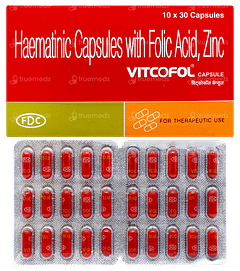

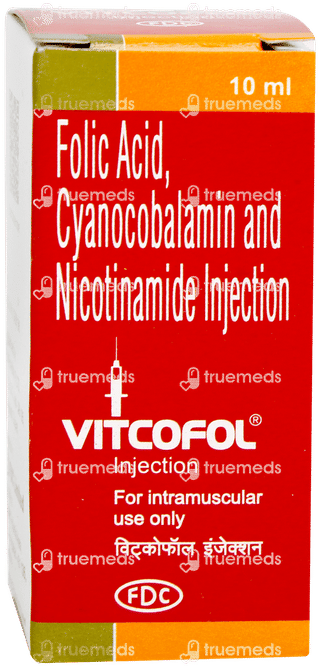
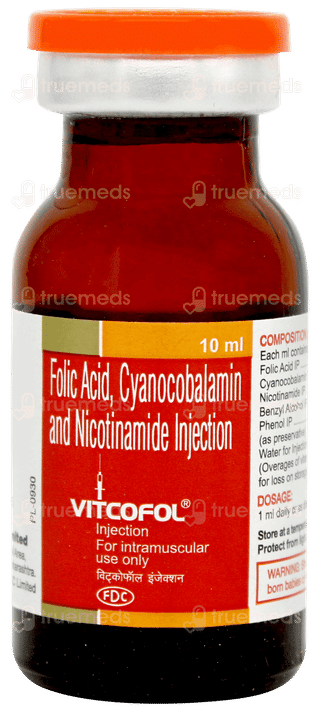
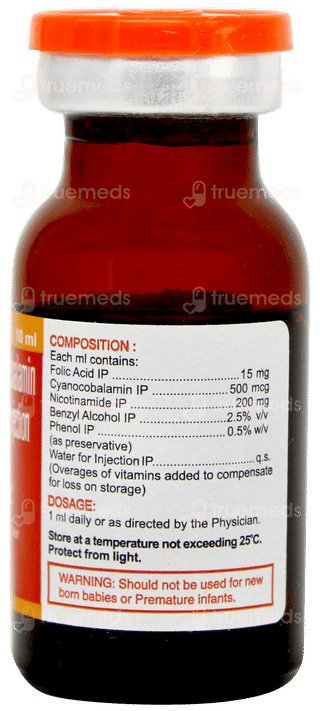
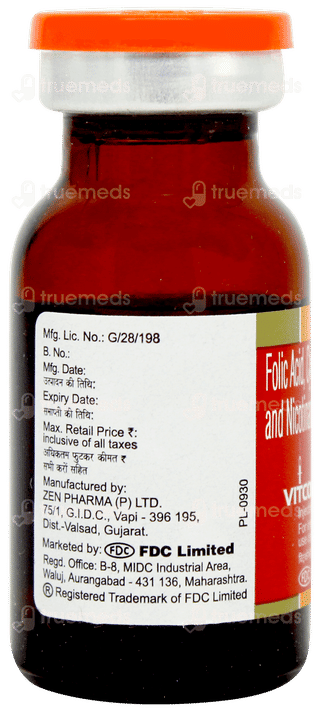
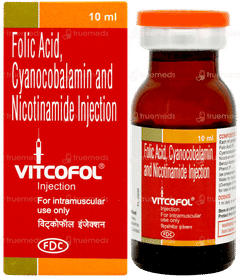
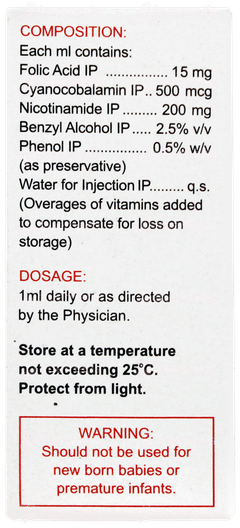

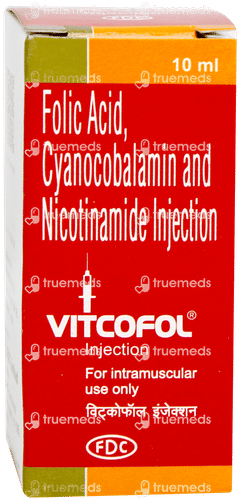
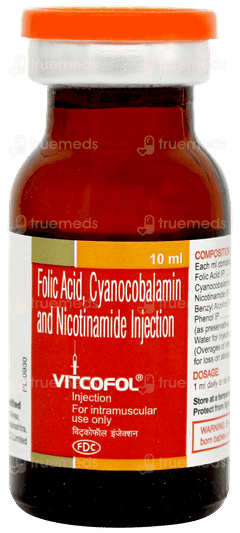
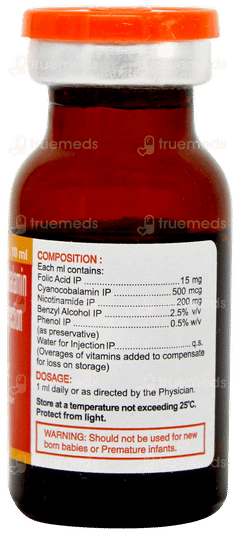
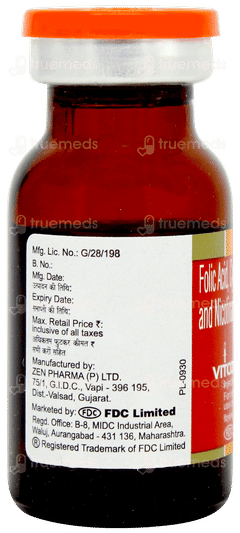


 Composition
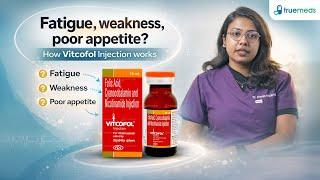
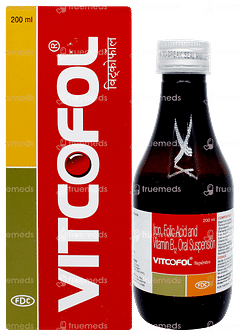
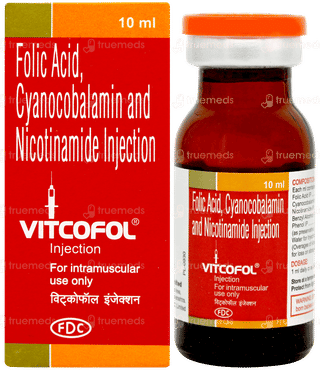
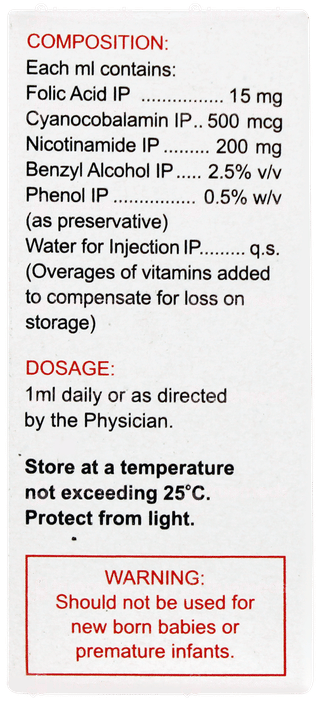
Vitcofol Injection is used to treat deficiencies of B vitamins and folate, which can cause anaemia, nerve problems and tiredness. It contains nicotinamide, folic acid and cyanocobalamin, which are forms of vitamins B3, B9 and B12. It works by replacing the vitamins your body is short of and helps your body make healthy red blood cells. It is used when tablets are not enough. See a doctor if your symptoms continue.
Vitcofol Injection is given by a doctor or nurse, into a muscle or a vein. Do not give yourself this injection. Follow your doctor's prescribed dose and duration. Eat a balanced diet that includes foods rich in B vitamins and folate, such as green leafy vegetables, pulses and eggs. Tell the nurse if you feel pain or discomfort at the injection site.
Common side effects of Vitcofol Injection include pain, redness and swelling where the injection is given, nausea, stomach discomfort, headache and a feeling of warmth or flushing. Mild effects may settle after treatment. Inform your doctor if symptoms persist or worsen. Get emergency help for a rash, itching, swelling of the face or lips, or trouble breathing. Do not stop or change treatment without medical advice.
Before using Vitcofol Injection, tell your doctor about any allergy to vitamins, kidney or liver disease, a stomach ulcer, gout, low potassium levels or Leber's disease (an inherited eye disease). Mention all medicines you take, especially medicines for fits and antibiotics. Consult your doctor if pregnant or breastfeeding. Your doctor may do blood tests to check your response to treatment.