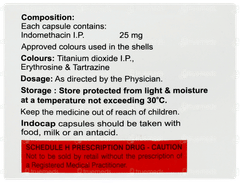

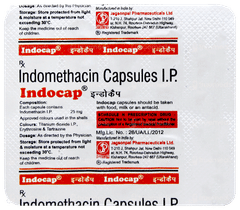


 Composition
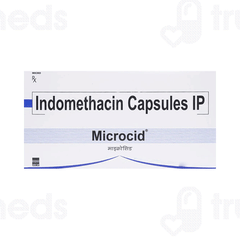
Indocap Capsule is used to manage inflammatory pain associated with arthritis and selected acute musculoskeletal conditions. In rheumatoid arthritis, osteoarthritis and ankylosing spondylitis, it may reduce pain, swelling and stiffness. It is also used to relieve inflammation during acute gout attacks and certain cases of acute painful shoulder conditions, including bursitis or tendinitis. Treatment should be individualised because indomethacin may cause more troublesome adverse effects than some alternative anti-inflammatory medicines.
Take Indocap Capsule exactly as prescribed by your doctor. Swallow the capsule whole with water, preferably with food or milk to reduce stomach discomfort. Follow the prescribed treatment duration and do not increase the amount independently. Use the lowest effective dose for the shortest appropriate period under medical supervision. Avoid combining it with other NSAIDs, including ibuprofen or diclofenac, unless specifically instructed. Avoid alcohol because it may increase gastrointestinal irritation and bleeding risk.
Possible side effects of Indocap Capsule include nausea, heartburn, abdominal pain, diarrhoea, headache and dizziness. Serious adverse effects include stomach or intestinal bleeding, ulceration, kidney injury, fluid retention and increased cardiovascular risk. Rarely, severe skin reactions or liver injury may occur. Seek urgent medical attention for vomiting blood, black stools, chest pain, sudden weakness or breathing difficulty. Stop taking the medicine and seek immediate medical advice if a serious skin rash or allergic reaction develops.
Before taking Indocap Capsule, tell your doctor about stomach ulcers, gastrointestinal bleeding, kidney or liver disease, heart failure, high blood pressure or asthma triggered by aspirin. Indomethacin must not be used around coronary artery bypass graft surgery. Mention anticoagulants, corticosteroids, antidepressants, diuretics and other anti-inflammatory medicines. Discuss pregnancy and breastfeeding before treatment. NSAIDs should generally be avoided from around 20 weeks of pregnancy unless specifically advised, and indomethacin should be avoided from around 30 weeks because of fetal risks. Older adults may require closer monitoring.