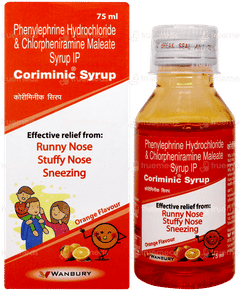
Can I Give Coriminic Syrup to My Child If They Have a Cold?
Yes, Coriminic Syrup can help manage cold symptoms in children aged 6 years and above. However, always consult your doctor before giving it.
What Are the Active Ingredients in Coriminic Syrup?
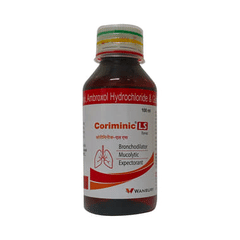
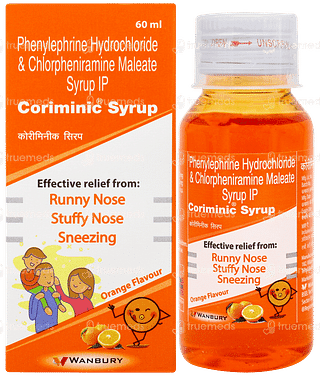
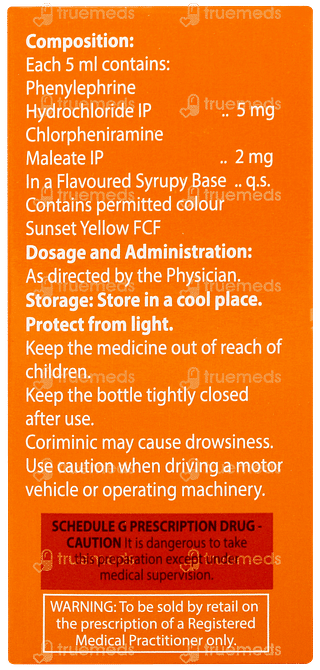
Coriminic Syrup contains chlorpheniramine (an antihistamine) and phenylephrine (a decongestant) which help manage cold and allergy symptoms.
How Does Coriminic Syrup Work?
The antihistamine ingredient blocks histamine, reducing allergy symptoms, while the decongestant reduces nasal passage swelling for easier breathing.
Can My Pregnant or Breastfeeding Partner Take Coriminic Syrup?
Please consult your doctor before taking Coriminic Syrup if pregnant, planning pregnancy, or breastfeeding.
What Precautions Should Be Taken When Giving My Child Coriminic Syrup?
Use with caution if your child has cardiovascular disease, diabetes, or glaucoma. Avoid driving or operating machinery until effects are known.
Can My Child Take Coriminic Syrup With Other Medications?
Always inform your doctor about other medications being taken as Coriminic Syrup can interact with certain other medicines.
What Should I Do If My Child Misses a Dose of Coriminic Syrup?
Give the missed dose as soon as you remember unless it's nearly time for the next one - then skip the missed dose.
What symptoms does Corimic Syrup treat?
Corimic Syrup helps children find relief from uncomfortable symptoms caused by allergies or the common cold. It effectively manages sneezing, runny nose, and itchy or watery eyes.
How does Corimic Syrup help with nasal congestion?
Corimic Syrup contains a decongestant that narrows blood vessels in the nose. It reduces swelling and inflammation, which clears blocked nasal passages and helps your child breathe more easily.
Is Corimic Syrup safe for children under two?
Corimic Syrup should not be given to children under four years of age. It carries a higher risk of serious side effects in very young children.
Should I give Corimic Syrup with food?
Corimic Syrup can be given with or without food. Giving it with a meal and plenty of water may help reduce stomach discomfort.
How should I measure the dose of Corimic Syrup?
Corimic Syrup must always be measured using a proper dosing syringe or measuring cup. This ensures accuracy, as using a kitchen spoon may lead to your child receiving the wrong amount.
Can Corimic Syrup cause drowsiness?
Corimic Syrup contains an antihistamine that may cause children to feel sleepy or drowsy. It is important to monitor your child and avoid activities that require alertness after taking the medicine.
What if the child has dry mouth after taking Corimic Syrup?
Corimic Syrup may cause dryness in the mouth, nose, or throat. Encourage your child to drink plenty of fluids while taking the medicine.
Is Corimic Syrup safe for children with diabetes?
Corimic Syrup may contain sugar and could affect blood glucose levels. It is essential to consult a doctor before giving it to a child with diabetes.
Where should I store Corimic Syrup?
Corimic Syrup should be kept at room temperature between 15°C and 30°C. It must remain in a tightly closed container and be stored away from excessive light or moisture.
Is Corimic Syrup habit-forming?
Corimic Syrup is not known to be habit-forming. It will not cause dependency when used correctly according to your doctor’s instructions.
Can Corimic Syrup cause headaches?
Corimic Syrup may occasionally cause a mild headache in some children. It is usually temporary, but you should seek professional medical advice if this side effect persists.
Should I keep Corimic Syrup away from children?
Corimic Syrup must always be stored in a secure place where children cannot reach it. This helps prevent accidental ingestion, which could lead to serious health issues or overdose.
Can Corimic Syrup help with watery eyes?
Corimic Syrup works by blocking histamine, a substance released during allergic reactions. This helps relieve itchy or watery eyes and other allergy symptoms.
What suggests an overdose of Corimic Syrup?
Taking too much Corimic Syrup may cause extreme drowsiness, confusion, or unusual restlessness. Contact your doctor immediately if these symptoms occur.
Can my child ride a bicycle after taking Corimic Syrup?
Corimic Syrup can cause dizziness or affect mental focus. It is recommended that your child avoids riding a bicycle or doing activities that require concentration until you know how the medicine affects them.
How does Phenylephrine in Corimic Syrup work?
Corimic Syrup contains Phenylephrine, which acts as a decongestant by narrowing the blood vessels in the nasal passages. This helps reduce swelling in the nasal passages, clears congestion, and makes breathing easier.
Is Corimic Syrup okay for heart conditions?
Corimic Syrup should be used with extreme caution if the child has a heart condition. It can increase heart rate or blood pressure, so consult a doctor before giving this medicine.
Can Corimic Syrup cause blurred vision?
Corimic Syrup may cause side effects like blurred vision or restlessness in some children. These effects are usually mild, but you should contact a doctor if these persist.
What diet helps when using Corimic Syrup?
Corimic Syrup works best when the child stays well hydrated. Giving plenty of fluids and a balanced diet can help support recovery while the medicine relieves symptoms.
Can I give Corimic Syrup with other decongestants?
Corimic Syrup should not be combined with other decongestants like pseudoephedrine. Doing so may increase the risk of side effects such as restlessness, increased heart rate, or high blood pressure.
How should the bottle of Corimic Syrup be handled?
Corimic Syrup should always be kept tightly closed after every use. It helps maintain the quality of medicine and protects it from being exposed to air or moisture contaminants.
Can Corimic Syrup cause nausea?
Corimic Syrup might cause mild nausea or vomiting in some cases. Giving the medicine with food may help reduce stomach upset in the child.
Is Corimic Syrup safe for kidney disease?
Corimic Syrup requires caution in children with kidney problems because the body may process it differently. It is important to speak with a doctor regarding possible dose adjustments.
Can Corimic Syrup be used for flu symptoms?
Corimic Syrup may help relieve some symptoms associated with flu, such as a runny nose, sneezing, and nasal congestion. However, it does not treat the flu infection itself and only helps manage these symptoms.
Should Corimic Syrup be used with MAOIs?
Corimic Syrup must not be given if a child is taking MAOI antidepressants. It is necessary to wait at least 14 days after stopping those medicines before starting this syrup.
What is therapeutic category for Corimic Syrup?
Corimic Syrup belongs to the cold and allergy therapeutic category. It combines an antihistamine and a decongestant to treat various respiratory symptoms caused by infections or seasonal allergies in children.
Can Corimic Syrup cause constipation?
Corimic Syrup may lead to mild constipation in some children. It is important to ensure the child drinks plenty of water and consult a doctor if the condition persists.
Is Corimic Syrup suitable for liver issues?
Corimic Syrup should be used with caution if the child has a history of liver problems. It is necessary to consult a doctor before starting the medicine to determine the appropriate dose.
Can Corimic Syrup cause dizziness?
Corimic Syrup may cause your child to feel dizzy. Because of this, it is best that they avoid activities requiring balance, such as climbing, whilst taking medicine.
How does Chlorpheniramine in Corimic Syrup help?
Corimic Syrup contains Chlorpheniramine, an antihistamine that blocks the effects of histamine in the body. This helps relieve allergy symptoms such as sneezing, runny nose, and itchy eyes.



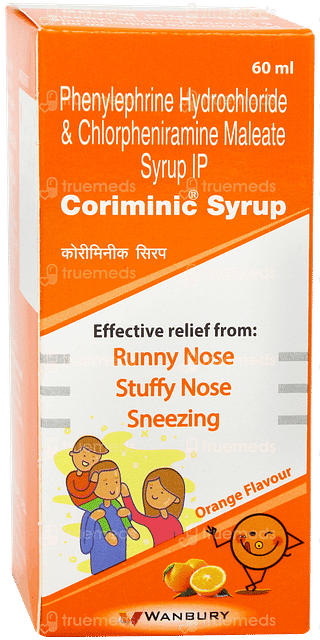

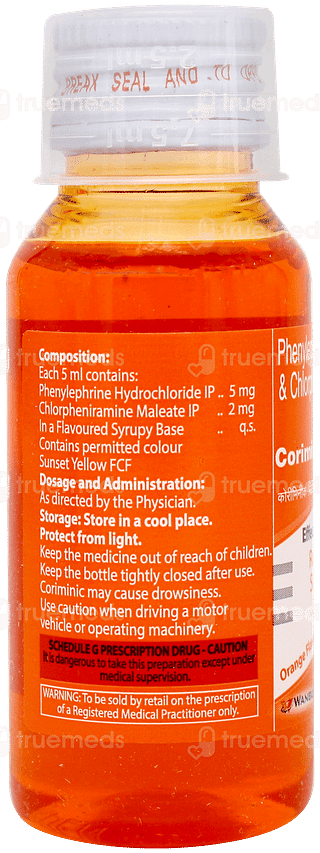
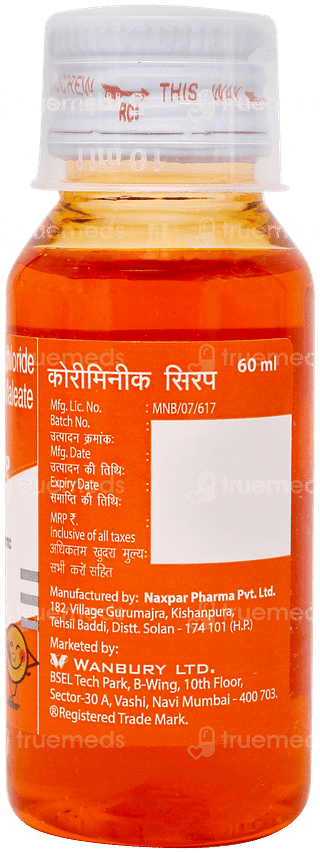
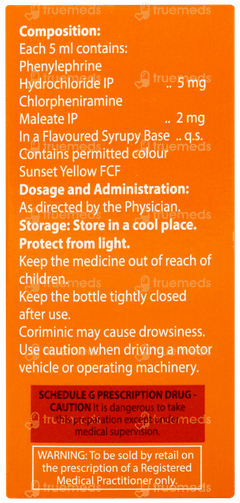

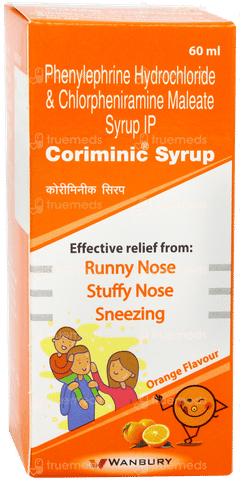
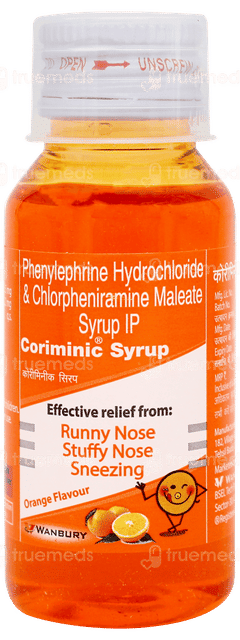
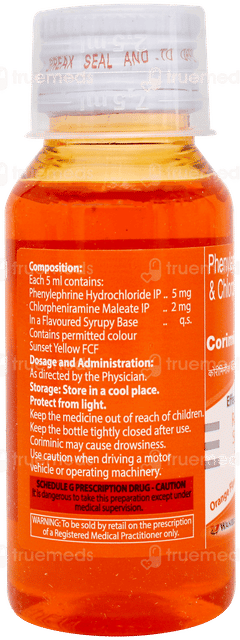
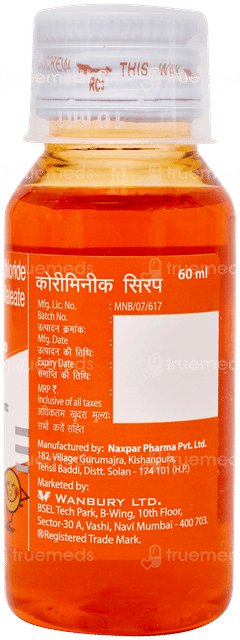


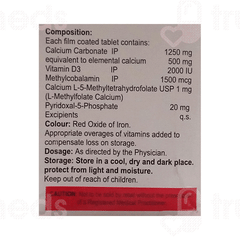
 Composition