

- Medicines
- Personal Care
- Skin Cream
- Sunscreen
- Face Wash
- Skin and Body Soap
- Acne Care
- Body Lotions
- Moisturising Lotion
- Moisturising Cream
- Mosquito Repellent
- Moisturising Gel
- Body Wash
- Hair Oils
- Hair Shampoo
- Hair Conditioners
- Hair Supplements
- Hair Colour
- Hair Serum
- Hair Mask
- Hair Solutions
- Baby Diapers and Wipes
- Baby Lotion and Moisturising Cream
- Baby Bath Essentials
- Baby Skin Care
- Baby and Infant Food
- Baby Healthcare
- Women Multivitamins
- Ovulation Test Kit and Women Intimate Care
- Sanitary Pads
- Nutritional Drinks
- Condoms
- Lubricants
- Massage Gels
- Personal Body Massagers
- Men Performance Booster
- Sexual Health Supplements
- Massage Oils
- Ayurveda
- Tooth Paste
- Mouth Ulcer Gel
- Mouthwash
- Toothache and Gum Pain
- Tooth Brush
- Gargle Solution
- Orthopaedic Supports
- Adult Diapers
- Footwear
- Mobility and Support Accessories
- Urinary Support and Care
- Health Conditions
- Bone and Joint Care
- Digestive Care
- Eye Care
- Pain Relief
- Smoking Cessation
- Liver Care
- Stomach Care
- Cold and Cough
- Heart Care
- Kidney Care
- Piles, Fissures & Fistula
- Respiratory Care
- Mental Wellness
- Derma Care
- Pre and Probiotics
- Acidity
- Gas
- Constipation
- Loose Motion/Diarrhoea
- Digestive Fibres
- Digestive Enzymes
- Eye Lubricant Drops
- Lens Solution
- Safety Eye Wear
- Eye Cream
- Eye Vitamins and Supplements
- Eye Drops
- Eye Ointment and Gel
- Nicotine Patch
- Nicotine Gum
- Nicotine Lozenges
- Cough Syrups
- Chest Rubs and Balms
- Nasal Spray
- Lozenges
- Inhalant Capsules
- Cold and Cough Tablets
- Vitamins & Supplements
- Diabetes Care
- Healthcare Devices
- Homeopathic Medicine
- Health Guide
Pneumonia
Pneumonia is a serious lung infection caused by bacteria, viruses, or fungi, leading to inflammation and fluid buildup in the air sacs.
 50
50Last updated on : 10 Jun, 2026
Read time : 12 mins
Overview of Pneumonia Disease
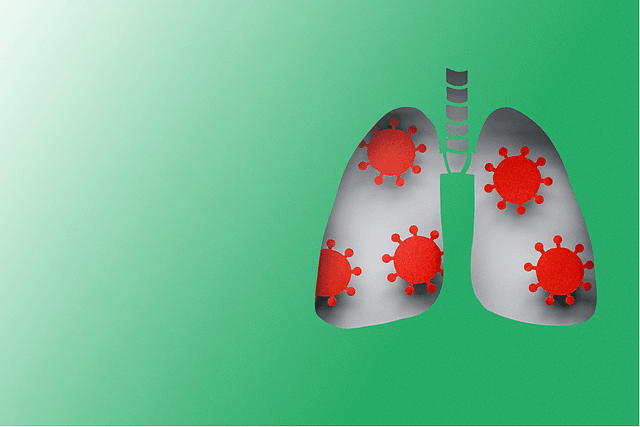
Pneumonia is a common and potentially life-threatening lung infection. It affects millions of people worldwide each year. Understanding the causes, symptoms, and treatment options for pneumonia is essential to seek medical attention promptly and prevent complications.
What is Pneumonia?
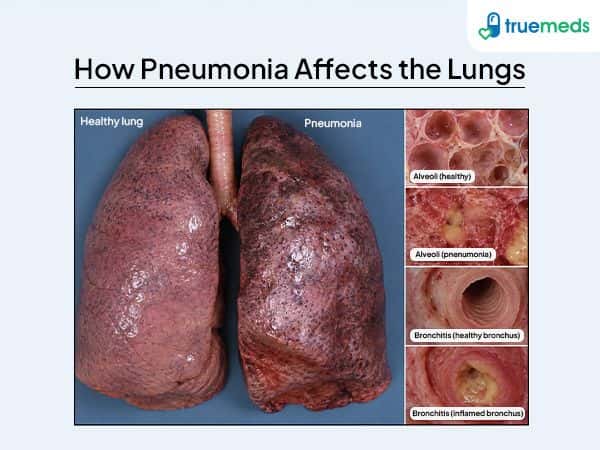
Pneumonia is a lung infection that causes inflammation in the air sacs of one or both lungs. These air sacs may become filled with fluid or pus, leading to symptoms such as cough with phlegm or pus, fever, chills, and difficulty breathing. Pneumonia can be caused by a variety of organisms, including bacteria, viruses, and fungi.
The severity of pneumonia can vary from mild to life-threatening (World Health Organization). It poses the greatest risk to infants and young children, adults over the age of 65, and individuals with underlying health conditions or weakened immune systems.
Key Factors about Pneumonia
| Category | Details |
| Also Referred to as |
|
| Commonly Occurs In |
|
| Affected Organ |
|
| Type |
|
| Common Signs |
|
| Consulting Specialist |
|
| Treatment Procedures |
|
| Managed By |
|
| Mimicking Condition |
|
Types of Pneumonia
Pneumonia can be classified into several types based on the cause and how it was acquired. Here are the main types of pneumonia:
1. Bacterial pneumonia
Caused by bacteria, such as Streptococcus pneumoniae, Legionella pneumophila, and Mycoplasma pneumoniae (Sattar et al., 2024). This type is often more severe and requires antibiotic treatment.
2. Viral pneumonia
Caused by viruses, such as influenza, respiratory syncytial virus (RSV), and SARS-CoV-2. Viral pneumonia may be mild but can also be severe, especially in older adults, infants, and immunocompromised individuals
3. Fungal pneumonia
Caused by fungi, such as Pneumocystis, Coccidioides, and Histoplasma. This type is more common in individuals with weakened immune systems or chronic health conditions. Treatment typically involves antifungal medications.
4. Aspiration pneumonia
Caused by the accidental inhalation of food, fluid, or other substances into the lungs, leading to infection.
5. Community-acquired pneumonia
Acquired outside of a medical or institutional setting and can also be caused by bacteria, viruses, or fungi.
6. Hospital-acquired pneumonia
Acquired during a hospital stay. Also, it is often caused by antibiotic-resistant bacteria due to the hospital environment.
Symptoms of Pneumonia
The symptoms of pneumonia can vary in severity, depending on factors such as the cause of the infection, the patient's age, and their overall health. Common symptoms include:
- Fever, chills, and sweating
- Cough, which may produce mucus that is greenish, yellow, or bloody
- Shortness of breath or rapid, shallow breathing
- Sharp or stabbing chest pain that worsens with deep breathing or coughing
- Fatigue and loss of appetite
- Nausea, vomiting, or diarrhoea
- A bluish tint to the lips or fingernails, indicating low oxygen levels
- Fast breathing or trouble breathing, and a fast pulse
Symptoms can present differently in certain groups. Older adults may exhibit confusion, a lower-than-normal body temperature, and sudden changes in mental awareness. Newborns and infants may not show any signs of infection, or they may vomit, have a fever or cough, appear restless, or have difficulty feeding. People with chronic lung disease may experience a worsening of their existing symptoms. Understanding the various presentations of pneumonia symptoms can aid in early diagnosis and treatment.
Causes of Pneumonia
Pneumonia is an infection of one or both lungs caused by bacteria, viruses, or fungi. The severity and symptoms can vary based on the type of germ responsible for the infection.
1. Bacterial pneumonia
Bacterial pneumonia is caused by Streptococcus pneumoniae, Legionella pneumophila, and Mycoplasma pneumoniae. It can occur independently or develop after a viral infection. Bacterial pneumonia tends to be more serious than other types, with symptoms that can develop gradually or suddenly.
2. Viral pneumonia
Viral pneumonia is caused by viruses like influenza (flu), respiratory syncytial virus (RSV), and SARS-CoV-2 (COVID-19). It is often mild and resolves on its own within a few weeks, but it can be serious enough to require hospitalisation. Symptoms typically develop over several days, starting with fever, dry cough, headache, and weakness.
3. Fungal pneumonia
Fungal pneumonia is more common in people with chronic health problems or weakened immune systems. Types include Pneumocystis pneumonia (PCP), Valley fever (coccidioidomycosis), and aspergillosis. Symptoms can be similar to those of other types of pneumonia but may be more gradual in onset.
Risk Factors
Various factors can increase an individual's risk of developing pneumonia.
- Age plays a significant role, with older adults over 65 being more vulnerable due to weakened immune systems and potential underlying health conditions. Young children, especially those under 2 years old, are also at higher risk because of their immature immune systems.
- People with chronic illnesses such as heart disease, diabetes, and lung diseases like chronic obstructive pulmonary disease are more susceptible to pneumonia.
- Immunocompromised individuals, such as those undergoing cancer treatment, taking immunosuppressive medications, or living with HIV/AIDS, have a higher risk due to their weakened immune systems.
- Lifestyle factors, including smoking and excessive alcohol consumption, can damage the lungs and increase the likelihood of developing pneumonia.
- Environmental factors, such as exposure to air pollution, secondhand smoke, and certain chemicals, may also elevate the risk.
Complications
Pneumonia can lead to various complications, especially if left untreated or if the individual has underlying health issues.
- One common complication is respiratory failure, which occurs when the lungs cannot adequately oxygenate the blood or remove carbon dioxide. This can be life-threatening and may require mechanical ventilation.
- Sepsis, a severe inflammatory response to infection, can develop if the pneumonia-causing pathogens enter the bloodstream. Sepsis can lead to organ failure and, in extreme cases, septic shock.
- Pleural effusions, a build-up of fluid between the lungs and chest wall, can cause difficulty breathing and may require drainage.
- In some cases, pneumonia can lead to lung abscesses, which are pockets of pus in the lungs that may require surgical intervention.
- Acute respiratory distress syndrome (ARDS), a severe form of respiratory failure, can develop in severe cases of pneumonia, causing widespread inflammation and fluid build-up in the lungs.
Prevention of Pneumonia
Preventing pneumonia involves a combination of vaccinations, good hygiene practices, and maintaining overall health.
- Getting vaccinated against common causes of pneumonia, such as seasonal influenza, respiratory syncytial virus (RSV), and COVID-19, is crucial. Specifically, receiving pneumococcal vaccines (PCV13 and PPSV23) against pneumococcal pneumonia is essential, especially for those under 5 years of age, over 65, or with certain health conditions such as chronic lung disease, diabetes, or immunocompromising conditions.
- Frequently washing hands with soap and water, especially after coughing or blowing your nose, going to the bathroom, and before eating or preparing food, can help prevent the spread of infectious agents.
- Avoiding smoking is also essential, as it damages the lungs and increases the risk of pneumonia. Maintaining good health habits, such as a healthy diet, regular exercise, and adequate rest, can help reduce the risk of developing pneumonia.
- Finally, avoiding exposure to illnesses by steering clear of sick individuals and keeping surfaces clean can further help prevent pneumonia.
Diagnosis & Tests
Diagnosing pneumonia involves a combination of physical examination, imaging tests, and laboratory tests. The following are standard methods used to diagnose pneumonia:
1. Physical examination
A doctor will listen to the lungs with a stethoscope to detect abnormal sounds, such as crackles, bubbling, or wheezing.
2. Chest X-ray
This imaging test can show the location and extent of the infection in the lungs. It can also help differentiate pneumonia from other conditions with similar symptoms.
3. Blood tests
A complete blood count (CBC) can help determine if there is a possible infection by evaluating white blood cell levels. Blood cultures can identify the specific bacterium causing the infection.
4. Sputum culture
A sample of mucus coughed up from the lungs is collected and analysed to identify the microorganism causing the infection.
5. Pulse oximetry
This non-invasive test measures blood oxygen saturation, which can be lower in people with pneumonia.
6. Bronchoscopy
In some cases, a flexible tube with a camera may be inserted through the mouth or nose into the lungs to examine the airways and collect fluid samples.
Treatment & Management
The management and treatment of pneumonia depend on its type, severity, and the patient's overall health.
1. Antibiotics
Bacterial pneumonia is treated with antibiotics such as amoxicillin, doxycycline, ciprofloxacin, levofloxacin, vancomycin, and gentamicin, depending on the causative organism and severity. Completing the full course of antibiotics is essential to prevent resistance and ensure effective recovery.
2. Antiviral medications
Viral pneumonia does not respond to antibiotics and often resolves with supportive care. However, antiviral medications such as oseltamivir, zanamivir, peramivir, ribavirin, acyclovir, and ganciclovir may be prescribed for severe viral pneumonia, particularly in patients with influenza or who are immunocompromised.
3. Antifungals
Fungal pneumonia, though less common, requires antifungal treatment with fluconazole, ketoconazole, itraconazole, or voriconazole, depending on the fungal pathogen involved.
4. OTC medications
Home care involves symptom management with pain relievers such as ibuprofen or paracetamol/acetaminophen to reduce fever and discomfort. Adequate rest, hydration, and warm beverages, along with steamy baths or humidifiers, help ease breathing difficulties.
Severe cases may require hospitalisation, where patients receive intravenous antibiotics, oxygen therapy, and breathing treatments. Those with respiratory distress might need ventilatory support. Completing prescribed treatments and maintaining good hygiene, vaccination, and a healthy lifestyle can help prevent recurrence and future infections.
Living with Disease
After being diagnosed with pneumonia, managing the disease effectively involves a combination of medical treatment and lifestyle adjustments.
- If pneumonia is caused by bacteria, completing the full course of antibiotics as prescribed is essential.
- For viral pneumonia, following your doctor's recommendations for symptom management is crucial.
- Maintaining a healthy lifestyle by ensuring adequate rest, eating a balanced diet rich in fruits and vegetables, and staying hydrated can help your body recover.
- Reducing stress and engaging in regular physical activity once you are well enough can also aid recovery.
- Keeping regular medical check-ups and scheduling follow-up appointments with your doctor are essential for monitoring your recovery and addressing any persistent or worsening symptoms.
- Managing symptoms at home by controlling fever with appropriate medication, ensuring adequate fluid intake to prevent dehydration, and avoiding over-the-counter cough medicines without consulting your doctor can help alleviate discomfort.
- Lastly, avoiding exposure to tobacco smoke and other air irritants can help your lungs recover and reduce the risk of complications.
When to See a Doctor?
- If you experience symptoms of pneumonia, such as cough, fever, chills, difficulty breathing, chest pain, or rapid heartbeat, it is essential to contact your doctor promptly.
- Seek immediate medical attention if you have a high fever (above 39°C or 102.2°F), severe shortness of breath, or persistent chest pain.
- If you are in a high-risk group, such as being over 65, having a chronic health condition, or having a weakened immune system, and develop symptoms of pneumonia, consult your doctor without delay.
- Infants and young children with signs of pneumonia, such as rapid breathing, difficulty feeding, or bluish skin colour, require immediate medical evaluation.
- If your symptoms worsen or do not improve after a few days of treatment, contact your doctor for further guidance.
Key Takeaways
- Pneumonia is a common lung infection caused by various microorganisms, including bacteria, viruses, and fungi.
- Symptoms of pneumonia include cough, fever, chills, difficulty breathing, chest pain, and rapid heartbeat.
- Risk factors for developing pneumonia include age (under 5 or over 65), chronic health conditions, a weakened immune system, and lifestyle factors such as smoking.
- Diagnosis of pneumonia typically involves a physical exam, chest X-ray, and possibly blood tests or sputum culture.
- Treatment for pneumonia depends on the cause and severity, and may include antibiotics, antiviral medications, oxygen therapy, or hospitalisation in severe cases.
- Preventing pneumonia involves vaccinations, good hygiene practices, maintaining overall health, and avoiding exposure to illnesses.
- Living with pneumonia requires following medical treatment, maintaining a healthy lifestyle, keeping regular medical check-ups, managing symptoms at home, and avoiding irritants.
- Seeking prompt medical attention for symptoms of pneumonia is crucial, especially for high-risk individuals or if symptoms worsen or persist.
FAQs
What is the primary trigger for pneumonia?
Can you list three typical symptoms of pneumonia?
How serious can pneumonia get?
Is it possible to cure pneumonia?
How does pneumonia transmission occur?
What is the typical duration of pneumonia?
Can lungs fully heal after pneumonia?
References
- MedlinePlus. (n.d). Pneumonia. https://medlineplus.gov/pneumonia.html
- World Health Organization: WHO. (n.d). Pneumonia. https://www.who.int/health-topics/pneumonia#tab=tab_1
- Metlay, J. P., Waterer, G. W., Long, A. C., Anzueto, A., Brozek, J., Crothers, K., Cooley, L. A., Dean, N. C., Fine, M. J., Flanders, S. A., Griffin, M. R., Metersky, M. L., Musher, D. M., Restrepo, M. I., & Whitney, C. G. (2019). Diagnosis and treatment of adults with community-acquired pneumonia. An official clinical practice guideline of the American Thoracic Society and Infectious Diseases Society of America. American Journal of Respiratory and Critical Care Medicine, 200(7), e45–e67. https://doi.org/10.1164/rccm.201908-1581ST
- National Heart, Lung, and Blood Institute. (2021). Pneumonia. https://www.nhlbi.nih.gov/health-topics/pneumonia
- World Health Organization. (2022). Pneumonia. https://www.who.int/news-room/fact-sheets/detail/pneumonia
- Sattar, S. B. A., Nguyen, A. D., & Sharma, S. (2024). Bacterial pneumonia. StatPearls - NCBI Bookshelf. https://www.ncbi.nlm.nih.gov/books/NBK513321/
Check Related Salts
Browse Other Conditions
Latest health articles

Top Health Essentials




















Disclaimer
Top-Selling Medicines:
...View more
Top-OTC medicines:
...View more
Company
About UsHealth ArticleHealth StoriesHealth LibraryDiseases & Health ConditionsAyurvedaUnderstanding Generic MedicinesAll MedicinesAll BrandsNeed HelpFAQSecuritySavings CalculatorAdvertise with UsSubscribe
Registered Office Address
Grievance Officer
Download Truemeds


Contact Us
Our customer representative team is available 7 days a week from 9 am - 9 pm.
v4.28.19

2026 - Truemeds | All rights reserved. Our content is for informational purposes only. See additional information.

Our Payment Partners




