

- Medicines
- Personal Care
- Skin Cream
- Sunscreen
- Face Wash
- Skin and Body Soap
- Acne Care
- Body Lotions
- Moisturising Lotion
- Moisturising Cream
- Mosquito Repellent
- Moisturising Gel
- Body Wash
- Hair Oils
- Hair Shampoo
- Hair Conditioners
- Hair Supplements
- Hair Colour
- Hair Serum
- Hair Mask
- Hair Solutions
- Baby Diapers and Wipes
- Baby Lotion and Moisturising Cream
- Baby Bath Essentials
- Baby Skin Care
- Baby and Infant Food
- Baby Healthcare
- Women Multivitamins
- Ovulation Test Kit and Women Intimate Care
- Sanitary Pads
- Nutritional Drinks
- Condoms
- Lubricants
- Massage Gels
- Personal Body Massagers
- Men Performance Booster
- Sexual Health Supplements
- Massage Oils
- Ayurveda
- Tooth Paste
- Mouth Ulcer Gel
- Mouthwash
- Toothache and Gum Pain
- Tooth Brush
- Gargle Solution
- Orthopaedic Supports
- Adult Diapers
- Footwear
- Mobility and Support Accessories
- Urinary Support and Care
- Health Conditions
- Bone and Joint Care
- Digestive Care
- Eye Care
- Pain Relief
- Smoking Cessation
- Liver Care
- Stomach Care
- Cold and Cough
- Heart Care
- Kidney Care
- Piles, Fissures & Fistula
- Respiratory Care
- Mental Wellness
- Derma Care
- Pre and Probiotics
- Acidity
- Gas
- Constipation
- Loose Motion/Diarrhoea
- Digestive Fibres
- Digestive Enzymes
- Eye Lubricant Drops
- Lens Solution
- Safety Eye Wear
- Eye Cream
- Eye Vitamins and Supplements
- Eye Drops
- Eye Ointment and Gel
- Nicotine Patch
- Nicotine Gum
- Nicotine Lozenges
- Cough Syrups
- Chest Rubs and Balms
- Nasal Spray
- Lozenges
- Inhalant Capsules
- Cold and Cough Tablets
- Vitamins & Supplements
- Diabetes Care
- Healthcare Devices
- Homeopathic Medicine
- Health Guide
HIV Infection
HIV (Human Immunodeficiency Virus) infection is a viral condition that weakens the body's immune system by attacking white blood cells called CD4 cells. If untreated, HIV can progress to AIDS (Acquired Immunodeficiency Syndrome), the most advanced stage of the infection (WHO (2022)). HIV is transmitted through the exchange of bodily fluids, such as semen, blood, vaginal fluid, and breast milk, with an infected person.
 50
50Last updated on : 29 Apr, 2026
Read time : 16 mins
Overview of Disease
HIV infection is a serious global health concern that affects millions of people worldwide. Despite significant advances in treatment and prevention, HIV remains a major cause of morbidity and mortality, particularly in developing countries. Understanding the basics of HIV infection, including its causes, symptoms, and transmission methods, is crucial for reducing the spread of the virus. It also helps improve the lives of those affected.
What is HIV Infection?
HIV infection is caused by the human immunodeficiency virus, which belongs to a group of viruses called retroviruses. The virus attacks and destroys CD4 T cells, a type of white blood cell that plays a vital role in the body's immune response. As the infection progresses, the immune system becomes increasingly compromised, making the body more susceptible to opportunistic infections and cancers.
There are two main types of HIV: HIV-1 and HIV-2. HIV-1 is the most common type and is responsible for the majority of HIV infections worldwide. HIV-2 is less common and is primarily found in West Africa. HIV is transmitted through sexual contact, the sharing of contaminated needles or syringes, and from an infected mother to her child. It is important to understand that HIV is not transmitted through casual contact, such as hugging, sharing utensils, or using public restrooms. Understanding the modes of transmission is crucial for preventing the spread of HIV.
Key Factors about HIV Infection
| Category | Details |
| Also Referred to as | Acquired Immunodeficiency Syndrome (AIDS) when in its late stage |
| Commonly Occurs In | Worldwide, with the highest prevalence in Eastern and Southern Africa, and in key populations such as men who have sex with men, people who inject drugs, and sex workers. |
| Affected Organ | Immune system, specifically CD4+ T cells |
| Type | Viral infection caused by HIV-1 and HIV-2 |
| Common Signs |
|
| Consulting Specialist | Infectious disease specialist |
| Treatment Procedures | Antiretroviral therapy (ART), PrEP, PEP |
| Managed By | Antiretroviral therapy (ART): Maraviroc, Fostemsavir, Raltegravir & Dolutegravir |
| Mimicking Condition | Flu-like symptoms during acute HIV infection can mimic other viral illnesses |
Symptoms of HIV Infection
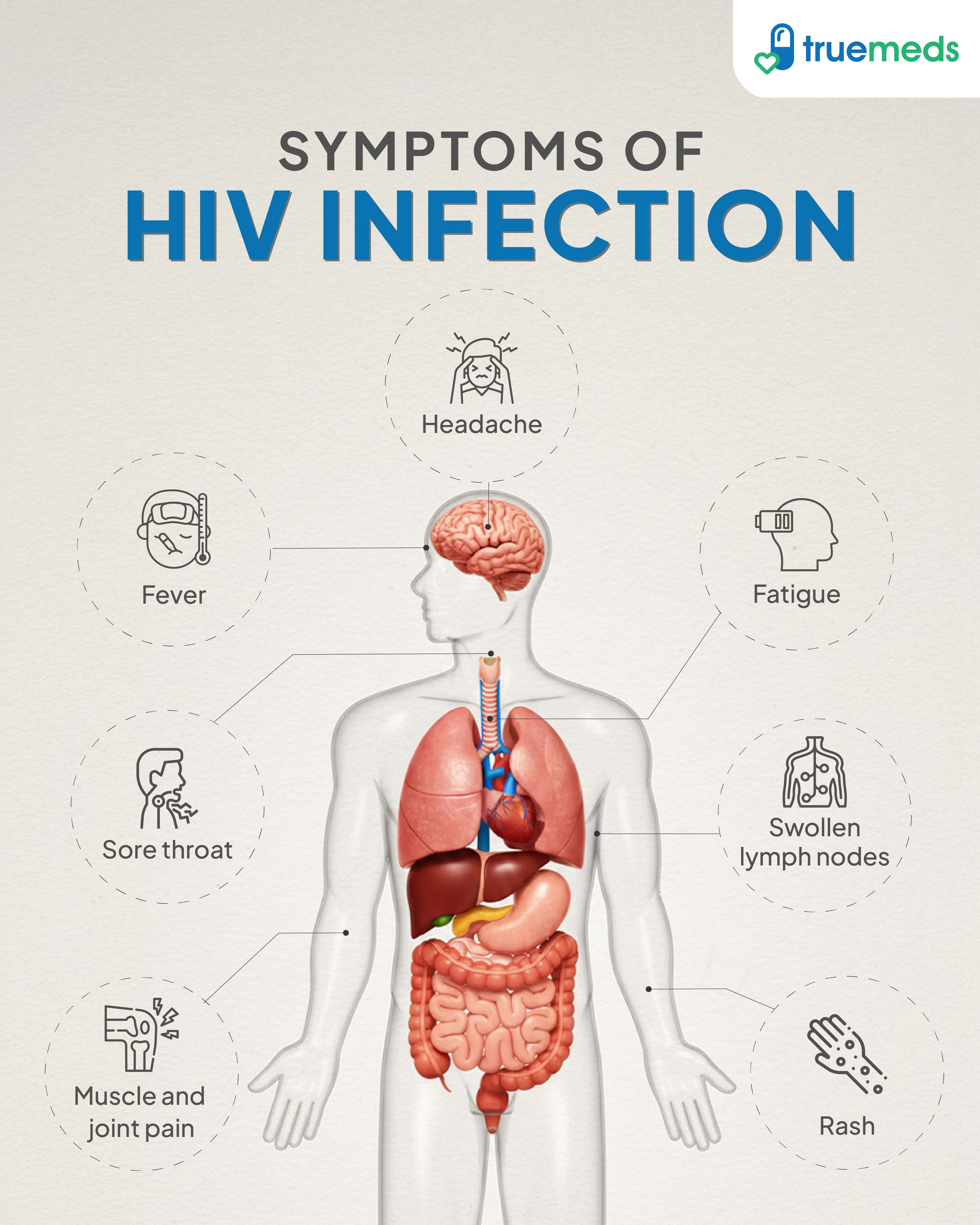
The symptoms of HIV infection can vary depending on the stage of the disease. In the early stages, many people may not experience any symptoms at all. However, some individuals may develop flu-like symptoms within 2–4 weeks of infection, which is known as acute HIV infection. These symptoms may include:
- Fever
- Headache
- Fatigue
- Swollen lymph nodes
- Rash
- Sore throat
- Muscle and joint pain
These symptoms usually resolve within a few weeks, and the individual may remain asymptomatic for several years. However, the virus continues to replicate and can be transmitted (European AIDS Clinical Society, 2022). This period is known as the clinical latent stage of HIV infection.
As the infection progresses and the immune system becomes more damaged, individuals may start to experience more severe symptoms, such as:
- Persistent fever
- Night sweats
- Unexplained weight loss
- Chronic diarrhoea
- Oral thrush
- Skin rashes
- Recurrent infections
If left untreated, HIV infection can progress to AIDS. This is characterised by a severely weakened immune system and the development of opportunistic infections and cancers. At this stage, symptoms may include:
- Pneumonia
- Tuberculosis
- Kaposi's sarcoma
- Lymphoma
- Wasting syndrome
- Neurological disorders
Stages of HIV Infection
HIV infection progresses through three distinct stages if left untreated:
- Acute HIV Infection: This is the earliest stage, occurring within 2–4 weeks after exposure to the virus. The virus replicates rapidly, leading to a high viral load and increased contagiousness. During this stage, individuals may experience symptoms such as fever, headache, rash, chills, night sweats, muscle and joint aches, fatigue, swollen lymph nodes, mouth ulcers, and upset stomach.
- Chronic HIV Infection (Clinical Latency): Following the acute stage, the virus continues to multiply but at very low levels. This stage can last for many years, with many people remaining asymptomatic. The virus remains active and transmissible, even in the absence of symptoms, WHO (2022). Without treatment, this stage can progress to AIDS.
- Acquired Immunodeficiency Syndrome (AIDS): This is the most advanced stage of HIV infection, where the immune system is severely damaged. The CD4 cell count drops below 200 cells per cubic millimetre of blood, making the individual susceptible to opportunistic infections.
Understanding these stages is crucial for early detection and timely initiation of HIV medications to manage the infection effectively.
Causes of HIV Infection
HIV attacks the immune system, compromising its ability to fight off infections and diseases. The primary modes of HIV transmission include:
- Unprotected Sexual Contact: Engaging in anal or vaginal sex without using a condom significantly increases the risk of HIV transmission.
- Sharing Needles: Sharing needles, syringes, or other drug injection equipment can directly introduce the virus into the bloodstream.
- Other Body Fluids: HIV can be transmitted through different bodily fluids. These include blood, pre-seminal fluid, rectal fluids, vaginal fluids, semen, and breast milk. Transmission occurs if these fluids come into contact with a mucous membrane or damaged tissue. Additionally, HIV can be transmitted if these fluids are directly injected into the bloodstream.
Risk Factors
Several factors can increase the risk of HIV infection, including:
- Unprotected Sexual Contact: Engaging in anal or vaginal sex without using a condom significantly increases the risk of HIV transmission. Consistent and correct use of condoms is crucial for reducing the risk of infection.
- Sharing Needles: Sharing needles, syringes, or other drug injection equipment can lead to the transmission of HIV. It is essential to avoid sharing needles and to use sterile equipment when injecting drugs.
- Other Sexually Transmitted Infections (STIs): The presence of other STIs, such as chlamydia, gonorrhoea, or syphilis, can increase the risk of transmitting or acquiring HIV. These infections can cause inflammation and create entry points for the virus.
- High Viral Load: Individuals with high levels of HIV in their blood (high viral load) are more likely to transmit the virus to others. Antiretroviral therapy (ART) can help reduce the viral load and decrease the risk of transmission.
Other risk factors include having multiple sexual partners, engaging in commercial sex work, and being born to an HIV-infected mother (vertical transmission). Understanding these risk factors is essential for implementing effective prevention strategies and reducing the spread of HIV infection.
Complications
HIV infection can lead to various complications, especially when left untreated. Some of the common complications associated with HIV include:
- Opportunistic Infections: As HIV weakens the immune system, the body becomes vulnerable to various infections. This includes candidiasis, herpes simplex virus, and different types of pneumonia. Severe infections like cryptococcosis, histoplasmosis, and the Mycobacterium avium complex can also occur.
- Cancers: People with HIV have a higher risk of developing certain cancers, particularly lymphomas (both Hodgkin and non-Hodgkin) and Kaposi's sarcoma.
- Neurological Complications: HIV can cause neurological disorders, including HIV-associated neurocognitive disorders (HAND), ranging from mild cognitive impairment to severe forms like AIDS dementia complex (ADC). Other neurological issues may include pain, seizures, strokes, difficulty swallowing, and vision loss.
- Haematological Complications: HIV infection can result in blood-related abnormalities such as cytopenias (anaemia, leukopenia, thrombocytopenia), malignancies, and coagulation disturbances. There is also an increased risk of aggressive lymphomas and higher rates of cardiovascular disease and venous thromboembolism.
- Other Complications: HIV can also contribute to the development of cardiovascular disease, kidney disease, and wasting syndrome. Additionally, mental health issues like anxiety, depression, and stress related to managing the condition are common among people living with HIV.
Recognising the potential complications of HIV infection emphasises the importance of early diagnosis, proper treatment, and preventive measures.
Prevention of HIV Infection
Preventing the spread of HIV is crucial in controlling the epidemic. Here are some key strategies for reducing the risk of HIV transmission:
- Safe Sex Practices: Using condoms consistently and correctly during sexual activities can significantly lower the chances of HIV transmission.
- Pre-Exposure Prophylaxis (PrEP): For individuals at high risk of contracting HIV, taking antiretroviral medication daily as prescribed can help prevent infection.
- Post-Exposure Prophylaxis (PEP): If someone believes they may have been exposed to HIV, starting PEP within 72 hours can lower the chance of the infection establishing itself.
- Blood and Fluid Precautions: Avoiding the sharing of needles or other injection equipment is essential. It is also important to ensure that any medical procedures involving blood or bodily fluids are conducted safely and with proper precautions.
- Testing and Awareness: Regular HIV testing is vital for early detection and timely treatment. Raising awareness about HIV, its transmission methods, and prevention strategies can help reduce the spread of the virus in communities.
By adopting these preventive measures and promoting education about HIV, we can reduce new infections and improve public health outcomes.
Diagnosis & Tests
Early diagnosis of HIV infection is crucial for effective treatment and management of the condition. The following diagnostic tests are commonly used to detect HIV:
- Antibody Tests: These tests look for antibodies produced by the immune system in response to HIV infection. They can be performed using blood samples or oral fluids. Rapid antibody tests can provide results within 20–30 minutes, while laboratory-based tests may take a few days.
- Antigen/Antibody Tests: These tests detect both HIV antibodies and the p24 antigen, a protein produced by the virus during the early stages of infection. They can identify HIV infection earlier than antibody tests alone.
- Nucleic Acid Tests (NATs): NATs, such as the HIV viral load test, directly detect the presence of HIV's genetic material in the blood. They are highly sensitive and can diagnose HIV infection even before antibodies develop, making them useful for early detection.
- CD4 Count: The CD4 count measures the number of CD4 T-cells in the blood, which are crucial for a healthy immune system. A low CD4 count indicates a weakened immune system and helps determine the stage of HIV infection.
It is important to note that a single positive test result should always be confirmed with a follow-up test to avoid false-positive results. If you suspect you may have been exposed to HIV or are experiencing symptoms, consult a healthcare professional for appropriate testing and guidance. Early diagnosis allows for the timely initiation of treatment, which can improve long-term health outcomes and reduce the risk of transmitting the virus to others.
Treatment & Management
The cornerstone of HIV management is antiretroviral therapy (ART), which involves using a combination of HIV medicines to suppress viral replication, maintain immune function, and prevent disease progression. Starting ART as early as possible after diagnosis, ideally on the same day, is strongly recommended to improve long-term outcomes and reduce transmission risk (BHIVA, 2024).
1. Antiretroviral Medications
HIV medicines fall into several classes, each targeting different stages of the HIV life cycle. These are commonly used in combination regimens to enhance effectiveness and reduce the risk of resistance:
Nucleoside/Nucleotide Reverse Transcriptase Inhibitors (NRTIs):
- Tenofovir disoproxil fumarate: An NRTI that blocks reverse transcriptase, reducing viral replication in HIV-infected cells.
- Tenofovir alafenamide: A newer form of tenofovir with similar antiviral action but improved kidney and bone safety profile.
- Emtricitabine: An NRTI that works by inhibiting HIV reverse transcriptase, often used in combination therapy.
- Lamivudine: An NRTI that reduces the ability of HIV to multiply, often used in dual or triple therapy regimens.
- Abacavir: An NRTI that prevents HIV replication by blocking reverse transcriptase; requires genetic screening before use due to hypersensitivity risk.
- Zidovudine: One of the earliest NRTIs, still used in some settings to prevent mother-to-child transmission and in select combination therapies.
Non-Nucleoside Reverse Transcriptase Inhibitors (NNRTIs):
- Efavirenz: An NNRTI that directly inhibits HIV reverse transcriptase; commonly used in first-line regimens, though CNS side effects are a concern.
- Etravirine: A second-generation NNRTI used in treatment-experienced patients with resistance to earlier NNRTIs.
- Rilpivirine: An NNRTI often used in combination with other antiretrovirals in once-daily regimens for patients with lower viral loads.
- Doravirine: A newer NNRTI with a favourable side effect profile and effectiveness against certain resistant strains.
- Nevirapine: An NNRTI previously widely used, particularly in the prevention of mother-to-child transmission, though now less favoured due to liver toxicity risks.
Protease Inhibitors (PIs):
- Atazanavir: A PI that inhibits viral protease enzymes, preventing the maturation of infectious HIV particles; often boosted with ritonavir.
- Darunavir: A potent PI effective against resistant HIV strains; usually combined with a booster like ritonavir or cobicistat.
- Lopinavir: A PI commonly co-formulated with ritonavir to improve its effectiveness in suppressing HIV replication.
- Ritonavir: Originally developed as a PI, it is now mainly used in low doses as a pharmacokinetic booster for other protease inhibitors.
Integrase Strand Transfer Inhibitors (INSTIs):
- Dolutegravir: A highly effective INSTI that prevents integration of HIV DNA into host cells, with a high barrier to resistance.
- Bictegravir: An INSTI often used in once-daily, single-tablet regimens for its strong antiviral efficacy and minimal side effects.
- Raltegravir: The first INSTI approved, used to block viral DNA integration; well-tolerated and effective.
- Elvitegravir: An INSTI used in fixed-dose combination regimens, typically boosted with cobicistat for improved action.
Fusion Inhibitors:
- Enfuvirtide: A fusion inhibitor that blocks the virus from merging with the host cell membrane.
CCR5 Antagonists:
- Maraviroc: It prevents HIV from entering CD4 cells by blocking the CCR5 receptor.
Post-Attachment Inhibitors:
- Ibalizumab: It is a post-attachment inhibitor that prevents HIV from binding to and entering CD4 cells, used for drug-resistant HIV.
2. Long-Acting Injections
- Cabotegravir and rilpivirine are available as long-acting intramuscular injections given monthly or every two months. These are intended for individuals with stable, undetectable viral loads and no history of resistance or treatment failure.
Adherence to ART is critical to maintaining viral suppression and preventing medication resistance. With consistent treatment, people living with HIV can achieve undetectable viral loads, improve immune function, and significantly reduce the risk of transmission.
Living with Disease
Living with HIV infection requires a comprehensive approach to maintain optimal health and prevent the transmission of the virus to others. Some key pointers for individuals living with HIV include:
- Achieving and maintaining an undetectable viral load through consistent adherence to ART is crucial for staying healthy and preventing HIV transmission.
- Taking HIV medicines exactly as prescribed is essential for keeping the viral load low and preventing the development of medicine resistance.
- Regular visits to the healthcare provider and blood tests are necessary to monitor the effectiveness of treatment and adjust the treatment plan if needed.
- Adopting a healthy lifestyle, including a balanced diet, regular exercise, stress management, and avoiding smoking and excessive alcohol consumption, can help support overall health and well-being.
- Practising safer sex by using condoms consistently and correctly can prevent the transmission of HIV and other STIs to partners.
- Open communication with sexual partners about HIV status and the importance of treatment adherence can foster understanding and support.
- Seeking emotional support from family, friends, or support groups can help individuals cope with the challenges of living with HIV and maintain a positive outlook.
When to See a Doctor?
Individuals with HIV infection should maintain regular contact with their healthcare provider to monitor their progress and adjust their treatment plan as necessary. Some key instances when it is essential to consult a doctor include:
- Immediately after receiving an HIV diagnosis, it is important to discuss treatment options and initiate ART as soon as possible.
- Regularly scheduled appointments (usually every 3–6 months) to monitor viral load, CD4 count, and overall health status.
- If experiencing any new or worsening symptoms, such as persistent fever, night sweats, unexplained weight loss, or oral thrush, which may indicate a weakened immune system or opportunistic infections.
- When considering starting or changing HIV medications, discuss potential side effects, medication interactions, and the most suitable treatment regimen.
- If facing challenges with treatment adherence or experiencing significant side effects from HIV medications.
- When planning for pregnancy or becoming pregnant, discuss the prevention of mother-to-child transmission and the safety of HIV medications during pregnancy and breastfeeding.
- If exposed to other STIs or experiencing symptoms of STIs, as they can impact overall health and increase the risk of HIV transmission.
Key Takeaways
- HIV is a chronic viral infection that attacks the immune system, specifically CD4 T cells, leading to a weakened immune response.
- HIV is transmitted through sexual contact, the sharing of needles, or from an infected mother to her child during pregnancy, childbirth, or breastfeeding.
- Early symptoms of HIV infection may include flu-like symptoms, but many people may not experience any symptoms for years.
- Antiretroviral therapy (ART) is the standard treatment for HIV, involving a combination of medications to suppress the virus, prevent progression to AIDS, and reduce transmission risk (European AIDS Clinical Society, 2022).
- Adherence to treatment and regular monitoring are essential for managing HIV infection and maintaining good health.
- With proper treatment and care, people living with HIV can lead long, healthy lives and have fulfilling relationships.
FAQs
What exactly is HIV, and what are its effects on the human body?
HIV is a virus that attacks the immune system by destroying CD4 T cells, making the body vulnerable to infections and diseases.
How does HIV spread from one person to another?
HIV is transmitted through contact with infected bodily fluids like blood, semen, vaginal fluid, and breast milk, primarily through unprotected sex and sharing of needles.
What are the initial symptoms that may indicate an HIV infection?
Early HIV symptoms, appearing 2-4 weeks post-exposure, can include fever, rash, sore throat, fatigue, swollen lymph nodes, headache, muscle/joint pain, diarrhoea, and night sweats.
What are the procedures for HIV testing, and how frequently should one get tested?
How do HIV and AIDS differ from each other?
HIV is the virus that causes AIDS, the most advanced stage of HIV infection, characterised by a severely compromised immune system.
Is there a treatment available for HIV, and what does it involve?
While there's no cure, HIV can be managed with antiretroviral therapy (ART), which involves taking a combination of medications daily to suppress the virus.
What measures can I take to reduce my risk of contracting HIV?
To prevent HIV, practice safe sex with condoms, avoid sharing needles, get tested regularly, and consider PrEP if at high risk.
Can someone with HIV expect to have a normal lifespan and good health?
With proper treatment and care, people with HIV can live long, healthy lives with life expectancies close to those without the virus.
Is HIV transmissible through regular social interactions like embracing or sharing meals?
HIV is not spread through casual contact, such as hugging, sharing food or drinks, using public toilets, or insect bites.
What actions should I take if I suspect I've been exposed to HIV?
If you think you've been exposed to HIV, contact a healthcare provider immediately. Post-exposure prophylaxis (PEP) can prevent infection if started within 72 hours.
References
- World Health Organization. (2022). Consolidated guidelines on HIV prevention, testing, treatment, service delivery and monitoring. https://www.who.int/publications/i/item/9789240031593
- European AIDS Clinical Society. (2023). EACS guidelines version 12.0. https://www.eacsociety.org/media/guidelines-12.0.pdf
- BHIVA. (2024). BHIVA guidelines on antiretroviral treatment for adults living with HIV. https://bhiva.org/clinical-guideline/hiv-1-treatment-guidelines/
- EACS. (2025). EACS guidelines 2025: HIV updates put comorbidities first. https://www.eatg.org/hiv-news/eacs-guidelines-2025-hiv-updates-put-comorbidities-first-art-on-cruise-control/
Browse Other Conditions
Latest health articles

Top Health Essentials
















Disclaimer
Top-Selling Medicines:
...View more
Top-OTC medicines:
...View more
Company
About UsHealth ArticleHealth StoriesHealth LibraryDiseases & Health ConditionsAyurvedaUnderstanding Generic MedicinesAll MedicinesAll BrandsNeed HelpFAQSecuritySavings CalculatorAdvertise with UsSubscribe
Registered Office Address
Grievance Officer
Download Truemeds


Contact Us
Our customer representative team is available 7 days a week from 9 am - 9 pm.
v4.28.13

2026 - Truemeds | All rights reserved. Our content is for informational purposes only. See additional information.

Our Payment Partners




