

- Medicines
- Personal Care
- Skin Cream
- Sunscreen
- Face Wash
- Skin and Body Soap
- Acne Care
- Body Lotions
- Moisturising Lotion
- Moisturising Cream
- Mosquito Repellent
- Moisturising Gel
- Body Wash
- Hair Oils
- Hair Shampoo
- Hair Conditioners
- Hair Supplements
- Hair Colour
- Hair Serum
- Hair Mask
- Hair Solutions
- Baby Diapers and Wipes
- Baby Lotion and Moisturising Cream
- Baby Bath Essentials
- Baby Skin Care
- Baby and Infant Food
- Baby Healthcare
- Women Multivitamins
- Ovulation Test Kit and Women Intimate Care
- Sanitary Pads
- Nutritional Drinks
- Condoms
- Lubricants
- Massage Gels
- Personal Body Massagers
- Men Performance Booster
- Sexual Health Supplements
- Massage Oils
- Ayurveda
- Tooth Paste
- Mouth Ulcer Gel
- Mouthwash
- Toothache and Gum Pain
- Tooth Brush
- Gargle Solution
- Orthopaedic Supports
- Adult Diapers
- Footwear
- Mobility and Support Accessories
- Urinary Support and Care
- Health Conditions
- Bone and Joint Care
- Digestive Care
- Eye Care
- Pain Relief
- Smoking Cessation
- Liver Care
- Stomach Care
- Cold and Cough
- Heart Care
- Kidney Care
- Piles, Fissures & Fistula
- Respiratory Care
- Mental Wellness
- Derma Care
- Pre and Probiotics
- Acidity
- Gas
- Constipation
- Loose Motion/Diarrhoea
- Digestive Fibres
- Digestive Enzymes
- Eye Lubricant Drops
- Lens Solution
- Safety Eye Wear
- Eye Cream
- Eye Vitamins and Supplements
- Eye Drops
- Eye Ointment and Gel
- Nicotine Patch
- Nicotine Gum
- Nicotine Lozenges
- Cough Syrups
- Chest Rubs and Balms
- Nasal Spray
- Lozenges
- Inhalant Capsules
- Cold and Cough Tablets
- Vitamins & Supplements
- Diabetes Care
- Healthcare Devices
- Homeopathic Medicine
- Health Guide
Obesity
Obesity is a complex disease characterised by excessive body fat that can impair health, with a body mass index (BMI) of 30 or higher in adults. It increases the risk of serious health problems such as heart disease, type 2 diabetes, certain cancers, and osteoarthritis. The fundamental cause of obesity is an imbalance between calories consumed and expended, often resulting from a combination of dietary habits, sedentary lifestyles, and genetic factors.
 50
50Last updated on : 07 May, 2026
Read time : 15 mins

Overview of Disease
Obesity is a growing global health concern that affects millions of people worldwide. It is a chronic condition that occurs when an individual accumulates excessive body fat, leading to various health complications. Understanding the causes, symptoms, and treatment options for obesity is crucial in managing this condition and improving overall health and well-being.
What is Obesity?
Obesity is defined as having too much body fat, which can lead to serious health problems. It is typically diagnosed by calculating body mass index (BMI), which is a person's weight divided by the square of their height.
Obesity is a long-term health condition that progresses over time and can affect an individual's overall health and quality of life. It is essential to understand the different classes of obesity to determine the appropriate course of action for managing this condition.
Morbid Obesity
Morbid obesity, also known as class 3 obesity, is a severe form of obesity characterised by a BMI of 40 or higher (American Heart Association, 2024). This condition is associated with a significantly increased risk of obesity-related health complications, such as cardiovascular disease, type 2 diabetes, and certain cancers. Morbid obesity often requires medical intervention, including lifestyle changes, medication, and in some cases, surgery.
Key Factors about Obesity
| Category | Details |
| Also Referred to as | Adiposity-based chronic disease (ABCD), morbid obesity, severe obesity |
| Commonly Occurs In | Prevalence is increasing globally, particularly in low- and middle-income countries among both adults and children |
| Affected Organ | Heart, pancreas, joints, liver, kidneys, brain (sleep apnoea) |
| Type | Class 1 (BMI 30-34.9), Class 2 (BMI 35-39.9), Class 3 (BMI 40 or higher) |
| Common Signs | Increased body fat, central obesity, shortness of breath, fatigue |
| Consulting Specialist | Endocrinologist, Bariatrician, Primary Care Physician |
| Treatment Procedures | Behavioural therapy, diet changes, physical activity, bariatric surgery, medications (e.g., orlistat) |
| Managed By | Anti-obesity medications (e.g., orlistat, liraglutide, semaglutide, naltrexone-bupropion) |
| Mimicking Condition | Hypothyroidism, Cushing syndrome, Polycystic Ovary Syndrome (PCOS), Prader-Willi syndrome |
Types of Obesity
Obesity is categorised into different classes based on an individual's BMI:
- Underweight: A BMI of 18.5 or under indicates that an individual is underweight.
- Normal weight: A BMI between 18.5 and 24.9 is considered normal and healthy.
- Overweight: A BMI between 25 and 29.9 indicates that an individual is overweight.
- Class 1 obesity: A BMI between 30 and 34.9 is classified as class 1 obesity.
- Class 2 obesity: A BMI between 35 and 39.9 is classified as class 2 obesity.
- Class 3 obesity (morbid obesity): A BMI of 40 or higher is considered class 3 obesity, also known as morbid, extreme, or severe obesity.
Understanding these classes of obesity is important for assessing an individual's health risks and determining appropriate interventions.
Childhood Obesity
Childhood obesity is a growing concern, as it can lead to various health problems in adulthood. In children, obesity is defined based on percentile ranges of BMI for age (NHLBI, 2022):
- Underweight: A BMI below the 5th percentile for age indicates that a child is underweight.
- Normal weight: A BMI between the 5th and 84th percentiles for age is considered normal and healthy.
- Overweight: A BMI between the 85th and 94th percentile for age indicates that a child is overweight.
- Obesity: A BMI at or above the 95th percentile for age is considered obesity in children.
Addressing childhood obesity is crucial for preventing chronic diseases later in life and promoting healthy growth and development.
Early Signs of Disease
The early signs of obesity include:
- Rapid weight gain
- Early development of body fat
- Excessive sweating, fatigue, joint pain, and shortness of breath
Symptoms of Obesity
The symptoms of obesity can manifest in various ways, but some common signs include:
- Excess body fat: Excess body fat, particularly central (abdominal) fat distribution. This excess fat can lead to noticeable changes in body shape, often with increased fat around the abdomen, hips, and thighs.
- Difficulty with physical activities: Individuals with obesity may have trouble performing everyday physical activities, such as walking, climbing stairs, or exercising. This can lead to fatigue and decreased stamina, impacting overall quality of life.
- Shortness of breath: Obesity can contribute to respiratory problems, including shortness of breath during physical exertion or even while at rest. This can be due to extra weight, which places pressure on the lungs and chest.
- Joint pain: Excess weight can put additional stress on joints, particularly in the knees, hips, and lower back. This can lead to chronic pain and conditions like osteoarthritis, making movement more challenging.
- Sleep apnoea: Obesity is a significant risk factor for this condition, characterised by interrupted breathing during sleep. Symptoms may include loud snoring, gasping for air during sleep, and excessive daytime fatigue.
- High blood pressure and cholesterol: Obesity often leads to metabolic changes that increase the risk of high blood pressure and elevated cholesterol levels. These conditions can contribute to cardiovascular diseases and other health complications.
- Mood changes: Individuals with obesity may experience psychological symptoms such as depression, anxiety, or low self-esteem. The social stigma associated with obesity can lead to feelings of isolation or body image issues.
Causes of Obesity
Obesity is a complex condition that can be influenced by various factors, including (NHLBI, 2022):
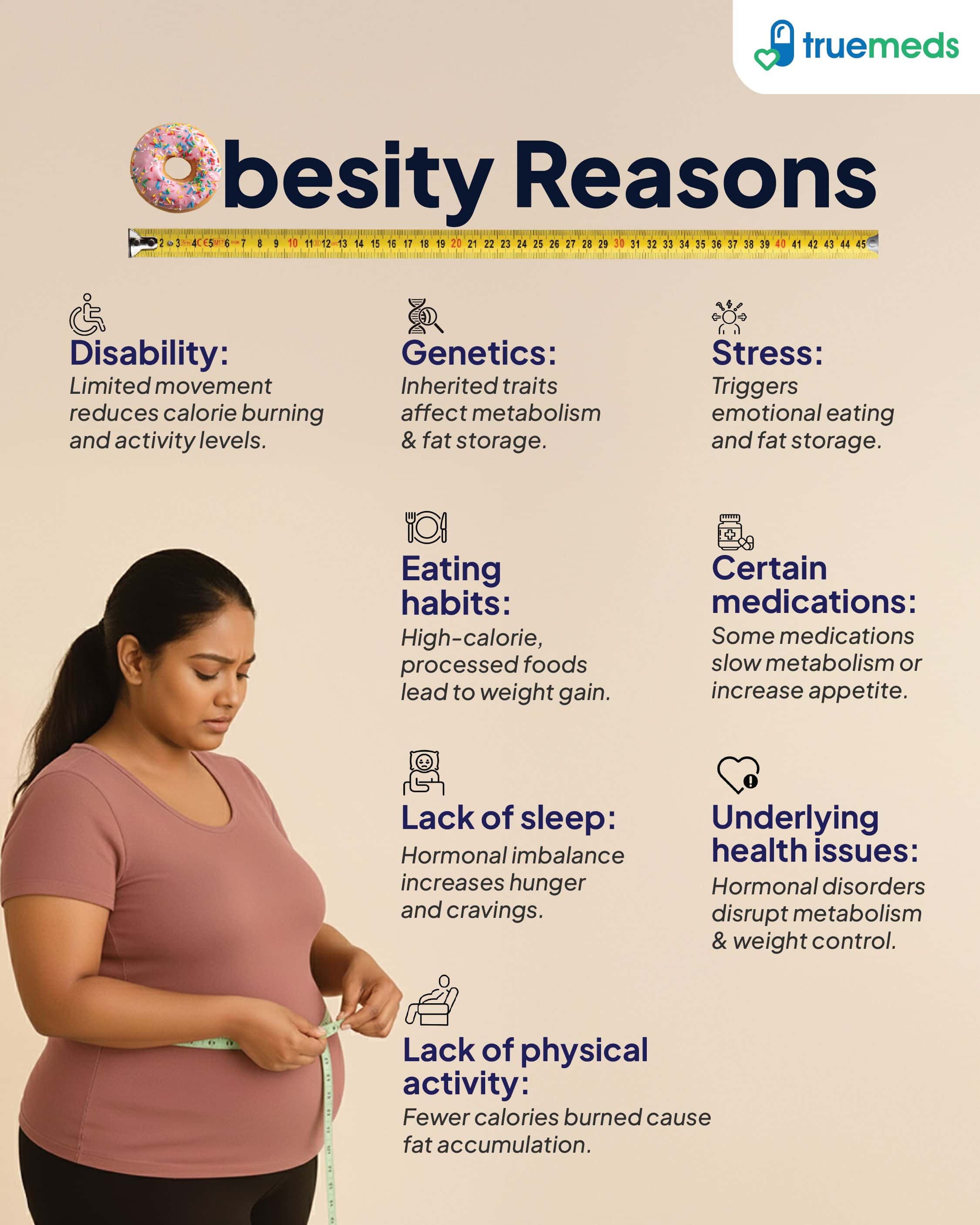
- Certain medications: Certain medications (e.g., corticosteroids, antipsychotics, some antidepressants, insulin, and sulfonylureas) may contribute to weight gain.
- Disability: People with disabilities may encounter obstacles to engaging in physical activity and maintaining a healthy diet, which increases their risk of obesity.
- Eating habits: Consistently consuming high-calorie foods and beverages without balancing energy intake with sufficient physical activity is a major contributor to obesity.
- Genetics: Genetic factors can influence how the body processes and stores food, affecting an individual's susceptibility to weight gain. However, genes alone do not determine obesity; lifestyle choices play a significant role.
- Lack of physical activity: Leading a sedentary lifestyle with minimal exercise makes it difficult for the body to burn excess calories, leading to weight gain over time.
- Lack of sleep: Insufficient sleep has been linked to hormonal changes that can increase appetite and cravings for high-calorie foods, contributing to obesity risk.
- Stress: Chronic stress can lead to overeating as a coping mechanism and may also disrupt sleep patterns, further exacerbating the risk of obesity.
- Underlying health issues: Certain medical conditions, such as hypothyroidism or polycystic ovary syndrome (PCOS), can make it more challenging to maintain a healthy weight.
Risk Factors
Obesity poses a significant health risk to a wide range of individuals. These include:
- High birth weight
- Parental obesity
- Increased risk of type 2 diabetes
- Higher likelihood of developing heart disease and stroke
- Increased risk of certain cancers, such as breast, colon, and endometrial cancer
- Greater risk of developing sleep apnea and breathing problems
- Increased risk of osteoarthritis and joint problems
- Higher likelihood of experiencing infertility and complications during pregnancy
- Increased risk of developing gallbladder disease and gallstones
- Greater risk of experiencing mental health issues, such as depression and anxiety
Who's at Risk?
Several groups of individuals face a higher risk of developing obesity, including:
- Individuals with a family history of obesity, especially when both parents are obese
- People who have poor eating habits and don't get enough physical activity
- Children who are obese are more likely to remain so into adulthood
- Adults between 40 and 59 years old have higher obesity rates than other age groups
- Certain ethnic groups (e.g., South Asian, Black populations)
- Lower-income populations with decreased access to healthy foods and safe places to exercise
- Those with disabilities that limit mobility and make physical activity challenging
- People taking long-term medications that have weight gain as a common side effect
- Individuals who get less than 7 hours of sleep per night regularly
Complications
Obesity can lead to a wide range of health complications, affecting multiple organ systems in the body. Some of the complications include (NHS, 2023):
- Cardiovascular diseases: Obesity is strongly associated with an increased risk of cardiovascular diseases, including heart disease, stroke, hypertension, and dyslipidaemia. These conditions can lead to heart failure, coronary heart disease, and increased mortality from cardiovascular events.
- Metabolic disorders: Type 2 diabetes mellitus (T2DM) is strongly associated with obesity, as excess body fat can lead to insulin resistance. Metabolic syndrome, which includes high blood pressure, high blood sugar, excess body fat around the waist, and abnormal cholesterol or triglyceride levels, is another common complication of obesity.
- Cancer: Obesity is linked to an increased risk of several types of cancer, including breast, colon, endometrial, kidney, oesophagus, gastric, pancreatic, and gallbladder cancers. Obesity also affects the prognosis and survival rates for some cancer types.
- Musculoskeletal disorders: Men and women with obesity are more than twice as likely to develop osteoarthritis, particularly in weight-bearing joints like the knees. The extra weight puts additional stress on the joints, leading to pain and mobility issues.
- Respiratory problems: Obesity is associated with obstructive sleep apnoea (OSA), asthma, and other respiratory issues due to fat deposition around the neck, chest, and abdomen, which can affect lung function and breathing.
- Gastrointestinal and hepatobiliary complications: Non-alcoholic fatty liver disease (NAFLD) and nonalcoholic steatohepatitis (NASH) are more common in individuals with obesity. Increased intra-abdominal pressure associated with obesity can also contribute to the development of gastro-oesophageal reflux disease (GORD) and Barrett's oesophagus.
- Mental health issues: Individuals with obesity are at a higher risk of developing depression, anxiety, and other mental health problems, which can further exacerbate obesity-related complications.
Prevention of Obesity
Preventing obesity involves a combination of lifestyle changes, focusing on diet, physical activity, and other factors that influence weight management. Some of the preventative measures include:
- Education and awareness: Increasing awareness about the importance of nutrition and physical activity can empower individuals to make informed choices regarding their health and lifestyle.
- Mindful eating: Practising mindful eating involves paying attention to hunger cues and eating slowly, which can help individuals recognise when they are full and reduce overeating.
- Limit high-calorie snacks: Keeping high-calorie snacks out of the home or limiting their availability can help reduce temptation and encourage healthier eating choices.
- Regular health check-ups: Routine health check-ups can help monitor weight and assess other health metrics, allowing for early intervention if weight gain is detected.
Lifestyle Changes
Some of the lifestyle changes to manage obesity include:
- Balanced diet: Adopting a balanced diet that emphasises whole grains, fruits, vegetables, lean proteins, and healthy fats while limiting processed foods, sugary drinks, and excessive portion sizes is essential for maintaining a healthy weight.
- Regular physical activity: Engaging in at least 150 minutes of moderate-intensity exercise or 75 minutes of vigorous-intensity exercise per week can help prevent weight gain and maintain a healthy body composition.
- Stress management: Chronic stress can contribute to obesity by influencing eating habits and hormonal imbalances. Incorporating stress management techniques, such as meditation, deep breathing exercises, and relaxing activities, can help prevent stress-related weight gain.
- Adequate sleep: Getting enough quality sleep is crucial for maintaining a healthy weight, as sleep deprivation can disrupt appetite-regulating hormones and increase food intake. Aiming for 7-9 hours of sleep per night is recommended for adults.
- Limiting sedentary behaviour: Reducing sedentary activities, such as prolonged sitting or excessive screen time, and incorporating more movement throughout the day can help prevent weight gain and improve overall health.
By focusing on these lifestyle changes, individuals can significantly reduce their risk of developing obesity and its associated health complications.
Diagnosis & Tests
Diagnosing obesity involves a comprehensive evaluation of an individual's body composition, health status, and risk factors. The most common methods for diagnosing obesity include:
- Body mass index (BMI): BMI is calculated by dividing a person's weight in kilograms by their height in metres squared (kg/m²). A BMI of 30 or above is considered obese, while a BMI between 25 and 29.9 is classified as overweight.
- Waist circumference: Measuring waist circumference helps assess central obesity, which is associated with a higher risk of metabolic disorders. A waist circumference of > 94 cm for men and 80 cm for women is considered a risk factor for obesity-related health problems.
- Body fat percentage: Measuring body fat percentage using techniques such as skinfold thickness, bioelectrical impedance, or dual-energy X-ray absorptiometry (DXA) can provide a more accurate assessment of body composition than BMI alone.
- Physical examination: A doctor may perform a physical exam to assess for obesity-related health complications, such as high blood pressure, skin changes, or joint problems.
- Laboratory tests: Blood tests may be ordered to evaluate the presence of obesity-related metabolic disorders, such as type 2 diabetes, dyslipidaemia, or liver function abnormalities.
By using a combination of these diagnostic tools, doctors can accurately identify obesity and develop personalised treatment plans to address the condition and its associated health risks.
Treatment & Management
The management of obesity involves a structured, multi-pronged approach tailored to the individual's needs and medical status. It includes lifestyle modification, pharmacological therapy, and surgical intervention where appropriate. A combination of these strategies improves long-term outcomes and supports sustained weight loss.
1. Initial Care and Lifestyle Measures
a. Dietary Adjustments and Nutritional Support
- A calorie-controlled diet rich in vegetables, whole grains, and lean proteins is essential to create a sustained energy deficit.
- Bulk-forming agents such as dietary fibre and methylcellulose may support satiety.
- Reducing high-fat, high-sugar foods helps regulate insulin and prevent fat accumulation.
b. Physical Activity
- Engaging in at least 150 minutes of moderate-intensity aerobic exercise per week (e.g., brisk walking and swimming) helps burn calories and improve metabolic rate.
- Resistance training helps preserve lean body mass during weight loss and increases basal metabolic rate.
c. Behavioural Interventions
- Goal setting and self-monitoring of food intake and exercise enhance motivation and accountability.
- Cognitive Behavioural Therapy (CBT) is effective in changing unhealthy eating patterns and addressing emotional triggers.
- Motivational interviewing supports patients in overcoming ambivalence and making sustainable changes.
2. Medications for Obesity
When lifestyle changes alone are insufficient, medications may be prescribed to support weight reduction.
a. Appetite Control through Central Mechanisms
- Amphetamine: It acts on the hypothalamus to suppress appetite via stimulation of the central nervous system.
- Mephentermine: It reduces food cravings by mimicking sympathetic nervous system activation.
b. Appetite Suppression via 5-HT Agonists
- Fenfluramine: It increases serotonin release in the brain, enhancing satiety and reducing meal frequency.
c. Targeting the Endocannabinoid System
- Rimonabant: A CB1 receptor antagonist that inhibits reward pathways related to food cravings and emotional eating.
d. Reducing Fat Absorption
- Orlistat: It inhibits gastric and pancreatic lipases, preventing dietary fat breakdown and its absorption in the intestine.
3. Types of Surgery for Obesity
For patients with a BMI ≥40 or BMI ≥35 with obesity-related comorbidities or BMI ≥30 with inadequately controlled metabolic disease, weight-loss surgery (bariatric surgery) may be recommended. Some common types of bariatric surgeries include:
- Roux-en-Y gastric bypass: This procedure involves creating a small pouch from the stomach and connecting it directly to the small intestine, bypassing a portion of the digestive tract.
- Laparoscopic adjustable gastric banding: A band is placed around the upper part of the stomach to create a small pouch, limiting food intake.
- Biliopancreatic diversion with duodenal switch (BPD/DS): This surgery involves removing a portion of the stomach and rerouting the small intestine to reduce food absorption.
- Endoscopic sleeve gastroplasty: A minimally invasive procedure where the stomach is reduced in size using an endoscope.
- Gastric balloon: A balloon is inserted into the stomach and filled with saline to reduce stomach capacity.
When to See a Doctor?
It is important to consult a doctor if you are struggling with obesity or have concerns about your weight. Some signs that indicate the need for medical attention include:
- A BMI of 30 or higher
- Difficulty losing weight despite lifestyle changes
- Presence of obesity-related health problems, such as type 2 diabetes, high blood pressure, or sleep apnoea
- Psychological distress related to weight, such as depression or anxiety
- Rapid or unexplained weight gain
Your doctor can help assess your overall health, identify potential underlying causes of obesity, and develop a personalised treatment plan to help you achieve and maintain a healthy weight.
Key Takeaways
- Obesity is a complex chronic disease that requires a multifaceted approach to management, including lifestyle changes, tailored weight-loss programs, medication, and surgery.
- Lifestyle modifications, such as adopting a healthy eating plan, increasing physical activity, and participating in behavioural interventions, form the foundation of obesity treatment.
- Weight-loss medications, such as semaglutide, orlistat, and liraglutide, can be prescribed in combination with lifestyle changes when necessary.
- For patients with a BMI of 35 or higher or those with a BMI of 30 or higher with obesity-related health problems, weight-loss surgery may be recommended.
- It is essential to consult a doctor if you are struggling with obesity or have concerns about your weight to receive proper guidance and treatment.
FAQs
How to prevent obesity?
What are 5 ways to overcome obesity?
What are 5 foods that prevent obesity?
What are 5 effects of obesity on health?
Can obesity be cured?
What are the side effects of being overweight?
Is a BMI of 29.9 obese?
What is BMI?
References
- Centers for Disease Control and Prevention. (2021, March 22). Obesity. https://www.cdc.gov/obesity/php/about/index.html
- National Health Service. (2026, April 24). Obesity. https://www.nhs.uk/conditions/obesity/
- World Health Organization. (2021, June 9). Obesity and overweight. https://www.who.int/news-room/fact-sheets/detail/obesity-and-overweight
- National Heart, Lung, and Blood Institute. (n.d.). Overweight and obesity. https://www.nhlbi.nih.gov/health-topics/overweight-and-obesity
- Understanding Extreme Obesity and What You Can Do. (2024, January 18). https://www.heart.org/en/healthy-living/healthy-eating/losing-weight/extreme-obesity-and-what-you-can-do
Check Related Salts
Browse Other Conditions
Latest health articles

Top Health Essentials






















Disclaimer
Top-Selling Medicines:
...View more
Top-OTC medicines:
...View more
Company
About UsHealth ArticleHealth StoriesHealth LibraryDiseases & Health ConditionsAyurvedaUnderstanding Generic MedicinesAll MedicinesAll BrandsNeed HelpFAQSecuritySavings CalculatorAdvertise with UsSubscribe
Registered Office Address
Grievance Officer
Download Truemeds


Contact Us
Our customer representative team is available 7 days a week from 9 am - 9 pm.
v4.28.13

2026 - Truemeds | All rights reserved. Our content is for informational purposes only. See additional information.
Our Payment Partners