

- Medicines
- Personal Care
- Skin Cream
- Sunscreen
- Face Wash
- Skin and Body Soap
- Acne Care
- Body Lotions
- Moisturising Lotion
- Moisturising Cream
- Mosquito Repellent
- Moisturising Gel
- Body Wash
- Hair Oils
- Hair Shampoo
- Hair Conditioners
- Hair Supplements
- Hair Colour
- Hair Serum
- Hair Mask
- Hair Solutions
- Baby Diapers and Wipes
- Baby Lotion and Moisturising Cream
- Baby Bath Essentials
- Baby Skin Care
- Baby and Infant Food
- Baby Healthcare
- Women Multivitamins
- Ovulation Test Kit and Women Intimate Care
- Sanitary Pads
- Nutritional Drinks
- Condoms
- Lubricants
- Massage Gels
- Personal Body Massagers
- Men Performance Booster
- Sexual Health Supplements
- Massage Oils
- Ayurveda
- Tooth Paste
- Mouth Ulcer Gel
- Mouthwash
- Toothache and Gum Pain
- Tooth Brush
- Gargle Solution
- Orthopaedic Supports
- Adult Diapers
- Footwear
- Mobility and Support Accessories
- Urinary Support and Care
- Health Conditions
- Bone and Joint Care
- Digestive Care
- Eye Care
- Pain Relief
- Smoking Cessation
- Liver Care
- Stomach Care
- Cold and Cough
- Heart Care
- Kidney Care
- Piles, Fissures & Fistula
- Respiratory Care
- Mental Wellness
- Derma Care
- Pre and Probiotics
- Acidity
- Gas
- Constipation
- Loose Motion/Diarrhoea
- Digestive Fibres
- Digestive Enzymes
- Eye Lubricant Drops
- Lens Solution
- Safety Eye Wear
- Eye Cream
- Eye Vitamins and Supplements
- Eye Drops
- Eye Ointment and Gel
- Nicotine Patch
- Nicotine Gum
- Nicotine Lozenges
- Cough Syrups
- Chest Rubs and Balms
- Nasal Spray
- Lozenges
- Inhalant Capsules
- Cold and Cough Tablets
- Vitamins & Supplements
- Diabetes Care
- Healthcare Devices
- Homeopathic Medicine
- Health Guide
Ocular Hypertension
Ocular hypertension (OHT) is defined as consistently elevated intraocular pressure (IOP) without detectable glaucomatous optic nerve damage or visual field loss, confirmed through repeated measurements and clinical evaluation. It occurs without signs of glaucomatous optic nerve damage or visual field loss. It is often considered a risk factor for developing glaucoma, a condition that can cause irreversible vision loss if left untreated. The management of OHT involves regular monitoring and treatment with eye drops or medications. In high-risk cases, more aggressive treatment such as laser therapy or surgery may be required (AAO (2026)).
 50
50Last updated on : 29 Apr, 2026
Read time : 12 mins
Overview of Disease
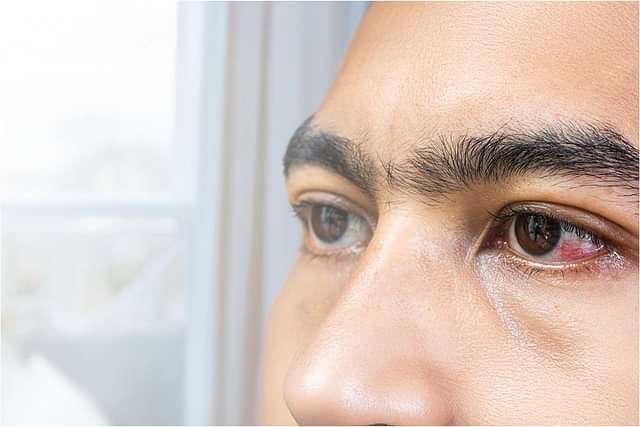
Ocular hypertension is a prevalent eye condition that affects millions of people worldwide. It is characterised by increased pressure within the eye, which can potentially lead to glaucoma if left unmanaged. Understanding the causes, symptoms, and available treatment options for ocular hypertension is crucial for maintaining healthy vision and preventing vision loss.
What is Ocular Hypertension?
Ocular hypertension refers to a condition where the pressure inside the eye, known as intraocular pressure (IOP), is higher than the normal range. The normal IOP range is typically between 10 and 21 mmHg. While an IOP above the typical reference range (commonly >21 mmHg) raises suspicion for OHT, the diagnosis requires repeat IOP measurements and evaluation of the optic nerve and visual fields to exclude glaucoma (EGS, 2021). This increased pressure occurs when the fluid in the eye, called aqueous humour, does not drain properly, leading to a buildup of pressure.
Ocular hypertension can affect one eye (unilateral) or both eyes (bilateral). It is essential to note that having elevated IOP does not necessarily mean that a person has glaucoma. However, ocular hypertension is a significant risk factor for developing glaucoma. Glaucoma is a serious eye condition that can cause irreversible damage to the optic nerve and lead to vision loss.
Key Factors about Ocular Hypertension
| Category | Details |
| Also Referred to as | High eye pressure, Glaucoma suspect |
| Commonly Occurs In | Older adults, particularly those aged 40 and older |
| Affected Organ | The eye, specifically the optic nerve and intraocular structures |
| Type | A condition characterised by increased intraocular pressure (IOP) |
| Consulting Specialist | Ophthalmologist |
| Treatment Procedures | Prescription eye drops (prostaglandin analogues, beta-blockers, carbonic anhydrase inhibitors, alpha agonists, rho-kinase inhibitors); selective laser trabeculoplasty (SLT) may be used as an alternative first-line option; surgery is reserved for cases not controlled with medications or laser. |
| Managed By | Prostaglandins, beta-blockers, carbonic anhydrase inhibitors, alpha agonists, rho-kinase inhibitors |
| Mimicking Condition | Glaucoma, particularly primary open-angle glaucoma (POAG) |
Early Signs of Disease
Unlike many other eye conditions, ocular hypertension does not present specific early signs that patients would typically notice. Since the condition is usually asymptomatic, it is often discovered during routine eye exams when the intraocular pressure (IOP) is measured. An IOP of greater than or equal to 21 mmHg is considered elevated and may indicate the presence of ocular hypertension. Regular eye examinations are the most reliable way to detect ocular hypertension in its early stages, allowing for timely intervention and management to preserve eye health.
Symptoms of Ocular Hypertension
Ocular hypertension, a condition characterised by elevated intraocular pressure (IOP), is often asymptomatic.
- Most people with ocular hypertension do not experience any noticeable symptoms, which is why regular eye examinations are essential for early detection.
- However, these symptoms are not typical and can also be associated with other eye problems.
- The absence of apparent symptoms makes it crucial to attend routine eye check-ups to identify ocular hypertension and prevent potential complications.
Stages of Ocular Hypertension
While there are no distinct stages of ocular hypertension, eye doctors categorise the condition based on the level of risk for developing glaucoma. The Ocular Hypertension Treatment Study (OHTS) provides a risk model based on factors such as age, baseline IOP, central corneal thickness, optic disc appearance, and visual field indices to estimate a patient’s likelihood of developing primary open-angle glaucoma. The management of ocular hypertension is tailored according to the patient's risk level:
- Low-Risk Patients: Regular monitoring and follow-up appointments with an eye doctor to assess the condition and adjust treatment as needed.
- Moderate-Risk Patients: Treatment with eye drops or other medications to lower IOP and reduce the risk of glaucoma.
- High-Risk Patients: More aggressive treatment, including laser therapy or surgery, to lower IOP and prevent glaucoma.
Causes of Ocular Hypertension
Ocular hypertension occurs when there is an imbalance between the production and drainage of aqueous humour. This imbalance can result from either an overproduction of aqueous humour or a blockage or malfunction in the eye's drainage system. Several factors can contribute to the development of ocular hypertension:
- Increased Fluid Production: In some cases, the eye may produce an excessive amount of aqueous humour. This leads to a buildup of pressure within the eye.
- Drainage Issues: A blockage or malfunction of the trabecular meshwork can prevent the aqueous humour from draining out of the eye effectively. This results in increased intraocular pressure.
- Age: The risk of ocular hypertension increases with age, particularly in individuals over 40 years old.
- Family History: Having a family member with ocular hypertension or glaucoma increases the likelihood of developing the condition.
- Medical Conditions: Certain health issues, such as diabetes and high blood pressure, can increase the risk of ocular hypertension.
- Medications: Long-term use of corticosteroids, either in the form of eye drops or oral medications, can lead to elevated intraocular pressure.
- Eye Trauma or Surgery: Previous injuries to the eye or certain eye surgeries can disrupt the balance of fluid production and drainage, potentially causing ocular hypertension.
Risk Factors
Several factors can increase the risk of developing ocular hypertension, which may lead to glaucoma if left untreated. Some of the key risk factors include:
- Age: Individuals over 40 years old have a higher risk of developing ocular hypertension and glaucoma.
- Family History: If you have a family member with glaucoma or ocular hypertension, your risk is increased.
- Ethnicity: People of African or Afro-Caribbean ancestry have a higher risk of developing glaucoma and more rapid progression due to a combination of genetic, structural, and epidemiological factors; thinner corneal thickness is one contributing factor, but not the sole explanation.
- Intraocular Pressure: Higher IOP levels (e.g., 21–25 mmHg, 26–30 mmHg, or above 30 mmHg) are associated with an increased risk of glaucoma.
- Corneal Thickness: People with thinner central corneal measurements have a higher risk of developing glaucoma.
- Optic Disc Appearance: A larger vertical or horizontal cup-to-disc ratio may indicate an increased risk of glaucoma.
- Systemic Health Conditions: High blood pressure, diabetes, and obesity are linked to elevated IOP.
- Myopia: Axial myopia, or nearsightedness, is a risk factor for developing glaucoma.
- Previous Eye Conditions or Injuries: Uveitis, pigment dispersion syndrome, pseudoexfoliation syndrome, tumours, large cataracts, and previous eye injuries or surgeries can increase the risk of ocular hypertension.
Prevention of Ocular Hypertension
While it may not be possible to completely prevent ocular hypertension, there are steps you can take to manage the condition. These measures can help reduce the risk of complications.
- Schedule Regular Eye Exams: Routine eye check-ups are essential for early detection and management of ocular hypertension, especially if you are over 40 or have other risk factors.
- Maintain a Healthy Lifestyle: Adopting a balanced diet, exercising regularly, and maintaining a healthy weight can help manage systemic health conditions that may contribute to elevated IOP.
- Protect Your Eyes: Wear protective eyewear when engaging in activities that may cause eye injuries, such as sports or certain occupations like construction, welding, carpentry, or laboratory work.
- Manage Underlying Health Conditions: If you have diabetes, high blood pressure, or other health conditions linked to ocular hypertension, it's important to manage them properly. Work closely with your doctor to keep these conditions under control.
- Follow Your Treatment Plan: If you are prescribed eye drops or other medications for ocular hypertension, use them consistently as your eye doctor directs.
- Quit Smoking: Smoking can increase the risk of developing eye conditions, so quitting may help protect your eye health.
Diagnosis & Tests
If you notice symptoms like eye pain, headaches, or blurred vision, or have risk factors for ocular hypertension, see your eye doctor. They may perform various tests to diagnose the condition:
- Tonometry: Intraocular pressure is best measured using Goldmann applanation tonometry, the clinical gold standard. Non-contact tonometry may be used for screening, but elevated readings should be confirmed with applanation AAO (2026).
- Ophthalmoscopy: Your eye doctor will use a special magnifying lens to examine the optic nerve for signs of damage or abnormalities.
- Gonioscopy: This test assesses the drainage angle between the iris and the cornea, where the aqueous humour normally drains from the eye.
- Pachymetry: This test measures the thickness of your cornea, which can affect IOP readings and help determine your risk of developing glaucoma.
- Visual Field Test: Also known as perimetry, this test evaluates your peripheral vision to detect any blind spots or areas of reduced sensitivity. It can indicate glaucomatous damage.
- Optical Coherence Tomography (OCT): This non-invasive imaging test uses light waves to create detailed images of the retina and optic nerve, helping to detect subtle changes that may indicate early glaucoma.
Treatment & Management
The treatment of ocular hypertension aims to achieve a target intraocular pressure (IOP) that reduces the patient’s individual risk of developing glaucomatous optic nerve damage. Here are some treatment options:
1. Prostaglandin Analogues for Enhanced Aqueous Outflow
The first-line treatment for ocular hypertension often involves prostaglandin analogues such as latanoprost, travoprost, and bimatoprost. These medications are highly effective in lowering intraocular pressure (IOP) by increasing the outflow of aqueous humour from the eye.
- Latanoprost: It reduces IOP with once-daily dosing and is well-tolerated with minimal systemic effects.
- Travoprost: It has similar efficacy to latanoprost and is useful when additional IOP lowering is needed.
- Bimatoprost: Provides robust IOP reduction and may cause more conjunctival hyperemia compared to other agents.
2. Beta-Adrenergic Antagonists to Reduce Aqueous Production
Beta-blockers like timolol, levobunolol, betaxolol, and carteolol function by decreasing aqueous humour production. These agents are often used alone or in combination therapy and are suitable for patients who may not respond adequately to prostaglandin analogues. Here is how these medications work:
- Timolol: A non-selective beta-blocker that remains a widely used and affordable option.
- Levobunolol: Offers similar efficacy to timolol with convenient dosing.
- Betaxolol: A selective beta-1 blocker preferred in patients with respiratory conditions, though slightly less effective in IOP lowering.
- Carteolol: A non-selective beta-blocker with intrinsic sympathomimetic activity, potentially causing fewer systemic side effects.
3. Adrenergic Agonists with Dual Mechanism
Medications such as apraclonidine and brimonidine, classified as adrenergic agonists, help lower IOP through dual action, both reducing aqueous production and enhancing uveoscleral outflow. They are particularly useful in adjunctive therapy or for short-term pressure reduction.
- Apraclonidine: It is primarily used for short-term IOP control, including post-laser procedures.
- Brimonidine: It is suitable for longer-term adjunctive therapy, with neuroprotective potential being explored.
4. Carbonic Anhydrase Inhibitors for Suppressed Fluid Formation
To further suppress aqueous humour formation, carbonic anhydrase inhibitors like acetazolamide, methazolamide, dorzolamide, and brinzolamide are prescribed. While oral formulations (e.g., acetazolamide) are used in acute settings, topical options are preferred for long-term management.
- Dorzolamide and Brinzolamide: These are topical formulations used in combination therapies for long-term management.
- Acetazolamide and Methazolamide: These are oral agents reserved for acute IOP elevation or when topical therapies are insufficient or not tolerated.
5. Miotics for Angle Widening and Fluid Drainage
Cholinergic agonists (miotics), such as pilocarpine, are rarely used in the long-term management of ocular hypertension and are generally reserved for specific situations, such as angle-closure management, rather than routine OHT treatment.
Living with Disease
Living with ocular hypertension involves a proactive approach to maintain eye health and prevent the progression to glaucoma. Compliance with prescribed medications is crucial, as non-adherence can lead to increased IOP, optic nerve damage, and permanent vision loss. Patients must properly apply eye drops and follow their doctor's instructions regarding dosage and frequency.
Regular monitoring is essential for individuals with ocular hypertension. Patients should attend scheduled check-ups to monitor IOP, visual fields, and the appearance of the optic disc. These examinations help in the early detection of any changes that may indicate the development of glaucoma, allowing for prompt intervention.
While there is no specific diet proven to cure ocular hypertension, maintaining a healthy lifestyle is important. A balanced diet rich in nutrients like zinc and antioxidants may support overall eye health. Engaging in regular exercise, managing stress, and protecting the eyes from UV radiation are also beneficial practices.
Individuals with ocular hypertension should be aware of the potential signs and symptoms of glaucoma. These may include gradual vision loss, eye pain, headaches, and seeing halos around lights. Promptly reporting any changes in vision or ocular discomfort to an eye care professional is crucial for timely diagnosis and management.
When to See a Doctor?
Individuals with ocular hypertension should maintain regular follow-up appointments with their eye care provider as advised. However, certain situations warrant prompt medical attention:
- Sudden or severe eye pain
- Rapid vision loss or changes in vision
- Persistent eye redness or irritation
- Seeing halos around lights
- Headaches accompanied by nausea or vomiting
FAQs
What factors contribute to the development of ocular hypertension?
Ocular hypertension occurs when there is an imbalance between the production and drainage of aqueous humour in the eye.
How can one manage and reduce ocular hypertension?
Treatment for ocular hypertension typically involves medications like eye drops, laser surgery, and regular monitoring to lower intraocular pressure.
Is there a difference in normal eye pressure across age groups?
The normal range for eye pressure (11-21 mmHg) remains consistent across all ages, although pressure may naturally increase with age.
At what intraocular pressure level does the risk of eye damage increase?
Are there any specific foods that can raise eye pressure?
No direct link has been established between specific foods and increased eye pressure, but maintaining a healthy diet supports overall eye health.
Is it possible to completely cure ocular hypertension?
While there is no definitive cure, ocular hypertension can be effectively managed through treatment to lower intraocular pressure and prevent glaucoma.
Are there any specific drinks that can help lower eye pressure?
Currently, there is no scientific evidence suggesting that any particular drink can directly reduce ocular hypertension or eye pressure.
Can sleep deprivation contribute to high eye pressure?
While lack of sleep can have various health consequences, there is no clear evidence directly linking it to ocular hypertension.
How can one recognise the signs and symptoms of high eye pressure?
Ocular hypertension often presents no noticeable symptoms, emphasising the importance of regular eye check-ups to monitor intraocular pressure.
Is increasing water intake an effective way to lower eye pressure?
References
- American Academy of Ophthalmology. (2026). Primary Open-Angle Glaucoma Suspect Preferred Practice Pattern®. AAO. https://www.aao.org/education/preferred-practice-pattern/primary-open-angle-glaucoma-suspect-ppp.
- European Glaucoma Society. (2021). Terminology and Guidelines for Glaucoma (4th ed.) — English translation. https://doi.org/10.1136/bjophthalmol-2021-egsguidelines
- Gazzard, G., et al. (2023). Selective Laser Trabeculoplasty (SLT) and its role in glaucoma and ocular hypertension: trial evidence and guideline implications. American Journal of Ophthalmology. https://www.aaojournal.org/article/S0161-6420(22)00732-1/fulltext. aaojournal.org
- Subbulakshmi, S., et al. (2023). Prostaglandin analogs in ophthalmology: current practice and new developments. International Journal of Ophthalmology. https://www.ncbi.nlm.nih.gov/pmc/articles/PMC10922870
Latest health articles
Top Health Essentials












Disclaimer
Top-Selling Medicines:
...View more
Top-OTC medicines:
...View more
Company
About UsHealth ArticleHealth StoriesHealth LibraryDiseases & Health ConditionsAyurvedaUnderstanding Generic MedicinesAll MedicinesAll BrandsNeed HelpFAQSecuritySavings CalculatorAdvertise with UsSubscribe
Registered Office Address
Grievance Officer
Download Truemeds


Contact Us
Our customer representative team is available 7 days a week from 9 am - 9 pm.
v4.28.13

2026 - Truemeds | All rights reserved. Our content is for informational purposes only. See additional information.
Our Payment Partners