

- Medicines
- Personal Care
- Skin Cream
- Sunscreen
- Face Wash
- Skin and Body Soap
- Acne Care
- Body Lotions
- Moisturising Lotion
- Moisturising Cream
- Mosquito Repellent
- Moisturising Gel
- Body Wash
- Hair Oils
- Hair Shampoo
- Hair Conditioners
- Hair Supplements
- Hair Colour
- Hair Serum
- Hair Mask
- Hair Solutions
- Baby Diapers and Wipes
- Baby Lotion and Moisturising Cream
- Baby Bath Essentials
- Baby Skin Care
- Baby and Infant Food
- Baby Healthcare
- Women Multivitamins
- Ovulation Test Kit and Women Intimate Care
- Sanitary Pads
- Nutritional Drinks
- Condoms
- Lubricants
- Massage Gels
- Personal Body Massagers
- Men Performance Booster
- Sexual Health Supplements
- Massage Oils
- Ayurveda
- Tooth Paste
- Mouth Ulcer Gel
- Mouthwash
- Toothache and Gum Pain
- Tooth Brush
- Gargle Solution
- Orthopaedic Supports
- Adult Diapers
- Footwear
- Mobility and Support Accessories
- Urinary Support and Care
- Health Conditions
- Bone and Joint Care
- Digestive Care
- Eye Care
- Pain Relief
- Smoking Cessation
- Liver Care
- Stomach Care
- Cold and Cough
- Heart Care
- Kidney Care
- Piles, Fissures & Fistula
- Respiratory Care
- Mental Wellness
- Derma Care
- Pre and Probiotics
- Acidity
- Gas
- Constipation
- Loose Motion/Diarrhoea
- Digestive Fibres
- Digestive Enzymes
- Eye Lubricant Drops
- Lens Solution
- Safety Eye Wear
- Eye Cream
- Eye Vitamins and Supplements
- Eye Drops
- Eye Ointment and Gel
- Nicotine Patch
- Nicotine Gum
- Nicotine Lozenges
- Cough Syrups
- Chest Rubs and Balms
- Nasal Spray
- Lozenges
- Inhalant Capsules
- Cold and Cough Tablets
- Vitamins & Supplements
- Diabetes Care
- Healthcare Devices
- Homeopathic Medicine
- Health Guide
Cardiac Arrest
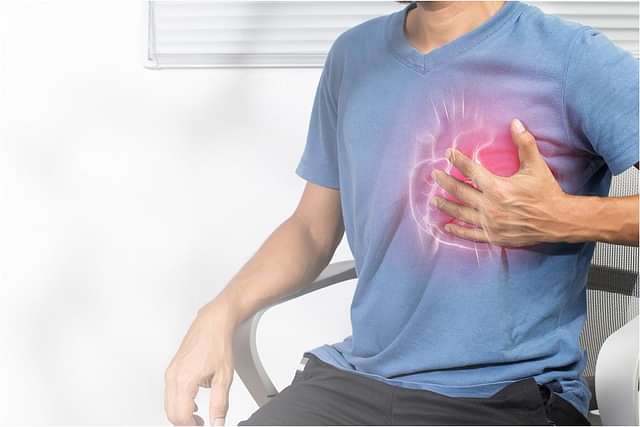
Cardiac arrest is a life-threatening condition that occurs when the heart suddenly stops beating, causing a loss of blood flow to the brain and other vital organs. It is typically caused by an electrical malfunction in the heart and requires immediate medical attention to prevent sudden cardiac death. Recognising the symptoms of cardiac arrest and providing prompt treatment can significantly improve the chances of survival.
 50
50Last updated on : 30 Apr, 2026
Read time : 14 mins
Overview of Disease
Cardiac arrest is a medical emergency that requires swift action to save a person's life. As stated by the Centers for Disease Control and Prevention (CDC, 2024), more than 356,000 people have an out-of-hospital cardiac arrest in the United States every year, and about 60% to 80% of them die before reaching the hospital. It is essential to understand the causes, risk factors, and symptoms of cardiac arrest to ensure timely intervention and improve the chances of a successful outcome. In this article, we will delve into the details of cardiac arrest, its types, and the importance of recognising the signs and seeking immediate medical help.
What is Cardiac Arrest?
According to the American Heart Association (AHA, 2023), cardiac arrest is a condition in which the heart abruptly stops functioning, leading to a loss of blood circulation throughout the body. This sudden cessation of heart function is typically caused by an electrical disturbance that disrupts the heart's normal rhythm and prevents it from pumping blood effectively. Cardiac arrest is different from a heart attack, although a heart attack can sometimes lead to cardiac arrest. Cardiac arrest is a life-threatening emergency that requires immediate medical attention to prevent permanent damage to the brain and other vital organs.
Key Factors about Cardiac Arrest
| Category | Details |
| Also Referred as | Cardiopulmonary arrest, circulatory arrest, sudden cardiac arrest (SCA) |
| Commonly Occurs In | Adults, especially those with cardiac disease, can occur in any age group |
| Affected Organ | Heart, brain, and other vital organs due to lack of blood flow |
| Common Signs | Sudden collapse, no pulse, no breathing, loss of consciousness |
| Consulting Specialist | Cardiologist |
| Treatement Procedures | Cardiopulmonary resuscitation (CPR), defibrillation using an automated external defibrillator (AED), cardioversion, cardiac pacing |
| Managed By | Beta-blockers (e.g., metoprolol), ACE inhibitors (e.g., lisinopril), and antiarrhythmic medicines (e.g., amiodarone), surgical options (implantable cardioverter-defibrillator (ICD) placement or coronary angioplasty and stenting) |
| Mimiciking Condition | Syncope, Seizure, Overdose of certain medications like opioids |
Types of Cardiac Arrest
Cardiac arrest can be classified into several types based on the underlying cause and the outcome of the event. The main types of cardiac arrest include:
- Cardiac arrest: This is the general term used to describe the sudden loss of heart function, which can be caused by various factors, including heart rhythm disturbances, coronary artery disease, and structural heart problems.
- Sudden cardiac arrest (SCA): As stated by the National Library of Medicine (MedlinePlus, 2023), SCA is a specific type of cardiac arrest that occurs abruptly and without warning. It is often caused by a malfunction in the heart's electrical system, leading to an irregular heartbeat (arrhythmia) that disrupts blood flow to the brain and other vital organs.
- Sudden cardiac death: Sudden cardiac death (SCD) refers to the fatal outcome of cardiac arrest, which occurs when the person does not receive prompt medical treatment or when resuscitation efforts are unsuccessful.
- Aborted sudden cardiac death: Aborted sudden cardiac death (ASCD) is a term used to describe a non-fatal outcome of cardiac arrest, where the person survives the event due to timely medical intervention and successful resuscitation efforts.
Symptoms of Cardiac Arrest
Cardiac arrest occurs suddenly and can be life-threatening, often without warning. The most common symptoms include:
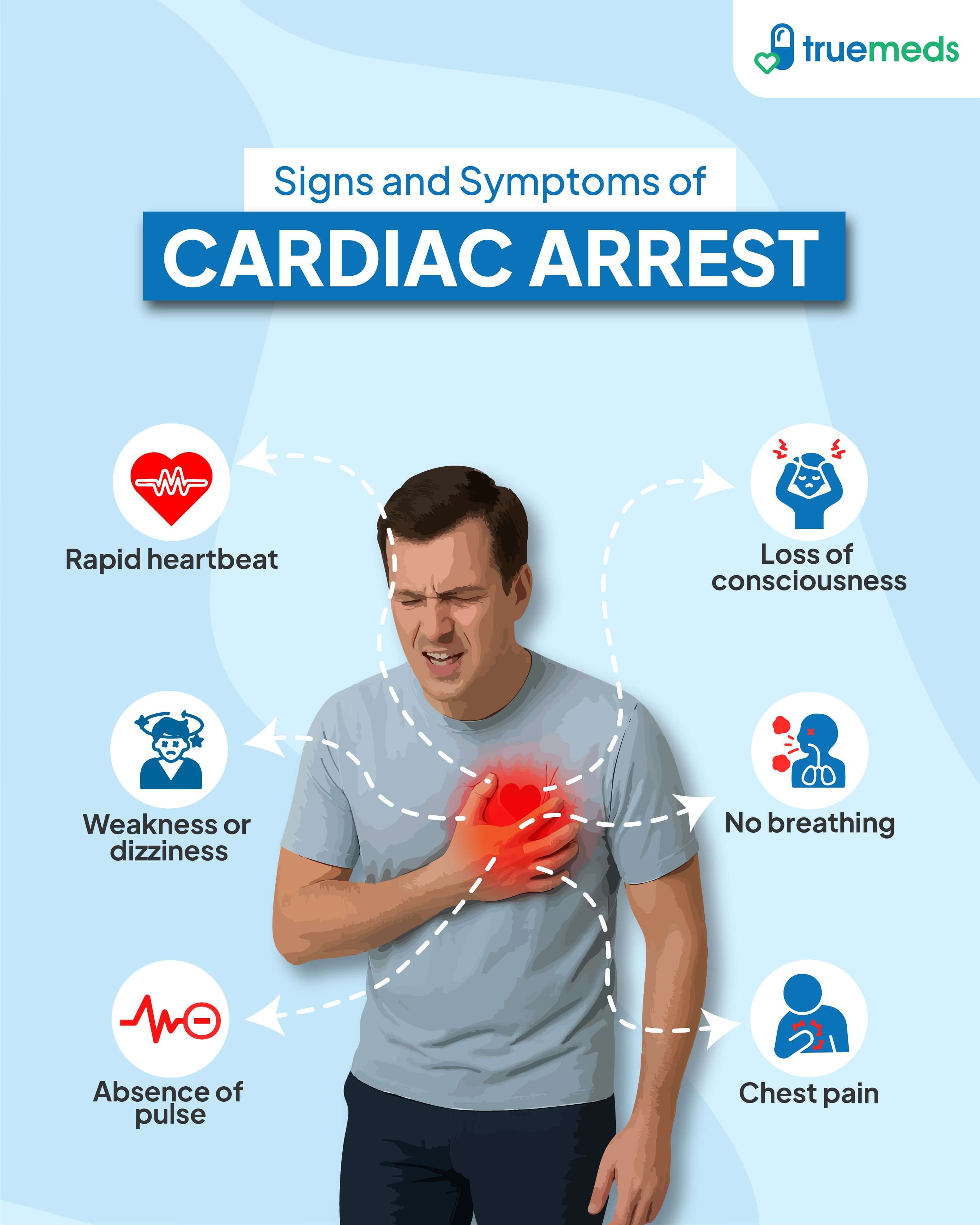
- Loss of consciousness: The individual typically becomes unresponsive and may suddenly collapse as blood flow to the brain is disrupted. This immediate loss of consciousness indicates a critical lack of oxygenated blood reaching the brain.
- Absence of pulse: There is a lack of detectable pulse, indicating that the heart is no longer pumping blood effectively. Without a pulse, vital organs are deprived of oxygen, leading to rapid deterioration.
- No breathing: Breathing may stop, or the person may exhibit only gasping breaths, known as agonal breathing. This irregular breathing pattern is insufficient to sustain life and requires immediate medical attention.
- Chest pain: Some individuals may experience severe chest discomfort or pain before losing consciousness, though this symptom is not always present. Chest pain can indicate a heart problem and may precede a cardiac event.
- Weakness or dizziness: Before the event, a person might feel lightheaded, weak, or dizzy, signalling potential heart issues. These symptoms can serve as warning signs that the heart is not functioning properly.
- Rapid heartbeat: A sudden increase in heart rate may occur before cardiac arrest, indicating underlying arrhythmias. This rapid heartbeat can be alarming and may precede a life-threatening situation.
Causes of Cardiac Arrest
A cardiac arrest occurs when an electrical malfunction in the heart disrupts its rhythm, causing it to stop beating effectively. Various factors contribute to this critical condition, including:
- Ventricular fibrillation: Ventricular fibrillation is the most common cause of cardiac arrest, characterised by rapid, erratic electrical signals that cause the heart's lower chambers (ventricles) to quiver. This results in ineffective pumping of blood, leading to a rapid loss of consciousness and vital signs.
- Ventricular tachycardia: Ventricular tachycardia refers to a very fast heart rate originating in the ventricles. This condition can prevent the heart from filling adequately with blood, ultimately leading to a decrease in cardiac output and potential cardiac arrest.
- Coronary artery disease: Coronary artery disease occurs when blockages in the coronary arteries reduce blood flow to the heart muscle. This lack of blood supply can cause damage to the heart tissue and lead to arrhythmias, increasing the risk of cardiac arrest.
- Cardiomyopathy: Cardiomyopathy is a condition characterised by an enlarged or thickened heart muscle. This can interfere with the heart's ability to pump blood effectively and disrupt its electrical signals, contributing to the risk of sudden cardiac arrest.
- Heart valve disease: It involves stretching or thickening of the heart valves, which can impede normal blood flow. Dysfunctional valves may lead to heart strain and arrhythmias, both of which can precipitate cardiac arrest.
- Congenital heart defects: Congenital heart defects are structural issues present at birth that can affect heart function. These defects may disrupt normal blood flow and electrical signalling, increasing the likelihood of cardiac arrest later in life.
- Long QT syndrome: This is a genetic condition that affects the heart's electrical system, leading to potentially dangerous arrhythmias.
- Blood vessel abnormalities: Abnormalities in the blood vessels can impede blood flow to the heart or disrupt normal heart rhythms. Conditions such as aneurysms or vascular malformations may increase the risk of cardiac arrest.
- Commotio cordis: Commotio cordis occurs when a sudden blow to the chest happens at a specific point in the heart's rhythm. This can trigger fatal arrhythmia, resulting in cardiac arrest, particularly in young athletes.
Risk Factors
Several factors can increase an individual's risk of experiencing cardiac arrest, including:
- Family history of cardiac arrest or heart disease
- Pre-existing heart conditions
- Elevated blood pressure
- High levels of cholesterol in the blood
- Being overweight or obese
- Presence of diabetes
- Lack of physical activity
- Use of tobacco
- Older age and being male
- History of heart attack
- Low levels of potassium or magnesium
- Presence of obstructive sleep apnea
- Physical exertion or physical stress, including competitive sports: In 1 out of 3 cardiac arrests in athletes, the event occurred while they were resting or sleeping after activity (NHLBI, 2022).
Recognising these risk factors can help individuals take proactive measures to reduce their likelihood of experiencing cardiac arrest.
Complications
A cardiac arrest is a life-threatening emergency that can lead to severe complications if not treated immediately. Some of the potential complications include:
- Brain injury: Brain injury due to oxygen deprivation is one of the most severe consequences of cardiac arrest. Survivors may experience a range of cognitive impairments, including memory problems, difficulty with speech and movement, and changes in behaviour or personality.
- Organ damage: During cardiac arrest, vital organs such as the kidneys and liver can be deprived of oxygenated blood, leading to potential organ damage. This deprivation can result in organ failure and contribute to long-term health issues affecting overall body function.
- Psychological challenges: Survivors of cardiac arrest may face psychological challenges, including anxiety, depression, and post-traumatic stress disorder (PTSD). These emotional responses can arise as individuals cope with the traumatic experience and adapt to any physical limitations resulting from the event.
Prevention of Cardiac Arrest
Preventing cardiac arrest involves managing and reducing risk factors associated with heart disease and abnormal heart rhythms. Some of the strategies include:
- Healthy diet: Adopting a nutrient-rich diet high in vegetables, fruits, whole grains, low-fat dairy products, and lean proteins is essential. This dietary approach helps maintain healthy blood pressure, cholesterol levels, and weight, thereby reducing the risk of cardiac arrest.
- Quitting smoking: Quitting smoking is vital, as it is a significant risk factor for heart disease and cardiac arrest. Eliminating tobacco use can lead to improved cardiovascular health and lower the likelihood of heart-related emergencies.
- Regular physical activity: Engaging in at least 150 minutes of moderate-intensity physical activity each week is important for lowering blood pressure and cholesterol. Regular exercise also helps maintain a healthy weight, further decreasing the risk of cardiac arrest.
- Blood pressure management: Keeping blood pressure below 120/80 mm Hg through lifestyle changes and medications can significantly reduce the risk of cardiac events. Regular monitoring and proactive management are crucial for maintaining optimal heart health.
- Cholesterol control: Controlling high cholesterol levels through dietary adjustments and, if necessary, medications is essential. Lowering cholesterol can help prevent plaque buildup in arteries, reducing the risk of cardiac arrest.
- Diabetes management: For individuals with diabetes, regular medical checkups and effective management of the condition are critical. Healthy eating, weight control, and physical activity play a vital role in reducing complications associated with diabetes and cardiovascular health.
- Genetic screening: Genetic screening can help identify individuals at risk, particularly those with a family history of abnormal heart rhythms or sudden cardiac arrest. Early identification allows for targeted prevention strategies and monitoring.
- Limiting alcohol consumption: Limiting alcohol intake is important for maintaining heart health. Excessive alcohol consumption can contribute to high blood pressure and other heart-related issues.
- Stress management: Finding healthy ways to manage stress, such as through exercise, social support, and relaxation techniques, can help reduce the risk of heart problems. Effective stress management is vital for overall cardiovascular well-being.
Diagnosis & Tests
Diagnosing the underlying causes of cardiac arrest often involves a combination of clinical evaluation, medical history, and various tests. Some key diagnostic approaches include:
- Electrocardiogram (ECG): An ECG is used to detect abnormal heart rhythms and electrical signals in the heart, with certain patterns like early repolarisation or ventricular fibrillation indicating a risk for sudden cardiac arrest.
- Echocardiogram: It is used to assess the structure and function of the heart, including the size and thickness of the heart walls, the performance of the heart valves, and the heart's pumping ability.
- Cardiac Magnetic Resonance Imaging: This is used to provide detailed images of the heart's structure and function, helping to identify scarring, inflammation, or other abnormalities that may contribute to cardiac arrest risk.
- Coronary angiography: This is used to visualise the blood vessels supplying the heart, identifying blockages or narrowing of the arteries that can lead to a heart attack or cardiac arrest.
- Electrophysiology study: This is used to assess the heart's electrical activity and identify abnormal heart rhythms that may increase the risk of cardiac arrest.
- Blood tests: These are used to check for markers of heart damage like troponin, electrolyte imbalances, or other underlying conditions that may contribute to cardiac arrest risk.
These diagnostic tests help doctors identify the specific factors contributing to an individual's risk of cardiac arrest, allowing for targeted treatment and management strategies.
Treatment & Management
Managing heart conditions often requires a combination of medications to regulate heart rhythm, control blood pressure, prevent clot formation, and support overall cardiovascular health. The following medications play a vital role:
- Emergency Cardiac Support: Epinephrine, vasopressin, and norepinephrine help restore circulation during cardiac arrest by increasing blood pressure and heart rate. Atropine is used to treat bradycardia, while lidocaine and amiodarone help control life-threatening arrhythmias.
- Acid-Base and Electrolyte Management: Sodium bicarbonate corrects metabolic acidosis, while calcium gluconate is used for calcium imbalances that can affect heart function. Magnesium sulphate helps manage torsades de pointes, a specific type of arrhythmia.
- Clot Prevention and Thrombolysis: Clopidogrel is an antiplatelet medicine that reduces the risk of blood clots. Thrombolytics such as streptokinase, urokinase, alteplase, and reteplase help dissolve clots during heart attacks and strokes.
- Heart Failure and Fluid Management: Digoxin strengthens heart contractions, while furosemide and mannitol help remove excess fluid, reducing strain on the heart.
- Blood Pressure and Circulatory Support: Nifedipine and nitroglycerin help lower blood pressure and improve blood flow to the heart.
Reversal Agents: In cases of medicine overdose affecting heart function, naloxone (for opioid toxicity), flumazenil (for benzodiazepine overdose), and atipamezole (for certain sedative overdoses) are used as antidotes.
Living with Disease
Surviving a cardiac arrest can be a life-altering experience, with various neurological, physical, and psychological consequences that require ongoing management and support. Here are some points to consider:
- Regular follow-up appointments with doctors are essential for monitoring heart health and managing any underlying conditions.
- Taking prescribed medications consistently is crucial for preventing future cardiac events and managing heart conditions.
- Adopting a heart-healthy lifestyle, including a balanced diet, regular exercise, and avoiding smoking, can significantly improve overall health.
- Engaging with support groups or counselling can help individuals cope with the emotional aftermath of cardiac arrest and build resilience.
- Having an action plan in case of another cardiac event, including knowledge of CPR and access to an automated external defibrillator (AED), can be life-saving.
- Participating in structured rehabilitation programs can aid recovery, improve fitness, and provide education on heart health.
- Being aware of any new or worsening symptoms, such as chest pain or shortness of breath, is vital for timely medical intervention.
- Incorporating stress-reducing practices, such as mindfulness or relaxation techniques, can benefit both mental and physical health.
When to See a Doctor?
- If patients notice any new or worsening symptoms, such as chest pain, shortness of breath, dizziness, or fainting, they should contact their doctor immediately.
- Attend all scheduled check-ups with your doctor to monitor your heart health, adjust medications if needed, and address any ongoing symptoms or complications related to the cardiac arrest.
Key Takeaways
- Cardiac arrest is a sudden loss of heart function, breathing, and consciousness, often caused by an electrical disturbance in the heart.
- Common signs and symptoms of cardiac arrest include sudden collapse, no pulse, no breathing, and loss of consciousness.
- Risk factors for cardiac arrest include coronary artery disease, heart valve disease, cardiomyopathy, electrical problems in the heart, and certain medications.
- Bystander CPR and the use of automated external defibrillators (AEDs) can significantly improve survival rates for individuals experiencing cardiac arrest outside of a hospital setting.
- Rapid medical intervention is crucial for treating cardiac arrest and preventing brain damage or death due to lack of oxygen.
- Cardiac arrest survivors face a challenging recovery process involving ongoing medical care, lifestyle changes, and managing the physical and emotional consequences of the event.
- Regular follow-up with doctors and prompt attention to any new or worsening symptoms are essential for preventing future cardiac arrests and maintaining overall health and well-being.
FAQs
Can a person survive a cardiac arrest?
What is the main cause of cardiac arrest?
What is the best treatment for cardiac arrest?
Can a healthy person have cardiac arrest?
How to avoid cardiac arrest?
Can you recover after cardiac arrest?
Can ECG detect cardiac arrest?
Who is at risk for cardiac arrest?
Are there warning signs before cardiac arrest?
What is the minimum age for cardiac arrest?
References
- American Heart Association. (2023, November 9). What is cardiac arrest? https://www.heart.org/en/health-topics/cardiac-arrest/about-cardiac-arrest
- Centers for Disease Control and Prevention. (2024, May 15). About cardiac arrest. https://www.cdc.gov/heart-disease/about/cardiac-arrest.html
- MedlinePlus. (2023, October 27). Sudden cardiac arrest. https://medlineplus.gov/suddencardiacarrest.html
- National Heart, Lung, and Blood Institute. (2022, May 19). Cardiac arrest: Causes and risk factors. https://www.nhlbi.nih.gov/health/cardiac-arrest/causes
- Patel, K., & Hipskind, J. E. (2025). Cardiac arrest. In StatPearls. StatPearls Publishing. https://www.ncbi.nlm.nih.gov/books/NBK534866/
- Schlesinger, S. A. (2024, December). Cardiac arrest. In Merck Manual Professional Edition. Merck & Co., Inc. https://www.merckmanuals.com/professional/critical-care-medicine/cardiac-arrest-and-cardiopulmonary-resuscitation-cpr/cardiac-arrest
- Vo, J., Norby, F. L., Marano, P., Matusov, Y., Reinier, K., Ebinger, J., Halperin, H., & Chugh, S. S. (2024). Management and prevention of in-hospital cardiac arrest: Present and future. npj Cardiovascular Health, 1(7). https://doi.org/10.1038/s44325-024-00009-7
Check Related Salts
Browse Other Conditions
Latest health articles
Top Health Essentials

















Disclaimer
Top-Selling Medicines:
...View more
Top-OTC medicines:
...View more
Company
About UsHealth ArticleHealth StoriesHealth LibraryDiseases & Health ConditionsAyurvedaUnderstanding Generic MedicinesAll MedicinesAll BrandsNeed HelpFAQSecuritySavings CalculatorAdvertise with UsSubscribe
Registered Office Address
Grievance Officer
Download Truemeds


Contact Us
Our customer representative team is available 7 days a week from 9 am - 9 pm.
v4.28.13

2026 - Truemeds | All rights reserved. Our content is for informational purposes only. See additional information.

Our Payment Partners




