Key Takeaways
- Traditional Indian breakfasts like rice-based idli, dosa, and upma tend to have high glycaemic index values, which can trigger hunger sooner after eating
- Protein at breakfast improves satiety and may reduce total daily calorie intake
- Skipping breakfast does not inherently harm your metabolism; total daily calories matter more
- Building a balanced plate means pairing carbohydrates with protein, fibre, and healthy fats
- Fruit juices spike blood sugar faster than whole fruits and should be avoided for weight loss
- ICMR guidelines recommend getting 50% of cereal intake from whole grains and 25-30 grams of fibre daily
If you are searching for healthy breakfast ideas in India that actually support your weight loss goals, the key lies in choosing meals that promote satiety and help control your overall calorie intake throughout the day. A protein-rich breakfast can help reduce hunger and limit snacking later[1]. However, many traditional Indian breakfasts are carbohydrate-heavy and may cause rapid blood sugar spikes, working against your efforts. This article offers practical breakfast choices and building principles, not a personalised meal plan.
Why do traditional Indian breakfasts make weight loss harder?
Many beloved South Indian breakfasts rank high on the glycaemic index (GI), a measure of how quickly foods raise blood sugar levels. Rice idli has a GI of approximately 85, rice dosa sits at 76, and upma measures around 71[2]. These values place them in the high GI category.
When you consume high-GI foods, your blood sugar rises rapidly and then drops quickly [3]. Additionally, traditional preparations often lack adequate protein and fibre, the two nutrients most associated with sustained fullness[1].
The problem is not the foods themselves but rather how they are typically prepared and portioned. Pairing these dishes with protein sources and limiting refined carbohydrate portions can help address these concerns.
What makes a breakfast actually support weight loss?
A weight-loss-supportive breakfast prioritises satiety, the feeling of fullness that helps you eat less throughout the day. Research indicates that a high-protein, low-carbohydrate breakfast may lead to lower subsequent energy intake at lunch compared to a high-carbohydrate breakfast or no breakfast at all[1].
Protein plays the central role here. According to the ICMR–NIN (2024) guidelines, the recommended protein intake for healthy adults is 0.83 g protein/kg body weight/day[4]. Protein-rich foods have been shown to produce greater satiety compared to carbohydrate-rich or high-fat foods with equivalent calories[1].
Fibre also contributes to satiety and helps moderate blood sugar responses. According to ICMR-NIN (2024) guidelines, Indians should aim for 25-30 grams of dietary fibre daily, with 50% of cereal intake coming from whole grains[5].
The combination of protein, fibre, and moderate carbohydrates creates a meal that sustains energy and reduces the urge to snack between meals.
Individual calorie and macronutrient needs vary. Consult a dietitian for personalised guidance.
Read about - How Much Protein You Need Daily (Indian Diet Focus)
Does skipping breakfast slow down weight loss?
A common belief holds that skipping breakfast harms your metabolism, but current evidence does not strongly support this claim. Your daily caloric intake appears to matter more than when you consume those calories.
What the research does confirm is that if you choose to eat breakfast, making it protein-rich may offer advantages for appetite control[1].
A systematic review and meta-analysis found no evidence that eating breakfast promotes weight loss. Participants assigned to eat breakfast consumed approximately 260 kcal more per day than those assigned to skip breakfast. The findings suggest that eating breakfast is not essential for weight loss, although further research is needed to establish its long-term effects[6].
The choice to eat or skip breakfast can depend on your personal preferences, schedule, and how different patterns affect your overall food intake.
However, skipping or delaying meals and fasting can increase the risk of hypoglycaemia (abnormally low blood glucose), particularly in people with diabetes who take insulin or certain glucose-lowering medications[7].
If you have diabetes or other metabolic conditions, consult your healthcare provider about meal timing.
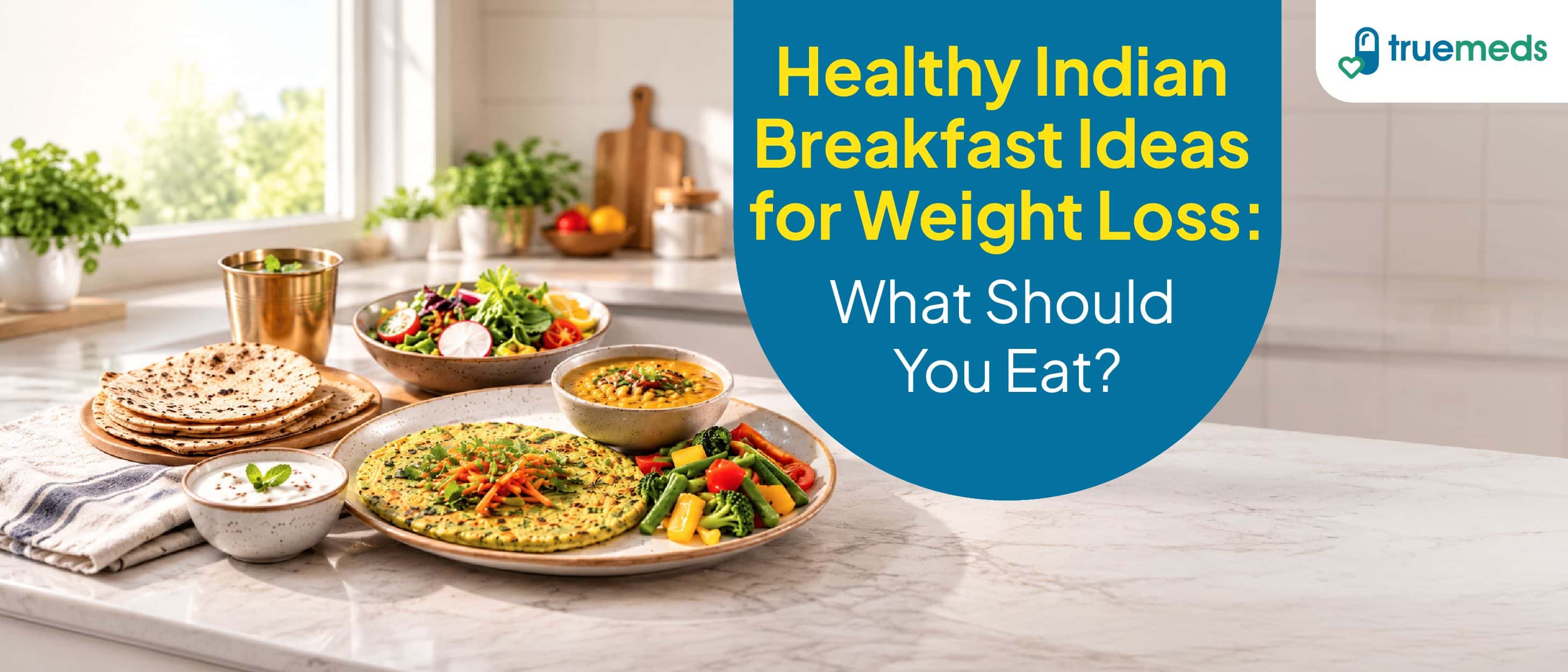
10 healthy Indian breakfast ideas for weight loss
The following options emphasise protein, fibre, and lower glycaemic impact. Each can be modified to suit your preferences and nutritional needs[8].
Breakfast option (quantity per serving) | Main protein source | Protein (per 100 g of source) |
|---|---|---|
2 medium moong dal chillas | Moong dal | 23.88 g
|
2 medium besan chillas | Bengal gram dal | 21.55 g
|
1 medium bowl vegetable dalia with moong dal | Moong dal and broken wheat | 23.88 g moong dal; 10.84 g broken wheat
|
1 small bowl paneer bhurji | Paneer | 18.86 g
|
1 medium bowl chana chaat | Whole Bengal gram (chickpeas) | 18.77 g
|
1 medium bowl vegetable poha + 1 boiled egg | Egg and poha | 13.28 g egg; 7.44 g poha
|
2 small ragi dosas + 1 bowl sambar | Ragi and dal | 7.16 g ragi; 22.87 g dal content
|
2-egg bhurji + 1 medium whole-wheat roti | Egg and wheat | 13.28 g egg; 10.59 g wheat
|
1 medium bowl vegetable moong dal khichdi | Moong dal | 23.88 g
|
1 large besan cheela + 2 tbsp mint chutney | Besan | 21.55 g
|
Protein values are per 100 g of the raw main ingredient, not the prepared breakfast. Actual protein per serving depends on the recipe and ingredient amounts.
When selecting traditional options like idli or dosa, consider millet-based alternatives which typically have a lower glycaemic index than their rice-based counterparts[2]. Pairing any carbohydrate-based breakfast with a protein source like sambhar, curd, or eggs can help improve satiety[1].
Portion sizes should be adjusted based on individual calorie requirements.
Read about - 7-Day Indian Diet Plan for Weight Loss (Detailed Meal Chart)
How to build a balanced plate with any Indian breakfast?
You can transform almost any Indian breakfast into a weight-loss-friendly meal by following a simple plate-building approach.
Start by including a protein source. This could be dal, paneer, eggs, Greek yoghurt, legumes, or nuts. Aim to make protein approximately one-quarter of your plate. The ICMR-NIN guidelines emphasise the importance of adequate protein intake for overall health[5].
Next, add fibre through vegetables, whole grains, or legumes. Fibre slows digestion and helps moderate blood sugar responses. When you eat carbohydrates alongside protein, fat, or fibre, blood sugar rises more gradually[9].
Finally, control your refined carbohydrate portion[9]. If eating rice-based items, keep the portion moderate and ensure protein and vegetables fill most of your plate.
This approach works whether you are eating traditional South Indian breakfast, North Indian parathas, or fusion options. The principle remains consistent: balance carbohydrates with protein and fibre.
What mistakes can ruin a healthy breakfast?
Several common habits can undermine your breakfast's weight loss potential.
Drinking fruit juice instead of eating whole fruit
Fruit juice raises blood sugar faster than eating whole fruit because it lacks the fibre that slows digestion[6]. Adults who regularly consume sugary drinks are more likely to experience weight gain and obesity[10]. Choose whole fruits over juices to benefit from their full fibre content.
Skipping protein entirely
A breakfast of only carbohydrates, such as plain idli or dosa without accompaniments, may leave you hungry within hours. Adding a protein source improves satiety and may help reduce later snacking.
Using excessive oil or ghee
Traditional preparations often use generous amounts of cooking fat. While healthy fats are important, excessive amounts add significant calories without proportional increases in satiety. Steamed options or lightly cooked dishes offer lower calorie alternatives.
Overlooking portion sizes. Even healthy foods contribute to weight gain when consumed in excess[9]. The principle of calorie balance remains fundamental regardless of food quality.
Conclusion
Achieving weight loss with Indian breakfasts requires thoughtful choices rather than complete dietary overhauls. Focus on including adequate protein, choosing whole grains over refined carbohydrates, and adding fibre through vegetables and legumes. Avoid liquid calories from juices and sweetened drinks. Remember that your total daily food intake matters more than any single meal. With these principles, traditional Indian breakfasts can become effective tools in your weight management journey.
FAQs
How much protein should breakfast have for weight loss?
Research suggests approximately 25 to 30 grams of protein at breakfast may help manage appetite throughout the day. Good Indian sources include paneer, eggs, dal, Greek yoghurt, and besan-based preparations. The exact amount varies based on your overall daily protein needs and body weight.
Can I still eat poha, idli, or dosa and lose weight?
Yes, with modifications. Choose millet-based versions when available, control portion sizes, and pair with protein sources like sambhar, curd, or eggs. The key is balancing these carbohydrate-rich foods with protein and fibre rather than eliminating them entirely.
Is it true that skipping breakfast ruins your metabolism?
No, this is largely a myth. Your daily caloric intake matters more than meal timing. However, if you eat breakfast, making it protein-rich may help control appetite throughout the day. Choose the approach that works best for your lifestyle and hunger patterns.
Are fruit juices a good breakfast choice for weight loss?
No, fruit juices are not ideal for weight loss. They raise blood sugar faster than whole fruits because they lack fibre. Regular consumption of sugary drinks is associated with weight gain. Choose whole fruits instead to benefit from their fibre content and slower sugar absorption.
Does eating breakfast within an hour of waking matter?
There is no strong evidence that the exact timing of breakfast significantly affects weight loss. What matters more is the quality and composition of your breakfast. Focus on protein and fibre content rather than worrying about eating within a specific timeframe.
Can vegetarians get enough protein at Indian breakfast?
Yes, vegetarians have many high-protein Indian breakfast options. Paneer bhurji, moong dal chilla, besan chilla, Greek yoghurt, sprouts, and legume-based dishes all provide substantial protein. Combining multiple plant protein sources throughout the day ensures adequate intake.
Medical Disclaimer
This article is for informational purposes only and does not constitute medical advice. The information provided should not be used for diagnosing or treating health conditions. Always consult a qualified healthcare provider for diagnosis, treatment, and personalised medical advice. Do not disregard professional medical advice or delay seeking it because of information found in this article. If you have a medical emergency, contact your doctor or emergency services immediately.
References
Dalgaard, L. B., Kruse, D. Z., Norup, K., Andersen, B. V., & Hansen, M. (2024). A dairy-based, protein-rich breakfast enhances satiety and cognitive concentration before lunch in overweight to obese young females: A randomized controlled crossover study. Journal of Dairy Science. https://www.journalofdairyscience.org/article/S0022-0302(23)02014-3/fulltext
Glycemic-Index.org. (2026). Glycemic index of Indian foods. Glycemic-Index.org. https://www.glycemic-index.org/glycemic-index-of-indian-foods.html
MedlinePlus. (2024). Glycemic index and diabetes. U.S. National Library of Medicine.
Indian Council of Medical Research, & National Institute of Nutrition. (2024). Dietary guidelines for Indians. https://nin.res.in/dietaryguidelines/pdfjs/locale/DGI_2024.pdf