

Key Takeaways
- Vegetable-heavy juices can be lower in calories and sugar while providing nutrients, making them an option to include in a balanced weight-management diet.
- Blending rather than juicing preserves more fibre, which can support satiety and digestive health. Use a blender where possible.
- Avoid fruit-only juices and added sugars as these can increase calorie intake and may raise blood sugar levels.
- Juices cannot target belly fat. They can only be part of an overall approach to weight management alongside a balanced diet and regular physical activity.
- Do not replace all meals with juice. Use juices as part of the diet rather than as a complete meal replacement to help maintain adequate nutrient intake.
- Consult a doctor if you have diabetes, a history of eating disorders, or take medicines that may interact with specific juice ingredients.
Juices can be a refreshing, nutrient-dense addition to your weight loss plan if you choose the right ingredients. While eating whole fruits and vegetables is always best for optimal fibre intake, juicing offers a convenient shortcut to packing vitamins into your day.
The golden rule for weight loss is to prioritise vegetable-heavy blends and steer clear of added sugars or pure fruit juices, which can quietly spike your calorie intake[1]. Let us dive into the best juice ingredients for sustainable weight management and how to use them safely.
What makes juices effective for weight loss?
Several key factors contribute to the effectiveness of certain juices in supporting weight loss. Here are the primary components that make these beverages beneficial:
- Low calorie and sugar content: Juices that are naturally low in calories and sugar may help minimise your overall calorie intake.
- High nutrient density: Juices packed with vitamins, minerals, and antioxidants provide your body with essential nutrients without excessive calories[2].
- Presence of metabolism-boosting ingredients: Certain ingredients, such as ginger, have been studied for their potential thermogenic effects in small human trials[3], but they should not be considered a standalone weight-loss solution.
- Fibre content: Juicing removes most of the fibre found in whole fruits and vegetables. Using a blender instead of a juicer preserves more fibre, which supports satiety and digestive health[2].
By focusing on these key aspects, you can ensure that the juices you consume are not only flavourful but also conducive to your weight management goals.
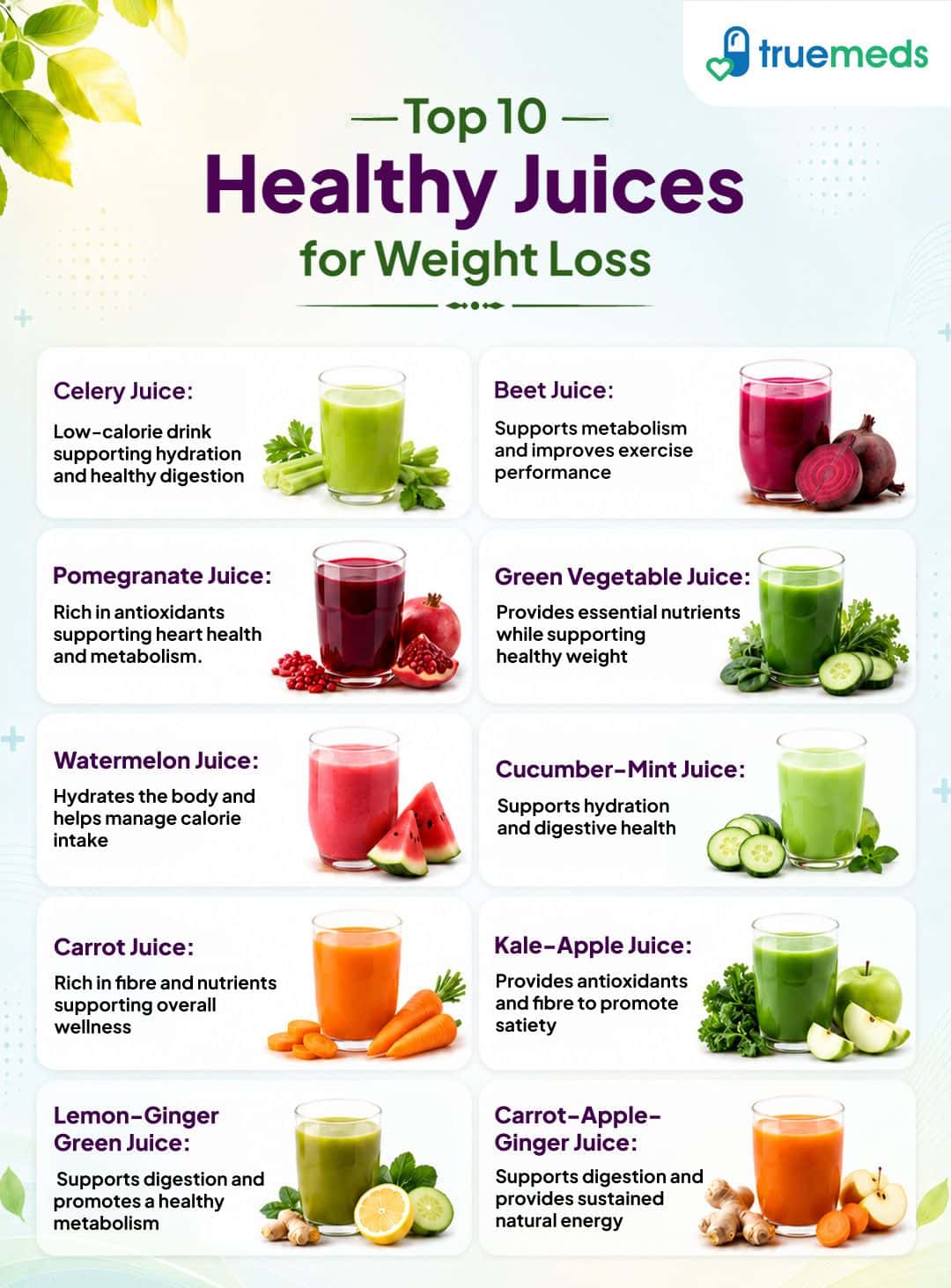
Top 10 healthy juices for weight loss
Healthy juices are nutrient-packed beverages that provide essential vitamins and minerals and may help keep you feeling full and satisfied while keeping your calorie intake in check. Here are the top 10 juices known for their potential weight loss benefits, along with their key ingredients, nutritional profiles, and the unique advantages they offer.
1. Celery juice
Celery juice has become a popular wellness beverage in recent years, though much of its popularisation has been based on anecdotal claims rather than scientific evidence. Its high water content helps keep you hydrated and may promote a feeling of fullness. This, in turn, can help reduce your overall calorie intake.
While human clinical evidence is limited, some preliminary research suggests celery juice may have mild anti-inflammatory properties and hydrating effects that could support overall wellness[4]. Its high water content may help with hydration and satiety, but there is insufficient scientific evidence to directly link celery juice consumption to reduced inflammation, water retention, or effective weight-management outcomes in humans.
2. Beet juice
Beet juice is another excellent choice for supporting weight loss and is often considered one of the best juices for fat loss, as it may enhance exercise performance and support cardiovascular health[5]. However, the effects can vary depending on an individual's fitness level and training status.
- Rich in nitrates, beet juice may improve blood flow and oxygen delivery to your muscles during workouts, which can increase your stamina and calorie expenditure.
- Additionally, evidence suggests that the nitrates and bioactive compounds (betalains, flavonoids, and polyphenols) in beetroot juice may support heart health and help reduce blood pressure, all of which may facilitate healthier weight management[6].
- Since beets are high in oxalates, individuals prone to calcium oxalate kidney stones should consume their juice in moderation.
3. Pomegranate Juice
Pomegranate juice is widely appreciated for its rGreen vegetable juice can be made by combining ingredients such as spinach, kale, cucumber, and ceich antioxidant profile, especially punicalagins and anthocyanins, which help combat oxidative stress and inflammation in the body. By supporting overall metabolic health and reducing low-grade inflammation, these compounds may indirectly contribute to better weight management[7].
Nutritionally, it provides vitamin C and potassium; note that juicing reduces the fibre content compared to consuming whole pomegranate arils. Pomegranate juice is relatively high in natural sugars and calories; portion control is important if it is included in a weight-loss plan.
Pomegranate juice is not a weight-loss solution on its own, and its benefits are best realised when included as part of a balanced diet and healthy lifestyle.
4. Green vegetable juice
Green vegetable juice is considered an effective juice for weight loss by health and fitness enthusiasts. Green vegetable juice can be made by combining ingredients such as spinach, kale, cucumber, and celery. These ingredients are low in calories and nutrient-dense, which may support weight management due to their low-calorie content and high levels of fibre, vitamins, and minerals[1].
Green juice is also low in sugar, making it a suitable choice for weight management while still delivering essential nutrients like vitamin K, vitamin C, iron, and magnesium.
5. Watermelon juice
Watermelon juice is an ideal choice for weight loss due to its high water content (around 90%), which promotes hydration and fullness without adding many calories[8].
- Naturally low in calories, watermelon juice contains compounds like citrulline, an amino acid that may support nitric oxide production, potentially aiding blood flow and exercise performance. Watermelon also contains lycopene and vitamin C, antioxidants that may help reduce oxidative stress.
- It also provides vitamins A and C, along with antioxidants.
- The refreshing taste and hydrating effect of watermelon juice make it a beneficial low-calorie beverage to help curb hunger and maintain energy levels during your weight loss journey.
6. Lemon-ginger green juice
Lemon-ginger green juice is a combination that may help support your metabolism and may contribute to weight management. The citrus component from lemons has been shown to potentially reduce insulin resistance and fat storage in cultured adipocytes (lab study)[9], however, this finding is based on a laboratory cell study only and does not confirm that lemon juice reduces insulin resistance in humans. Human clinical trials are needed to validate this effect. Additionally, ginger may support metabolism and help with appetite control[3], though more robust human evidence is required to establish its direct impact on weight loss.
Incorporating lemon-ginger green juice into your weight loss plan can be an effective way to support your goals while enjoying a refreshing, nutritious beverage.
7. Carrot juice
Carrot juice is low in calories and packed with vitamins and minerals[10], potentially supporting digestive health and overall well-being. While it may not be as filling as eating whole carrots due to reduced fibre content, carrot juice can still provide essential nutrients and can serve as a replacement for high-calorie beverages in your weight loss diet. The natural sweetness of carrots can also satisfy your cravings without the added sugar found in many other drinks.
8. Kale-apple juice
Kale-apple juice for weight loss is a beneficial combination that offers both nutritional value and a pleasant taste. Kale is a nutrient powerhouse, loaded with vitamins and minerals[11], while apples bring a natural sweetness to the blend[8]. Consuming kale-apple juice can be a satisfying way to manage your appetite and support your weight loss goals.
Individuals taking blood thinners such as warfarin should be cautious, as kale is very high in vitamin K.
9. Cucumber-mint juice
Cucumber-mint juice is a refreshing and hydrating drink that may help support your weight management efforts. Cucumbers are known for their high water content, which aids in maintaining hydration and supporting a healthy metabolism, a crucial factor in effective weight loss[12]. The addition of mint leaves brings a cool, invigorating flavour to the juice.
This low-calorie, nutrient-rich beverage can be a refreshing, lower-calorie beverage option to support your weight loss journey while staying hydrated.
10. Carrot-apple-ginger juice
The trio of carrots, apples, and ginger in this juice blend offers a powerful combination of digestive and appetite-supporting benefits.
- Ginger is known for its ability to support digestive health and may help with appetite regulation[3].
- Apples bring natural sweetness and fibre to the mix.
- Carrots, on the other hand, provide essential vitamins and minerals that contribute to overall well-being[10].
Consult your doctor before making significant dietary changes, especially if you have existing health conditions.
Additional tips for weight loss with juices
Understanding which juices may be beneficial for weight loss is valuable. To further maximise the benefits of juicing, consider the following tips:
- Choose Low-Sugar Options: Opt for juices that are naturally low in sugar and high in fibre, such as green vegetable juices, to avoid excessive calorie intake and promote satiety.
- Eat Whole Fruits and Vegetables: While juices can be a convenient way to increase your nutrient intake, remember that whole fruits and vegetables provide more fibre and promote a feeling of fullness, aiding in sustainable weight loss.
- Supplement Meals, Don't Replace Them: Using juices to supplement one meal a day can be an effective strategy, but replacing all meals with juice can lead to nutrient deficiencies and may not be sustainable in the long run.
- Timing Matters: Drinking juice before a meal may help you feel fuller before eating, although evidence is limited and whole fruits may provide greater satiety than juice.
- Watch Portion Size: Even low-calorie juices can add up. Keep portions moderate to avoid excessive calorie intake.
Potential risks and considerations
While juices can be a nutritious addition to your diet, there are some potential considerations to keep in mind. Consuming juices in excess, especially those high in sugar, may contribute to weight gain and other health concerns. Consider the following:
- Sugar Content: Be mindful that many juices, particularly shop-bought varieties, can be high in sugar, which can cause rapid spikes in blood sugar levels and may contribute to weight gain.
- Consult a Professional: If you have diabetes or a history of eating disorders, it's important to consult with a doctor before incorporating juices into your diet to ensure it aligns with your specific needs and goals.
- Moderation is Key: Enjoy juices in moderation as part of a balanced diet to avoid potential negative health impacts and maintain a sustainable approach to weight loss.
This is not medical advice. Always seek professional guidance for personalised dietary recommendations.
Conclusion
Healthy juices can support your weight loss journey when chosen wisely. Prioritise vegetable-based, low-sugar options and use a blender where possible to retain more fibre. Remember that juices can complement a balanced diet; they should not replace whole foods or professional medical guidance. Consult your doctor before making significant dietary changes.
FAQs
Which juices are best for weight loss?
Vegetable-based juices are generally best for weight loss, as they are low in calories and sugar while providing essential nutrients. Options such as celery juice, beet juice, and green vegetable juices made with spinach, kale, cucumber, and celery may support weight management when consumed as part of a balanced diet.
Can juices help reduce belly fat?
Juices cannot directly target belly fat. However, low-calorie vegetable juices such as green blends or cucumber with ginger may support overall weight management by aiding hydration and providing beneficial nutrients when included in a balanced diet and healthy lifestyle.
How often should I drink juice for weight loss?
Juice can be included occasionally as part of a balanced diet, but it should not replace whole meals. For safe and sustainable weight management, prioritise whole foods, adequate protein and fibre, and use juices only as a supportive addition rather than a primary weight-loss strategy.
Is fruit juice good for weight loss?
Fruit juice is not ideal for weight loss when consumed regularly. Even 100% fruit juice lacks fibre and can be high in natural sugars, which may increase calorie intake and affect blood sugar levels. If included, it should be consumed in small portions and occasionally, with whole fruits generally being a better choice for weight management.
Can I add sugar to juice for weight loss?
It is best to avoid adding sugar to juice. Sugar in juices increases calorie intake and can lead to weight gain over time.
How can I make healthy juice at home?
To make healthy juice at home, use a variety of fruits and vegetables, avoid adding sugars, and opt for low-calorie ingredients. This ensures you create nutritious juices that support your weight loss goals.
Medical Disclaimer
This article is for informational purposes only and does not constitute medical advice. The information provided should not be used for diagnosing or treating health conditions. Always consult a qualified healthcare provider for diagnosis, treatment, and personalised medical advice. Do not disregard professional medical advice or delay seeking it because of information found in this article. If you have a medical emergency, contact your doctor or emergency services immediately.
References
Zhang, X., Liao, X., Wang, Y., Rao, L., & Zhao, L. (2024). Health effects of fruit juices and beverages with varying degrees of processing. Food Science and Human Wellness, 13(5), 2456-2479. https://doi.org/10.26599/fshw.2022.9250202
Dreher M. L. (2018). Whole Fruits and Fruit Fiber Emerging Health Effects. Nutrients, 10(12), 1833. https://doi.org/10.3390/nu10121833
Mansour, M. S., Ni, Y. M., Roberts, A. L., Kelleman, M., Roychoudhury, A., & St-Onge, M. P. (2012). Ginger consumption enhances the thermic effect of food and promotes feelings of satiety without affecting metabolic and hormonal parameters in overweight men: a pilot study. Metabolism, 61(10), 1347-1352. https://pubmed.ncbi.nlm.nih.gov/22538118/
Zhao, D., Cao, J., Jin, H., Shan, Y., Fang, J., & Liu, F. (2021). Beneficial impacts of fermented celery (Apium graveolens L.) juice on obesity prevention and gut microbiota modulation in high-fat diet fed mice. Food & Function, 12(19), 9151–9164. https://pubs.rsc.org/en/content/articlelanding/2021/fo/d1fo00560j