Key Takeaways
- ESR measures how fast red blood cells settle in a tube, while CRP directly measures a specific protein made by your liver during inflammation.
- CRP responds within 12–24 hours and drops quickly when inflammation resolves; ESR changes slowly over days to weeks.
- Neither test diagnoses a specific condition; both require interpretation alongside symptoms and other tests.
- Factors like age, sex, and anaemia can affect ESR independently of inflammation.
- Your doctor chooses which test to order based on whether they need to detect acute changes or monitor long-term inflammation.
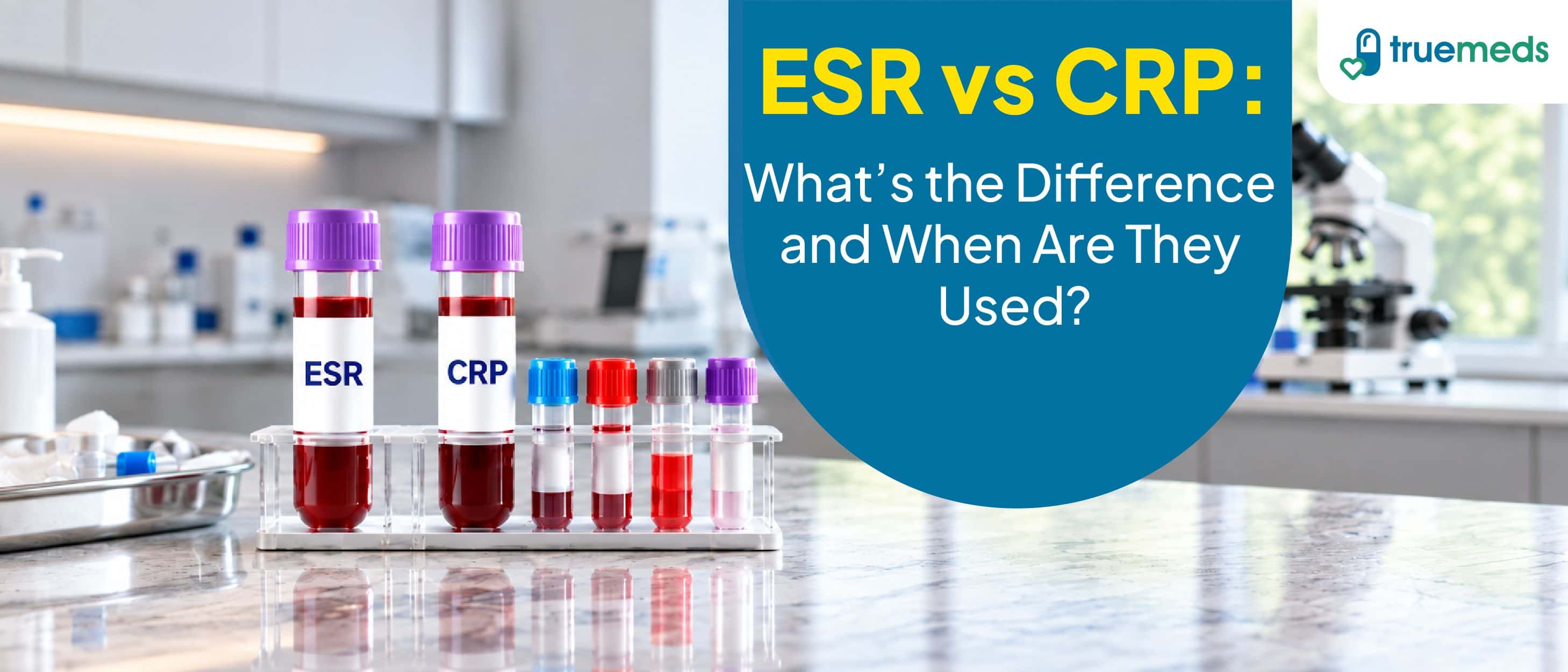
When your doctor suspects inflammation in your body, they may order blood tests to help identify the cause. Understanding ESR vs CRP, the two most common inflammation markers, can help you make sense of your test results and have more informed conversations with your doctor. Both tests help assess inflammation, but they work differently and serve distinct clinical purposes[1]. This article explains what each test measures, how quickly they respond to inflammation, and when doctors might order one, the other, or both. Note that this is general health education; always discuss your individual results with your doctor.
What are ESR and CRP?
Erythrocyte sedimentation rate (ESR) is a routine blood test that measures the rate at which red blood cells settle at the bottom of a specialised tube over one hour. During inflammation, certain proteins in the blood increase, promoting the formation of red blood cell aggregates that settle more rapidly than usual[2]. This makes ESR an indirect marker of inflammation.
CRP, or C-reactive protein, is a protein your liver produces in response to inflammation[3]. Unlike ESR, which measures a physical process, a CRP test directly measures the concentration of this specific inflammatory protein in your blood. Your liver releases CRP when triggered by interleukin-6, a chemical messenger produced during infection, injury, or autoimmune processes[4].
How do ESR and CRP differ in what they measure?
The fundamental difference between these tests lies in what they actually measure.
ESR is a physical test that evaluates the settling behaviour of red blood cells in plasma. During inflammation, increased levels of certain blood proteins promote the formation of red blood cell aggregates known as rouleaux, which settle more rapidly due to their increased mass[2]. This means ESR reflects changes in multiple plasma proteins rather than measuring a single marker.
CRP, on the other hand, is a direct measurement of one specific protein. When interleukin-6 signals your liver during inflammatory or infectious processes, your liver increases production of CRP[4]. This makes CRP a more direct indicator of your body's acute inflammatory response.
How do ESR and CRP differ in speed of response?
One of the most clinically important differences between these tests is how quickly they respond to changes in inflammation.
CRP begins to rise within 12–24 hours after an inflammatory trigger and peaks at 2–3 days [1]. This quick response makes CRP particularly useful for detecting new inflammation or monitoring how well treatment is working.
ESR demonstrates much slower kinetics. It rises gradually over days and remains elevated for an extended period even after inflammation has resolved. Because of this delayed response, ESR is not useful for monitoring the clinical or therapeutic response in acute inflammatory conditions[1].
When is each test used?
Doctors choose between CRP and ESR based on the clinical question they need to answer. The CRP test is often ordered alongside the ESR test when investigating inflammation[5].
CRP may be preferred when[1]:
- Detecting acute infections or inflammation
- Monitoring response to treatment for acute conditions
ESR may be preferred when[2]:
- Monitoring chronic inflammatory conditions over time
- Evaluating autoimmune disorders where gradual changes matter
- Screening for inflammatory activity in conditions like infections or tumours
Your doctor will determine which test is most appropriate based on your specific symptoms and suspected condition. Do not self-diagnose based on test results.
Read about - What Are the Most Common Blood Tests, and Why Are They Done?
Should both tests be ordered together?
Ordering ESR and CRP together is useful in certain clinical situations, but routine simultaneous testing is generally unnecessary. CRP is more sensitive and specific than ESR for evaluating acute inflammation, and ordering both tests routinely can lead to discrepant results that require careful interpretation[1].
Your doctor may order both tests when[1]:
- Evaluating certain inflammatory conditions: Concurrent ESR and CRP testing may be useful in rheumatoid arthritis, systemic lupus erythematosus (SLE), giant cell arteritis, and Kawasaki disease.
- Assessing fever in patients with SLE: The ESR-to-CRP ratio may help distinguish a lupus flare from an infection.
- Investigating suspected orthopaedic infections: Ordering both tests may improve diagnostic accuracy, particularly when the initial clinical probability of infection is low.
For the initial evaluation of acute inflammation, CRP alone is generally recommended. ESR remains useful in monitoring chronic rheumatologic conditions, such as rheumatoid arthritis, polymyalgia rheumatica, and giant cell arteritis[1].
Neither ESR nor CRP testing requires fasting, and you can eat and drink normally before blood collection unless instructed otherwise for other tests.
The decision to order both tests should therefore depend on the clinical situation, with careful interpretation of results when the two tests disagree.
What can affect ESR and CRP results besides inflammation?
Both tests can be influenced by factors unrelated to active inflammation, which is why results must always be interpreted in a clinical context.
Factors that may affect ESR include[6]:
- Age and sex
- Pregnancy and menstrual cycle
- Obesity
- Regular alcohol consumption
- Exercise
- Certain medicines and supplements
Factors that may affect CRP include[3]:
- Infections and inflammatory conditions
- Smoking
- Exposure to environmental toxins, such as air pollution and hazardous waste
- Insomnia
- Depression
- Menopausal hormone therapy
- Obesity
Because of these variables, a mildly elevated result does not necessarily indicate disease. Your doctor considers your complete health picture when interpreting these tests.
What are normal ESR and CRP levels?
Normal ranges can vary between laboratories, so always refer to the reference values provided with your specific test results.
CRP
Most healthy adults have CRP levels below 0.3 mg/dL. Normal ranges may vary between laboratories, and levels can differ with age, sex, and race. CRP levels of 1–10 mg/dL indicate a moderate increase, while levels above 10 mg/dL indicate a marked increase. Elevated CRP levels suggest inflammation, but the test alone cannot determine its underlying cause[5].
ESR
Normal ESR values vary by age and sex. For adults, normal values using the Westergren method are generally[7]:
- Men under 50 years: Less than 15 mm/hr
- Men over 50 years: Less than 20 mm/hr
- Women under 50 years: Less than 20 mm/hr
- Women over 50 years: Less than 30 mm/hr
An elevated ESR may indicate inflammation or be associated with conditions such as anaemia, pregnancy, kidney disease, thyroid disease, infections, and autoimmune disorders. However, an abnormal ESR result alone cannot confirm a specific diagnosis, and further testing may be needed[7].
If your results fall outside normal ranges, consult your healthcare provider for proper interpretation. Do not adjust medications or make health decisions based on test results alone.
Conclusion
ESR and CRP are both valuable tools for assessing and monitoring inflammation, but they work differently and serve distinct purposes. CRP responds quickly to inflammatory changes and can help track acute conditions, while ESR changes more gradually and may be useful for monitoring chronic inflammation. Neither test alone can diagnose a specific disease; both require interpretation alongside your symptoms, medical history, and other investigations. If you have concerns about inflammation or have received test results you do not understand, speak with your doctor for personalised guidance.
FAQs
Can ESR or CRP be high without any infection?
Yes, both markers can be elevated without active infection. Autoimmune diseases, certain cancers, tissue injury, and chronic inflammatory conditions can all raise ESR or CRP levels. Your doctor considers your complete clinical picture when interpreting elevated results.
Is CRP more accurate than ESR?
CRP responds faster and is more specific to active inflammation. However, ESR remains useful for certain chronic conditions and has established diagnostic criteria for diseases like polymyalgia rheumatica. Neither test is universally superior; each has specific applications.
What conditions specifically require an ESR test rather than CRP?
ESR remains particularly useful for monitoring certain chronic inflammatory conditions where gradual changes over time matter more than rapid fluctuations. Your doctor will choose based on your specific clinical situation.
Why would a doctor order both ESR and CRP at once?
Ordering both can help provide complementary information about inflammation. Since CRP changes rapidly while ESR responds slowly, comparing them can provide a fuller picture of inflammatory activity and how it changes over time. However, routinely ordering both tests is not necessary in every case.
Can these test results be normal even if you're sick?
Yes, normal CRP does not definitively rule out inflammation. Some conditions, including lupus and certain forms of rheumatoid arthritis, may not consistently elevate CRP. Clinical assessment alongside test results is essential for accurate diagnosis.
Medical Disclaimer
This article is for informational purposes only and does not constitute medical advice. The information provided should not be used for diagnosing or treating health conditions. Always consult a qualified healthcare provider for diagnosis, treatment, and personalised medical advice. Do not disregard professional medical advice or delay seeking it because of information found in this article. If you have a medical emergency, contact your doctor or emergency services immediately.
References
College of American Pathologists. (2025). C-reactive protein and erythrocyte sedimentation rate test use. https://www.cap.org/wp-content/uploads/documents/C-ReactiveProteinandErythrocyteSedimentationRateTestUse.pdf?download=true
StatPearls. (2025). Erythrocyte sedimentation rate. National Center for Biotechnology Information. https://www.ncbi.nlm.nih.gov/books/NBK557485/
MedlinePlus. (2025). C-reactive protein (CRP) test. National Library of Medicine. https://medlineplus.gov/lab-tests/c-reactive-protein-crp-test/
StatPearls. (2025). C-reactive protein: Clinical relevance and interpretation. National Center for Biotechnology Information. https://www.ncbi.nlm.nih.gov/books/NBK441843/