Key Takeaways
- A high cholesterol diet focuses on reducing saturated and trans fats while increasing fibre-rich foods
- Soluble fibre from oats, beans, and legumes can help lower LDL cholesterol levels
- Mediterranean, DASH, and vegetarian dietary patterns align with heart-healthy eating guidelines
- Genetics and underlying health conditions can affect how well diet changes work
- Always consult a healthcare provider before making significant dietary changes
Following a high cholesterol diet involves more than simply avoiding certain foods. While dietary changes are an important part of managing elevated cholesterol levels, factors such as genetics, underlying health conditions like type 2 diabetes, and overall lifestyle also play significant roles[1]. High cholesterol is often treated through a combination of lifestyle adjustments, with steps to lower LDL cholesterol including choosing foods lower in saturated and trans fats[2].
This article provides general nutrition education about foods that may help manage cholesterol levels. It is not a personalised medical diet plan or a substitute for professional medical guidance. Always consult your doctor or a registered dietitian for individualised advice.
What makes a diet effective for lowering cholesterol?
Your body produces all the cholesterol it needs, which means dietary cholesterol is not essential. Eating foods high in saturated fat and trans fat may contribute to elevated cholesterol levels and related conditions such as heart disease[3].
An effective cholesterol-lowering diet focuses on two main principles: reducing harmful fats and increasing beneficial nutrients. Foods naturally high in fibre, such as oatmeal and beans, along with unsaturated fats found in avocados, vegetable oils like olive oil, and nuts, may help prevent and manage high LDL cholesterol levels. These foods can also help increase HDL (good) cholesterol while reducing triglycerides[3].
Foods to include in a high cholesterol diet
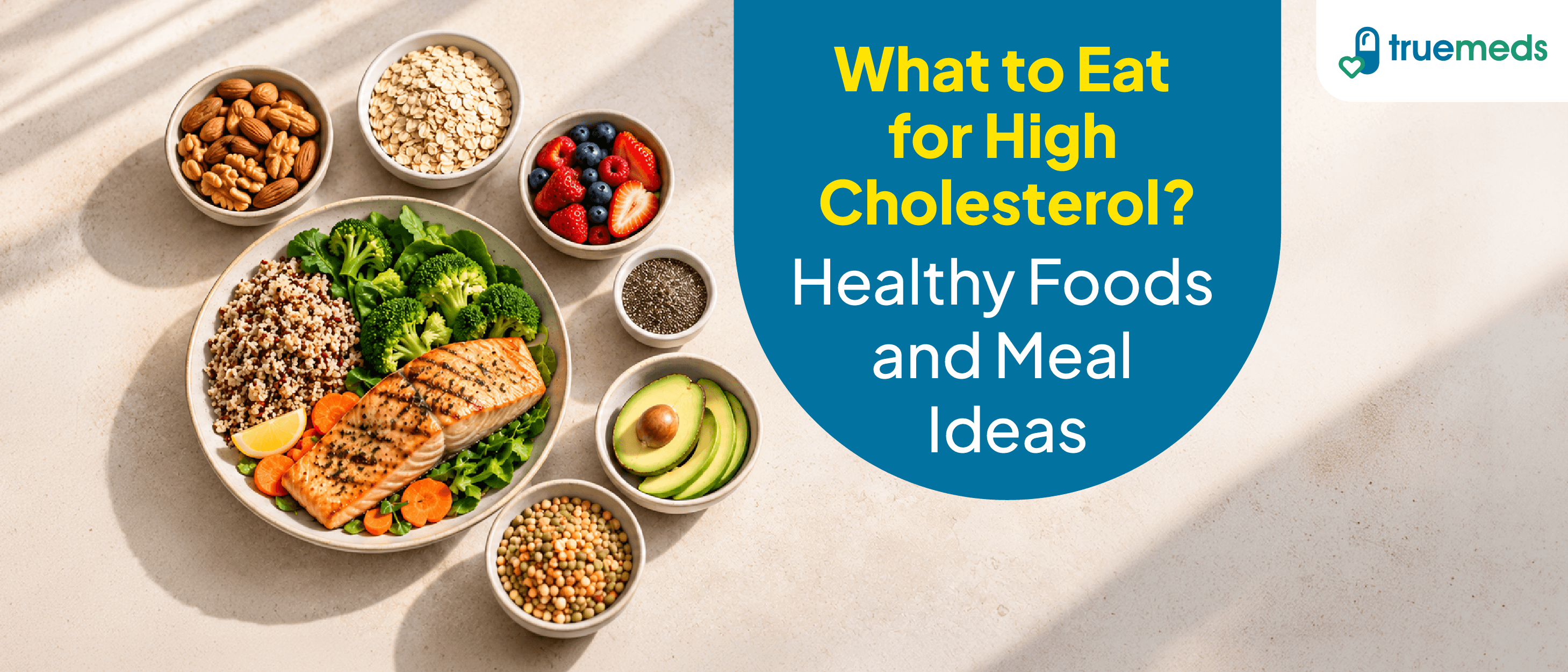
Evidence-based dietary guidance recommends eating plenty of fruits and vegetables, choosing whole grain foods, selecting healthy protein sources (mostly plants, regular fish and seafood, and low-fat dairy), and using liquid plant oils rather than tropical oils[4].
The following table highlights beneficial foods for managing cholesterol, including options commonly available in India:
Food Category | Examples | How It May Help |
|---|---|---|
Whole grains | Oats, barley, brown rice, jowar, bajra, ragi | Provide soluble fibre that can reduce cholesterol absorption |
Legumes | Rajma, chana, moong dal, lentils, chickpeas | Rich in fibre and plant protein |
Vegetables | Leafy greens, brinjal, okra, carrots, tomatoes | High in fibre and antioxidants |
Fruits | Apples, citrus fruits, guava, papaya, berries | Contain soluble fibre and beneficial compounds |
Healthy fats | Olive oil, mustard oil, groundnuts, flaxseeds | Provide unsaturated fats that may improve cholesterol profile |
Fish | Rohu, katla, pomfret, sardines, mackerel | Offer omega-3 fatty acids beneficial for heart health |
Include these foods regularly as part of a balanced diet. Consult a dietitian for personalised portion guidance.
Read about - 10 Healthy Seeds You Should Include in Your Daily Diet
Foods to limit or avoid
Saturated fats primarily come from animal products such as cheese, fatty meats, and dairy desserts, as well as tropical oils such as palm oil. Foods higher in saturated fat may also be high in cholesterol[3].
The following table outlines foods to limit, including items commonly consumed in Indian households:
Food Category | Examples to Limit | Reason |
|---|---|---|
Fatty meats | Mutton with fat, processed meats, organ meats | High in saturated fat and cholesterol |
Full-fat dairy | Ghee in excess, cream, full-fat paneer, butter | Contains saturated fat that may raise LDL |
Fried foods | Samosas, pakoras, puris, deep-fried snacks | Often prepared in oils high in unhealthy fats |
Baked goods | Commercial biscuits, cakes, pastries | May contain trans fats and saturated fats |
Tropical oils | Coconut oil (in large amounts), palm oil | High in saturated fat compared to other plant oils |
Processed snacks | Chips, namkeen, instant noodles | Often high in unhealthy fats and sodium |
Reducing these foods does not mean complete elimination. Moderation and mindful choices are key.
Which dietary pattern works best?
Several established dietary patterns strongly align with heart-healthy eating guidelines. Mediterranean, DASH, pescetarian, and vegetarian dietary patterns all meet the criteria set by the American Heart Association Dietary Guidance and can be adapted to reflect personal, cultural preferences, and budgetary constraints[4].
Research suggests that compared to omnivorous diets, vegetarian or vegan diets may reduce total cholesterol by approximately 0.34 mmol/L and LDL cholesterol by 0.3 mmol/L, with a 14% reduction in apolipoprotein B levels[5]. However, the effectiveness of any dietary pattern depends on the specific food choices made within it. A vegetarian diet high in saturated fats from fried foods and full-fat dairy may not provide the same benefits as one focused on whole grains, legumes, and vegetables.
For Indian households, adapting these patterns might include emphasising traditional preparations like dal, sabzi, and whole-grain rotis while reducing ghee and fried items.
What can cause high cholesterol besides diet?
Diet is only one factor affecting cholesterol levels. Health conditions such as type 2 diabetes and obesity, lifestyle factors like insufficient physical activity, and family history can all contribute to elevated cholesterol[1].
Familial hypercholesterolaemia (FH) is a genetic condition caused by mutations that disrupt normal clearance of LDL from the blood, leading to elevated cholesterol levels throughout life. If untreated, individuals with this condition may face a 10- to 20-fold increased risk of coronary heart disease[6].
For those with familial hypercholesterolaemia, a heart-healthy diet low in saturated fat remains important but is typically insufficient on its own. Medications or other therapies are usually necessary alongside dietary changes[7].
If you have a family history of high cholesterol or heart disease at a young age, discuss your risk and whether further assessment or genetic testing is appropriate with your healthcare provider.
How to structure a high cholesterol diet chart
The ICMR 2024 Dietary Guidelines for Indians recommend being physically active, restricting salt intake, minimising high-fat, high-sugar, and ultra-processed foods, and preventing abdominal obesity. Dietary fibre from fresh fruits and vegetables is emphasised for proper bowel function and cholesterol management[8].
The following sample structure demonstrates how to plan meals throughout the day:
Time | Meal | Recommended foods | Foods to avoid or limit |
|---|---|---|---|
6:30–7:00 AM | Early morning | A glass of water; 4–5 unsalted almonds or 2 walnuts | Biscuits, sugary drinks |
8:00–9:00 AM | Breakfast | Oats porridge with low-fat milk; vegetable poha; or vegetable dalia | Butter toast, paratha cooked with excess ghee |
11:00 AM | Mid-morning | 1 apple, orange, guava, or pear | Fruit juice, sweetened beverages |
1:00–2:00 PM | Lunch | 2 whole-wheat rotis, dal, one bowl of vegetables, salad, and low-fat curd | Deep-fried foods, creamy gravies, excess ghee |
4:00–5:00 PM | Evening snack | Roasted chana, a small handful of nuts, or sprouts | Namkeen, chips, samosas, cream biscuits |
7:00 PM | Optional snack | Green tea without sugar or one whole fruit | Sugary tea, packaged snacks |
7:30–8:30 PM | Dinner | 2 small rotis or a moderate portion of brown rice, dal or beans, and cooked vegetables | Butter naan, fried rice, fatty meat |
9:00 PM | If hungry | A small glass of unsweetened low-fat milk | Ice cream, sweets, full-fat milk |
Consistent dietary changes may lead to measurable improvements in cholesterol levels within 8–12 weeks[9]. Consult a registered dietitian for a personalised diet chart based on your health status, medications, and nutritional needs.
Conclusion
Managing cholesterol through diet involves consistent, mindful food choices rather than extreme restrictions. Focus on increasing fibre-rich foods like whole grains, legumes, fruits, and vegetables while limiting saturated fats from fatty meats, full-fat dairy, and fried foods. Established dietary patterns such as Mediterranean or vegetarian diets can be adapted to Indian preferences. Remember that genetics and other health conditions also influence cholesterol levels, so dietary changes should complement rather than replace medical advice. Start with small, sustainable changes and work with healthcare providers to monitor your progress.
FAQs
Can diet alone lower cholesterol without medication?
Dietary changes may help improve cholesterol levels and support heart health. However, those with genetic conditions like familial hypercholesterolaemia or very high cholesterol levels may require medication alongside dietary modifications. Your doctor can recommend the best approach based on your individual risk factors and overall health.
Is coconut oil bad for cholesterol?
Coconut oil is high in saturated fat, similar to other tropical oils. Health guidelines group tropical oils with foods that may contribute to elevated cholesterol when consumed in excess. Liquid plant oils like olive or mustard oil are generally better choices for heart health.
Do eggs really raise cholesterol?
Current research suggests that dietary saturated fat has a greater impact on blood cholesterol than dietary cholesterol itself. For most people, moderate egg consumption within a diet low in saturated fat is not considered harmful. Discuss your individual needs with your healthcare provider.
How long does it take to see cholesterol improve with diet changes?
Most people can expect to see measurable changes in cholesterol levels within 8-12 weeks of consistent dietary modifications. However, the degree of improvement varies based on individual factors including genetics, starting levels, and how strictly dietary changes are followed.
Is a vegetarian diet automatically better for cholesterol?
Not necessarily. While vegetarian diets can reduce LDL cholesterol compared to omnivorous diets, the benefits depend on food choices. A vegetarian diet high in fried foods, full-fat dairy, and refined carbohydrates may not improve cholesterol levels.
Can genetics make diet changes less effective for lowering cholesterol?
Yes. Conditions like familial hypercholesterolaemia cause persistently high cholesterol regardless of diet. While dietary changes remain important for overall heart health, individuals with genetic conditions typically need medications to achieve target cholesterol levels.
Medical Disclaimer
This article is for informational purposes only and does not constitute medical advice. The information provided should not be used for diagnosing or treating health conditions. Always consult a qualified healthcare provider for diagnosis, treatment, and personalised medical advice. Do not disregard professional medical advice or delay seeking it because of information found in this article. If you have a medical emergency, contact your doctor or emergency services immediately.
References
Centers for Disease Control and Prevention. (2024). About cholesterol. CDC. https://www.cdc.gov/cholesterol/about/index.html
Centers for Disease Control and Prevention. (2024). Treat and manage high cholesterol. CDC. https://www.cdc.gov/cholesterol/treatment/index.html
Centers for Disease Control and Prevention. (2026). Preventing high cholesterol. CDC. https://www.cdc.gov/cholesterol/prevention/index.html
Lichtenstein, A. H., Khera, A., Anderson, C. A. M., Appel, L. J., DeSilva, D. M., Gardner, C., Hu, F. B., Jones, D. W., & Petersen, K. S. (2026). 2026 dietary guidance to improve cardiovascular health: A scientific statement from the American Heart Association. Circulation. https://www.ahajournals.org/doi/10.1161/CIR.0000000000001435