Key Takeaways
- A semen analysis measures sperm count, motility, morphology, and semen volume to assess male fertility potential
- WHO reference values have been updated multiple times; the most recent 2021 edition sets different thresholds than older reports
- Normal ranges represent statistical benchmarks, not absolute fertility or infertility cutoffs
- One abnormal result does not define fertility status; repeat testing is standard practice
- Lifestyle factors such as diet, exercise, and abstinence period can influence test results
A semen analysis is the cornerstone of male fertility evaluation, providing essential information about sperm health and reproductive potential. The World Health Organization (WHO) published the 6th edition of its Laboratory Manual for the Examination and Processing of Human Semen in 2021, providing updated guidance on standardised semen analysis procedures and reference values[1].
Reading these reports can feel confusing without proper guidance. This article explains what key parameters mean and how to interpret the numbers. It provides general education only and does not replace professional interpretation of your individual results or constitute a fertility diagnosis. Consult your doctor for personalised guidance.
What does a semen analysis measure?
A basic semen examination focuses on obtaining accurate measurements of several essential parameters. The primary measurements include[2]:
- Sperm concentration: The number of sperm per millilitre of semen
- Sperm motility: How well sperm move, including progressive movement categories
- Sperm vitality: The percentage of living sperm cells
- Sperm morphology: The shape and structure of sperm
- Semen volume: The total amount of semen ejaculated
These measurements form the foundation of fertility assessment, and accurate results are essential for proper interpretation alongside reference limits[2].
Understanding sperm count and concentration
Sperm concentration and total sperm count are distinct but related measures of male fertility. Sperm concentration indicates the number of sperm present per millilitre of semen, whereas total sperm count refers to the total number of sperm in the entire ejaculate[3].
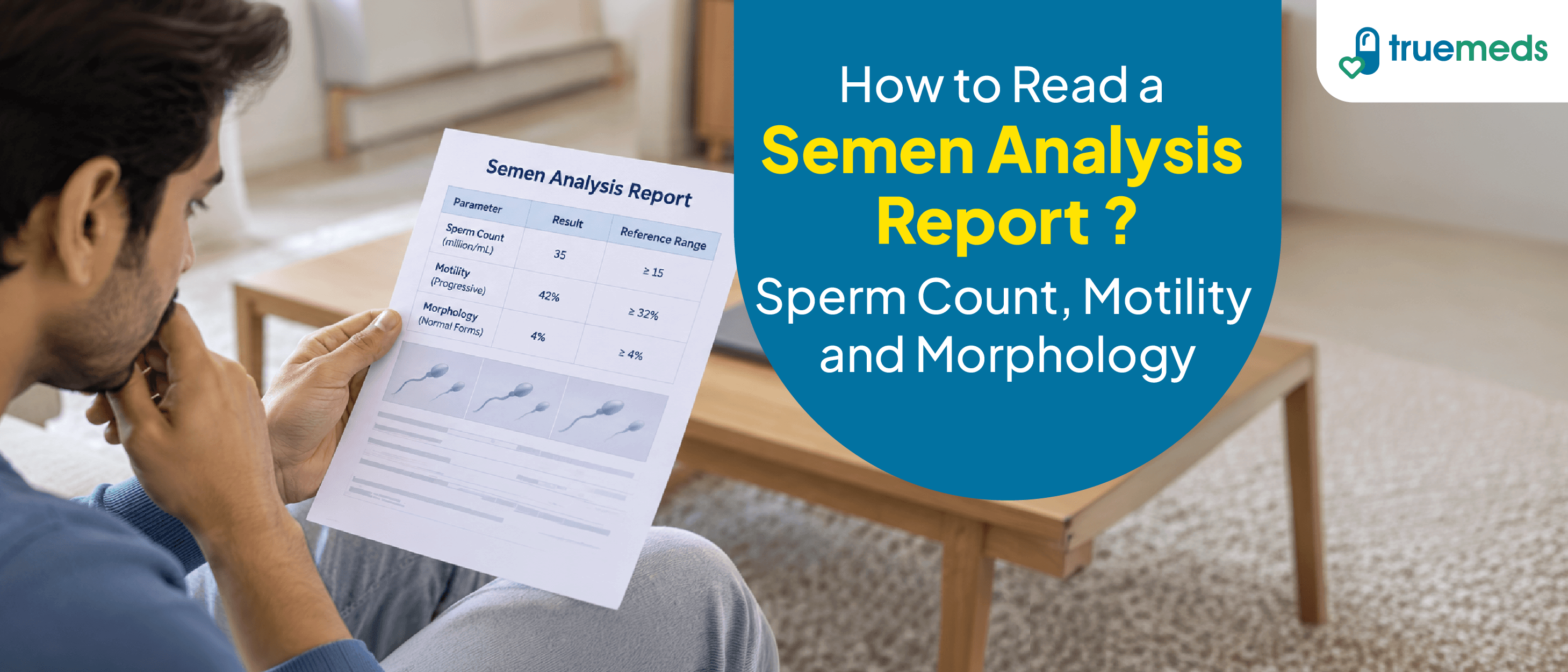
According to WHO 2021 criteria, normal semen profiles include[3]:
- Sperm concentration: 16 million/mL or higher
- Total sperm count: 39 million per ejaculate or higher
Values below these thresholds may indicate reduced fertility potential, though they do not automatically mean infertility. A healthcare provider should interpret your specific results.
Understanding sperm motility
Sperm motility describes how well sperm can swim, which is crucial for reaching and fertilising an egg. The WHO 2021 criteria define two key motility measurements[3]:
- Total motility: 42% or more of sperm should be moving
- Progressive motility: At least 30% of sperm should be swimming forward in a relatively straight line or large circles
Progressive motility is particularly important because sperm must travel through the female reproductive tract to reach the egg. Non-progressive motility refers to sperm that move but do not make forward progress[3].
Understanding sperm morphology
Sperm morphology assesses the shape and structure of sperm cells, including the head, midpiece, and tail. Abnormalities in any of these components may affect the sperm's ability to fertilise an egg. According to WHO 2021 standards, a morphology of 4% or more normal forms is considered within the normal range[2].
This means that even in fertile men, up to 96% of sperm may have some form of abnormality. Morphology alone does not determine fertility potential and should be interpreted alongside other parameters.
What is considered a normal range? Why the numbers have changed
WHO reference values have changed significantly across editions, reflecting evolving scientific understanding. Here is how key thresholds have shifted[4]:
Parameter | WHO 1999 | WHO 2010 | WHO 2021 |
|---|---|---|---|
Sperm concentration | ≥20 million/mL | ≥15 million/mL | ≥16 million/mL |
Total motility | ≥50% | ≥40% | ≥42% |
Normal morphology | ≥14% | ≥4% | ≥4% |
These changes reflect updates to the reference data used to establish the values. The WHO 2010 and 2021 values are based on the 5th percentile of fertile men who achieved pregnancy within 12 months.
The impact of these revisions is significant. Research found that approximately 42% of men classified as having normal semen parameters under WHO 2010 criteria were reclassified as having abnormal values when WHO 2021 criteria were applied[4]. If your report uses older reference ranges, your doctor may need to reinterpret the results.
Common terms on a semen analysis report
Semen analysis reports often contain medical terminology that may be unfamiliar. The following table explains common terms you might encounter[5]:
Term | Meaning |
|---|---|
Oligozoospermia | Low sperm count (below reference threshold) |
Asthenozoospermia | Poor sperm motility (reduced movement) |
Teratozoospermia | Abnormal sperm morphology (irregular shapes) |
Oligoasthenoteratozoospermia (OAT) | Combination of low count, poor motility, and abnormal morphology |
Azoospermia | Complete absence of sperm in the ejaculate |
Normozoospermia | All semen parameters are within normal reference ranges |
Understanding these terms can help you discuss your results more effectively with your healthcare provider.
Why one abnormal result isn't the final answer
A single abnormal semen analysis does not necessarily indicate permanent infertility. Sperm production can vary naturally due to factors such as illness, stress, heat exposure, or recent ejaculation. To ensure consistent testing conditions, the WHO recommends a 2- to 7-day abstinence period before semen collection[6].
Research demonstrates that natural pregnancy remains possible even with severely low sperm counts. Studies have shown that couples where the male partner has severe oligozoospermia (below 5 million/mL) can achieve natural pregnancy rates of approximately 30% over two years. The lowest sperm count resulting in a successful naturally conceived pregnancy was documented at just 50,000/mL[7].
Lifestyle modifications may also influence semen parameters. Evidence shows that a healthy diet, smoking cessation, moderate alcohol consumption, and regular exercise can positively impact sperm quality[8].
Because of natural variability, abnormal results are typically repeated before making diagnostic conclusions. If results remain abnormal on repeat testing, referral to a reproductive urologist may be recommended. Always discuss your results with a qualified healthcare provider.
Read about - What is a Urologist? When to See One and What They Treat?
Conclusion
Understanding your semen analysis report can help you have informed conversations with your healthcare provider. Key parameters to focus on include sperm concentration, motility, and morphology, with WHO 2021 reference values serving as current benchmarks.
Remember that reference ranges have changed over time, so check which criteria your laboratory uses. A single abnormal result does not diagnose infertility, as sperm parameters naturally fluctuate. Lifestyle factors may also influence results. Work with your doctor to interpret your specific situation and determine if repeat testing or a specialist referral is appropriate.
FAQs
Does a low sperm count always mean infertility?
No, a low sperm count reduces fertility potential but does not guarantee infertility. Natural pregnancy is possible even with counts below 5 million/mL, though the probability decreases. Many factors influence conception success beyond sperm count alone.
How long should I abstain before a semen analysis test?
The World Health Organization recommends abstaining from ejaculation for 2 to 7 days before providing a sample. This standardisation helps ensure comparable and reliable results. Your doctor may provide specific instructions based on your situation.
Can lifestyle changes actually improve semen analysis results?
Yes, evidence supports that lifestyle modifications can positively impact sperm quality. A healthy diet, smoking cessation, moderate alcohol consumption, and regular exercise have all been linked to improved fertility outcomes.
Why did my results come back different on a repeat test?
Sperm production naturally fluctuates due to factors like illness, stress, heat exposure, and time since last ejaculation. This variability is normal and is precisely why repeat testing is often recommended before drawing conclusions.
What's the difference between total motility and progressive motility?
Total motility measures all moving sperm, regardless of direction. Progressive motility specifically measures sperm swimming forward effectively. Progressive motility is more clinically relevant because sperm must travel forward to reach and fertilise an egg.
Does an abnormal semen analysis always mean I need to see a specialist?
Not necessarily after one test. If results are abnormal, the test is typically repeated. If abnormalities persist on repeat testing, referral to a reproductive urologist may be recommended for further evaluation and diagnosis.
Medical Disclaimer
This article is for informational purposes only and does not constitute medical advice. The information provided should not be used for diagnosing or treating health conditions. Always consult a qualified healthcare provider for diagnosis, treatment, and personalised medical advice. Do not disregard professional medical advice or delay seeking it because of information found in this article. If you have a medical emergency, contact your doctor or emergency services immediately.
References
World Health Organization. (2021). WHO laboratory manual for the examination and processing of human semen (6th ed.). https://www.who.int/publications/i/item/9789240030787
Fertility and Sterility. (2021). The sixth edition of the WHO Laboratory Manual for the Examination and Processing of Human Semen: ensuring quality and standardization. Fertility and Sterility. https://www.sciencedirect.com/science/article/pii/S0015028221022986
Journal of Men’s Health. (2024). The impact of the new 2021 reference limits of the World Health Organization criteria for semen analyses. Journal of Men’s
Health. https://oss.jomh.org/files/article/20240628-297/pdf/JOMH2024020401.pdf
Andrology. (2022). The impact of different WHO reference criteria for semen analysis in clinical practice: Who will benefit from the new 2021 thresholds for normal semen parameters?. PMC. https://pmc.ncbi.nlm.nih.gov/articles/PMC9541878/