
Black spots on the tongue, while often harmless, can be alarming when first noticed. These spots are relatively common and can arise from various causes, ranging from benign (not harmful or severe) conditions like black hairy tongue to more serious underlying health issues[1].
Understanding the causes of black spots on the tongue and when to seek medical attention is essential for maintaining oral health and overall well-being. While many cases resolve without intervention, recognising when professional help is necessary can help address potential health concerns early on.
What Does a Black Spot on the Tongue Mean?
A black spot on the tongue typically arises from changes in pigmentation, trapped debris, or minor injuries. In most cases, these spots are harmless and involve discolouration and elongation of the filiform papillae, which are small taste bud structures on the tongue's surface[1]. However, persistent spots, particularly those accompanied by swelling, texture changes, or pain, may indicate infections, reactions to medications, or, in rare cases, oral cancer, which typically presents as persistent ulcers, irregular growths, or non-healing lesions rather than isolated small black dots[2].
Sensations like tingling or irritation often accompany temporary causes such as burns or allergic reactions. It is essential to monitor the appearance and sensation of black spots on the tongue to determine whether they are benign or require further investigation.
Professional diagnosis is essential.
Common Causes of Black Spots on the Tongue
Black spots on the tongue can stem from various factors, including benign pigmentation, lifestyle habits, and medical conditions[1]. Here are some of the most common causes:
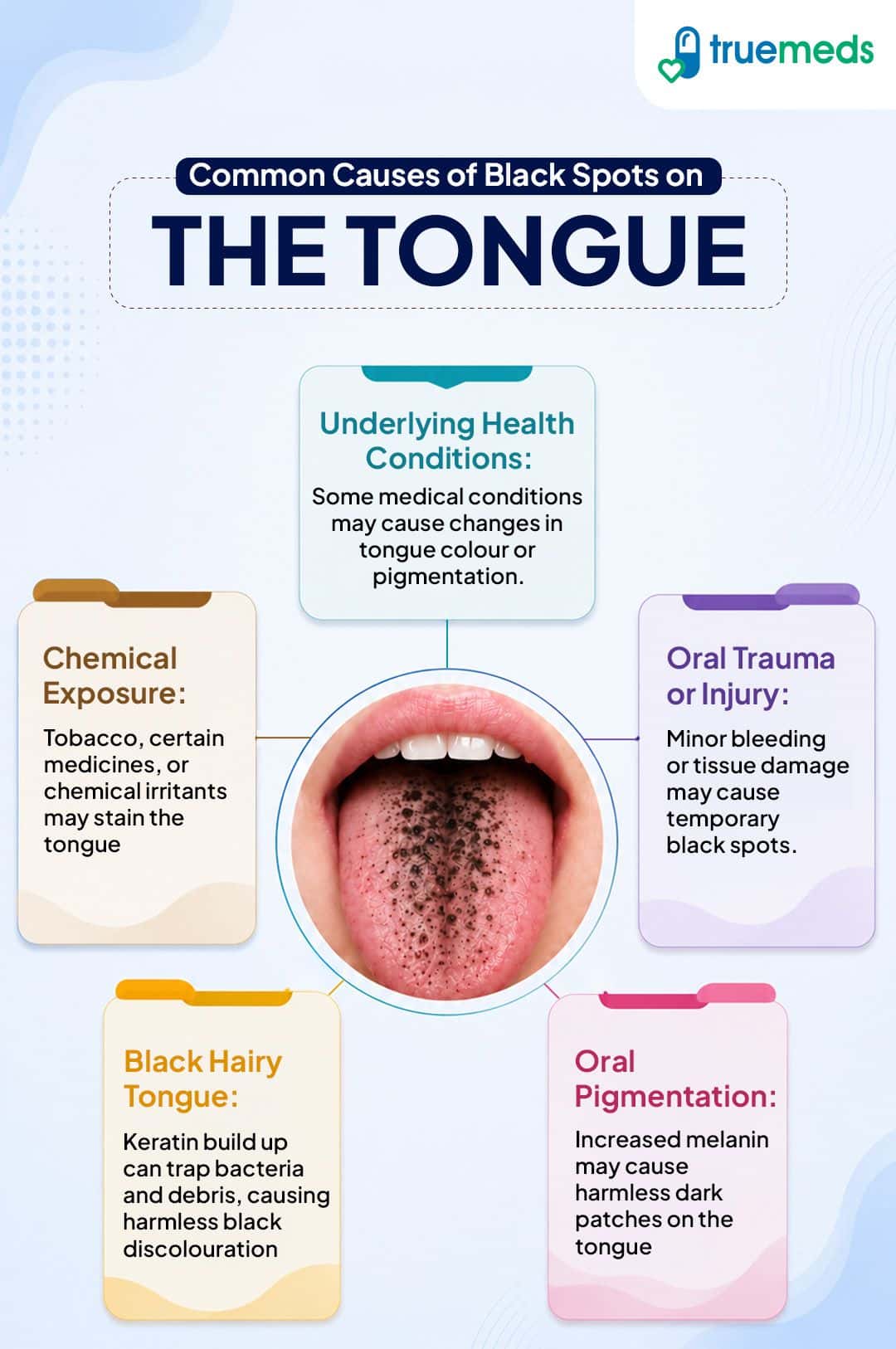
1. Black Hairy Tongue
Black hairy tongue is a condition characterised by a dark, furry appearance of the tongue due to elongated papillae on its surface. These tiny, thread-like projections can trap food particles, tobacco residue, bacteria, or other substances, leading to staining and discolouration of the tongue. While the condition may appear alarming, it is usually painless and can be resolved with proper oral hygiene practices and the avoidance of causative agents[1].
Symptoms associated with black hairy tongue may include a metallic taste in the mouth and bad breath, but the condition rarely poses serious health risks[1]. If you suspect you have black hairy tongue, improving your oral hygiene routine and consulting with your dentist can help alleviate the issue.
2. Oral Trauma or Injury
Injuries to the tongue, such as accidental bites or cuts, may result in black spots on the tongue. When the surface of the tongue is damaged, small blood vessels may rupture and form clots, which appear as dark spots as they heal. Persistent trauma can also trigger pigmentation in the affected area[3].
While most black spots on the tongue fade as the injury heals, prolonged or recurring lesions may indicate improper healing or secondary infection. In such cases, it is advisable to consult a dental professional to rule out complications.
3. Chemical Exposure
Exposure to chemicals like bismuth subsalicylate, commonly found in antacids, can cause black spots on the tongue. Bismuth reacts with sulphur compounds in saliva, forming dark deposits on the tongue's papillae. This harmless discolouration typically resolves after discontinuing the medication[4].
Other substances, such as tobacco or certain mouthwashes, may also contribute to black spots on the tongue[2]. However, if the black patches on the tongue persist and are unrelated to recent chemical use, it is essential to consult a doctor to exclude underlying conditions like fungal infections or oral cancer.
This is not medical advice. Seek professional guidance.
4. Oral Pigmentation
Benign oral pigmentation, such as pigmented fungiform papillae (a rare benign condition), can cause dark spots on the tongue without any underlying disease. These black spots occur when melanin accumulates in the tongue's papillae. Unlike concerning lesions, benign spots are uniform, non-painful, and stable over time[5].
However, if you notice sudden or irregular pigmentation, especially with changes in texture, it is crucial to seek medical evaluation to differentiate it from other serious conditions like oral melanoma (cancer in the mucosal tissues of the mouth). Regular dental check-ups can help monitor harmless pigmentation and ensure early detection of any abnormalities.
5. Underlying Health Conditions
While most black spots on the tongue are harmless, they can sometimes indicate underlying health conditions[3]. Addison's disease, which affects the adrenal glands, can cause diffuse mucosal pigmentation, not isolated, tiny black spots on the tongue. Peutz-Jeghers syndrome, a rare genetic disorder, can also present as dark spots due to pigmented polyps in the mouth.
Though uncommon, these conditions are important to recognise, especially if other symptoms like fatigue or digestive issues are present.
Consult your doctor if you have concerning symptoms.
Black Spot vs Black Hairy Tongue vs Something Serious: How to Tell
Risk Factors
Several factors can increase the likelihood of developing black spots on the tongue, including:
- Poor oral hygiene leading to bacterial or fungal buildup
- Tobacco use, including smoking and chewing tobacco
- Reactions to certain medications, such as antibiotics or antivirals[3]
- Excessive alcohol or tea/coffee consumption
- Trauma or irritation from dental appliances or sharp teeth
- Underlying medical conditions like Addison's disease or Peutz-Jeghers syndrome
By being aware of these risk factors, you can take steps to minimise your chances of developing black spots on your tongue and maintain better overall oral health.
Prevention Tips
Preventing the occurrence of black spots on the tongue involves a combination of good oral hygiene practices and lifestyle choices:
- Brush your teeth and tongue twice daily to maintain oral hygiene
- Use an antibacterial mouthwash to reduce bacterial buildup
- Avoid tobacco products, including smoking and chewing tobacco
- Limit alcohol and caffeine intake to prevent tongue discolouration
- Visit your dentist regularly for check-ups and cleanings
- Eat a balanced diet rich in vitamins, especially B12 and iron
- Replace worn or damaged dental appliances to avoid tongue irritation
- Monitor any changes in tongue appearance and consult a doctor if needed
By incorporating these prevention tips into your daily routine, you can help keep your tongue healthy and minimise the chances of developing black spots or other concerning oral health issues.
When to Seek Medical Attention?
Black spots on the tongue are usually harmless, but certain symptoms may indicate a more serious underlying issue[2]. It's important to monitor any changes and seek medical attention when necessary to ensure proper diagnosis and treatment.
Seek medical attention if you notice:
- A black spot or other mouth lesion that lasts more than two weeks.
- A sore, ulcer or patch in the mouth that has not healed within three weeks.
- A red patch, white patch, or mixed red-and-white patch that does not rub off.
- A lump, thickening or lasting swelling on the tongue, inside the cheek, or on the floor of the mouth.
- Rapid changes in the size, shape or colour of a black spot.
- Persistent pain, numbness, bleeding or swelling of the tongue or mouth.
- Difficulty eating, speaking, swallowing or opening the mouth with no obvious dental cause.
- A loose tooth with no clear dental reason.
- Lasting changes in your voice or speech.
- Any of the above, especially if you smoke, chew tobacco, use paan, gutka or khaini, or drink alcohol regularly, as these habits increase the risk of oral cancer.
If you have a history of conditions like Addison's disease or Peutz-Jeghers syndrome, early evaluation is especially important.
Conclusion
Black spots on the tongue are usually harmless and often result from poor oral hygiene, medication side effects, or minor tongue injuries. While generally benign, persistent discolouration or additional symptoms may signal a more serious issue. Practising good oral hygiene, avoiding tobacco, and noting any tongue changes are important for prevention. If black spots last more than two weeks or interfere with eating or speaking, consult a doctor.
Regular dental visits and early intervention are crucial, especially in rare cases like oral cancer. Staying aware of the causes of black spots on the tongue and being proactive helps ensure any oral health concerns are addressed promptly and effectively.
FAQs
Are black spots on the tongue always a sign of a serious condition?
Black spots on the tongue are not always a sign of a serious condition. In many cases, they are harmless and may be caused by minor injury, poor oral hygiene, or conditions like black hairy tongue. Only in rare situations do they point to an underlying medical issue. If the spots persist, change in appearance, or are accompanied by pain or other symptoms, a medical or dental check-up is advisable.
Can black spots on the tongue be prevented?
Yes, black spots on the tongue can often be prevented through good oral hygiene, avoiding tobacco, and staying hydrated to reduce dead cell buildup.
How long do black spots on the tongue typically last?
Most black spots on the tongue resolve within days to weeks with improved hygiene or by removing triggers like tobacco. Persistent spots lasting over two weeks need evaluation.
Can black spots on the tongue be treated at home?
Yes, mild cases of black spots on the tongue often improve with regular brushing, tongue scraping, staying hydrated, and avoiding irritants like alcohol or tobacco.
When should I consult a doctor about black spots on my tongue?
Consult a doctor if you notice black patches on your tongue that persist beyond two weeks, bleed, cause pain or swallowing issues, or appear with white or grey lesions.
Medical Disclaimer
This article is for informational purposes only and does not constitute medical advice. The information provided should not be used for diagnosing or treating health conditions. Always consult a qualified healthcare provider for diagnosis, treatment, and personalised medical advice. Do not disregard professional medical advice or delay seeking it because of information found in this article. If you have a medical emergency, contact your doctor or emergency services immediately.
References
National Center for Biotechnology Information. (2014, August 8). Black hairy tongue. PMC. https://www.ncbi.nlm.nih.gov/pmc/articles/PMC4138463/
Schlager, E., St Claire, C., Ashack, K., & Khachemoune, A. (2017). Black Hairy Tongue: Predisposing Factors, Diagnosis, and Treatment. American journal of clinical dermatology, 18(4), 563–569. https://doi.org/10.1007/s40257-017-0268-y
Sreeja, C., Ramakrishnan, K., Vijayalakshmi, D., Devi, M., Aesha, I., & Vijayabanu, B. (2015). Oral pigmentation: A review. Journal of pharmacy & bioallied sciences, 7(Suppl 2), S403–S408. https://doi.org/10.4103/0975-7406.163471
Cohen P. R. (2009). Black tongue secondary to bismuth subsalicylate: case report and review of exogenous causes of macular lingual pigmentation. Journal of drugs in dermatology : JDD, 8(12), 1132–1135. https://pubmed.ncbi.nlm.nih.gov/20027942/