
Key Takeaways
- Vitamin D deficiency is very common in India despite the sunshine. The main causes are spending the day indoors, limited skin exposure to sunlight, pollution, skin pigmentation, low dietary intake and some medicines and health conditions.
- Most people with low vitamin D have no symptoms. Tiredness, hair loss and low mood have many other causes.
- Routine testing is not needed for everyone. A doctor may test if you have symptoms or risk factors suggesting deficiency, such as bone pain, muscle weakness, fractures, a health condition that affects absorption, or use of certain medicines that affect vitamin D levels.
- Sun, food and supplements all contribute. Diet alone may not provide enough vitamin D, and sunlight exposure varies with factors such as season, location, air pollution, skin pigmentation and clothing.
- Do not take high-dose supplements without advice. Repeated high doses can raise blood calcium and harm the kidneys. The usual upper limit is 4,000 IU a day for adults, unless a doctor prescribes more.
- Infants, pregnant women and older adults may have different vitamin D requirements and should follow age- and situation-specific medical advice.
Vitamin D deficiency has emerged as a major public health challenge in India, affecting nearly half the population despite the country’s tropical climate and year-round sunshine. Recent studies, including a comprehensive report by ICRIER-ANVKA (2025), reveal that about one in five Indians suffers from severe vitamin D deficiency, with children, pregnant women, and older adults being the most vulnerable groups.[1]
This deficiency is not only linked to skeletal disorders like rickets and osteomalacia (softening of the bones), but some studies have shown a potential correlation between vitamin D deficiency and cardiovascular diseases, type 2 diabetes, autoimmune diseases and certain cancers.[2]
The rising prevalence underscores the urgent need for awareness, routine screening, and targeted interventions to combat this growing health crisis.
Common Causes of Vitamin D Deficiency in India
Vitamin D deficiency in India is caused by a combination of lifestyle, environmental, dietary, and medical factors. Although India receives abundant sunshine throughout the year, many people do not get enough ultraviolet B (UVB) exposure or dietary vitamin D to maintain healthy levels. The following are some of the most common causes of vitamin D deficiency in India.
1. Spending Less Time Outdoors and Indoor Work
Many people spend most of their day indoors due to work, school, household responsibilities, online education and recreational screen time. As a result, they have limited exposure to direct sunlight, which is essential for vitamin D production in the skin. Children and adults living in urban areas may be particularly affected by reduced outdoor activity. Even when sitting near windows or travelling in vehicles, glass blocks most UVB rays required for vitamin D synthesis, making prolonged indoor living a contributing factor to vitamin D deficiency despite living in a sunny country.
2. Air Pollution Reducing UVB Exposure
Air pollution is another major factor contributing to vitamin D deficiency in India. High levels of airborne pollutants reduce the amount of UVB radiation reaching the Earth's surface, making it harder for the skin to produce vitamin D. The problem is especially significant in heavily polluted cities and may become worse during winter and the monsoon when sunlight exposure is already reduced[4].
3. Skin Pigmentation and Vitamin D Production
Melanin, the natural pigment that gives skin its colour, acts as a natural sunscreen by reducing UVB penetration into the skin. Since most Indians have medium to dark skin tones, they generally require longer periods of sun exposure to produce the same amount of vitamin D as people with lighter skin. This natural biological factor contributes to the high prevalence of deficiency across the country[3].
4. Dietary Patterns Low in Vitamin D
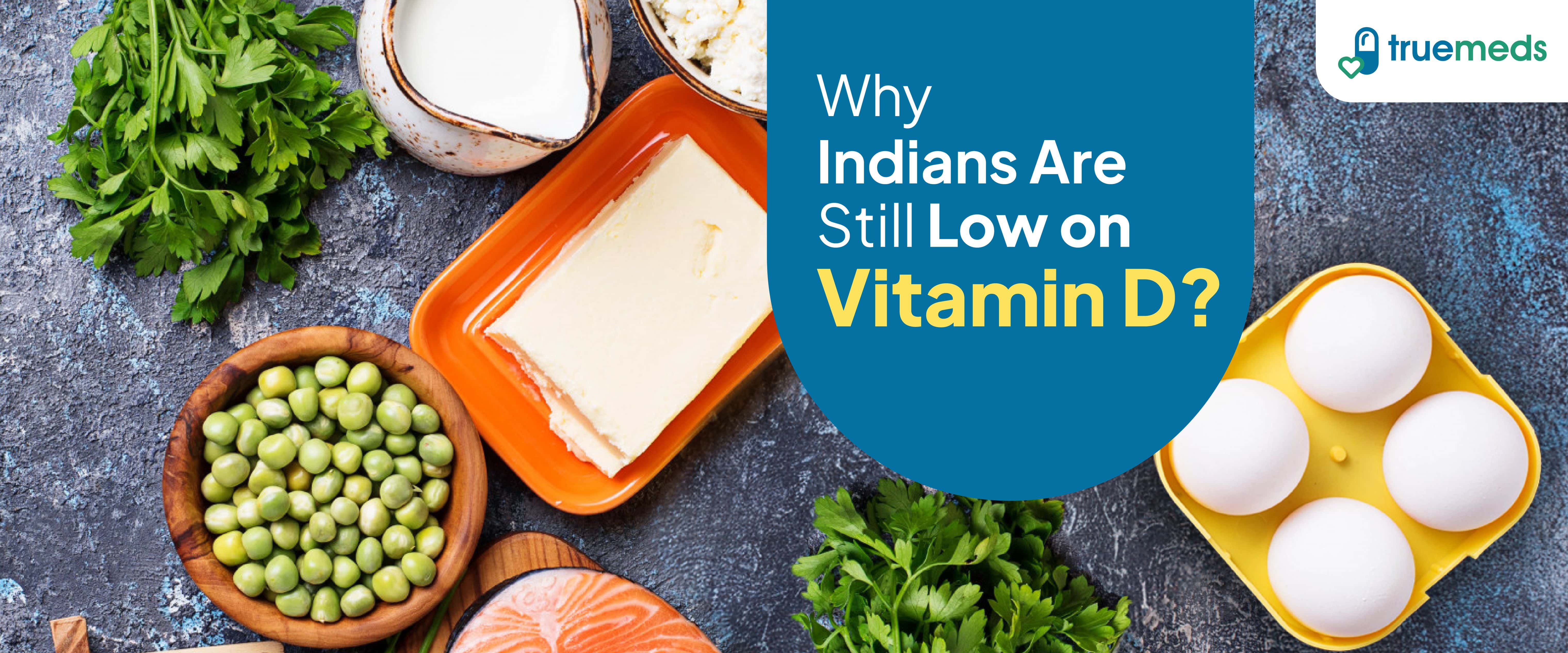
Very few foods naturally contain vitamin D, making it difficult to meet daily requirements through diet alone. Indian diets are often low in vitamin D-rich foods such as fatty fish, egg yolks, and liver. In addition, vitamin D-fortified foods are not yet widely consumed, increasing the risk of inadequate intake.
5. Rising Rates of Obesity
Obesity is associated with lower circulating vitamin D levels. Vitamin D is a fat-soluble vitamin and may become stored in body fat, reducing the amount available for use by the body. As obesity becomes increasingly common in India, it is also contributing to the growing burden of vitamin D deficiency [5].
6. Vegetarian and Vegan Diet Patterns
Many Indians follow vegetarian diets for cultural, religious, or personal reasons. While these diets offer many health benefits, they naturally contain fewer dietary sources of vitamin D because foods such as fatty fish and egg yolks are excluded or consumed less frequently. Unless fortified foods or supplements are included, maintaining adequate vitamin D intake may be difficult.
7. Ageing Population
The skin gradually becomes less efficient at producing vitamin D as people age. Older adults may also spend less time outdoors due to reduced mobility or chronic illnesses, further limiting sun exposure. Together, these factors make vitamin D deficiency more common among the elderly population.
8. Chronic Health Conditions Affecting Absorption
Certain medical conditions can reduce the body's ability to absorb or utilise vitamin D effectively. Disorders such as coeliac disease, inflammatory bowel disease, chronic liver disease, and some kidney disorders may interfere with vitamin D metabolism or absorption, increasing the likelihood of deficiency.
9. Medicines That Can Lower Vitamin D Levels
Some medicines can interfere with vitamin D absorption or metabolism, leading to lower vitamin D levels over time. Examples include certain anticonvulsants, glucocorticoids, antifungal medicines, and medicines used to treat tuberculosis or HIV. People taking these medicines for long periods should consult their doctor about monitoring their vitamin D status if clinically indicated.
Who Is Most at Risk of Vitamin D Deficiency?
- Older adults
- Pregnant and breastfeeding women
- Infants
- Office workers
- People with obesity
- People with gastrointestinal disorders
- People with darker skin tones
- People taking certain long-term medicines (e.g., anticonvulsants, glucocorticoids)
Signs of Vitamin D Deficiency and Who Should Be Tested
Most people with low vitamin D have no symptoms. When symptoms do occur, they can affect the bones and muscles:
- Bone pain or tenderness, especially in the hips, back, ribs or legs
- Muscle weakness or aching, or difficulty climbing stairs or getting up from a chair
- Fractures after minor trauma, which may indicate weakened bones
- In children: bowed legs, delayed walking, swollen wrists or ankles, delayed teething and soft skull bones (rickets)
Tiredness, hair loss and low mood are non-specific symptoms and can have many other causes, including anaemia, thyroid problems, low vitamin B12 or poor sleep. Frequent infections alone are not a reliable sign of vitamin D deficiency. Do not assume these symptoms are due to vitamin D.
Who should be tested? A blood test (serum 25-hydroxyvitamin D) is used to assess vitamin D status when testing is clinically indicated, but most healthy people do not need routine testing. A doctor may advise it if you have suspected bone disease, relevant symptoms or risk factors, such as a condition that affects absorption, certain kidney or liver disorders, or use of medicines that interfere with vitamin D metabolism.
What do the numbers mean? Different bodies use different cut-offs. There is no universally accepted blood level that defines vitamin D sufficiency for every health outcome. The US National Institutes of Health notes that levels below 12 ng/mL (30 nmol/L) are associated with deficiency, while levels of 20 ng/mL (50 nmol/L) or above are considered adequate for bone and overall health in most people. Some Indian labs print “optimal” ranges of 30–100 ng/mL, but a level below 30 ng/mL does not automatically mean that every person has a deficiency requiring treatment. Do not start treatment based on a lab’s range alone, and discuss your result with your doctor.
When to See a Doctor
Seek emergency care (112 or 108) if:
- A baby or child has seizures, twitching or muscle spasms
- You have tingling around the mouth or in the hands, cramps or muscle spasms, particularly if these occur with confusion or seizures
- You develop severe vomiting, marked weakness or confusion after taking high-dose vitamin D
See a doctor if you have:
- Bone pain, muscle weakness or fractures
- A child with bowed legs, delayed walking or swollen wrists
- Medicines or health conditions that may affect vitamin D levels
- Plans to take high-dose vitamin D
Ask your paediatrician about whether your baby needs vitamin D supplementation, and your obstetrician about vitamin D requirements during pregnancy.
FAQs
What causes vitamin D deficiency in India despite year-round sunshine?
Despite abundant sunshine, indoor lifestyles, air pollution, skin pigmentation, and cultural norms limit adequate sun exposure, reducing the body's ability to make vitamin D.
Which groups in India are most at risk of low vitamin D levels?
Children, adolescents, pregnant and breastfeeding women, older adults, and urban residents are most at risk due to limited sun exposure and dietary gaps.
How long should you be in the sun to avoid deficiency?
This depends on skin tone, location (where you are), season, pollution and time of the day.
Can diet alone fix vitamin D deficiency?
Diet alone is usually insufficient, especially in vegetarian populations. Supplementation and fortified foods are often necessary to correct a deficiency.
Does air pollution affect vitamin D synthesis?
Yes, air pollution blocks UVB rays, reducing the skin’s ability to make vitamin D and increasing the risk of deficiency.
What are the visible signs of vitamin D deficiency to look out for?
Common signs include persistent fatigue, bone pain, muscle aches and weakness, hair loss, frequent infections and mood changes.
How much sunlight is needed to maintain healthy vitamin D levels?
The amount of sunlight needed varies depending on factors such as skin tone, age, location, season, and time of day. People with darker skin generally require longer sun exposure than those with lighter skin to produce adequate vitamin D.
Can a vegetarian diet increase the risk of vitamin D deficiency?
Yes, a vegetarian diet may increase the risk of vitamin D deficiency because it excludes or limits foods naturally rich in vitamin D, such as fatty fish. Choosing fortified foods or supplements may help meet vitamin D requirements when needed.
What is a normal vitamin D level?
Vitamin D levels are measured using a blood test for 25-hydroxyvitamin D. According to commonly used guidelines, levels of 20 ng/mL or above are adequate for most people, although individual requirements may vary.
How much vitamin D do I need daily?
Daily vitamin D requirements depend on age and life stage. For most adults aged 19–70 years, the recommended intake is 600 IU (15 micrograms) daily. Older adults may require 800 IU (20 micrograms).
Does sunscreen block vitamin D?
Sunscreen reduces the skin’s exposure to ultraviolet B (UVB) radiation, which helps produce vitamin D. However, typical sunscreen use does not necessarily cause vitamin D deficiency. Avoiding sun protection can increase the risk of skin damage.
Do I need a vitamin D test?
Not everyone needs routine vitamin D testing. A doctor may recommend a blood test if you have symptoms, conditions affecting absorption, osteoporosis or other risk factors. Consult a healthcare professional to determine whether testing is appropriate for you.
References
ICRIER. (2025, October 1). Rising vitamin D deficiency: Action points for the Department of Health and Family Welfare, Government of NCT of Delhi - ICRIER. https://icrier.org/publications/rising-vitamin-d-deficiency-action-points-for-the-department-of-health-and-family-welfare-government-of-nct-of-delhi/
Kaur, J., Khare, S., Sizar, O., & Givler, A. (2025b, February 15). Vitamin D deficiency. StatPearls - NCBI Bookshelf. https://www.ncbi.nlm.nih.gov/books/NBK532266/
Nagaria, T. D., Shinde, R. K., Shukla, S., Acharya, S., Acharya, N., & Jogdand, S. D. (2023). The Sunlight-Vitamin D Connection: Implications for patient outcomes in the Surgical Intensive Care Unit. Cureus, 15(10), e46819. https://doi.org/10.7759/cureus.46819
Goel, S. (2020). Vitamin D status in Indian subjects: a retrospective analysis. International Journal of Research in Orthopaedics, 6(3), 603. https://doi.org/10.18203/issn.2455-4510.intjresorthop20201735