

- Medicines
- Personal Care
- Skin Cream
- Sunscreen
- Face Wash
- Skin and Body Soap
- Acne Care
- Body Lotions
- Moisturising Lotion
- Moisturising Cream
- Mosquito Repellent
- Moisturising Gel
- Body Wash
- Hair Oils
- Hair Shampoo
- Hair Conditioners
- Hair Supplements
- Hair Colour
- Hair Serum
- Hair Mask
- Hair Solutions
- Baby Diapers and Wipes
- Baby Lotion and Moisturising Cream
- Baby Bath Essentials
- Baby Skin Care
- Baby and Infant Food
- Baby Healthcare
- Women Multivitamins
- Ovulation Test Kit and Women Intimate Care
- Sanitary Pads
- Nutritional Drinks
- Condoms
- Lubricants
- Massage Gels
- Personal Body Massagers
- Men Performance Booster
- Sexual Health Supplements
- Massage Oils
- Ayurveda
- Tooth Paste
- Mouth Ulcer Gel
- Mouthwash
- Toothache and Gum Pain
- Tooth Brush
- Gargle Solution
- Orthopaedic Supports
- Adult Diapers
- Footwear
- Mobility and Support Accessories
- Urinary Support and Care
- Health Conditions
- Bone and Joint Care
- Digestive Care
- Eye Care
- Pain Relief
- Smoking Cessation
- Liver Care
- Stomach Care
- Cold and Cough
- Heart Care
- Kidney Care
- Piles, Fissures & Fistula
- Respiratory Care
- Mental Wellness
- Derma Care
- Pre and Probiotics
- Acidity
- Gas
- Constipation
- Loose Motion/Diarrhoea
- Digestive Fibres
- Digestive Enzymes
- Eye Lubricant Drops
- Lens Solution
- Safety Eye Wear
- Eye Cream
- Eye Vitamins and Supplements
- Eye Drops
- Eye Ointment and Gel
- Nicotine Patch
- Nicotine Gum
- Nicotine Lozenges
- Cough Syrups
- Chest Rubs and Balms
- Nasal Spray
- Lozenges
- Inhalant Capsules
- Cold and Cough Tablets
- Vitamins & Supplements
- Diabetes Care
- Healthcare Devices
- Homeopathic Medicine
- Health Guide
Small Cell Lung Cancer
Small cell lung cancer (SCLC) is an aggressive type of lung cancer that originates in the tissues of the lung and is characterised by the rapid and uncontrolled growth of certain cells forming tumours. SCLC, also known as small cell carcinoma or oat cell cancer, can quickly spread to other parts of the body. Symptoms may include persistent cough, difficulty breathing, chest pain, and weight loss.
 50
50Last updated on : 30 Apr, 2026
Read time : 15 mins
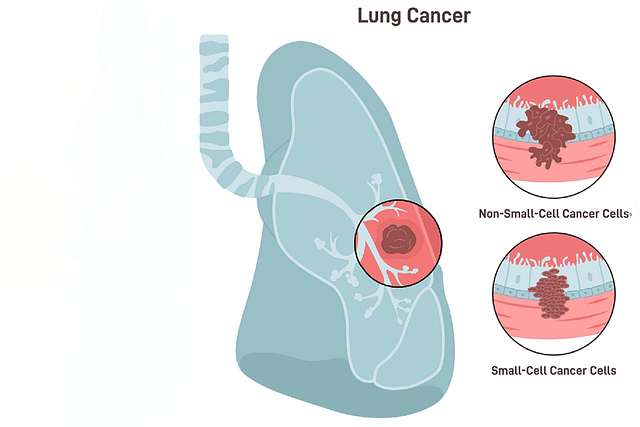
Overview of Disease
Small cell lung cancer (SCLC) is a serious and aggressive form of lung cancer that affects thousands of people worldwide. This type of cancer is known for its rapid growth and spread, making early detection and treatment crucial for improving patient outcomes. In this article, we will delve into the details of small-cell lung cancer, including its types, causes, symptoms, diagnosis, prognosis, and treatment options.
What is Small Cell Lung Cancer?
Small cell lung cancer (SCLC) is an aggressive type of lung cancer that primarily affects current or former long-term smokers (Basumallik et al.2023). It grows quickly and often spreads to other parts of the body. If detected at a very early stage, healthcare providers may be able to cure the disease, but for advanced cases, treatment can help manage symptoms and extend life. Quitting smoking is the most effective way to reduce the risk of developing small-cell lung cancer.
Key Factors about Small Cell Lung Cancer
| Category | Details |
| Also Referred to as | Oat cell cancer, Small cell carcinoma |
| Commonly Occurs In | People with a long history of smoking tobacco are slightly more common in men |
| Affected Organ | Lungs can spread to the lymph nodes, liver, bones, adrenal glands, and brain |
| Type | Small cell carcinoma, Combined small cell carcinoma |
| Common Signs | Coughing, shortness of breath, fluid around the lungs, pleural effusion |
| Consulting Specialist | Medical oncologist, Radiation oncologist |
| Treatment Procedures | Chemotherapy, Radiation therapy, and Immunotherapy |
| Managed By | Chemotherapy agents (e.g., cisplatin, etoposide), radiation therapy, and surgery (such as lobectomy or pneumonectomy) |
| Mimicking Condition | Other respiratory conditions, such as chronic obstructive pulmonary disease (COPD), pneumonia |
Types of Small Cell Lung Cancer
Small-cell lung cancer can be categorised into two main subtypes based on the characteristics of the affected cells:
- Small cell carcinoma: This is the most common form of small cell lung cancer, accounting for the majority of cases. Also known as oat cell cancer due to the appearance of the cancer cells under a microscope, small cell carcinoma is characterised by the rapid growth and spread of cancer cells. This subtype is highly aggressive and often leads to early metastasis to other parts of the body, such as the lymph nodes, liver, bones, adrenal glands, and brain.
- Combined small cell carcinoma: This is a rare subtype of lung cancer that exhibits characteristics of both small cell lung cancer and non-small cell lung cancer within the same tumour. Combined small cell carcinoma is less common than pure small cell carcinoma and may require a different approach to treatment depending on the specific features of the tumour.
Symptoms of Small Cell Lung Cancer
The symptoms of small-cell lung cancer can vary from person to person, and some individuals may not experience any symptoms in the early stages. However, as the disease progresses, the following symptoms may become apparent:
- Persistent cough: A chronic cough that does not go away or worsens over time. This cough may be accompanied by phlegm or blood.
- Shortness of breath: Difficulty breathing or a feeling of breathlessness, especially during physical activity. This can be caused by the tumour blocking the airways.
- Chest pain: Discomfort or pain in the chest that may be sharp or dull. This pain can worsen with deep breaths, coughing, or laughing.
- Fatigue: An overall feeling of exhaustion or weakness that does not improve with rest. This can be related to the body’s response to cancer.
- Weight loss: Unexplained weight loss without changes in diet or exercise, which can indicate the body is under stress from the disease.
- Hoarseness: Changes in voice, such as hoarseness, may occur due to pressure from the tumour on the vocal cords or surrounding structures.
- Frequent respiratory infections: Recurrent pneumonia or bronchitis, as the cancer can compromise lung function and immune response.
- Swelling of the face or neck: This can occur due to the tumour pressing on blood vessels, leading to a condition known as superior vena cava syndrome.
As the cancer spreads, additional symptoms may develop, such as bone pain, headaches, seizures, or confusion if the cancer metastasises to the brain or other organs.
How Small Cell Lung Cancer Affects Your Body?
Small-cell lung cancer is a fast-growing type of cancer that forms in the tissues of the lung. It can spread quickly to other parts of the body, often before symptoms appear. The cancer can cause various symptoms, including coughing, shortness of breath, chest pain, and fatigue.
As the cancer spreads, it can affect other organs and systems in the body, leading to a range of health issues. For example, if the cancer spreads to the brain, it can cause headaches, seizures, and neurological problems. If it spreads to the liver, it can cause abdominal pain and jaundice. The rapid growth and spread of small-cell lung cancer make early detection and treatment crucial for improving patient outcomes.
Stages of Small Cell Lung Cancer
Small cell lung cancer is generally classified into two stages based on the extent of the disease, including:
- Limited stage: In the limited stage, the cancer is confined to one side of the chest, which may include the lung and regional lymph nodes on the same side, and it can be encompassed within a tolerable radiation field.
- Extensive stage: Extensive-stage disease includes any cancer that cannot be encompassed within a tolerable radiation field, such as spread to the other lung, malignant pleural or pericardial effusion, or distant metastases to organs like the liver, bone, or brain (Basumallik et al., 2023).
Causes of Small Cell Lung Cancer
Small cell lung cancer is primarily linked to specific risk factors, with the following being the most significant:
- Smoking: Cigarette smoking is the leading cause of small-cell lung cancer. The risk increases with the number of cigarettes smoked and the duration of smoking.
- Secondhand smoke: Exposure to secondhand smoke from smokers can also increase the risk of developing small-cell lung cancer, even in non-smokers.
- Environmental pollutants: Exposure to certain environmental toxins, such as asbestos, radon, and industrial chemicals (like arsenic and diesel exhaust), can contribute to the development of lung cancer.
- Genetic factors: A family history of lung cancer may increase an individual’s risk. Certain genetic mutations may predispose individuals to develop small-cell lung cancer.
- Previous lung conditions: Individuals with a history of chronic obstructive pulmonary disease (COPD) or lung infections may have a higher risk of developing lung cancer, including small-cell lung cancer.
- Age and gender: Small cell lung cancer is more commonly diagnosed in older adults, typically those over 60, and it tends to affect more men than women.
- Weakened immune system: A compromised immune system, due to conditions such as HIV/AIDS or certain medications, may increase susceptibility to lung cancer.
Risk Factors
Several factors can increase the risk of developing small-cell lung cancer, including:
- Tobacco smoking
- Exposure to secondhand smoke
- Exposure to radon (radioactive gas)
- Exposure to certain chemicals (such as arsenic, chromium, and nickel)
- Previous radiation therapy (especially to the chest area)
- Family history
Prevention of Small Cell Lung Cancer
While not all cases of small cell lung cancer can be prevented, several strategies can significantly reduce the risk:
- Quit smoking: The most effective way to prevent small-cell lung cancer is to avoid tobacco in all forms. Quitting smoking greatly reduces the risk of lung cancer and improves overall health.
- Avoid secondhand smoke: Staying away from environments where smoking occurs can help protect non-smokers from exposure to harmful toxins found in cigarette smoke.
- Limit exposure to environmental toxins: Reduce exposure to known carcinogens such as asbestos, radon, and certain chemicals in industrial settings. Regular testing for radon in homes can help identify potential risks.
- Maintain a healthy lifestyle: Eating a balanced diet rich in fruits, vegetables, and whole grains can support overall health. Regular physical activity can also strengthen the immune system and reduce cancer risk.
- Regular health screenings: For individuals at higher risk, such as long-term smokers or those with a family history of lung cancer, regular screenings like low-dose CT scans can help detect lung cancer early.
- Strengthen the immune system: Maintaining a healthy immune system through proper nutrition, exercise, and adequate sleep can help the body fight off diseases, including cancer.
Diagnosis & Tests
Diagnosing small-cell lung cancer involves several steps and tests to confirm the presence of cancer and assess its stage. The following are commonly used diagnostic methods:
- Medical history and physical examination: The doctor will review the patient’s medical history, risk factors, and symptoms. A physical examination may help identify any signs of cancer.
- Chest X-ray: A preliminary test that can reveal abnormal masses or nodules in the lungs.
- Computed tomography (CT) scan: Provides detailed cross-sectional images of the chest and can help identify tumours, lymph node involvement, and metastasis.
- Positron emission tomography (PET) scan: A PET scan may be used to detect cancerous cells in the body and assess whether the cancer has spread to other areas.
- Sputum cytology: Examining mucus (sputum) coughed up from the lungs under a microscope can sometimes reveal cancer cells, particularly in cases of lung cancer.
- Bronchoscopy: A bronchoscope is a thin, flexible tube inserted through the nose or mouth into the lungs. This allows the doctor to visualise the airways and take biopsy samples from suspicious areas.
- Biopsy: A biopsy involves taking a small sample of lung tissue to be examined for cancer cells. This can be done through bronchoscopy, CT-guided needle biopsy, or thoracotomy (Basumallik et al., 2023).
- Mediastinoscopy: This surgical procedure involves examining the mediastinum (the area between the lungs) to check for enlarged lymph nodes and obtain tissue samples if necessary.
- Bone scan and other tests: If there’s a concern that cancer has spread, additional tests like a bone scan, liver function tests, or brain imaging may be performed.
Treatment & Management
The treatment and management of small cell lung cancer (SCLC) depend on the cancer's stage (limited-stage or extensive-stage), overall health status, and patient preferences. Due to the aggressive and fast-spreading nature of SCLC, treatment is typically urgent and multidisciplinary.
1. Chemotherapy (First-Line Treatment)
Chemotherapy remains the cornerstone of SCLC treatment, particularly effective in both limited-stage and extensive-stage disease. It is often used in combination with radiation or immunotherapy (Zhou et al., 2020).
Common chemotherapy regimens include:
- Cisplatin + Etoposide: This combination works by damaging DNA and inhibiting cell division, effectively killing rapidly growing small cell lung cancer (SCLC) cells, especially in limited-stage disease.
- Carboplatin + Etoposide: A commonly used alternative to cisplatin-based regimens, this combination disrupts DNA replication and promotes cancer cell death, suitable for patients with extensive-stage SCLC.
- Carboplatin or Cisplatin + Irinotecan: This combination interferes with DNA function and topoisomerase I activity, helping shrink tumours and improve survival in extensive-stage SCLC.
- Topotecan: A topoisomerase I inhibitor that slows or stops cancer cell replication, often used as a second-line treatment in relapsed SCLC.
- Lurbinectedin: Inhibits transcription and promotes apoptosis in cancer cells, offering a treatment option for patients with recurrent or progressive SCLC after initial chemotherapy (Zhou et al., 2020).
2. Radiation Therapy
Radiation therapy is frequently used alongside chemotherapy in limited-stage disease and for symptom control in extensive-stage disease.
- External Beam Radiation Therapy (EBRT): Targets primary tumours or metastatic lesions (e.g., bone or brain).
- Prophylactic Cranial Irradiation (PCI): Recommended for patients who respond to initial treatment to reduce the risk of brain metastases, which are common in SCLC.
3. Immunotherapy
Immunotherapy has significantly improved outcomes in extensive-stage SCLC and is now part of the standard first-line treatment.
Approved immune checkpoint inhibitors:
- Atezolizumab: A PD‑L1 inhibitor that boosts the immune system’s ability to recognise and attack cancer cells; approved in combination with platinum–etoposide chemotherapy as first-line treatment for extensive-stage small cell lung cancer.
- Durvalumab: A PD‑L1 inhibitor used in combination with platinum–etoposide chemotherapy as a first-line option for extensive-stage small cell lung cancer (Ortega-Franco et al., 2021).
- Nivolumab: A PD‑1 inhibitor that enhances T‑cell activity against cancer cells; it has been studied in relapsed small-cell lung cancer but is not part of the current standard first-line therapy.
- Ipilimumab: A CTLA‑4 inhibitor that has been evaluated in combination with platinum–etoposide and PD‑1/PD‑L1 inhibitors in small cell lung cancer, but it is not routinely used as standard therapy (Ortega-Franco et al., 2021).
4. Targeted Therapy
Unlike non-small cell lung cancer, small cell lung cancer currently has few established actionable mutations in routine practice, so targeted therapies are not standard and remain largely investigational. However, ongoing research continues to identify molecular subtypes for targeted treatment.
5. Surgery
Surgery is rarely used in SCLC due to its rapid progression and early metastasis. However, in highly selected patients with:
- Stage I disease
- No lymph node involvement
- Surgery may be performed (lobectomy), followed by adjuvant chemotherapy ± radiation.
6. Supportive & Palliative Care
Supportive therapies are essential to manage complications and side effects:
- Pain relief: Opioids or NSAIDs: To moderate pain and inflammation management in patients with small-cell lung cancer.
- Ondansetron: A serotonin receptor antagonist that helps prevent or reduce nausea and vomiting caused by chemotherapy.
- Dexamethasone: A corticosteroid that reduces inflammation and enhances the antiemetic effect of other medications during chemotherapy.
- Filgrastim: A granulocyte colony-stimulating factor (G-CSF) that promotes white blood cell production to reduce the risk of neutropenia from chemotherapy.
- Pegfilgrastim: A long-acting G-CSF that helps maintain white blood cell counts and prevent infections following chemotherapy.
- Bisphosphonates (e.g., zoledronic acid) for bone metastases
- Corticosteroids (e.g., dexamethasone) for symptom relief in patients with symptomatic brain metastases, such as edema-related headache or neurologic deficits.
- Nutritional support, pulmonary rehabilitation, psychosocial counselling, and hospice care when appropriate
Living with Disease
For patients diagnosed with small-cell lung cancer, making lifestyle adjustments and seeking support is crucial. Here are some key points to keep in mind:
- Smoking cessation is vital to prevent further lung damage and reduce the risk of additional cancers developing.
- Symptom management, potentially involving palliative care and supportive therapies, can help improve quality of life by addressing issues like cough, chest pain, breathlessness, and weight loss.
- Regular follow-up appointments with doctors are essential to monitor disease progression, manage treatment side effects, and adjust the care plan as needed.
- Psychological support and counselling can benefit both patients and their families in coping with the challenges of a small-cell lung cancer diagnosis and its treatment.
- Maintaining proper nutrition is critical, especially given the high metabolic demands of cancer and the therapies used against it. Nutritional counselling can provide helpful guidance.
When to See a Doctor?
Some key signs that warrant a doctor's visit include a persistent or worsening cough, especially if accompanied by blood or rust-colored sputum, chest pain that worsens with deep breathing or coughing, shortness of breath, unexplained weight loss, and other symptoms such as fatigue, hoarseness, or bone pain. Early detection and diagnosis of small cell lung cancer can significantly improve treatment outcomes and prognosis, so it's essential not to ignore these warning signs.
Key Takeaways
- Small-cell lung cancer is a serious and aggressive form of lung cancer that primarily affects current or former smokers.
- The primary risk factor for developing this disease is smoking, although exposure to radon gas, asbestos, and environmental tobacco smoke can also increase the risk.
- Diagnosis of small cell lung cancer typically involves imaging tests such as chest X-rays and CT scans, as well as biopsies to obtain tissue samples for histological examination.
- Treatment for small-cell lung cancer depends on the stage of the disease. For limited-stage disease, concurrent chemotherapy and radiation therapy are often the standard approach, with surgery being an option for very early-stage cases.
- In extensive-stage disease, chemotherapy combined with immunotherapy is the primary treatment, with palliative radiation therapy used to alleviate symptoms and improve quality of life.
FAQs
What is the survival rate of small cell lung cancer?
Note: Recent data show markedly different survival by stage; giving a single 5–10% “overall” figure is oversimplified and low for limited-stage patients.
Can small cell lung cancer be cured?
How fast does small cell lung cancer spread?
Has anyone beat small cell lung cancer?
What are the main causes of small cell lung cancer?
How quickly does small cell lung cancer progress?
Can you live 10 years with small cell lung cancer?
How to detect small cell lung cancer?
How can you prevent lung cancer?
Can non-smokers get small cell lung cancer?
References
- Basumallik, N., Agarwal, M., & Koirala, A. (2023). Small cell lung cancer. In StatPearls. StatPearls Publishing. https://www.ncbi.nlm.nih.gov/books/NBK482458/
- Zhou, T., Zhang, Z., Luo, F., Zhao, Y., Hou, X., Liu, T., & Zhang, L. (2020). First-line treatments for patients with extensive-stage small-cell lung cancer: A systematic review and network meta-analysis. JAMA Network Open, 3(9), e2017952. https://jamanetwork.com/journals/jamanetworkopen/fullarticle/2771854
- Ortega-Franco, A., Salvador-Coloma, C., Calvo, E., & Provencio, M. (2021). First-line immune checkpoint inhibitors for extensive-stage small-cell lung cancer. Clinical Lung Cancer, 22(6), e933–e944. https://www.sciencedirect.com/science/article/pii/S2059702920328623
- European Organisation for Research and Treatment of Cancer (EORTC). (2020, September 18). New data gives hope to small-cell lung cancer patients. https://www.eortc.org/blog/2020/09/18/new-data-gives-hope-to-small-cell-lung-cancer-patients/
- Canadian Cancer Society. (2020, May 22). Staging small cell lung cancer. https://cancer.ca/en/cancer-information/cancer-types/lung/staging/staging-small-cell-lung-cancer
Check Related Salts
Latest health articles

Top Health Essentials






























Disclaimer
Top-Selling Medicines:
...View more
Top-OTC medicines:
...View more
Company
About UsHealth ArticleHealth StoriesHealth LibraryDiseases & Health ConditionsAyurvedaUnderstanding Generic MedicinesAll MedicinesAll BrandsNeed HelpFAQSecuritySavings CalculatorAdvertise with UsSubscribe
Registered Office Address
Grievance Officer
Download Truemeds


Contact Us
Our customer representative team is available 7 days a week from 9 am - 9 pm.
v4.28.15

2026 - Truemeds | All rights reserved. Our content is for informational purposes only. See additional information.

Our Payment Partners




