

- Medicines
- Personal Care
- Skin Cream
- Sunscreen
- Face Wash
- Skin and Body Soap
- Acne Care
- Body Lotions
- Moisturising Lotion
- Moisturising Cream
- Mosquito Repellent
- Moisturising Gel
- Body Wash
- Hair Oils
- Hair Shampoo
- Hair Conditioners
- Hair Supplements
- Hair Colour
- Hair Serum
- Hair Mask
- Hair Solutions
- Baby Diapers and Wipes
- Baby Lotion and Moisturising Cream
- Baby Bath Essentials
- Baby Skin Care
- Baby and Infant Food
- Baby Healthcare
- Women Multivitamins
- Ovulation Test Kit and Women Intimate Care
- Sanitary Pads
- Nutritional Drinks
- Condoms
- Lubricants
- Massage Gels
- Personal Body Massagers
- Men Performance Booster
- Sexual Health Supplements
- Massage Oils
- Ayurveda
- Tooth Paste
- Mouth Ulcer Gel
- Mouthwash
- Toothache and Gum Pain
- Tooth Brush
- Gargle Solution
- Orthopaedic Supports
- Adult Diapers
- Footwear
- Mobility and Support Accessories
- Urinary Support and Care
- Health Conditions
- Bone and Joint Care
- Digestive Care
- Eye Care
- Pain Relief
- Smoking Cessation
- Liver Care
- Stomach Care
- Cold and Cough
- Heart Care
- Kidney Care
- Piles, Fissures & Fistula
- Respiratory Care
- Mental Wellness
- Derma Care
- Pre and Probiotics
- Acidity
- Gas
- Constipation
- Loose Motion/Diarrhoea
- Digestive Fibres
- Digestive Enzymes
- Eye Lubricant Drops
- Lens Solution
- Safety Eye Wear
- Eye Cream
- Eye Vitamins and Supplements
- Eye Drops
- Eye Ointment and Gel
- Nicotine Patch
- Nicotine Gum
- Nicotine Lozenges
- Cough Syrups
- Chest Rubs and Balms
- Nasal Spray
- Lozenges
- Inhalant Capsules
- Cold and Cough Tablets
- Vitamins & Supplements
- Diabetes Care
- Healthcare Devices
- Homeopathic Medicine
- Health Guide
Prostate Cancer
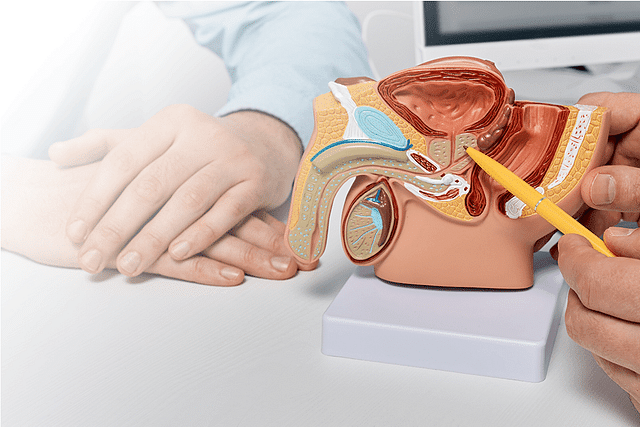
Prostate cancer is a common type of cancer that develops in the prostate gland, a small walnut-sized gland in males located below the bladder. It is characterised by the uncontrolled growth of cells in the prostate and often begins without symptoms. The TNM staging system is used to classify prostate cancer into different stages based on the extent of the tumour, involvement of lymph nodes, and presence of metastases. Screening decisions (e.g., PSA testing) should be individualised after discussion of risks and benefits, as routine screening remains controversial.
 50
50Last updated on : 06 May, 2026
Read time : 14 mins
Overview of Disease
Prostate cancer is a significant health concern for men worldwide. It develops in the prostate gland, which is located just below the bladder and surrounds the urethra. The prostate gland plays a crucial role in the male reproductive system by producing and storing fluid that helps make semen. Understanding the causes, symptoms, and available treatment options for prostate cancer is essential for early detection and effective management of the disease.
What is Prostate Cancer?
Prostate cancer occurs when the cells within the prostate gland begin to grow uncontrollably, forming a malignant tumour. These abnormal cells can eventually spread (metastasise) to other parts of the body, such as the bones and lymph nodes, if left untreated.
While the exact causes of prostate cancer are not fully understood, several risk factors have been identified, including advanced age, family history, and race (K. L. Ng, 2021). The severity and progression of prostate cancer are determined by the stage of the disease, which is assessed using the TNM staging system.
Key Factors about Prostate Cancer
| Category | Details |
| Also Referred as | Prostate Carcinoma |
| Commonly Occurs In | Men, Transgender Women, Non-Binary People Assigned Male at Birth |
| Affected Organ | Prostate Gland |
| Type | Urothelial Carcinoma, Sarcoma, Small Cell Carcinoma, Carcinoid Tumours, Squamous Cell Carcinoma |
| Common Signs | Trouble Urinating, Decreased Force in Urine Stream, Blood in Urine or Semen, Bone Pain, Losing Weight, Erectile Dysfunction |
| Consulting Specialist | Urologist, Oncologist |
| Treatement Procedures | Active Surveillance, Radiation Therapy, Prostatectomy, Hormone Therapy, Chemotherapy |
| Managed By | LHRH antagonists (degarelix), Anti-androgens (bicalutamide and enzalutamide) and Chemotherapy medicines (docetaxel and cabazitaxel) |
| Mimiciking Condition | Benign Prostatic Hyperplasia |
Types of Prostate Cancer
There are several types of prostate cancer, which include: (Cancer Research UK)
- Adenocarcinomas: Adenocarcinomas are the most common type of prostate cancer, accounting for more than 95% of all cases. They develop from the gland cells of the prostate that produce prostate fluid. There are two main subtypes of adenocarcinoma:
- Acinar adenocarcinoma: The most common subtype, accounting for virtually all prostatic adenocarcinomas. It originates in the gland cells lining the prostate gland.
- Ductal adenocarcinoma: This is a rarer but more aggressive subtype that develops in the cells lining the ducts and tubes of the prostate gland.
- Small cell carcinomas: These are rare, accounting for about 1% of prostate cancers. They develop in small, round cells in the prostate and can spread very quickly.
- Transitional cell carcinomas: Also known as urothelial carcinomas, these start in the cells lining the urethra. They are rare and often begin in the bladder before spreading to the prostate.
- Neuroendocrine tumours: These are rare tumours that develop in the neuroendocrine cells of the prostate, which produce hormones that help the organ function. They can be aggressive and are often diagnosed at an advanced stage.
- Sarcomas: Sarcomas are extremely rare. They originate in supportive tissues such as muscle, nerves, fat, or blood vessels within the prostate.
Early Signs of Prostate Cancer
Prostate cancer often develops silently, without causing noticeable symptoms in its early stages. Many men do not experience any signs or symptoms until the cancer has advanced. However, some possible early signs of prostate cancer include:
- Difficulty urinating, such as trouble starting or stopping the flow of urine
- Blood in the urine or semen
- Frequent urination, especially at night
- Painful ejaculation
- Weak or interrupted urine flow
It is important to note that these symptoms can also be caused by non-cancerous conditions, such as benign prostatic hyperplasia (BPH) or prostatitis.
Symptoms of Prostate Cancer
As prostate cancer progresses, it may cause various symptoms that can affect urinary function, sexual function, and overall well-being. Some common symptoms of prostate cancer include:
- Urinary issues: Frequent urination, particularly at night, and difficulty starting or stopping urination can be early signs. You might experience a weak or interrupted urine flow or a burning sensation while urinating.
- Blood in urine or semen: The presence of blood in urine or semen can be concerning. This may indicate irritation or more serious underlying issues.
- Painful ejaculation: Experiencing pain during ejaculation can be a symptom that may also be accompanied by discomfort in the pelvic area.
- Persistent pain: Ongoing pain in the lower back, hips, or pelvis can be indicative of prostate cancer, especially if it's not related to a specific injury or condition.
- General fatigue: Unexplained fatigue or weakness, without a clear cause, might be a sign of cancer spreading or affecting overall health.
- Unexplained weight loss: Significant and unexplained weight loss can sometimes occur with advanced cancer, reflecting a change in metabolism or the body's response to the disease.
Stages of Prostate Cancer
The staging of prostate cancer is based on the TNM system, which assesses the extent and spread of the cancer. The TNM system takes into account the size and location of the primary tumour (T), the involvement of nearby lymph nodes (N), and the presence of distant metastases (M).
The T (tumour) stage contains the following: (Cancer Research UK)
- T1: T1 prostate cancer is the earliest stage, where the tumour is too small to be felt during a digital rectal exam (DRE) or seen by imaging tests.
- T1a: Cancer is found incidentally in less than 5% of the prostate tissue removed during surgery for other reasons, such as a transurethral resection of the prostate (TURP) for benign prostatic hyperplasia (BPH).
- T1b: Cancer is found incidentally in 5% or more of the prostate tissue removed during surgery for other reasons, such as a TURP for BPH.
- T1c: Cancer is detected through a needle biopsy performed due to an elevated prostate-specific antigen (PSA) level, but the tumour is not palpable during a DRE or visible on imaging tests.
- T2: T2 prostate cancer is confined to the prostate gland but is large enough to be felt during a DRE.
- T2a: Cancer involves half of one lobe (section) of the prostate or less.
- T2b: Cancer involves more than half of one lobe but not both lobes.
- T2c: Cancer involves both lobes of the prostate.
- T3: T3 prostate cancer has grown through the capsule (covering) of the prostate gland.
- T3a: Cancer extends through the prostate capsule on one or both sides but has not spread to the seminal vesicles.
- T3b: Cancer has spread to the seminal vesicles.
- T4: T4 prostate cancer has invaded nearby structures, such as the bladder, rectum, or pelvic wall.
The N category in prostate cancer staging refers to the involvement of regional lymph nodes.
- N0: There is no cancer found in the regional lymph nodes.
- N1: Cancer is found in the regional lymph nodes.
The M category in prostate cancer staging indicates the presence or absence of distant metastases.
- M0: There is no evidence of distant metastasis.
- M1: There is evidence of distant metastasis.
- M1a: Cancer has spread to non-regional lymph nodes.
- M1b: Cancer has spread to the bones.
- M1c: Cancer has spread to other organs, with or without bone involvement.
Causes of Prostate Cancer
Prostate cancer develops due to a combination of factors that influence cell growth in the prostate gland. These factors include:
- Genetic factors: Family history of prostate cancer increases the risk, suggesting that genetic predisposition plays a significant role.
- Age: The risk of prostate cancer increases with age. It is rare in men under 50, but the likelihood rises significantly after age 65.
- Hormonal factors: Higher levels of testosterone and other androgens can contribute to the development and growth of prostate cancer cells.
- Diet and lifestyle: Dietary factors, such as high intake of red meat and dairy products, might influence risk. Obesity and lack of physical activity are also associated with an increased likelihood of developing prostate cancer.
- Environmental factors: Exposure to certain chemicals or pollutants may increase risk. Occupational exposure to substances like cadmium has been suggested as a possible contributing factor.
Risk Factors
Several factors can increase a man's risk of developing prostate cancer, including:
- Age (over 50 years)
- Family history
- Obesity
- A diet high in calcium
Who is at High Risk?
Certain groups of men are considered to be at a higher risk for developing prostate cancer, such as:
- Men over the age of 50
- Men with a family history of prostate cancer
- Obese men
- Men who consume a diet high in calcium
Recognising these risk factors can help men take proactive steps to monitor their prostate health and catch any potential issues early on.
Complications
If left untreated or if the cancer is aggressive, prostate cancer can lead to various complications, such as:
- Cancer spreading (metastasising) to nearby organs or distant parts of the body, such as the bones or lymph nodes
- Bone pain and fractures due to cancer spreading to the bones
- Urinary incontinence, which can develop following certain treatments, such as surgery or radiation therapy
- Unintended weight loss, which may be a sign of advanced prostate cancer
Prevention of Prostate Cancer
While there is no guaranteed way to prevent prostate cancer, adopting a healthy lifestyle may help reduce the risk of developing the disease. Some steps that men can take to promote prostate health include:
- Eating a balanced diet: Consume a variety of fruits, vegetables, whole grains, and lean proteins.
- Maintaining a healthy weight: Being overweight or obese can increase the risk of developing prostate cancer. Engage in regular physical activity and maintain a balanced diet to help control weight.
- Exercising regularly: Engaging in moderate-to-vigorous physical activity for at least 30 minutes a day, most days of the week, may help reduce the risk of prostate cancer.
- Discussing screening options with your doctor: It is essential to share your individual risk factors and concerns with your doctor. They can help you make an informed decision about whether and when to undergo screening tests, such as the prostate-specific antigen (PSA) test or digital rectal exam (DRE).
By making healthy lifestyle choices and staying informed about prostate cancer risk factors and screening options, men can take an active role in promoting their overall health and well-being.
Diagnosis & Tests
The diagnosis of prostate cancer typically involves several key steps to confirm the presence of the disease and assess its extent. These steps include:
- Digital rectal exam (DRE): A doctor performs a DRE to feel the prostate gland for abnormalities. During this exam, the doctor inserts a gloved, lubricated finger into the rectum to check for any lumps or irregularities.
- Prostate-specific antigen (PSA) test: This blood test measures PSA, a protein produced by the prostate. Elevated PSA levels can indicate the presence of prostate cancer, although high levels can also be due to other conditions.
- Biopsy: If initial tests suggest cancer, a biopsy is conducted to obtain a sample of prostate tissue. This sample is examined under a microscope to confirm the presence of cancer cells and determine the cancer's grade and stage.
- Imaging tests: Imaging tests such as transrectal ultrasound, magnetic resonance imaging (MRI), computed tomography (CT), and positron emission tomography (PET) scans are used to determine if the cancer has spread beyond the prostate.
- Genomic testing: In some cases, genomic tests analyse DNA from cancer cells. This can provide information on the aggressiveness of the cancer and help guide treatment decisions.
These diagnostic steps help determine the presence, stage, and characteristics of prostate cancer, guiding appropriate treatment options.
Treatment & Management
The treatment of prostate cancer is individualised based on the tumour stage, grade, the patient’s age, overall health, and treatment goals, such as preserving urinary or sexual function. A multidisciplinary approach is often adopted, involving hormone therapy, chemotherapy, radiotherapy, immunotherapy, and surgical interventions to manage symptoms, slow disease progression, and improve survival outcomes.
1. Antiandrogen Medication
Antiandrogens block the effect of male hormones that drive cancer growth and are often used alongside hormone-lowering treatments.
- Bicalutamide: It blocks androgen receptors, slowing cancer cell growth.
- Darolutamide: It inhibits androgen activity with fewer central nervous system side effects.
- Enzalutamide: It disrupts androgen signalling pathways and is effective in resistant prostate cancer.
- Flutamide: It competes with testosterone at receptor sites, reducing cancer stimulation.
- Erleada (Apalutamide): It targets androgen receptors in non-metastatic castration-resistant prostate cancer.
- Nilandron (Nilutamide): It is used post-surgery to prevent cancer cell growth driven by androgens.
2. Microtubule Inhibitors
Microtubule inhibitors interfere with cancer cell division and are primarily used in advanced or resistant cases.
Example:
- Cabazitaxel: It is used after failure of prior hormone and chemotherapy, halting cancer progression by disrupting cell division.
3. Gonadotropin-Releasing Hormone (GnRH) Agonists and Antagonists
These therapies reduce testosterone production, helping shrink or slow prostate cancer growth.
Examples include:
- Leuprolide mesylate: It reduces testosterone by desensitising pituitary hormone signals.
- Goserelin acetate: It suppresses testicular hormone production to reduce tumour size.
- Relugolix: It is an oral antagonist that rapidly lowers testosterone levels.
- Degarelix: It is a fast-acting GnRH blocker used in advanced or high-risk prostate cancer.
4. Taxanes
Taxane-based chemotherapy is used when the disease has progressed despite hormonal therapy.
Example:
- Docetaxel: It inhibits microtubule breakdown, improving survival in advanced stages.
5. Radiotherapy
Targeted radiotherapy is essential for local control and metastatic bone pain relief.
Examples include:
- Lutetium Lu 177: It delivers targeted radiation to PSMA-expressing prostate cancer cells.
- Radium 223: It mimics calcium and targets bone metastases, reducing pain and complications.
6. PARP Inhibitors (Poly (ADP-Ribose) Polymerase)
These medicines are used in men with specific genetic mutations; they impair cancer cell DNA repair.
Examples include:
- Olaparib: It blocks DNA repair enzymes in BRCA-mutated cancer cells.
- Rucaparib: It interferes with cancer cell repair, slowing progression in genetically predisposed patients.
- Talazoparib tosylate: It enhances DNA damage, especially effective in certain genetic subtypes.
- Talzenna: It is another PARP inhibitor approved for targeted prostate cancer therapy.
7. Anthracenediones
These are used for palliative purposes in late-stage prostate cancer.
- Mitoxantrone: It is used when hormonal options fail, helping control symptoms and improve quality of life.
8. Autologous Cellular Immunotherapy
This therapy boosts the immune system’s ability to fight prostate cancer.
Example:
- Sipuleucel-T: It trains the immune system to identify and attack prostate cancer cells, used in metastatic, hormone-refractory cases.
9. Surgery
Surgery is often performed for localised disease to eliminate cancer and reduce recurrence.
Options include:
- Radical prostatectomy: It involves the removal of the prostate gland and surrounding tissue.
- Laparoscopic/Robotic-assisted prostatectomy: Minimally invasive techniques to enhance precision and recovery.
When to See a Doctor?
If you experience difficulty urinating, blood in the urine, or pain in the pelvic area, you should consult a doctor. These symptoms may indicate prostate cancer or other urological conditions that require further evaluation.
Additionally, if you have a family history of prostate cancer, particularly in a first-degree relative (father or brother), you should discuss this with your doctor. Regular check-ups and prostate cancer screenings, such as PSA tests and DREs, are recommended for men over the age of 50 or those with a higher risk of developing prostate cancer.
Early detection and intervention can significantly improve treatment outcomes and quality of life.
Key Takeaways
- Prostate cancer is a common type of cancer that affects the prostate gland in men.
- Risk factors for prostate cancer include age, family history, and race.
- Early signs of prostate cancer may include urinary symptoms, pain, and sexual dysfunction.
- Diagnosis involves PSA tests, digital rectal exams, biopsies, and imaging tests.
- Treatment options include active surveillance, surgery, radiation therapy, and medication.
- Hormone therapy and other medications can be used to treat advanced prostate cancer.
- Consult a doctor if you experience symptoms such as difficulty urinating, blood in the urine, or pain in the lower back.
- Prevention strategies include maintaining a healthy diet, exercising regularly, and undergoing regular screenings.
FAQs
Can prostate cancer be 100% cured ?
Can prostate cancer serious issues?
Can you live 20 years after prostate removal?
How can I stop prostate problems?
How is prostate cancer typically diagnosed?
What are the 5 warning signs of an enlarged prostate?
How do prostate problems start?
Is early stage prostate cancer curable?
What are the lifestyle choices for prostate cancer?
References
- American Cancer Society. (2021). What is prostate cancer? https://www.cancer.org/cancer/prostate-cancer/about/what-is-prostate-cancer.html
- Centers for Disease Control and Prevention. (2022, January 19). Prostate cancer. https://www.cdc.gov/cancer/prostate/
- Cancer Research UK. (n.d.). Stages, types and grades of prostate cancer. https://www.cancerresearchuk.org/about-cancer/prostate-cancer/stages
- National Cancer Institute. (2020, October 8). Prostate cancer treatment (PDQ®)–patient version. https://www.cancer.gov/types/prostate/patient/prostate-treatment-pdq
- Ng, K. L. (2021). The etiology of prostate Cancer. In Prostate Cancer (pp. 17–28). https://doi.org/10.36255/exonpublications.prostatecancer.etiology.2021
- Cancer Research UK. (n.d.-b). Types of prostate cancer. https://www.cancerresearchuk.org/about-cancer/prostate-cancer/stages/types
- Prostate Cancer stages | Staging of prostate cancer. (n.d.). American Cancer Society. https://www.cancer.org/cancer/types/prostate-cancer/detection-diagnosis-staging/staging.html
Check Related Salts
Latest health articles

Top Health Essentials




























Disclaimer
Top-Selling Medicines:
...View more
Top-OTC medicines:
...View more
Company
About UsHealth ArticleHealth StoriesHealth LibraryDiseases & Health ConditionsAyurvedaUnderstanding Generic MedicinesAll MedicinesAll BrandsNeed HelpFAQSecuritySavings CalculatorAdvertise with UsSubscribe
Registered Office Address
Grievance Officer
Download Truemeds


Contact Us
Our customer representative team is available 7 days a week from 9 am - 9 pm.
v4.28.13

2026 - Truemeds | All rights reserved. Our content is for informational purposes only. See additional information.

Our Payment Partners