

- Medicines
- Personal Care
- Skin Cream
- Sunscreen
- Face Wash
- Skin and Body Soap
- Acne Care
- Body Lotions
- Moisturising Lotion
- Moisturising Cream
- Mosquito Repellent
- Moisturising Gel
- Body Wash
- Hair Oils
- Hair Shampoo
- Hair Conditioners
- Hair Supplements
- Hair Colour
- Hair Serum
- Hair Mask
- Hair Solutions
- Baby Diapers and Wipes
- Baby Lotion and Moisturising Cream
- Baby Bath Essentials
- Baby Skin Care
- Baby and Infant Food
- Baby Healthcare
- Women Multivitamins
- Ovulation Test Kit and Women Intimate Care
- Sanitary Pads
- Nutritional Drinks
- Condoms
- Lubricants
- Massage Gels
- Personal Body Massagers
- Men Performance Booster
- Sexual Health Supplements
- Massage Oils
- Ayurveda
- Tooth Paste
- Mouth Ulcer Gel
- Mouthwash
- Toothache and Gum Pain
- Tooth Brush
- Gargle Solution
- Orthopaedic Supports
- Adult Diapers
- Footwear
- Mobility and Support Accessories
- Urinary Support and Care
- Health Conditions
- Bone and Joint Care
- Digestive Care
- Eye Care
- Pain Relief
- Smoking Cessation
- Liver Care
- Stomach Care
- Cold and Cough
- Heart Care
- Kidney Care
- Piles, Fissures & Fistula
- Respiratory Care
- Mental Wellness
- Derma Care
- Pre and Probiotics
- Acidity
- Gas
- Constipation
- Loose Motion/Diarrhoea
- Digestive Fibres
- Digestive Enzymes
- Eye Lubricant Drops
- Lens Solution
- Safety Eye Wear
- Eye Cream
- Eye Vitamins and Supplements
- Eye Drops
- Eye Ointment and Gel
- Nicotine Patch
- Nicotine Gum
- Nicotine Lozenges
- Cough Syrups
- Chest Rubs and Balms
- Nasal Spray
- Lozenges
- Inhalant Capsules
- Cold and Cough Tablets
- Vitamins & Supplements
- Diabetes Care
- Healthcare Devices
- Homeopathic Medicine
- Health Guide
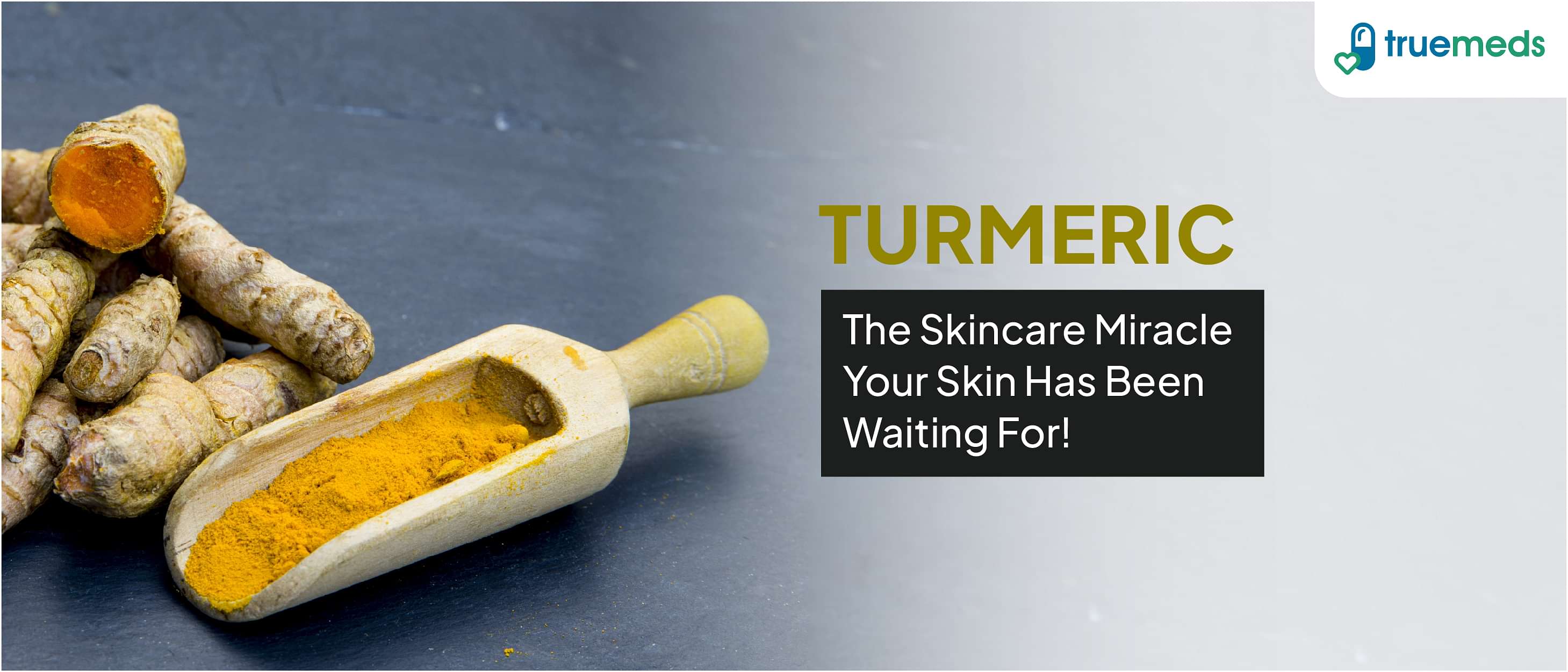
Turmeric Benefits For Skin And How To Use It
Last updated on : 30 Nov, 2025
Read time : 7 min
Turmeric powder, often revered as the golden spice, is obtained from the root of Curcuma longa, belonging to the Zingiberaceae family. Its primary active compound is curcumin, which contributes to the spice’s characteristic yellow hue and is believed to be the main source of its potential skin-enhancing effects.
Turmeric is frequently used in traditional systems for topical application. Research suggests its benefits for the skin are primarily due to its anti-inflammatory and antioxidant properties [1], [2]. These qualities may help manage common concerns such as acne, hyperpigmentation, and the appearance of early signs of aging [1].
While turmeric has been associated with therapeutic and beauty advantages for hundreds of years, modern scientific research, particularly large-scale human clinical trials, is still exploring the full range and efficacy of its topical benefits [1]. Below are some of the ways that turmeric may benefit the skin.
Turmeric Benefits for Skin
1. Management of Acne and Inflammation
Acne is a common skin condition characterized by inflammation and bacterial overgrowth. Curcumin, the active ingredient in turmeric, possesses documented antibacterial and significant anti-inflammatory qualities [1], [2]. These properties may help manage inflammatory acne by reducing the redness and swelling associated with blemishes and potentially inhibiting the proliferation of P. acnes bacteria [1].
One traditional approach for topical use suggests combining turmeric with ingredients like apple cider vinegar, which acts as a gentle astringent, for spot treatment. However, users must be cautious as high concentrations of turmeric or its application for too long can temporarily stain the skin yellow [3].
2. For Enhancing Skin Radiance and Glow
The perceived “glow” from using turmeric is likely a result of its anti-inflammatory and antioxidant effects [1]. By helping to mitigate oxidative stress and reduce subtle inflammation, turmeric may contribute to a healthier-looking complexion and a more uniform, lustrous sheen.
To safely test this benefit, a simple mask can be prepared: small amounts of Greek yogurt (lactic acid), honey (humectant), and a pinch of turmeric powder can be mixed and applied briefly to the face. Rinse thoroughly after 10-15 minutes to minimize staining.
3. Reducing Hyperpigmentation and Brightening
Turmeric is highly valued in traditional systems for its potential to target and fade hyperpigmentation (dark spots) and promote an even skin tone. Scientific studies suggest that curcumin can interfere with the process of melanogenesis (melanin production) [1]. Specifically, it has been shown to potentially inhibit tyrosinase, the enzyme responsible for melanin synthesis [1]. This mechanism of action helps to naturally reduce the appearance of dark spots, sun damage, and post-inflammatory hyperpigmentation (PIH), leading to overall skin brightening.
4. Helps Minimise the Appearance of Dark Circles
Dark circles are often caused by a combination of genetics, hyperpigmentation, thin skin allowing underlying blood vessels to show, and local inflammation/puffiness. Because turmeric is an anti-inflammatory and has potential skin-lightening effects [1], its topical application may theoretically help reduce puffiness and brighten the skin around the eyes.
However, the delicate skin around the eyes is highly sensitive. Extreme caution is advised when using homemade mixtures, especially those containing irritants like lemon juice, which can cause significant irritation or photosensitivity. A safer approach is to use commercially prepared eye creams that contain stabilized curcumin or turmeric extracts.
5. Moisturizing Support for Dry Skin
Dry skin, or xerosis, often appears pale and can be exacerbated in dry climates. While turmeric itself is not a primary moisturizing agent, when used in a mask combined with humectants (like honey or yogurt) or oils, it contributes its antioxidant benefits [1]. The ingredients it is mixed with, not the turmeric itself, are what primarily softens and moisturizes the skin and aids in the gentle mechanical removal of superficial dead skin cells.
6. Preventing Early Signs of Ageing
One of the leading causes of premature skin aging is chronic sun exposure, which generates damaging free radicals. Curcumin’s powerful antioxidant capabilities help neutralize these free radicals, which are known to degrade collagen and elastin, the proteins essential for skin structure [1], [2]. By protecting skin cells from this oxidative damage, turmeric may help slow down the visible signs of aging, such as the formation of fine lines and wrinkles [1].
7. Supporting Wound Healing
Experimental and preclinical studies on curcumin have shown that it can support the wound healing process [4]. It is believed to work by multiple mechanisms, including reducing the inflammatory phase of healing, promoting the formation of new blood vessels (angiogenesis), and encouraging tissue remodeling [4]. This suggests turmeric may help minimize the body’s overreaction to minor skin wounds and potentially accelerate recovery.
How to use turmeric for skin
1. Turmeric and Orange Juice Mask (Targeting Oily Skin)
Traditional use suggests that turmeric may help regulate sebum production. Sandalwood is often considered a natural astringent, while fruit acids in orange juice can provide mild chemical exfoliation.
Suggested Recipe (Use with caution due to potential irritation):
- Combine about a small pinch of turmeric, 3 tablespoons of orange juice, and one and a half tablespoons of sandalwood powder.
- Apply the mixture, focusing on non-sensitive areas.
- Allow for 10-15 minutes of application.
- Rinse using lukewarm water.
- Always follow up with a broad-spectrum sunscreen when using ingredients like citrus juice, which can cause photosensitivity.
2. Traditional Use (Kasturi Turmeric Paste)
In some cultural traditions, Kasturi manjal (Curcuma aromatica, an aromatic variety, not the standard cooking turmeric) is combined with binding agents like chickpea flour (besan) and milk or yogurt to create a paste. This mixture is generally applied for its fragrance and perceived skin benefits. The belief that this paste discourages the growth of fine facial hair (vellus hair) is largely anecdotal; any minor effect is likely due to the gentle mechanical friction from the chickpea flour acting as a mild exfoliant and physically pulling out very fine, superficial hair upon removal.
3. As a Gentle Facial Cleanser/Mask
This recipe serves as a gentle exfoliant and soothing mask:
- Combine equal parts chickpea (or rice) flour and turmeric powder in a mixing bowl. You can store the dry mixture in an airtight container for future use.
- To form a paste, combine one teaspoon of the dry powder with raw or soy milk (or yogurt).
- Apply evenly to the face and leave on for 10 to 15 minutes.
- Remove the applied mask with warm water and a gentle circular motion.
Conclusion
Scientific research is progressively supporting turmeric’s traditional uses, confirming its potent antioxidant, anti-inflammatory, and potential skin-brightening and healing benefits [1], [2]. Topical applications are often the most direct way to benefit from the active compound, curcumin, although the concentration, stability, and absorption of curcumin in homemade remedies can vary significantly [3].
More rigorous, large-scale clinical research is needed to establish standardized guidelines for topical turmeric use, concentrations, and long-term safety profiles [1]. Always perform a patch test on a small area of skin before applying widely to check for potential irritation or yellow staining. Individuals with underlying health conditions, sensitive skin, or those using prescription dermatological treatments should consult a healthcare provider or dermatologist before incorporating topical turmeric into their routine.
References
[1] Vaughn, A. R., Branum, A., & Sivamani, R. K. (2016). Effects of Turmeric (Curcuma longa) on Skin Health: A Systematic Review of the Clinical Evidence. Phytotherapy Research, 30(8), 1243–1264. https://doi.org/10.1002/ptr.5640
[2] Thangapazham, R. L., Sharma, A., & Maheshwari, R. K. (2007). Beneficial role of curcumin in skin diseases. In R. K. Maheshwari (Ed.), Advances in Experimental Medicine and Biology (pp. 343–357). Springer US. https://link.springer.com/chapter/10.1007/978-0-387-46401-5_15
[3] Bais, S. K., & Garad, V. R. (2024). Herbal preparation of turmeric. International Journal of Pharmacy and Herbal Technology, 2(1), 1458-1468. https://ijprdjournal.com/myapp/uploads/85-1458-1468%20vaishnavi%20garad.pdf
[4] Yen, Y., Pu, C., Liu, C., Chen, Y., Chen, Y., Liang, C., Hsieh, J., Huang, H., & Chen, Y. (2018). Curcumin accelerates cutaneous wound healing via multiple biological actions: The involvement of TNF‐α, MMP‐9, α‐SMA, and collagen. International Wound Journal, 15(4), 605–617. https://doi.org/10.1111/iwj.12904















Disclaimer
Our healthcare experts have carefully reviewed and compiled the information presented here to ensure accuracy and trustworthiness. It is important to note that this information serves as a general overview of the topic and is for informational purposes only. It is not intended to diagnose, prevent, or cure any health problem. This page does not establish a doctor-patient relationship, nor does it replace the advice or consultation of a registered medical practitioner. We recommend seeking guidance from your registered medical practitioner for any questions or concerns regarding your medical condition.
Popular Articles


Recommended Articles



Recent Articles










Company
About UsHealth ArticleHealth StoriesHealth LibraryDiseases & Health ConditionsAyurvedaUnderstanding Generic MedicinesAll MedicinesAll BrandsNeed HelpFAQSecuritySubscribe
Registered Office Address
Grievance Officer
Download Truemeds


Contact Us
Our customer representative team is available 7 days a week from 9 am - 9 pm.
v4.11.0

2026 - Truemeds | All rights reserved. Our content is for informational purposes only. See additional information.

Our Payment Partners




