

- Medicines
- Personal Care
- Skin Cream
- Sunscreen
- Face Wash
- Skin and Body Soap
- Acne Care
- Body Lotions
- Moisturising Lotion
- Moisturising Cream
- Mosquito Repellent
- Moisturising Gel
- Body Wash
- Hair Oils
- Hair Shampoo
- Hair Conditioners
- Hair Supplements
- Hair Colour
- Hair Serum
- Hair Mask
- Hair Solutions
- Baby Diapers and Wipes
- Baby Lotion and Moisturising Cream
- Baby Bath Essentials
- Baby Skin Care
- Baby and Infant Food
- Baby Healthcare
- Women Multivitamins
- Ovulation Test Kit and Women Intimate Care
- Sanitary Pads
- Nutritional Drinks
- Condoms
- Lubricants
- Massage Gels
- Personal Body Massagers
- Men Performance Booster
- Sexual Health Supplements
- Massage Oils
- Ayurveda
- Tooth Paste
- Mouth Ulcer Gel
- Mouthwash
- Toothache and Gum Pain
- Tooth Brush
- Gargle Solution
- Orthopaedic Supports
- Adult Diapers
- Footwear
- Mobility and Support Accessories
- Urinary Support and Care
- Health Conditions
- Bone and Joint Care
- Digestive Care
- Eye Care
- Pain Relief
- Smoking Cessation
- Liver Care
- Stomach Care
- Cold and Cough
- Heart Care
- Kidney Care
- Piles, Fissures & Fistula
- Respiratory Care
- Mental Wellness
- Derma Care
- Pre and Probiotics
- Acidity
- Gas
- Constipation
- Loose Motion/Diarrhoea
- Digestive Fibres
- Digestive Enzymes
- Eye Lubricant Drops
- Lens Solution
- Safety Eye Wear
- Eye Cream
- Eye Vitamins and Supplements
- Eye Drops
- Eye Ointment and Gel
- Nicotine Patch
- Nicotine Gum
- Nicotine Lozenges
- Cough Syrups
- Chest Rubs and Balms
- Nasal Spray
- Lozenges
- Inhalant Capsules
- Cold and Cough Tablets
- Vitamins & Supplements
- Diabetes Care
- Healthcare Devices
- Homeopathic Medicine
- Health Guide
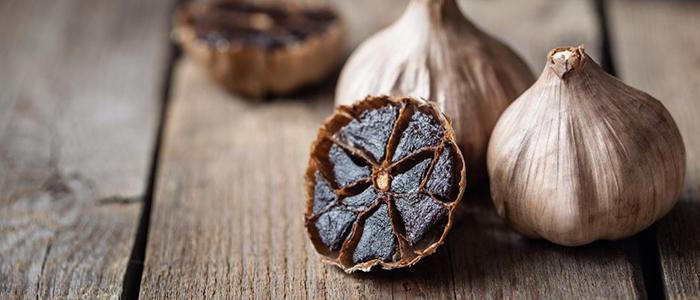
Know The Benefits of Black Garlic
Last updated on : 13 Nov, 2025
Read time : 5 min
What is Black Garlic?
Black garlic is a type of aged garlic that undergoes a fermentation-like process, where whole bulbs are slowly heated under controlled temperature and humidity over several weeks. This process results in a dark brown to black colour, a soft, chewy texture, and a sweet, tangy flavour often compared to balsamic vinegar or molasses.
Traditionally used in East Asian cuisines, black garlic has gained global popularity in recent years, not only for its unique flavour but also for its potential health-supporting properties. The ageing process significantly changes garlic’s chemical profile, converting unstable compounds like allicin into more stable and potent antioxidants, such as S-allyl-cysteine (SAC) [1].
Culinary Uses of Black Garlic
Black garlic is versatile in the kitchen and can be incorporated into your diet in several ways:
- Spread on toast or sandwiches
- Blended into sauces or salad dressings
- Added to soups, stews, and stir-fries
- Mixed into dips or marinades
Its mellow flavour makes it suitable for individuals sensitive to the sharpness of raw garlic.
What Research Says About Benefits of Black Garlic
Research suggests that black garlic may have significant antioxidant activity and could play a supportive role in areas such as cholesterol regulation, immune system function, and brain health [2]. However, it is important to note that much of the available evidence is from laboratory studies or animal models, and high-quality clinical trials in humans are still limited [3].
- Rich in Antioxidants: The ageing process may significantly increase the concentration of antioxidant compounds, such as S-allyl-cysteine (SAC), which can help support the body’s defence mechanisms against oxidative stress [1].
- May Support Heart Health: Some preliminary studies suggest that aged garlic extract, which includes black garlic compounds, may contribute to maintaining healthy cholesterol and blood pressure levels, thus supporting cardiovascular health [2], [4].
- Possible Blood Sugar Support: Limited research suggests that certain compounds in black garlic may influence glucose metabolism and could play a role in maintaining normal blood glucose levels when used in conjunction with a healthy lifestyle [5]. However, this effect is not a substitute for standard diabetes management or medication.
- May Support Brain Function: Antioxidant and anti-inflammatory compounds found in black garlic are being investigated for their potential role in supporting overall cognitive well-being; however, robust human clinical trials are necessary to confirm this relationship [3].
- Supports Immune Function: Like raw garlic, black garlic contains bioactive compounds that may contribute to general immune system support by influencing key immune markers [2].
Note: These potential benefits are based on preliminary and ongoing scientific investigation and should not be interpreted as definitive health outcomes or a primary treatment for any medical condition. Always consult a healthcare provider before making significant dietary changes, especially if you have existing health concerns or are taking prescribed medication.
Frequently Asked Questions (FAQs)
Can I make black garlic at home?
Yes, but it requires consistent low heat and controlled humidity for several weeks. Homemade black garlic may vary in quality and levels of beneficial compounds compared to commercially produced and tested products.
Does it have the same benefits as raw garlic?
While black garlic retains some benefits of raw garlic, the fermentation process significantly alters its composition. The process lowers levels of the pungent compound allicin while generally increasing the concentration of beneficial, water-soluble antioxidants like S-allyl-cysteine (SAC) [1].
Is black garlic safe for daily consumption?
For most healthy individuals, black garlic can be safely consumed in moderate amounts as a food ingredient. Individuals with underlying health issues (especially bleeding disorders or those on blood-thinning medication) should consult a doctor before adding large quantities to their diet [4].
Conclusion
Black garlic is a flavourful and potentially beneficial addition to the diet. With its rich antioxidant profile and milder taste, it offers a compelling culinary alternative to raw garlic. While early in vitro and animal research suggest potential benefits for heart health, immunity, and antioxidant support, the scientific community awaits more comprehensive, large-scale human clinical trials to fully establish these effects [3]. As a food, it enhances nutrition and flavour, but it should not replace medically prescribed treatments.
References
[1] Ahmed, T., & Wang, C.-K. (2021). Black Garlic and Its Bioactive Compounds on Human Health Diseases: A Review. Molecules, 26(16), 5028. https://doi.org/10.3390/molecules26165028
[2] Kimura, S., Tung, Y.-C., Pan, M.-H., Su, N.-W., Lai, Y.-J., & Cheng, K.-C. (2017). Black garlic: A critical review of its production, bioactivity, and application. Journal of Food and Drug Analysis, 25(1), 62–70. https://doi.org/10.1016/j.jfda.2016.11.003
[3] Ha, A. W., & Kim, W. K. (2017). Antioxidant mechanism of black garlic extract involving nuclear factor erythroid 2-like factor 2 pathway. Nutrition Research and Practice, 11(3), 206–213. https://doi.org/10.4162/nrp.2017.11.3.206
[4] Ryu, Y. M., Kang, M. J., Kong, Y. O., Kim, D., & Hong, Y. S. (2017). Physicochemical Properties, Biological Activity, and Health Benefits of Aged Black Garlic: A Review. Journal of Functional Foods, 34, 367-377. https://doi.org/10.1016/j.jff.2017.05.011
[5] Sanie-Jahromi, F., Zia, Z., & Afarid, M. (2023). A review on the effect of garlic on diabetes, BDNF, and VEGF as a potential treatment for diabetic retinopathy. Chinese Medicine, 18(1). https://doi.org/10.1186/s13020-023-00725-9














Disclaimer
Our healthcare experts have carefully reviewed and compiled the information presented here to ensure accuracy and trustworthiness. It is important to note that this information serves as a general overview of the topic and is for informational purposes only. It is not intended to diagnose, prevent, or cure any health problem. This page does not establish a doctor-patient relationship, nor does it replace the advice or consultation of a registered medical practitioner. We recommend seeking guidance from your registered medical practitioner for any questions or concerns regarding your medical condition.
Popular Articles

Recommended Articles



Recent Articles








Company
About UsHealth ArticleHealth StoriesDiseases & Health ConditionsAyurvedaAll MedicinesAll BrandsNeed HelpFAQSecuritySubscribe
Registered Office Address
Grievance Officer
Download Truemeds


Contact Us
Our customer representative team is available 7 days a week from 9 am - 9 pm.
v4.8.0

2025 - Truemeds | All rights reserved. Our content is for informational purposes only. See additional information.

Our Payment Partners




