

- Medicines
- Personal Care
- Skin Cream
- Sunscreen
- Face Wash
- Skin and Body Soap
- Acne Care
- Body Lotions
- Moisturising Lotion
- Moisturising Cream
- Mosquito Repellent
- Moisturising Gel
- Body Wash
- Hair Oils
- Hair Shampoo
- Hair Conditioners
- Hair Supplements
- Hair Colour
- Hair Serum
- Hair Mask
- Hair Solutions
- Baby Diapers and Wipes
- Baby Lotion and Moisturising Cream
- Baby Bath Essentials
- Baby Skin Care
- Baby and Infant Food
- Baby Healthcare
- Women Multivitamins
- Ovulation Test Kit and Women Intimate Care
- Sanitary Pads
- Nutritional Drinks
- Condoms
- Lubricants
- Massage Gels
- Personal Body Massagers
- Men Performance Booster
- Sexual Health Supplements
- Massage Oils
- Ayurveda
- Tooth Paste
- Mouth Ulcer Gel
- Mouthwash
- Toothache and Gum Pain
- Tooth Brush
- Gargle Solution
- Orthopaedic Supports
- Adult Diapers
- Footwear
- Mobility and Support Accessories
- Urinary Support and Care
- Health Conditions
- Bone and Joint Care
- Digestive Care
- Eye Care
- Pain Relief
- Smoking Cessation
- Liver Care
- Stomach Care
- Cold and Cough
- Heart Care
- Kidney Care
- Piles, Fissures & Fistula
- Respiratory Care
- Mental Wellness
- Derma Care
- Pre and Probiotics
- Acidity
- Gas
- Constipation
- Loose Motion/Diarrhoea
- Digestive Fibres
- Digestive Enzymes
- Eye Lubricant Drops
- Lens Solution
- Safety Eye Wear
- Eye Cream
- Eye Vitamins and Supplements
- Eye Drops
- Eye Ointment and Gel
- Nicotine Patch
- Nicotine Gum
- Nicotine Lozenges
- Cough Syrups
- Chest Rubs and Balms
- Nasal Spray
- Lozenges
- Inhalant Capsules
- Cold and Cough Tablets
- Vitamins & Supplements
- Diabetes Care
- Healthcare Devices
- Homeopathic Medicine
- Health Guide
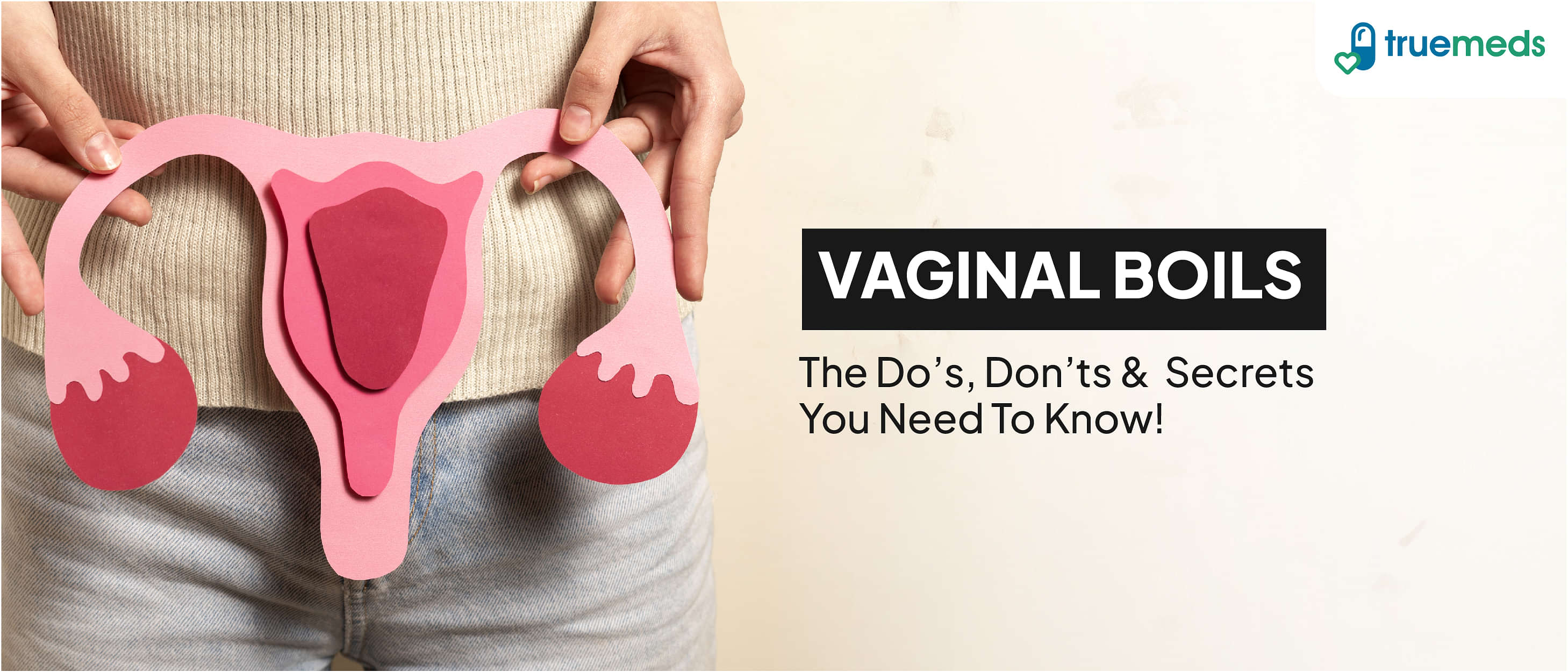
Effective Home Remedies for Treating Vaginal Boils
Last updated on : 01 Dec, 2025
Read time : 9 min
They’re uncomfortable, sometimes painful, and often a little scary when you first notice them– we are talking of vaginal boils!
But here’s the thing: you’re not alone. Vaginal boils, also known as furuncles, are a common skin condition that occurs when a hair follicle or oil gland becomes infected, often by the bacterium Staphylococcus aureus [1], and they form a painful, pus-filled lump. While they can be highly discomforting and sometimes even painful, most are easily treatable and not usually a cause for panic if managed correctly [2].
In this blog, we will explore some of the most effective and natural home remedies that can help you manage symptoms and support the natural healing process for small, uncomplicated vaginal boils. These simple practices, when combined with a bit of patience and adherence to hygiene, can make a noticeable difference in your healing journey. However, it is vital to know when to consult a doctor, as self-treatment is not always sufficient.
Home Care Practices to Support Healing
Many boils on the vaginal area typically heal naturally over a few days or weeks [2]. Implementing specific home remedies can alleviate symptoms and accelerate the healing process during this period. It is essential to adopt practices promoting comfort and aiding recovery, such as maintaining proper hygiene, applying appropriate home therapies, avoiding squeezing or puncturing the boil, and wearing loose-fitting, breathable clothing.
These proactive measures contribute to the overall well-being and expedited resolution of vaginal boils.
5 Effective Home Remedies to Treat Vaginal Boils
1. Warm Compress (Thermotherapy)
Applying heat to the impacted area can help fight infections by increasing local blood circulation, which helps draw pus to the surface and encourages the boil to drain naturally [3]. Hence, using heat is considered one of the best initial home remedies for boils.
Do It Yourself:
- Take a clean washcloth, wet it with warm water, and place it gently over the boil for 10 to 15 minutes.
- Repeat this three or four times daily until the boil goes away. Always use a fresh, clean washcloth for each application to prevent the spread of bacteria [2].
2. Tea Tree Oil
Tea tree oil (Melaleuca alternifolia) is well-known for its natural antimicrobial and antiseptic properties [4], and scientific studies support its activity against various microorganisms, including Staphylococcus aureus, the common cause of boils [5].
Do It Yourself:
- To use tea tree oil safely, it is crucial to dilute it with a carrier oil like olive or coconut oil (e.g., mix 1-2 drops of tea tree oil with one teaspoon of carrier oil).
- Apply the diluted tea tree oil to a boil using a clean cotton swab twice or thrice daily. Repeat this process daily until the boil has healed.
Caution: Tea tree oil should never be applied undiluted to the skin, especially to sensitive genital areas, as it can cause significant irritation or a burning sensation. Always perform a patch test on a small area of skin first.
3. Turmeric Paste
Turmeric powder (Curcuma longa) has traditional use and documented anti-inflammatory and potent antibacterial properties due to its active compound, curcumin [6]. These properties can help in managing boils by reducing swelling and fighting the infection. It is a commonly used and easily accessible remedy.
Do It Yourself:
- You can use turmeric powder by applying it externally.
- Make a paste utilising a pinch of turmeric powder and a few drops of water (or pure raw honey for enhanced antibacterial effect) for external use.
- Apply this paste to the affected area at least twice a day. Please note that turmeric can stain clothing and skin yellow.
4. Castor Oil
Castor oil is a useful home remedy for treating boils, particularly on the labia, due to its primary component, ricinoleic acid, which is known for its anti-inflammatory and significant antibacterial properties [7]. These qualities help reduce inflammation and support the healing of the boil.
Do It Yourself:
- To use castor oil for boils, apply a small amount to the affected area thrice daily.
- If you are using a mild alternative, virgin coconut oil also contains lauric acid, which exhibits antibacterial properties, and can be used to moisturize the area and keep it soft.
5. Neem Oil
Neem oil (Azadirachta indica), also known as Indian lilac, is a staple in Ayurvedic medicine and is considered effective in treating skin conditions like boils due to its documented antiseptic, anti-inflammatory, and strong antibacterial properties [8].
Do It Yourself:
- To use neem oil for boils, mix a few drops with a carrier oil like coconut oil (as it is potent) and apply it to the affected area three to four times daily.
- Remember to cleanse your hands before and after applying any products.
How to Prevent Vaginal Boils?
Boils on the skin around the vagina may be challenging to prevent, especially if your immune system is weak. However, there are some actions you can implement to reduce the chances of another boil in that area [1]:
- Practice excellent local hygiene.
- Avoid sharing personal items like towels and washcloths.
- Change underwear daily.
- Wear loose-fitting, breathable underwear, preferably made of cotton.
- Be cautious with hair removal: Shave carefully in the direction of hair growth using a clean, sharp razor, or consider alternative hair removal methods to prevent ingrown hairs [2].
- Maintain a healthy weight, as excess skin folds can trap bacteria [1].
- Manage underlying health conditions like diabetes, which can increase the risk of skin infections.
When To See a Doctor?
While most small vaginal boils heal on their own with consistent home care, it is imperative to seek professional medical advice if:
- The boil is large, becomes rapidly bigger, or is intensely painful.
- The boil has not started to heal or persists for more than a week.
- You notice signs of a spreading infection, such as increasing redness, swelling, warmth around the boil, or red streaking extending from the boil [2].
- The pus has a foul smell.
- You develop a fever or chills.
- You experience recurrent boils, which may indicate an underlying condition.
A doctor can properly diagnose the condition and, if necessary, recommend treatment such as antibiotics or a sterile incision and drainage procedure to prevent complications [1].
Expert Quote:
“Vaginal boils are common, and most can be managed easily with proper hygiene and consistent home care. However, due to the sensitive nature of the area and the risk of infection spreading, it is always wise to consult your primary healthcare provider or gynecologist if a boil is persistent, growing, or causes severe pain. Recurrent boils, in particular, require a full evaluation to find the underlying cause and a long-term solution.”
– Dr. Mandeep Chadha
Frequently Asked Questions (FAQs)
How do you get rid of a boil fast?
It is uncommon to get rid of a boil very quickly. The fastest approach to promote healing and relieve discomfort is to consistently apply warm compresses and practice good hygiene. Home remedies like diluted tea tree oil or castor oil can also support the process. Never try to squeeze or pop a boil.
What is the fastest home remedy for boils?
Applying warm compresses is generally considered the fastest home remedy for boils. It helps increase blood circulation to the site, promotes the natural drawing and drainage of the boil, and accelerates healing [3].
Can I put Vaseline on a vaginal boil?
Applying Vaseline or petroleum jelly to a boil is not recommended. These products can create a barrier that traps moisture and bacteria, potentially worsening the infection or blocking natural drainage. Keep the area clean and follow the recommended home care or professional treatment.
Can we apply turmeric to boils?
Yes, you can apply turmeric to boils in the form of a paste. Turmeric has natural antibacterial and anti-inflammatory properties that may help the healing process [6]. Make a paste by mixing turmeric powder with lukewarm water or honey and applying it gently to the boil. Consult a healthcare professional if the boil is severe or has not improved.
Is it normal to have bumps inside the vagina?
Bumps inside the vagina or on the vulva are common and can be due to various reasons, including cysts (like Bartholin’s or sebaceous cysts), blocked glands, ingrown hairs, or normal anatomical variations. However, any new, painful, or changing bump should be evaluated by a doctor to rule out an infection or a more serious condition.
What deficiency causes boils?
Boils are not typically caused by a specific nutrient deficiency. They are usually a result of bacterial infection (Staphylococcus aureus) in a hair follicle [1]. However, a weakened immune system, often linked to conditions like diabetes, poor diet, or chronic stress, can increase your susceptibility to developing boils [1, 2].
What ointment is good for boils on a private area?
Over-the-counter antibiotic ointments should only be used after consulting a healthcare professional. For persistent or infected boils, a doctor may prescribe topical or oral antibiotics. Do not use any ointment that is not specifically recommended by a doctor for your condition.
References
[1] Boils and carbuncles: Overview. (2018). Institute for Quality and Efficiency in Health Care (IQWiG). In: NCBI Bookshelf. U.S. National Library of Medicine. https://www.ncbi.nlm.nih.gov/books/NBK513141/
[2] Cleveland Clinic. (2021, November 29). Vaginal boil: Causes, symptoms, diagnosis & treatment. https://my.clevelandclinic.org/health/diseases/21651-vaginal-boil
[3] American Academy of Dermatology Association (AAD). (n.d.). How to treat boils and styes. Retrieved October 30, 2025, from https://www.aad.org/public/everyday-care/injured-skin/treat-boils-styes
[4] Carson, C. F., Hammer, K. A., & Riley, T. V. (2006). Melaleuca alternifolia (Tea Tree) oil: A review of antimicrobial and other medicinal properties. Clinical Microbiology Reviews, 19(1), 50–62. https://doi.org/10.1128/CMR.19.1.50-62.2006
[5] Hammer, K. A. (1998). In-vitro activity of essential oils, in particular Melaleuca alternifolia (tea tree) oil and tea tree oil products, against Candida spp. Journal of Antimicrobial Chemotherapy, 42(5), 591–595. https://doi.org/10.1093/jac/42.5.591
[6] Moghadamtousi, S. Z., Kadir, H. A., Hassandarvish, P., Talei, D., Murugan, K., & Abubakar, S. (2014). A review on antibacterial, antiviral, and antifungal activity of curcumin. BioMed Research International, 2014, 186864. https://doi.org/10.1155/2014/186864
[7] Narayanaswamy, R., & Isloor, S. G. (2017). Castor oil: Properties, uses, and optimization of processing parameters in commercial production. Lipid Technology, 29(12), 273–275. https://doi.org/10.1002/lite.201700085
[8] Alzohairy, M. A. (2016). Therapeutic role of Azadirachta indica (Neem) and their active constituents in diseases prevention and treatment. Evidence-Based Complementary and Alternative Medicine, 2016, 738250. https://doi.org/10.1155/2016/738250













Disclaimer
Our healthcare experts have carefully reviewed and compiled the information presented here to ensure accuracy and trustworthiness. It is important to note that this information serves as a general overview of the topic and is for informational purposes only. It is not intended to diagnose, prevent, or cure any health problem. This page does not establish a doctor-patient relationship, nor does it replace the advice or consultation of a registered medical practitioner. We recommend seeking guidance from your registered medical practitioner for any questions or concerns regarding your medical condition.
Popular Articles
Recommended Articles

Recent Articles








Company
About UsHealth ArticleHealth StoriesHealth LibraryDiseases & Health ConditionsAyurvedaUnderstanding Generic MedicinesAll MedicinesAll BrandsNeed HelpFAQSecuritySubscribe
Registered Office Address
Grievance Officer
Download Truemeds


Contact Us
Our customer representative team is available 7 days a week from 9 am - 9 pm.
v4.11.0

2026 - Truemeds | All rights reserved. Our content is for informational purposes only. See additional information.
Our Payment Partners