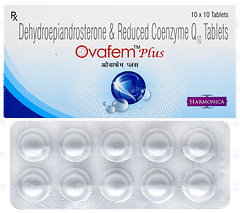
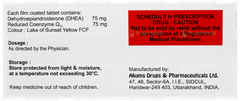


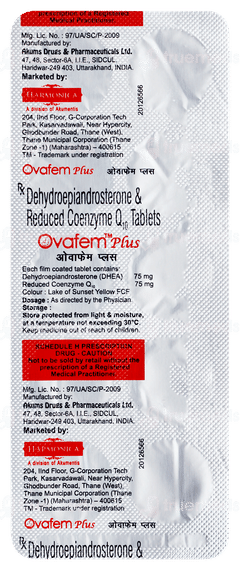

 Composition
Ovafem Plus Tablet is intended for use as an adjunct in selected fertility treatment plans. Coenzyme Q10 has been investigated for its potential effects on ovarian function and oocyte quality, while DHEA has been studied in women with reduced ovarian response. However, clinical benefits remain uncertain. The combination is not an established treatment for infertility and should not replace evidence-based fertility care. Your fertility specialist should assess its suitability individually.
Take Ovafem Plus Tablet with food, following your fertility specialist's instructions. Swallow the tablet whole with water. Do not change the prescribed amount or treatment duration independently. Inform your specialist about all other hormonal preparations and supplements you use. Fertility treatment should continue according to your individual protocol. Do not assume that taking additional DHEA or antioxidants will improve egg quality or pregnancy outcomes. Avoid self-medication with hormone-containing supplements.
Possible side effects of Ovafem Plus Tablet include nausea, abdominal discomfort, headache, acne and oily skin. DHEA may also cause increased facial hair growth, menstrual changes and other androgen-related effects. Some patients may experience mood changes or sleep disturbances. Inform your doctor if these effects persist or worsen. Seek prompt medical assessment for severe abdominal pain, unexplained vaginal bleeding or significant hormonal symptoms. Long-term safety data for DHEA supplementation in fertility treatment remain limited.
Before using Ovafem Plus Tablet, tell your doctor about hormone-sensitive conditions, liver disease, polycystic ovary syndrome or previous hormonal disorders. Mention all fertility medicines, hormonal treatments and anticoagulants. DHEA may alter androgen and oestrogen levels and may be unsuitable in certain hormone-sensitive conditions. Do not use it during pregnancy or breastfeeding unless specifically directed by a specialist. Your doctor should review the uncertain benefits and potential risks before recommending treatment.