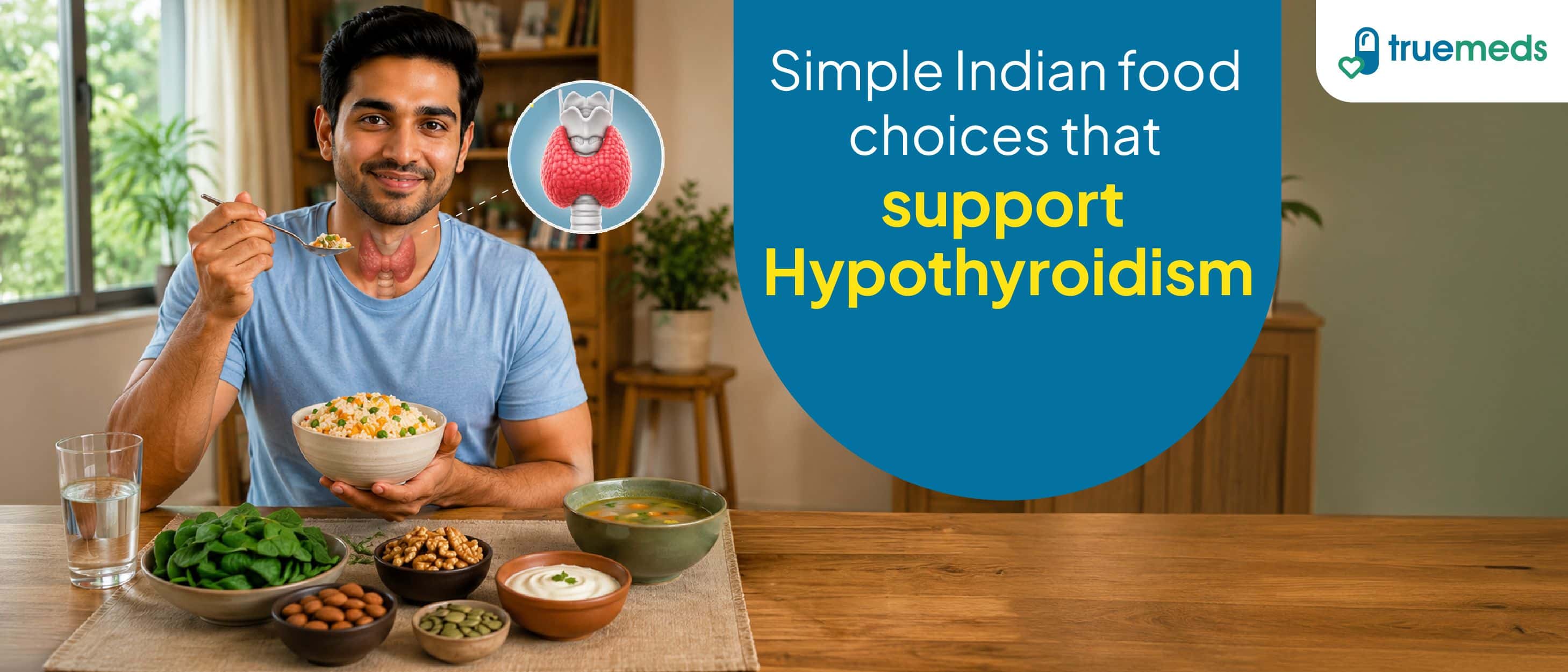
Managing hypothyroidism can feel overwhelming, especially when a diagnosis is followed by a long list of foods to avoid. A practical hypothyroidism diet plan, however, does not mean removing everything from your plate. For most people, hypothyroidism requires lifelong medication rather than a strict "special thyroid diet". The main dietary considerations are taking levothyroxine correctly and avoiding unnecessary iodine supplementation unless advised by a healthcare professional[1].
This article explains what a balanced Indian diet for hypothyroidism actually looks like, separates evidence from popular myths, and helps you make informed choices in consultation with your doctor.
What Does a Practical Hypothyroidism Diet Plan for Indians Actually Look Like?
For most Indian adults with hypothyroidism, the most sensible approach is a balanced, diverse eating pattern built from familiar food groups rather than an overly restrictive regime. The ICMR dietary guidelines for Indians emphasise diverse, balanced meals that include cereals or millets, pulses, vegetables, fruits, and appropriate animal foods or dairy[2]. This framework works well as the foundation of an Indian diet for hypothyroidism.
Iodine is essential for thyroid hormone production, and adults commonly need 150 mcg per day. Practical food sources include iodised salt, dairy products (such as milk, yoghurt and cheese), eggs, fish, and seafood[3]. The focus, therefore, should be on including enough of these foods rather than cutting them out.
The sample meal ideas below reflect this balanced approach:
Time | Vegetarian Options | Non-Vegetarian Options |
|---|---|---|
Breakfast | Poha with peanuts, a glass of milk | Egg omelette with vegetables, whole wheat toast |
Mid-morning | A fruit or a small handful of nuts | A fruit or boiled egg |
Lunch | Dal, sabzi, roti or rice, curd | Dal, sabzi, rice or roti, fish or chicken curry |
Evening | Sprouts chaat or roasted chana | Boiled egg or light chicken soup |
Dinner | Khichdi with vegetables or dal and roti | Dal, sabzi, roti or rice, grilled fish or paneer |
Using iodised salt in daily cooking is a simple and consistent way to support iodine adequacy[3].
Which Foods Do Indians Commonly Stop Eating After a Thyroid Diagnosis?
After a thyroid diagnosis, many people stop eating foods they have eaten their entire lives, often based on advice from friends, family, or social media. Common foods that get avoided unnecessarily include:
Cauliflower
Broccoli
Soy
Rice
Dairy products
Chapati
Curd
Eggs
Cabbage
Foods such as cabbage, cauliflower, broccoli, and soy contain compounds called goitrogens that can theoretically interfere with thyroid iodine uptake. However, these are mainly a concern for people with already low iodine intake. For most people eating a varied diet with adequately iodised salt, reasonable amounts of these foods are generally not considered a problem[3].
Rice, chapati, curd, dairy, and eggs are not standard foods to avoid in hypothyroidism. Removing multiple everyday foods can reduce overall diet quality without improving thyroid control.
Cabbage Myth: Do You Really Need to Stop Eating Cruciferous Vegetables?
The belief that cabbage, cauliflower, and broccoli are harmful for patients with thyroid issues is one of the most common diet myths in India. This idea likely spread because cruciferous vegetables contain goitrogenic compounds, which can theoretically interfere with how the body uses iodine[3]. Social media has amplified this concern into a near-total ban on brassica vegetables for anyone with a thyroid condition.
The reality is more nuanced. The concern is mainly relevant when iodine intake is already marginal, not as a universal rule for everyone with hypothyroidism[3]. A systematic review of brassica vegetables confirmed that the issue is more complex than popular advice suggests, and cooked cabbage, cauliflower, or broccoli should not automatically be treated as unsafe[4].
Practical guidance from this evidence is straightforward: eat these vegetables in normal portions, ensure iodine adequacy through iodised salt and other dietary sources, and do not assume that eliminating them will improve thyroid function.
If you have specific concerns, discuss them with your doctor rather than removing entire food groups on your own.
Which Foods Affect Thyroid Medication More Than the Thyroid Itself?
One of the most practically important and underappreciated areas in hypothyroid nutrition involves how everyday foods and supplements can interfere with levothyroxine absorption. A systematic review found reduced levothyroxine absorption with coffee, soy products, dietary fibre, calcium supplements, iron supplements, and enteral nutrition[5]. This means the timing of when you consume these items matters far more than eliminating them from your diet.
Levothyroxine is commonly taken in the morning before eating, and keeping this timing consistent is one of the most important steps in managing hypothyroidism effectively[1]. Key practical points include the following[5]:
Avoid drinking coffee or tea close to when you take your medication. Coffee has good evidence for reducing levothyroxine absorption. Evidence specific to tea is much more limited, but as a precaution, many clinicians advise keeping any hot beverage away from your dose.
If you take iron or calcium supplements, space them well away from your levothyroxine dose.
High-fibre meals can be part of a healthy diet, but avoid consuming them at the same time as your medication.
Soy products do not need to be avoided entirely but should not be consumed close to your medication dose.
Discuss your supplement timing and any regular dietary habits with your doctor to ensure consistent absorption.
Why Do Some People Follow a "Perfect Thyroid Diet" and Still Feel Tired?
Persistent tiredness is one of the most common complaints among people with hypothyroidism, and many blame their diet when food is not always the primary cause.
Several common nutritional and lifestyle factors can contribute to fatigue independently of thyroid function:
Iron deficiency can cause weakness, tiredness, low energy, and concentration problems[6].
Vitamin B12 deficiency can also cause tiredness or weakness and is more likely in people who eat little or no animal foods[7], making this particularly relevant for vegetarian Indians following a hypothyroid diet.
Vitamin D deficiency may be associated with bone pain and muscle weakness[8].
Poor sleep quality can directly worsen daytime tiredness and functioning[9].
Chronic stress can also affect how the body functions and contribute to fatigue[10].
If you are eating well and your thyroid medication is managed but you still feel exhausted, speak to your doctor about checking for iron, vitamin B12, or vitamin D deficiency rather than making further dietary changes on your own.
Things to Consider Before Removing Foods From Your Diet
Before cutting out a food because of a thyroid diagnosis, it is worth pausing to ask a few honest questions. Your doctor or dietitian should always be part of this conversation. Consider:
Who told me to avoid this food? A doctor or a social media post?
Is there evidence that avoiding it will help me? Or is it based on fear?
Am I restricting this because of something I read online?
Have I discussed this with my doctor or a registered dietitian?
Am I replacing it with a genuinely healthier option, or just eating less?
Removing whole food groups without medical guidance can lead to nutrient gaps and make daily eating unnecessarily difficult. Professional diagnosis and personalised advice are essential before making any significant dietary changes.
What Does a Sustainable Hypothyroid Diet Actually Look Like?
A sustainable hypothyroidism diet is not about a rigid list of allowed and banned foods. It is about balance, consistency, and long-term eating habits that support overall health. The ICMR guidelines reinforce that diverse, balanced Indian diets are the foundation of good health[2], and this principle applies equally to people with hypothyroidism.
A sustainable approach includes the following[1],[2]:
Eating balanced meals with iodised salt, cereals or millets, pulses, vegetables, fruits, and suitable dairy, eggs, fish, or meat.
Taking levothyroxine consistently, as directed by your clinician.
Spacing out supplements and foods that may affect medication absorption.
Avoiding unnecessary food restrictions that are not supported by medical advice.
Diet supports overall health and medication response but does not replace prescribed treatment.
Key Takeaways
- Most Indian adults with hypothyroidism do not need to stop eating rice, chapati, curd, eggs, or cruciferous vegetables by default.
- Medication timing around tea, coffee, iron supplements, calcium supplements, soy, and high-fibre foods often matters more than the food itself.
- Persistent tiredness may reflect iron, vitamin B12, or vitamin D deficiency, or poor sleep and stress, in addition to thyroid disease.
- A practical Indian diet for hypothyroidism is balanced and consistent and includes adequate iodine through iodised salt and everyday food sources.
- Always discuss dietary changes and supplement timing with your doctor before making decisions based on social media advice.
FAQs
Do I need to avoid all high-fibre foods if I take thyroid medicine?
No. High-fibre foods can remain part of a healthy diet. The key is to avoid consuming high-fibre meals at the same time as your levothyroxine. Keep medication timing consistent and discuss your routine with your doctor.
Can I eat rice and chapati every day if I have hypothyroidism?
For most people, yes. Routine avoidance of staple cereals like rice or chapati is not supported by current evidence. Focus on balanced meals and appropriate portion sizes rather than eliminating these everyday foods.
Should I avoid soy products if I have thyroid disease?
Not necessarily. Soy does not need to be removed from your diet entirely. The main concern is that soy may reduce levothyroxine absorption, so keep a gap between soy-based foods and your medication dose.
Can drinking tea after taking thyroid medicine affect treatment?
It may. Coffee has been shown to reduce levothyroxine absorption. As a practical precaution, it is advisable to keep tea or coffee away from your medication dose. Maintain consistent timing and consult your doctor.
Can changing my diet reduce the need for thyroid medicine?
Generally, no. Diet alone does not replace prescribed levothyroxine in hypothyroidism. A balanced diet supports overall health and medication response, but treatment decisions should always be made by your healthcare provider.
Is there one Indian diet plan that works for everyone with hypothyroidism?
No. The best plan is individualised within a balanced Indian eating pattern. Vegetarian and non-vegetarian preferences, as well as individual nutritional deficiencies, all affect what works best for each person.
Can I eat dairy products if I have hypothyroidism?
Yes, for most people. Dairy can contribute useful nutrients including iodine and vitamin B12. However, calcium-rich foods and calcium supplements should be spaced well away from your levothyroxine dose.
Which foods should I eat regularly if I have hypothyroidism?
A balanced plate is the goal: cereals or millets, pulses, vegetables, fruits, and suitable dairy, eggs, fish, or meat. Use iodised salt in daily cooking to support adequate iodine intake.
How long should I wait to eat after taking thyroid medicine?
Levothyroxine is commonly taken in the morning before eating. Your clinician will advise on the appropriate gap. Keep this timing consistent each day for the best medication response.
Can I eat eggs if I have hypothyroidism?
Yes, for most people. Eggs can contribute iodine and vitamin B12 to your diet and do not need to be routinely avoided unless there is a separate individual reason. Discuss any specific concerns with your doctor.
Medical Disclaimer
This article is for informational purposes only and does not constitute medical advice. The information provided should not be used for diagnosing or treating health conditions. Always consult a qualified healthcare provider for diagnosis, treatment, and personalised medical advice. Do not disregard professional medical advice or delay seeking it because of information found in this article. If you have a medical emergency, contact your doctor or emergency services immediately.
References
NIDDK. (2021). Hypothyroidism (Underactive Thyroid). National Institute of Diabetes and Digestive and Kidney Diseases. https://www.niddk.nih.gov/health-information/endocrine-diseases/hypothyroidism
ICMR-NIN. (2024). Dietary Guidelines for Indians-2024. National Institute of Nutrition. https://nin.res.in/dietaryguidelines/pdfjs/locale/DGI_2024.pdf
NIH ODS. (2024). Iodine - Consumer. National Institutes of Health Office of Dietary Supplements. https://ods.od.nih.gov/factsheets/Iodine-Consumer/
Galanty, A., Grudzińska, M., Paździora, W., Służały, P., & Paśko, P. (2024). Do Brassica Vegetables Affect Thyroid Function?-A Comprehensive Systematic Review. International journal of molecular sciences, 25(7), 3988. https://doi.org/10.3390/ijms25073988