

- Medicines
- Personal Care
- Skin Cream
- Sunscreen
- Face Wash
- Skin and Body Soap
- Acne Care
- Body Lotions
- Moisturising Lotion
- Moisturising Cream
- Mosquito Repellent
- Moisturising Gel
- Body Wash
- Hair Oils
- Hair Shampoo
- Hair Conditioners
- Hair Supplements
- Hair Colour
- Hair Serum
- Hair Mask
- Hair Solutions
- Baby Diapers and Wipes
- Baby Lotion and Moisturising Cream
- Baby Bath Essentials
- Baby Skin Care
- Baby and Infant Food
- Baby Healthcare
- Women Multivitamins
- Ovulation Test Kit and Women Intimate Care
- Sanitary Pads
- Nutritional Drinks
- Condoms
- Lubricants
- Massage Gels
- Personal Body Massagers
- Men Performance Booster
- Sexual Health Supplements
- Massage Oils
- Ayurveda
- Tooth Paste
- Mouth Ulcer Gel
- Mouthwash
- Toothache and Gum Pain
- Tooth Brush
- Gargle Solution
- Orthopaedic Supports
- Adult Diapers
- Footwear
- Mobility and Support Accessories
- Urinary Support and Care
- Health Conditions
- Bone and Joint Care
- Digestive Care
- Eye Care
- Pain Relief
- Smoking Cessation
- Liver Care
- Stomach Care
- Cold and Cough
- Heart Care
- Kidney Care
- Piles, Fissures & Fistula
- Respiratory Care
- Mental Wellness
- Derma Care
- Pre and Probiotics
- Acidity
- Gas
- Constipation
- Loose Motion/Diarrhoea
- Digestive Fibres
- Digestive Enzymes
- Eye Lubricant Drops
- Lens Solution
- Safety Eye Wear
- Eye Cream
- Eye Vitamins and Supplements
- Eye Drops
- Eye Ointment and Gel
- Nicotine Patch
- Nicotine Gum
- Nicotine Lozenges
- Cough Syrups
- Chest Rubs and Balms
- Nasal Spray
- Lozenges
- Inhalant Capsules
- Cold and Cough Tablets
- Vitamins & Supplements
- Diabetes Care
- Healthcare Devices
- Homeopathic Medicine
- Health Guide
Vitamin D Deficiency
Vitamin D deficiency is a prevalent health condition characterised by insufficient vitamin D levels. It can lead to symptoms such as muscle and bone pain, fatigue, and mood changes. Maintaining adequate vitamin D levels through sun exposure, diet, and supplements is crucial for overall health and well-being.
 50
50Last updated on : 08 Apr, 2026
Read time : 10 mins

Overview of Disease
According to the National Institutes of Health (2025), vitamin D deficiency is a common health issue affecting nearly 1 billion people worldwide. It is essential to understand the importance of vitamin D and the consequences of its deficiency. In this article, we will explore the definition of vitamin D deficiency, its symptoms, and the steps you can take to maintain optimal vitamin D levels.
What is Vitamin D Deficiency?
Vitamin D deficiency can occur if you don’t get enough sunlight, have darker skin, use sunscreen or clothing that blocks the sun, eat foods low in vitamin D, are overweight, or have health conditions or take medicines that reduce vitamin D absorption. Symptoms may take months or even years to appear.
This condition is usually treated with vitamin D supplements. Spending time in the sun and eating foods rich in vitamin D, like fatty fish and fortified dairy products, can also help.
Key Factors about Vitamin D Deficiency
| Category | Details |
| Also Referred as | Hypovitaminosis D |
| Commonly Occurs In | People with inadequate sunlight exposure, dark skin, obesity, older adults, and people with malabsorption conditions |
| Affected Organ | Bones, muscles, nervous system, and immune system |
| Type | Nutritional deficiency |
| Common Signs | Fatigue, bone and joint pain, muscle weakness, aches or cramps, mood changes |
| Consulting Specialist | Endocrinologist |
| Treatment Procedures | Vitamin D supplements, calcium and phosphate supplements if necessary |
| Managed By | Vitamin D3 supplementation |
| Mimicking Condition | Osteoporosis, osteomalacia, rickets, and other muscle and bone disorders |
Symptoms of Vitamin D Deficiency
Vitamin D deficiency can be hard to notice because symptoms may take months or even years to appear. Some people may not experience any symptoms at all.
Symptoms of Vitamin D Deficiency in Adults:

- Bone pain: Aching or tenderness, especially in the lower back, pelvis, and legs.
- Muscle weakness and cramps: Pain or weakness, particularly in the legs and back.
- Joint pain and stiffness: Can be mistaken for arthritis or other joint problems.
- Fatigue: Constant tiredness, even after adequate rest.
- Mood changes: Depression, anxiety, or irritability.
- Frequent infections: Weakened immunity, making individuals prone to illnesses.
Severe Vitamin D Deficiency in Children:
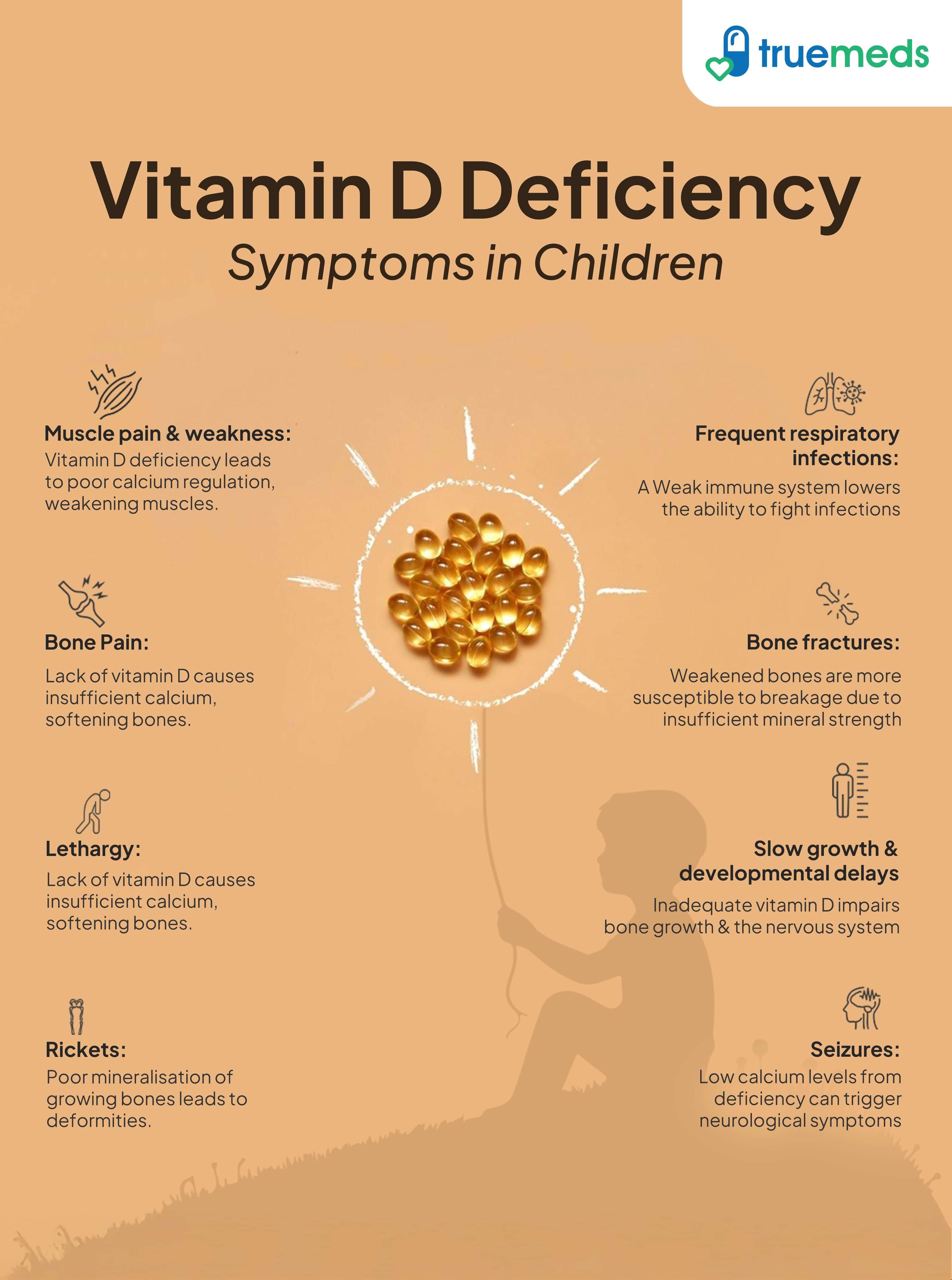
- Muscle pain and weakness
- Bone pain
- Lethargy: Feeling tired or sluggish.
- Frequent respiratory infections: More colds and illnesses.
- Rickets: Weak, soft bones leading to bowed legs and skeletal deformities in children National Health Service (2023)
- Bone fractures: Increased risk due to weak bones.
- Slow growth and developmental delays
- Seizures: Due to low calcium levels in the blood.
Causes of Vitamin D Deficiency
Several key factors can lead to vitamin D deficiency, which include:
- Inadequate dietary intake of vitamin D-rich foods like fortified dairy products and cereals
- Insufficient exposure to ultraviolet B (UVB) sunlight, especially for those who spend limited time outdoors or live in regions with low sunlight
- Malabsorption issues caused by conditions such as Crohn's disease, coeliac disease, and other gastrointestinal disorders that impair vitamin D absorption
- Kidney and liver diseases that affect the body's ability to convert vitamin D into its active form
- Certain medications, including some antiseizure medications and anti-tuberculosis medications, can interfere with vitamin D metabolism.
Risk Factors
Several factors can increase the risk of developing vitamin D deficiency, including:
- Limited sun exposure due to spending most of the time indoors, wearing protective clothing, or using sunscreen consistently
- Living in areas with high levels of air pollution or at higher latitudes where sunlight is less intense
- Having a diet low in vitamin D-rich foods, such as fatty fish, egg yolks, and fortified products
- Being of advanced age, as the skin's ability to synthesise vitamin D decreases with age
- Having a body mass index (BMI) in the obese range, as excess body fat can sequester vitamin D, making it less available for use
- Suffering from certain medical conditions, such as liver or kidney disease, that affect vitamin D metabolism and absorption
Prevention of Vitamin D Deficiency
Preventing vitamin D deficiency involves a combination of lifestyle practices and awareness of risk factors:
- Ensure regular, safe sun exposure: Sunlight is the primary natural source of vitamin D. Spending time outdoors, especially during midday when the sun's rays are strongest, can help stimulate vitamin D production in the skin. However, it is crucial to balance sun exposure with skin cancer prevention measures, such as using sunscreen and avoiding excessive exposure.
- Maintain a balanced diet: Consuming vitamin D-rich foods can help maintain adequate levels. Foods naturally high in vitamin D include fatty fish (salmon, tuna, mackerel), egg yolks, and liver. Fortified foods, such as dairy products, cereals, and plant-based milk alternatives, can also contribute to vitamin D intake.
- Consider supplementation: For individuals at higher risk of vitamin D deficiency or those with limited sun exposure and dietary sources, vitamin D supplements may be necessary. Consulting with a healthcare provider can help determine the appropriate dosage and form of supplementation based on individual needs.
- Monitor vitamin D levels: Regular testing of 25(OH)D levels, especially for those at higher risk, can help identify deficiencies early and guide preventive measures. This is particularly important for older adults, individuals with darker skin, those with limited sun exposure, and people with certain medical conditions that affect vitamin D absorption or metabolism.
Raising Awareness
Educating the public about the importance of vitamin D and the risk factors for deficiency is crucial to preventing widespread vitamin D insufficiency. Healthcare providers, public health organisations, and media outlets can play a vital role in disseminating information about:
- The functions of vitamin D in the body
- Symptoms and health consequences of vitamin D deficiency
- Risk factors for developing vitamin D deficiency
- Strategies for maintaining adequate vitamin D levels through sun exposure, diet, and supplementation
Diagnosis & Tests
Diagnosing vitamin D deficiency involves a combination of clinical evaluation and laboratory testing. The most accurate method for measuring vitamin D levels is the 25-hydroxyvitamin D (25(OH)D) blood test, which measures 25(OH)D levels and provides the best indicator of the body's vitamin D stores.
Doctors may order the 25(OH)D blood test if a patient reports symptoms such as:
- Bone pain
- Muscle pain
- Muscle weakness
- Increased sensitivity to pain
Certain health conditions may also prompt testing for vitamin D deficiency, including musculoskeletal symptoms, kidney or liver disease, and specific dietary or lifestyle factors. Risk factors like older age, dark skin, obesity, limited sun exposure, certain medical conditions (e.g., Crohn's disease, coeliac disease), and medications that alter vitamin D metabolism increase the likelihood of being tested.
While many people with vitamin D deficiency do not exhibit symptoms, severe cases can lead to bowed legs in children and osteomalacia in adults. Identifying and treating vitamin D deficiency is crucial for maintaining overall health and preventing complications associated with hypovitaminosis D.
Treatment & Management
The treatment for vitamin D deficiency involves taking vitamin D supplements, which may be in the form of ergocalciferol (vitamin D2) or cholecalciferol (vitamin D3). These supplements can be administered as injections, liquids, or tablets, depending on the patient’s needs. The doctor determines the appropriate dose and treatment schedule based on the severity of the deficiency, age, and health condition.
1. Supplements
Both ergocalciferol (vitamin D2) and cholecalciferol (vitamin D3) play crucial roles in maintaining optimal vitamin D levels by aiding calcium absorption and supporting bone health.
- Absorption & Effectiveness: Both D2 and D3 are well absorbed in the gut, but research suggests that cholecalciferol (vitamin D3) is more effective at raising and sustaining serum 25(OH)D levels compared to ergocalciferol (vitamin D2).
- Choosing the Right Supplement
- Vitamin D2 (ergocalciferol): Often prescribed for short-term deficiency treatment.
- Vitamin D3 (cholecalciferol): Preferred for long-term supplementation due to its superior bioavailability and sustained effects.
2. Recommended Dosages
- Initial Supplementation: Adults with vitamin D deficiency should take 6,000 IU of vitamin D3 daily or 50,000 IU weekly for eight weeks to restore optimal levels. Once serum vitamin D exceeds 30 ng/mL, a daily maintenance dose of 1,000–2,000 IU is recommended.
- High-Risk Adults (with underlying conditions): May require a higher initial dose of 10,000 IU of vitamin D3 daily. Once serum vitamin D exceeds 30 ng/mL, a maintenance dose of 3,000–6,000 IU/day is advised.
- Children with vitamin D deficiency: Need 1,000 IU/day of vitamin D3 or 50,000 IU once weekly for 6 weeks to correct deficiency.
3. Monitoring and Additional Management
- Regular monitoring of 25(OH)D levels ensures the effectiveness of treatment and allows for dosage adjustments if necessary. It also helps identify issues such as malabsorption, nonadherence, or inadequate dosing.
- Since vitamin D plays a crucial role in calcium and phosphorus metabolism, doctors may also recommend calcium and phosphorus supplements or dietary changes to maintain a proper balance.
When to See a Doctor?
If you suspect a vitamin D deficiency, it is essential to consult your doctor. While some symptoms of vitamin D deficiency, such as fatigue and muscle weakness, can be vague and easily attributed to other causes, it is crucial to seek medical attention if you experience persistent or severe symptoms.
Some signs that you should see a doctor for a potential vitamin D deficiency include:
- Chronic fatigue that does not improve with rest
- Bone pain or tenderness
- Muscle weakness or cramps
- Mood changes, such as depression or irritability
- Recurrent infections
Key Takeaways
Vitamin D deficiency, also known as hypovitaminosis D, is a common condition in which your body lacks sufficient vitamin D to function properly. Here are some key takeaways about vitamin D deficiency:
- Vitamin D is essential for strong bones, a healthy immune system, and proper muscle function.
- The leading causes of vitamin D deficiency include limited sun exposure, dark skin, obesity, and certain medical conditions that interfere with vitamin D absorption.
- Symptoms of vitamin D deficiency can include fatigue, bone pain, muscle weakness, mood changes, and recurrent infections.
- Vitamin D deficiency can be diagnosed with a simple blood test that measures your vitamin D levels.
- Treatment for vitamin D deficiency typically involves taking vitamin D supplements, increasing your exposure to sunlight, or consuming more vitamin D-rich foods.
- If left untreated, vitamin D deficiency can lead to serious health problems, such as rickets in children and osteomalacia in adults.
- To prevent vitamin D deficiency, aim to get regular sun exposure (while using sunscreen), eat vitamin D-rich foods like fatty fish and fortified dairy products, and consider taking a vitamin D supplement if recommended by your doctor.
FAQs
What are the consequences of having low vitamin D levels?
Low vitamin D can lead to bone density loss, muscle weakness, fatigue, bone and joint pain, mood changes, and an increased risk of various diseases.
How can I quickly increase my vitamin D levels?
To rapidly increase vitamin D, consider sunlight exposure, consuming vitamin D-rich foods, and taking vitamin D supplements under the guidance of a healthcare provider.
What are the common signs of vitamin D deficiency?
Fatigue, bone and joint pain, muscle weakness, mood changes, and frequent infections are some common indicators of vitamin D deficiency.
What are the treatment options for vitamin D deficiency?
Which foods are naturally high in vitamin D?
Fatty fish, fish liver oils, egg yolks, cheese, fortified milk, plant-milk alternatives, fortified cereals, and some mushrooms are among foods rich in vitamin D.
How can vitamin D deficiency be addressed naturally?
Vitamin D deficiency can be managed naturally by spending time in sunlight, eating vitamin D-rich foods, and maintaining a healthy lifestyle.
Can consuming bananas help increase vitamin D levels?
While bananas contain some essential nutrients, they are not a significant source of vitamin D and cannot directly increase vitamin D levels.
References
- Holick, M. F., Binkley, N. C., Bischoff-Ferrari, H. A., Gordon, C. M., Hanley, D. A., Heaney, R. P., Murad, M. H., & Weaver, C. M. (2011). Evaluation, treatment, and prevention of vitamin D deficiency: An Endocrine Society clinical practice guideline. The Journal of Clinical Endocrinology & Metabolism, 96(7), 1911-1930. https://doi.org/10.1210/jc.2011-0385
- NHS. (2023). Vitamin D. https://www.nhs.uk/conditions/vitamins-and-minerals/vitamin-d/
- Dunlop, E., et al. (2025). Global prevalence of circulating 25-hydroxyvitamin D concentrations: A systematic review and meta-analysis. Journal of Public Health. https://academic.oup.com/jpubhealth/article/47/4/e520/8198241
- Amrein, K., Scherkl, M., Hoffmann, M., et al. (2020). Vitamin D deficiency 2.0: An update on the current status worldwide. European Journal of Clinical Nutrition, 74(11), 1498–1513. https://doi.org/10.1038/s41430-020-0558-y
- Kaur, J., Khare, S., Sizar, O., & Givler, A. (2025). Vitamin D deficiency. In StatPearls. StatPearls Publishing. https://www.ncbi.nlm.nih.gov/books/NBK532266/
Check Related Salts
Browse Other Conditions
Latest health articles

Top Health Essentials














Disclaimer
Top-Selling Medicines:
...View more
Top-OTC medicines:
...View more
Company
About UsHealth ArticleHealth StoriesHealth LibraryDiseases & Health ConditionsAyurvedaUnderstanding Generic MedicinesAll MedicinesAll BrandsNeed HelpFAQSecuritySavings CalculatorAdvertise with UsSubscribe
Registered Office Address
Grievance Officer
Download Truemeds


Contact Us
Our customer representative team is available 7 days a week from 9 am - 9 pm.
v4.28.13

2026 - Truemeds | All rights reserved. Our content is for informational purposes only. See additional information.

Our Payment Partners