

- Medicines
- Personal Care
- Skin Cream
- Sunscreen
- Face Wash
- Skin and Body Soap
- Acne Care
- Body Lotions
- Moisturising Lotion
- Moisturising Cream
- Mosquito Repellent
- Moisturising Gel
- Body Wash
- Hair Oils
- Hair Shampoo
- Hair Conditioners
- Hair Supplements
- Hair Colour
- Hair Serum
- Hair Mask
- Hair Solutions
- Baby Diapers and Wipes
- Baby Lotion and Moisturising Cream
- Baby Bath Essentials
- Baby Skin Care
- Baby and Infant Food
- Baby Healthcare
- Women Multivitamins
- Ovulation Test Kit and Women Intimate Care
- Sanitary Pads
- Nutritional Drinks
- Condoms
- Lubricants
- Massage Gels
- Personal Body Massagers
- Men Performance Booster
- Sexual Health Supplements
- Massage Oils
- Ayurveda
- Tooth Paste
- Mouth Ulcer Gel
- Mouthwash
- Toothache and Gum Pain
- Tooth Brush
- Gargle Solution
- Orthopaedic Supports
- Adult Diapers
- Footwear
- Mobility and Support Accessories
- Urinary Support and Care
- Health Conditions
- Bone and Joint Care
- Digestive Care
- Eye Care
- Pain Relief
- Smoking Cessation
- Liver Care
- Stomach Care
- Cold and Cough
- Heart Care
- Kidney Care
- Piles, Fissures & Fistula
- Respiratory Care
- Mental Wellness
- Derma Care
- Pre and Probiotics
- Acidity
- Gas
- Constipation
- Loose Motion/Diarrhoea
- Digestive Fibres
- Digestive Enzymes
- Eye Lubricant Drops
- Lens Solution
- Safety Eye Wear
- Eye Cream
- Eye Vitamins and Supplements
- Eye Drops
- Eye Ointment and Gel
- Nicotine Patch
- Nicotine Gum
- Nicotine Lozenges
- Cough Syrups
- Chest Rubs and Balms
- Nasal Spray
- Lozenges
- Inhalant Capsules
- Cold and Cough Tablets
- Vitamins & Supplements
- Diabetes Care
- Healthcare Devices
- Homeopathic Medicine
- Health Guide
Vitamin B12 Deficiency
Vitamin B12 deficiency is a condition that occurs when the body lacks sufficient vitamin B12, an essential nutrient crucial for red blood cell production, nerve function, and DNA synthesis. This deficiency can result from inadequate dietary intake, malabsorption issues, or increased requirements due to certain medical conditions or life stages. Left untreated, vitamin B12 deficiency can lead to various health problems, including anaemia, nerve damage, and cognitive impairment..
 50
50Last updated on : 06 May, 2026
Read time : 8 mins
Overview of Disease
Introduction
Vitamin B12, also known as cobalamin, is a vital nutrient that plays a critical role in maintaining optimal health. It is essential for the proper functioning of the nervous system, the formation of red blood cells, and the synthesis of DNA. Despite its importance, vitamin B12 deficiency is a relatively common issue, affecting people of all ages and backgrounds. This article will delve into the causes, symptoms, and treatment options for vitamin B12 deficiency, providing a comprehensive understanding of this condition.
What is Vitamin B12 Deficiency?
Vitamin B12 deficiency, also referred to as cobalamin deficiency or B12 insufficiency, is a condition characterised by insufficient levels of vitamin B12 in the body. This deficiency can occur for several reasons, including inadequate dietary intake, malabsorption, or increased requirements. When the body lacks sufficient vitamin B12, it can lead to a range of health problems, as this nutrient is crucial for the proper functioning of several bodily systems.
One of the primary causes of vitamin B12 deficiency is inadequate dietary intake. Vitamin B12 is found naturally in animal-derived foods, such as meat, fish, poultry, eggs, and dairy products. As a result, individuals following vegetarian or vegan diets are at a higher risk of developing a deficiency if they do not consume fortified foods or supplements regularly. Additionally, malabsorption issues, such as those associated with celiac disease, Crohn's disease, and ulcerative colitis, can impair the body's ability to absorb vitamin B12 from food, leading to a deficiency (NIH, 2025). Furthermore, certain life stages, such as pregnancy and breastfeeding, and medical conditions, like HIV/AIDS, can increase the body's vitamin B12 requirements, making it more challenging to maintain adequate levels. If left untreated, vitamin B12 deficiency can progress, causing a range of symptoms and potentially severe health consequences.
Key Factors about Vitamin B12 Deficiency
| Category | Details |
| Also Referred as | Cobalamin deficiency |
| Commonly Occurs In | Older adults, individuals with gastrointestinal disorders, and those with strict vegan diets (NIH, 2025) |
| Affected Organ | Nervous system, blood cells, digestive system |
| Type | Nutritional deficiency |
| Common Signs | Fatigue, weakness, pale or yellowish skin, shortness of breath, dizziness, headache, neurological symptoms (numbness, tingling in hands and feet) |
| Consulting Specialist | General practitioner, hematologist, gastroenterologist, neurologist |
| Treatement Procedures | Oral or injectable vitamin B12 supplements |
| Managed By | Vitamin B12 oral medication Vitamin B12 intramuscular injections (a shot that goes into your muscle) Vitamin B12 nasal spray |
Symptoms of Vitamin B12 Deficiency
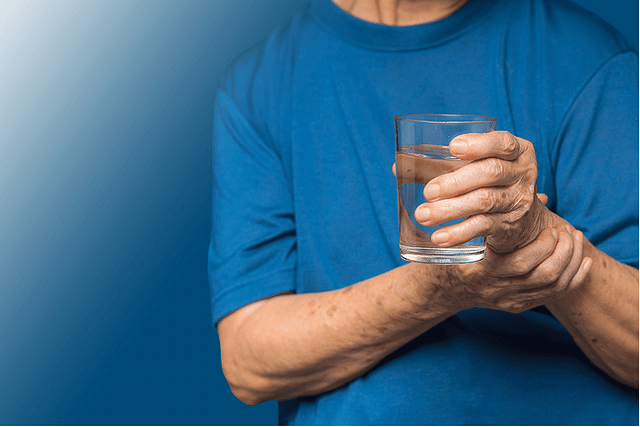
Vitamin B12 deficiency can lead to physical, neurological, and psychological symptoms, which may develop gradually and worsen over time. Interestingly, some individuals with low vitamin B12 levels may not show any symptoms. I is also possible to experience neurological damage without having anaemia (a lack of red blood cells).
General Symptoms
- Persistent tiredness or weakness
- Nausea, vomiting, or diarrhoea
- Reduced appetite
- Weight loss
- Soreness in the mouth or tongue
- Yellowish skin tone
Neurological Symptoms
- Numbness or tingling in hands and feet
- Vision disturbances
- Memory issues or confusion
- Difficulty walking or speaking normally
Psychological Symptoms
- Depression
- Irritability
- Changes in mood or behavior
Causes of Vitamin B12 Deficiency
Vitamin B12 deficiency occurs when your diet lacks enough vitamin B12 or when your body is unable to absorb it effectively.
Several factors can contribute to the development of vitamin B12 deficiency. Some of the main causes include:
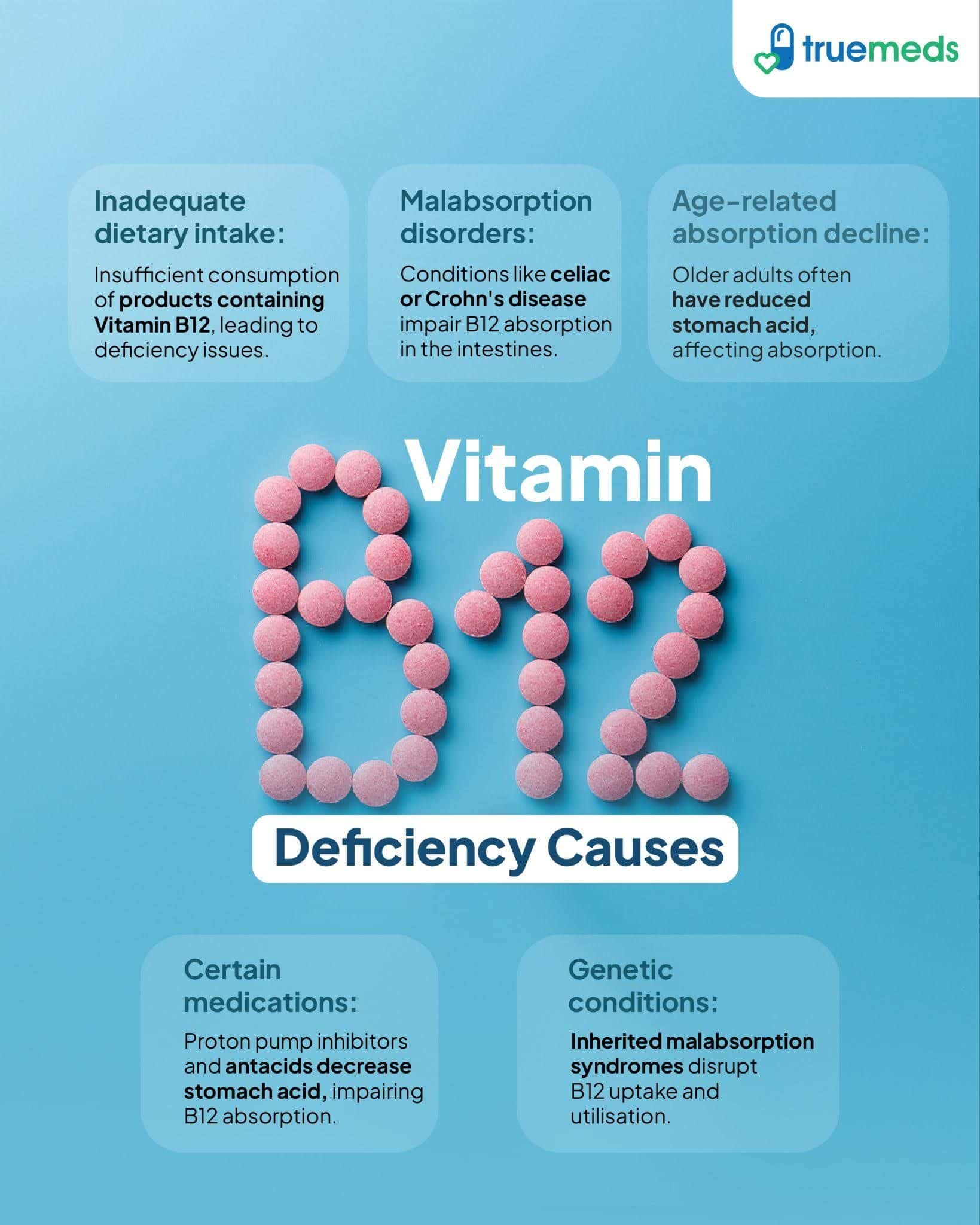
- Inadequate dietary intake: Vitamin B12 is found primarily in animal products like meat, fish, eggs, and dairy. Those following a strict vegan or vegetarian diet are at higher risk of B12 deficiency if they don't consume B12-fortified foods or supplements.
- Malabsorption disorders: Certain gastrointestinal conditions like celiac disease, Crohn's disease, and intestinal surgeries can impair the body's ability to absorb vitamin B12 from food.
- Age-related absorption decline: As people get older, their bodies naturally absorb less vitamin B12 from dietary sources.
- Certain medications: Long-term use of acid-reducing medications like proton pump inhibitors and H2 blockers for heartburn may interfere with B12 absorption. Long-term metformin use may also reduce vitamin B12 levels.
- Genetic conditions: Autoimmune conditions such as pernicious anaemia impair the production of intrinsic factor required for vitamin B12 absorption in the terminal ileum.
Complications
How Vitamin B12 Deficiency Affects the Body
Vitamin B12 deficiency, also known as cobalamin deficiency, can have a profound impact on various systems and functions within the body. This deficiency occurs when there is an insufficient amount of vitamin B12, leading to a range of symptoms that can affect the neurological, haematological, gastrointestinal, and psychological aspects of health.
From a neurological perspective, individuals with a vitamin B12 deficiency may experience numbness or tingling sensations in their hands and feet, weakness, and gait problems. These symptoms arise due to the damage that a lack of B12 can inflict on the nervous system. Haematologically, vitamin B12 insufficiency can result in anaemia, causing fatigue, shortness of breath, and pale skin. This occurs because vitamin B12 plays a vital role in the production of red blood cells, which are responsible for carrying oxygen throughout the body.
Gastrointestinal symptoms of a B12 deficiency disease may include a loss of appetite, weight loss, and diarrhoea. These issues often stem from malabsorption problems, such as those seen in conditions like coeliac disease or Crohn's disease. From a psychological standpoint, individuals with a vitamin B12 deficiency may experience depression, anxiety, and cognitive impairment. Neuropsychiatric symptoms such as depression, memory impairment, irritability, or cognitive decline may occur, making diagnosis challenging. Proper diagnosis is crucial for determining the appropriate vitamin B12 deficiency treatment.
Diagnosis & Tests
The diagnosis involves a multifaceted approach, including clinical evaluation, laboratory tests, and additional investigations if necessary. It begins with a thorough medical history and physical examination to identify symptoms and signs suggestive of deficiency.
1. Blood tests
The primary diagnostic test is a blood test
- Serum vitamin B12 levels: A level < 200 pg/mL indicates deficiency.
- Complete blood count (CBC): Detects megaloblastic anemia and other haematologic abnormalities.
- Other related markers: Methylmalonic acid (MMA) levels may be elevated in deficiency cases. Homocysteine levels can also be elevated with either vitamin B12 or folate deficiency (NICE, 2025).
2. Additional tests
- The Schilling test is now largely obsolete and is no longer routinely used. Evaluation of malabsorption is instead guided by clinical assessment, antibody testing (anti–intrinsic factor antibodies), and response to vitamin B12 therapy.
- Endoscopy and biopsy: Endoscopy with biopsy is not routinely required for diagnosing vitamin B12 deficiency but may be considered when underlying gastrointestinal pathology such as atrophic gastritis or inflammatory bowel disease is clinically suspected.
3. Interpreting Results
Normal vitamin B12 levels typically range from 200 to 800 pg/mL; levels between 200 and 300 pg/mL are considered borderline.
Treatment & Management of Vitamin B12 Deficiency
Vitamin B12 deficiency is treated by replenishing vitamin B12 levels through dietary changes, supplements, or injections, depending on the cause and severity of the deficiency. In conditions such as pernicious anaemia or irreversible malabsorption, lifelong vitamin B12 replacement is required (NICE, 2024). Treatment may be temporary until levels normalise or ongoing if the deficiency is chronic. Options for treatment include:
1. Dietary changes
Increasing intake of vitamin B12-rich foods such as meat, fish, poultry, eggs, and dairy products can help manage mild deficiencies.
2. Vitamin B12 supplements
For moderate cases, oral supplements containing cyanocobalamin or methylcobalamin are commonly prescribed to replenish B12 stores.
3. Vitamin B12 injections
In cases of severe deficiency or malabsorption issues, intramuscular injections of vitamin B12 are recommended for direct absorption into the bloodstream.
FAQs
What are the common indications of vitamin B12 insufficiency?
Which foods contain the highest amounts of vitamin B12?
What are the consequences of having a cobalamin deficiency?
Is it possible to treat a vitamin B12 deficiency effectively?
What are the quickest ways to improve B12 levels in the body?
What are the different stages of vitamin b12 deficiency?
Does increasing B12 intake help to boost hemoglobin levels?
References
- National Institutes of Health, Office of Dietary Supplements. (2025). Vitamin B12: Fact sheet for health professionals. U.S. Department of Health and Human Services. https://ods.od.nih.gov/factsheets/VitaminB12-HealthProfessional/
- National Institute for Health and Care Excellence. (2024). Vitamin B12 deficiency in over 16s: Diagnosis and management (NG239). NICE. https://www.nice.org.uk/guidance/ng239
- NCBI Bookshelf, National Institute for Health and Care Excellence. (2025). Evidence review for diagnostic tests for vitamin B12 deficiency. In Vitamin B12 deficiency in over 16s: Diagnosis and management. https://www.ncbi.nlm.nih.gov/books/NBK603364/
Check Related Salts
Browse Other Conditions
Latest health articles

Top Health Essentials












Disclaimer
Top-Selling Medicines:
...View more
Top-OTC medicines:
...View more
Company
About UsHealth ArticleHealth StoriesHealth LibraryDiseases & Health ConditionsAyurvedaUnderstanding Generic MedicinesAll MedicinesAll BrandsNeed HelpFAQSecuritySavings CalculatorAdvertise with UsSubscribe
Registered Office Address
Grievance Officer
Download Truemeds


Contact Us
Our customer representative team is available 7 days a week from 9 am - 9 pm.
v4.28.16

2026 - Truemeds | All rights reserved. Our content is for informational purposes only. See additional information.
Our Payment Partners