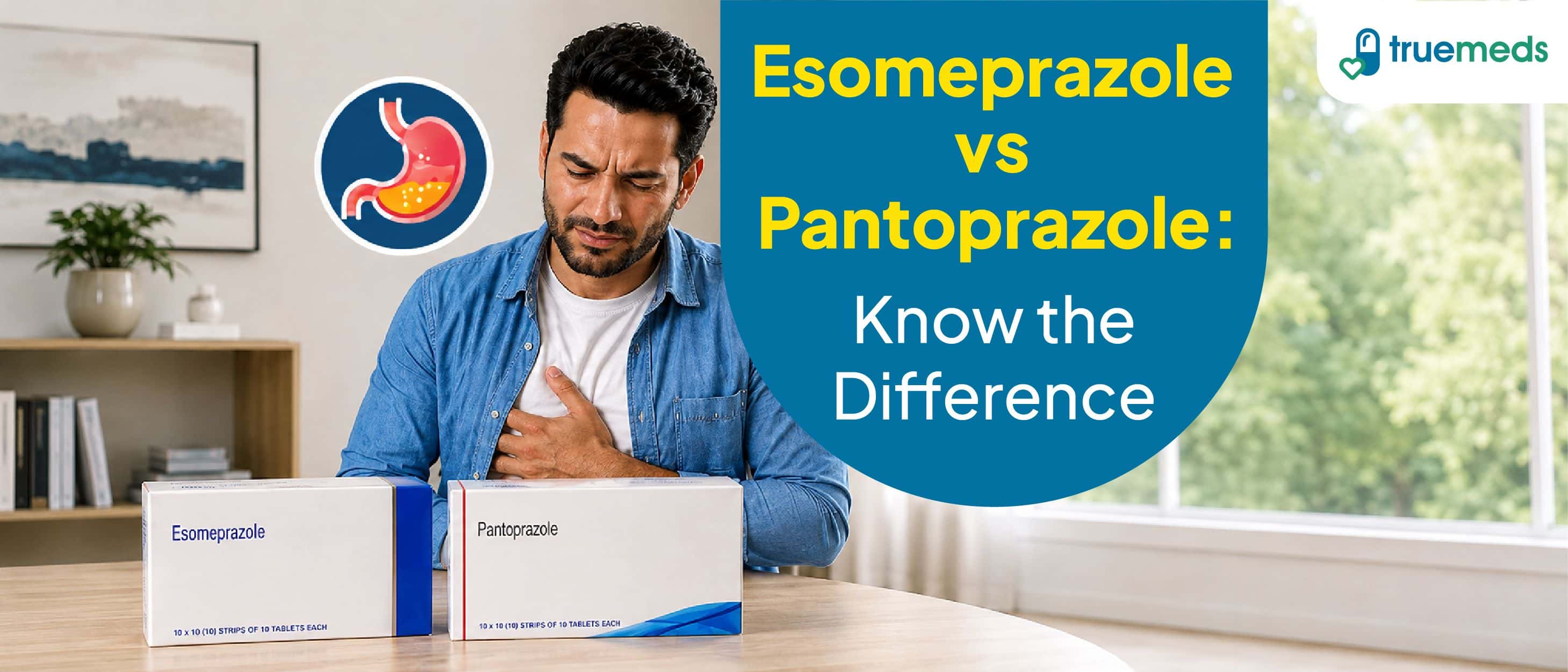
Choosing the right medication for acid-related conditions can significantly impact your treatment success and overall health. Proton pump inhibitors (PPIs) such as esomeprazole and pantoprazole are commonly used to treat conditions caused by excessive stomach acid, including gastroesophageal reflux disease (GERD) and peptic ulcers[1]. While both medications belong to the same medicine class and work similarly, knowing the differences between esomeprazole and pantoprazole can help you and your healthcare provider make an informed decision.
Understanding Esomeprazole and Pantoprazole
Proton pump inhibitors are a class of medications that reduce stomach acid production by targeting the proton pump in gastric parietal cells. The activated form of these medications binds covalently to the H+/K+-ATPase enzyme, which is the proton pump that transports hydrogen ions into the gastric lumen, effectively reducing acid production[1].
Esomeprazole is used to treat symptoms of GERD in adults and children aged 1 year and older. It is also used to heal damage from acid reflux and allow the oesophagus to heal while preventing further damage. It works by decreasing the amount of acid produced in the stomach[2].
Pantoprazole is used for the treatment and maintenance of erosive oesophagitis associated with GERD in adults and children five years of age and older. It is also used to treat conditions where the stomach produces excessive acid, such as Zollinger-Ellison syndrome. Similar to esomeprazole, pantoprazole is a proton pump inhibitor that reduces stomach acid production[3].
Though both medications share the core chemical structures of benzimidazole and pyridine, their pharmacokinetics and pharmacodynamics differ slightly[4]. These differences can affect their effectiveness in specific clinical situations, which is why understanding the distinction between pantoprazole and esomeprazole is important when selecting long-term treatment.
Uses and Indications for Esomeprazole and Pantoprazole
Both esomeprazole and pantoprazole are prescribed for similar acid-related conditions, though there are differences in their approved uses and clinical applications.
Esomeprazole is prescribed for:
Treatment of GERD symptoms and oesophageal damage in adults and children aged 1 year and older[2]
Healing of erosive oesophagitis caused by acid reflux in adults and children aged 1 year and older[5]
Maintenance of healing in patients with erosive oesophagitis to prevent symptom recurrence[6]
Reduction of the risk of NSAID-associated gastric ulcers in patients requiring continuous anti-inflammatory medication
Treatment and prevention of recurrence of stomach ulcers caused by Helicobacter pylori infection when combined with antibiotics
Long-term treatment of conditions causing excessive acid production, such as Zollinger-Ellison syndrome[2]
Pantoprazole is indicated for:
Treatment and maintenance of erosive oesophagitis associated with GERD in adults and children aged 5 years and older[3]
Maintenance of healing in adults with erosive oesophagitis to prevent relapse[6]
Treatment of conditions characterised by excessive stomach acid production, including Zollinger-Ellison syndrome in adults
Treatment and maintenance of GERD (delayed-release tablets)[3]
Treatment must be determined by a healthcare provider. Do not self-medicate or change medications without medical supervision.
The Key Differences Between Esomeprazole and Pantoprazole
Understanding the difference between esomeprazole and pantoprazole requires examining several key parameters that affect their clinical performance.
Primary distinctions include:
Acid suppression potency: Research shows that esomeprazole may provide greater acid inhibition than pantoprazole[7]. This can translate to faster symptom relief for some patients.
Speed of action: Esomeprazole provides faster and more consistent acid suppression than pantoprazole. Research indicates that esomeprazole achieves more rapid and superior acid suppression and better acid control compared with pantoprazole[7].
Absorption rate: Pantoprazole is absorbed consistently from the first dose, maintaining steady blood levels. Esomeprazole gradually increases in the blood with repeated doses, enhancing its acid-suppressing effect over time[8].
Genetic variability impact: The effectiveness of pantoprazole can vary significantly based on genetic differences in the CYP2C19 enzyme, which metabolises the medicine. Esomeprazole shows less variability across different genetic profiles, potentially offering more consistent results[9].
Medication interaction profile: Pantoprazole has minimal inhibitory effect on CYP2C19, so it has fewer interactions with other medications metabolised by this pathway. Esomeprazole is a weak autoinhibitor of CYP2C19, possibly requiring monitoring when used with certain medications like clopidogrel[9].
Comparison Table
The following table summarises key pharmacological parameters that distinguish esomeprazole from pantoprazole:
Parameter | Esomeprazole | Pantoprazole |
|---|---|---|
Potency Score | Superior | Less potent |
Duration of Action | Faster onset | Slower |
CYP2C19 Metabolism | Moderate dependence | High dependence |
Medicine Interaction Risk | Weak CYP2C19 inhibitor | Low (minimal CYP2C19 inhibition) |
Paediatric Use | From 1 month old | From 5 years old |
Pregnancy Category | Category B (historical) | Category B (historical) |
Note: Current FDA pregnancy labelling no longer uses letter categories; instead, it provides detailed risk summaries. Historical categories are shown for reference only.
Clinical Efficacy: Healing and Symptom Relief
Multiple clinical trials have compared the effectiveness of esomeprazole and pantoprazole in treating acid-related conditions, with results showing both similarities and important differences.
Healing rates for erosive oesophagitis
In one trial, patients receiving esomeprazole 40 mg daily achieved higher complete healing at 4 weeks than those on pantoprazole 40 mg (81% vs. 75%), a significant difference favouring esomeprazole. At 8 weeks, healing remained slightly higher with esomeprazole (96% vs. 92%), indicating faster mucosal repair. These results suggest that esomeprazole may provide faster, marginally better early healing[6].
Speed of symptom relief
A study examining heartburn resolution found that esomeprazole provided more rapid symptom relief than pantoprazole[7]. The faster symptom control may improve quality of life during the initial treatment period.
Maintenance therapy effectiveness
For patients who have achieved healing, maintenance therapy prevents symptom recurrence. One large study (the EXPO study) showed that esomeprazole 20 mg is more effective than pantoprazole 20 mg in maintaining both endoscopic and symptomatic remission. After 6 months of treatment, 92.2% of patients on esomeprazole remained free of moderate to severe GERD symptoms, compared with 88.5% on pantoprazole. These results indicate that esomeprazole may provide superior long-term symptom control[7].
Individual responses may vary. Clinical efficacy data should be discussed with your healthcare provider to determine which medication best suits your individual circumstances.
Safety Guide: Side Effects and Precautions
Both esomeprazole and pantoprazole generally have good safety profiles, but all medications can cause side effects, and long-term PPI use requires monitoring for specific risks.
Headache
Diarrhoea
Dizziness
Vomiting
Joint pain
Severe side effects:
Here are several potential risks associated with extended PPI use that require careful consideration[10]:
Kidney function: Studies suggest that PPI use has been linked with acute interstitial nephritis and that research indicates prolonged PPI therapy may increase the risk of chronic kidney disease, with evidence showing patients who use PPIs for longer durations have higher CKD risk.
Fracture risk: Retrospective studies suggest a dose‑dependent relationship between PPI use and decreased bone mineral density, potentially increasing fracture risk, especially hip fractures.
Infection susceptibility: Research indicates that PPI use has been linked with increased risk of both gastrointestinal infections, such as Clostridium difficile and other enteric pathogens, and respiratory infections, such as pneumonia, due to hypochlorhydria, which reduces the stomach’s acid barrier.
Cardiovascular concerns: Studies suggest that PPI use has been associated with increased risk of major acute cardiovascular events, including myocardial infarction and stroke.
Special population considerations:
Pregnancy and breastfeeding: Both esomeprazole and pantoprazole are classified as Pregnancy Category B (historically), indicating no evidence of risk in animal studies but limited human data[11].
Elderly patients: Older adults may be more susceptible to certain side effects; therefore, careful monitoring may be needed.
Patients with liver disease: Dose adjustments may be necessary for patients with severe liver impairment, as PPIs are metabolised by the liver[1].
Consult your healthcare provider immediately if you experience severe side effects. Do not discontinue PPI therapy abruptly without medical guidance, as this may cause acid rebound.
Expert Recommendation & Final Verdict
Healthcare providers consider multiple factors when choosing between esomeprazole and pantoprazole for individual patients. Evidence-based recommendations include:
When Esomeprazole May Be Preferred
Esomeprazole may be more suitable when faster symptom relief is needed, particularly in the initial treatment phase. Its superior acid-suppressing effect may provide faster relief of GERD symptoms. In H. pylori eradication therapy, esomeprazole achieves higher eradication rates than pantoprazole when combined with antibiotics[7]. Patients with genetic variants in CYP2C19 metabolism may also achieve more consistent results with esomeprazole, as it relies less on this enzyme pathway[9].
When Pantoprazole May Be Preferred
Pantoprazole may be chosen when a favourable safety profile is important, especially in patients on multiple medications, as it is widely used in both inpatient and outpatient settings for acid‑related disorders [12].
The choice between esomeprazole and pantoprazole should be made by your healthcare provider based on your individual needs, medical history, symptom severity, and treatment goals. Never switch medications without consulting your doctor.
Conclusion
Esomeprazole and pantoprazole represent two effective proton pump inhibitors for managing acid-related disorders. While clinical evidence suggests esomeprazole may offer faster symptom relief and slightly superior healing rates during initial treatment, both medications achieve comparable long-term outcomes for most patients. The choice between them depends on individual factors, including the severity of your condition, age, concurrent medications, treatment goals, and personal response to therapy.
Pantoprazole's lower risk of medication interactions makes it advantageous for patients taking multiple medications, while esomeprazole's broader age range approval benefits paediatric patients. Always consult your healthcare provider before starting, stopping, or switching PPI therapy to ensure safe and effective treatment tailored to your specific needs.
FAQs
Is esomeprazole stronger than pantoprazole?
Yes, clinical studies show that esomeprazole has a higher relative potency than pantoprazole. Esomeprazole may also provide more rapid and consistent acid suppression. However, both medicines are effective proton pump inhibitors and are commonly prescribed for managing acid-related conditions such as GERD and ulcers.
What is the safest PPI to take long-term?
All PPIs carry similar long-term risks, including bone fractures, vitamin deficiencies, and kidney problems. No single medicine is considered clearly safer than others for long-term use. The safest approach is to take the lowest effective dose for the shortest necessary duration under medical supervision.
Is it safe to switch from pantoprazole to esomeprazole?
Switching between PPIs is generally safe under medical guidance. Your doctor can determine appropriate timing and dosing. Some patients may experience temporary changes in symptoms during the transition, so medical supervision ensures proper management.
Do PPIs damage the kidneys?
Long-term PPI use may increase the risk of acute interstitial nephritis and chronic kidney disease in some patients. Regular monitoring with your healthcare provider helps detect early changes in kidney function. Most people tolerate PPIs well without kidney problems.
Which is better, omeprazole, pantoprazole, or esomeprazole?
All three medications effectively reduce stomach acid, with individual responses varying. Esomeprazole (the S-isomer of omeprazole) may provide faster symptom relief and more consistent effects across different genetic profiles. Pantoprazole has fewer medication interactions. The best choice depends on your specific medical situation, concurrent medications, and personal response. Consult your doctor to find the most appropriate option.
Which is best, pantoprazole, rabeprazole, or esomeprazole?
Esomeprazole and rabeprazole demonstrate higher potency than pantoprazole. Rabeprazole has the fastest activation, followed by esomeprazole. Individual response varies, so the best choice depends on your specific needs, other medications, and treatment goals.
Can I take esomeprazole and pantoprazole at the same time?
No, you should not take esomeprazole and pantoprazole simultaneously. Both medications work through the same mechanism, and combining them provides no additional benefit while increasing the risk of side effects. If one PPI is not providing adequate symptom control, discuss alternative approaches with your doctor, such as adjusting dosage, changing timing, or switching to a different medication class.
Medical Disclaimer
This article is for informational purposes only and does not constitute medical advice. The information provided should not be used for diagnosing or treating health conditions. Always consult a qualified healthcare provider for diagnosis, treatment, and personalised medical advice. Do not disregard professional medical advice or delay seeking it because of information found in this article. If you have a medical emergency, contact your doctor or emergency services immediately.
References
National Library of Medicine. (2023). Proton pump inhibitors. In StatPearls. National Center for Biotechnology Information. https://www.ncbi.nlm.nih.gov/books/NBK557385/
MedlinePlus. (2023). Esomeprazole. U.S. National Library of Medicine. https://medlineplus.gov/druginfo/meds/a699054.html
Pantoprazole - StatPearls - NCBI bookshelf. (2025, July 6). National Center for Biotechnology Information. https://www.ncbi.nlm.nih.gov/books/NBK499945/
Shin, J. M., & Kim, N. (2013). Pharmacokinetics and pharmacodynamics of the proton pump inhibitors. Journal of Neurogastroenterology and Motility, 19(1), 25–35. https://pmc.ncbi.nlm.nih.gov/articles/PMC3548122/