


Growth hormone (GH) is a vital hormone produced by the pituitary gland. It plays a crucial role in maintaining overall health and well-being by regulating growth, body composition, cell repair, and metabolism. Its importance extends beyond childhood growth and development, as it continues to influence health throughout life by maintaining muscle mass, bone density, and overall vitality[1].
However, GH levels naturally decline with age, which can impact physical fitness and well-being[1]. By understanding the role of GH and how to support its production, individuals can take steps to optimise their health and maintain a higher quality of life.
What is Growth Hormone?
Growth hormone (GH) is a peptide hormone synthesised and secreted by the pituitary gland[1]. It has the following roles in the human body[2]:
- It stimulates the liver and other tissues to release insulin-like growth factor 1 (IGF-1), which promotes bone growth, muscle development, and fat metabolism.
- While GH is crucial for growth and development in children, it continues to play a significant role in maintaining health throughout adulthood by regulating body composition and metabolic rate.
- Optimal GH levels are essential for preserving muscle mass, maintaining bone density, and supporting a healthy metabolism.
10 Natural Ways to Boost Human Growth Hormone (HGH) Scientifically
There are several natural methods for increasing the production of growth hormone, including lifestyle changes such as regular exercise, quality sleep, and dietary adjustments. These strategies may help stimulate the pituitary gland to release more GH, potentially leading to improved physical health and well-being.
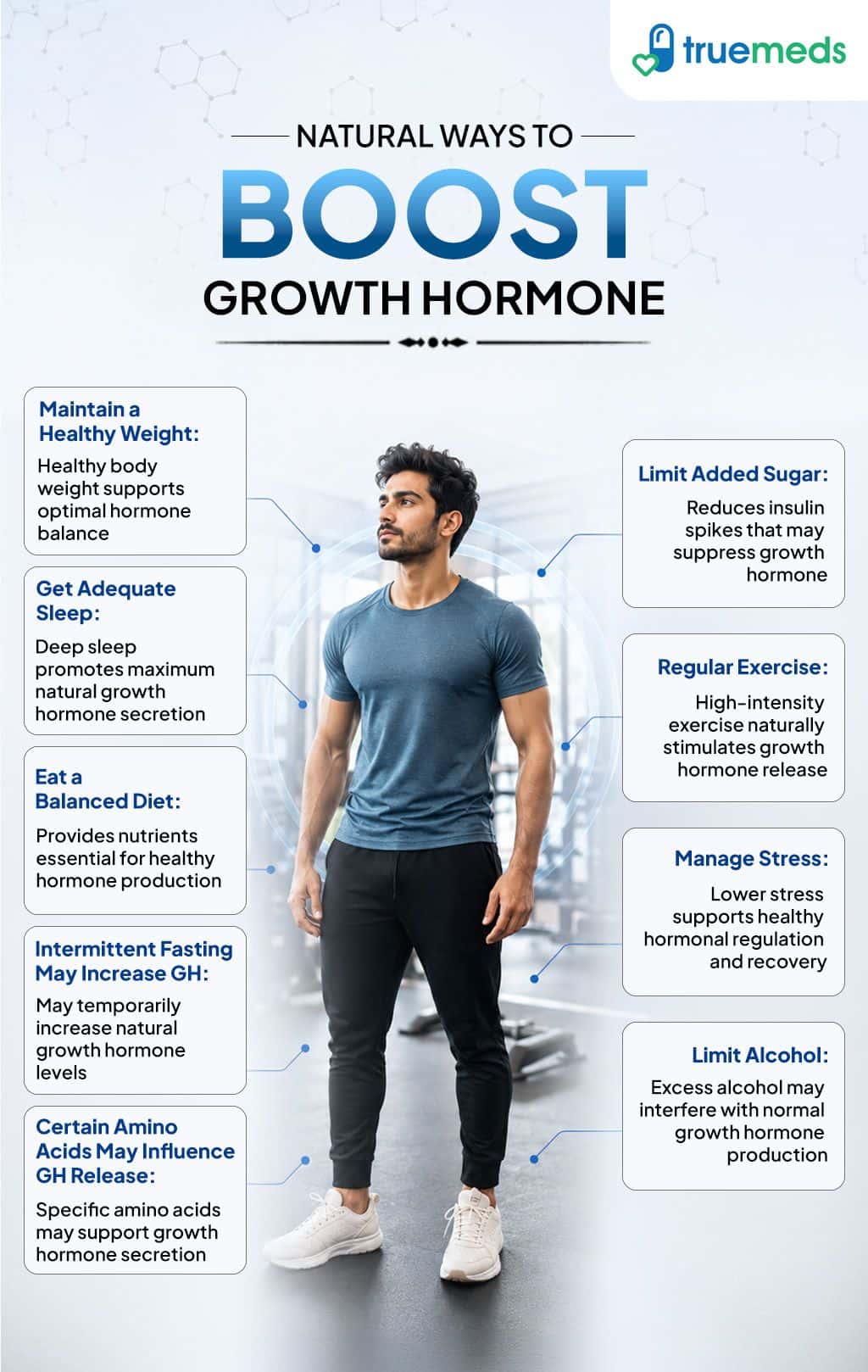
1. Regular Exercise
Engaging in regular exercise, both resistance training and aerobic activities, is one of the most potent stimulators of growth hormone release. When you exercise, your body experiences physical stress, which triggers the pituitary gland to secrete more GH[3].
Resistance exercises, such as weightlifting, may also promote GH secretion and help maintain muscle mass as you age. Moreover, exercise-induced stress activates various physiological pathways that facilitate GH release, contributing to improved metabolic and overall health outcomes[3]. An exercise intensity above lactate threshold for a minimum of 10 minutes may elicit the greatest stimulus to GH secretion[5].
2. Adequate Sleep for Growth Hormone Release
Getting enough quality sleep is essential for optimal GH production. During deep sleep stages, particularly slow-wave sleep, your body secretes significant amounts of GH. In adults, the most reproducible pulse of GH secretion occurs shortly after the onset of sleep in association with the first phase of slow-wave sleep[6].
To enhance sleep quality and support hormonal health, it's important to practice good sleep hygiene. This includes:
- Maintaining a consistent sleep schedule
- Avoiding exposure to blue light from electronic devices before bedtime
- Creating a dark and cool sleep environment.
Aim for 7-9 hours of uninterrupted sleep each night to support your body's natural GH production and promote overall hormonal balance.
3. Balanced Nutrition for Growth Hormone
Eating a balanced diet that includes lean proteins and vitamin D may support the synthesis of growth hormone. Here are some tips to keep in mind:
- Along with regular exercise and adequate sleep, including protein sources such as chicken, fish, and eggs may stimulate GH secretion.
- Avoid excessive consumption of sugar and refined carbohydrates, as insulin spikes from high-glycaemic foods can suppress GH release[7].
- Incorporating magnesium-rich foods like spinach and pumpkin seeds, which are vital for sleep, may indirectly support GH production.
- Ensure adequate vitamin D intake through fatty fish, fortified dairy products, or sunlight exposure. Vitamin D is essential to support bone health and insulin-like growth factor-1 (IGF-1) activity. Since IGF-1 mediates most of the growth-promoting effects of GH, optimising your vitamin D and protein intake is a great way to help increase igf 1 hormone naturally and support overall tissue repair.
By focusing on a balanced and nutritious diet, you can create a solid foundation for enhancing your GH levels naturally.
Consult your doctor before making significant dietary changes.
4. Intermittent Fasting and GH
Intermittent fasting has a notable impact on the body’s hormonal environment, particularly in relation to insulin and growth hormone (GH)[8]. During fasting periods, insulin levels decline significantly, creating a physiological state that permits increased GH secretion, as these hormones share an inverse relationship[7]. Fasting has been shown to enhance GH release and amplify its natural pulsatile rhythms in humans.
While elevated GH during fasting supports processes such as fat metabolism, cellular repair, and the preservation of lean tissue, these increases do not necessarily translate into muscle hypertrophy or improved physical performance[8].
In addition, intermittent fasting may enhance the body’s sensitivity to other hormones, contributing to overall hormonal regulation. By providing periods of digestive rest, fasting can reduce chronic inflammation and oxidative stress—both of which are known to negatively affect hormonal balance.
Clinical Advice: Always consult your doctor or a registered healthcare professional before starting an intermittent fasting regimen, especially if you have an underlying medical condition or are on chronic medications. Fasting is not recommended without medical supervision for specific groups, including diabetics on insulin/sulfonylureas, pregnant or breastfeeding women, individuals with a history of eating disorders, and adolescents.
5. Amino Acids and Their Role in Boosting GH
Certain amino acids, particularly arginine and glutamine, play a key role in stimulating growth hormone (GH) secretion[9].
- Under controlled experimental conditions, amino acids such as arginine may transiently stimulate GH release, although evidence suggests this has minimal clinical relevance in healthy adults.
- Glutamine may exert a modest, short-term influence on GH secretion; however, evidence in humans is limited, with effects primarily observed in animal or experimental studies.
Popular GH-supporting supplements often include arginine, glutamine, ornithine, and lysine, which work synergistically to enhance natural hormone production.
It's always advisable to consult with a doctor before starting any supplementation regimen to ensure safety and suitability for your individual needs.
6. Reducing Sugar Intake to Boost GH
Consuming high amounts of sugar can increase insulin levels, which can suppress the secretion of GH. Insulin and GH share an inverse relationship, meaning that when insulin levels are elevated (common after consuming sugary meals), GH release is hindered[7]. As GH is critical for metabolism and muscle growth, it's important to maintain optimal levels.
By reducing your intake of refined sugars, you can help maintain lower baseline insulin levels, allowing GH pulses to occur more frequently, especially during sleep and exercise. Instead, opt for low-glycaemic foods like leafy greens and lean proteins to stabilise insulin levels and support GH production.
7. Maintaining Healthy Body Fat for GH Production
Maintaining a healthy body fat percentage is another key factor for optimising growth hormone production[10].
- Excess body fat, especially around the abdominal area, can contribute to insulin resistance (body cells fail to respond effectively to insulin) and inflammation (the body’s natural immune response to injury, infection, or toxins), both of which can negatively impact GH secretion.
- Obesity may reversibly suppress GH secretion, potentially driven by elevated free fatty acid levels.
- Having an adequate amount of body fat (but not too much) helps ensure that your body can effectively produce and regulate hormones, including GH.
To support healthy body fat levels and GH production, aim to lead a balanced lifestyle that includes regular exercise and a nutritious diet.
8. Managing Stress for GH Balance
Stress, particularly when it becomes chronic, may significantly affect your growth hormone balance[11].
- When you experience stress, your body releases cortisol, a hormone that can interfere with the secretion of GH from your pituitary gland.
- Long-term high cortisol levels can reduce growth hormone production by lowering the signals that release it, increasing hormones that block it, and making the pituitary gland less responsive.
- This disruption can affect your body's growth and repair processes, which are mediated by GH.
To support better GH production, it's essential to manage your stress levels. Some effective techniques for reducing stress include:
- Practising meditation or mindfulness
- Engaging in regular exercise
- Trying relaxation techniques like yoga or deep breathing
9. Healthy Fats and Their Role in Growth Hormone Production
Incorporating healthy fats into your diet, particularly omega-3 fatty acids, can contribute to your overall health and potentially support growth hormone production. Some excellent sources of omega-3 fatty acids include:
- Fatty fish like salmon, mackerel, and sardines
- Nuts and seeds, such as walnuts, chia seeds, and flaxseeds
- Plant-based oils, like flaxseed oil and canola oil
By incorporating these healthy fats into your diet, you will not only support overall well-being but also create a metabolic environment conducive to GH production.
10. Avoiding Excessive Alcohol for Optimal GH Production
Excessive alcohol consumption can have a detrimental effect on growth hormone (GH) production, potentially reducing it significantly[12].
- Alcohol significantly suppresses plasma GH values by 70% and 75% during both acute and chronic consumption, respectively. This significant decrease in GH levels may negatively impact muscle repair and growth, hindering overall physical development and performance.
- Alcohol disrupts liver function, which plays a crucial role in regulating various hormones, including GH secretion.
- The toxic effects of alcohol also extend to testosterone production, further impairing muscle recovery and growth.
To maintain optimal hormonal health and support natural GH production, it is essential to avoid excessive alcohol consumption and adopt a balanced lifestyle approach.
Lifestyle Changes to Increase Growth Hormone
Incorporating certain lifestyle changes can effectively support and enhance your body's natural GH production:
- Engaging in regular physical activity, including high-intensity exercise and maintaining a healthy body weight through activities such as brisk walking, supports overall metabolic and endocrine health.
- While such activities may be associated with transient increases in GH secretion, they should be viewed primarily as general health-promoting practices rather than targeted strategies to stimulate GH release.
- Follow a balanced diet rich in protein to support muscle growth and recovery.
- Practice stress management techniques, such as meditation and yoga, to minimise cortisol levels that can interfere with GH production.
- Prioritise quality sleep, as GH is primarily secreted during deep sleep stages.
By making these actionable adjustments to your daily routine, you can create an environment that promotes optimal GH levels and overall well-being.
If you suspect an underlying hormonal imbalance, it is important to seek professional medical advice.
When to Consult a Doctor for Growth Hormone Imbalance
It is crucial to seek medical advice if you experience symptoms of GH imbalance, such as:
- Unexplained weight gain or difficulty losing weight
- Persistent fatigue or muscle weakness
- Slower growth in children or delayed physical development
- Reduced bone density or frequent fractures
- Mood changes or sleep disturbances
Your doctor can help you determine the underlying cause of your symptoms and develop a personalised treatment plan to restore hormonal balance and improve your overall well-being.
Conclusion
Optimising growth hormone levels naturally through lifestyle changes is a key component for promoting overall health and well-being. By incorporating regular exercise, consuming a balanced diet, practicing stress management techniques, and prioritising quality sleep, you can effectively support your body's natural GH production. Adopting a holistic approach to health, which includes avoiding detrimental substances like excessive alcohol, can help maintain optimal hormonal balance and contribute to improved physical and mental well-being.
FAQs
What are the best ways to increase growth hormone naturally?
The best ways to naturally increase human growth hormone (HGH) levels include exercise, quality sleep, reducing body fat, and intermittent fasting.
Can exercise help increase growth hormone levels?
Yes, high-intensity exercises like interval training or weightlifting can significantly boost growth hormone levels, making them effective ways to increase human growth hormone naturally.
What is the relationship between sleep and growth hormone?
Sleep is crucial for growth hormone production, as the body naturally releases it during sleep. Lack of quality sleep can disrupt this process.
Can nutrition and diet impact growth hormone production?
Nutrition plays a vital role in growth hormone production. Consuming amino acids and reducing sugar intake can help increase human growth hormone (HGH) levels naturally.
How does intermittent fasting affect growth hormone?
By providing periods of digestive rest, intermittent fasting may enhance the body’s sensitivity to other hormones, contributing to overall hormonal regulation making it a potential strategy to boost human growth hormone levels.
Are there any risks associated with increasing growth hormone?
While natural methods to increase growth hormone generally carry fewer risks, using synthetic human growth hormone can lead to side effects like joint pain, swelling, diabetes, and increased cancer risk.
Medical Disclaimer
This article is for informational purposes only and does not constitute medical advice. The information provided should not be used for diagnosing or treating health conditions. Always consult a qualified healthcare provider for diagnosis, treatment, and personalised medical advice. Do not disregard professional medical advice or delay seeking it because of information found in this article. If you have a medical emergency, contact your doctor or emergency services immediately.
References
National Center for Biotechnology Information. (2023, May 1). Physiology, Growth Hormone. StatPearls - NCBI Bookshelf. https://www.ncbi.nlm.nih.gov/books/NBK482141/
National Center for Biotechnology Information. (2025, April 18). Normal Physiology of Growth Hormone in Normal Adults. Endotext - NCBI Bookshelf. https://www.ncbi.nlm.nih.gov/books/NBK279056/
Wideman, L., Weltman, J. Y., Hartman, M. L., Veldhuis, J. D., & Weltman, A. (2002). Growth hormone release during acute and chronic aerobic and resistance exercise: recent findings. Sports Medicine, 32(15), 987-1004. https://pubmed.ncbi.nlm.nih.gov/12457419/
Dror, N., Pantanowitz, M., Nemet, D., & Eliakim, A. (2021). High-intensity interval exercise test stimulates growth hormone secretion in children. Growth Hormone & IGF Research, 57-58, 101388. https://pubmed.ncbi.nlm.nih.gov/33906078/