
Knowing how to provide first aid for a heart attack can mean the difference between life and death. A heart attack is a life-threatening medical emergency caused by blocked blood flow to part of the heart muscle, and getting help quickly can limit heart damage and save your life [1]. Yet many people wait too long because symptoms are not always dramatic or obvious. This guide explains the early warning signs, the immediate steps to take, what to do while waiting for help, and how to respond if someone becomes unresponsive.
Key Takeaways
- A heart attack is a medical emergency. Act on suspected symptoms immediately rather than waiting.
- The single most important first step is calling emergency medical services right away.
- While waiting for help, keep the person resting, calm, and monitored. Do not leave them alone or give food or water.
- Aspirin is not for everyone and should only be given if a medical professional advises it.
- If the person becomes unresponsive and is not breathing normally, start CPR immediately and use an AED if available.
- After a heart attack, hospital treatment and cardiac rehabilitation can support recovery and reduce future risk.
What to Do Right Now
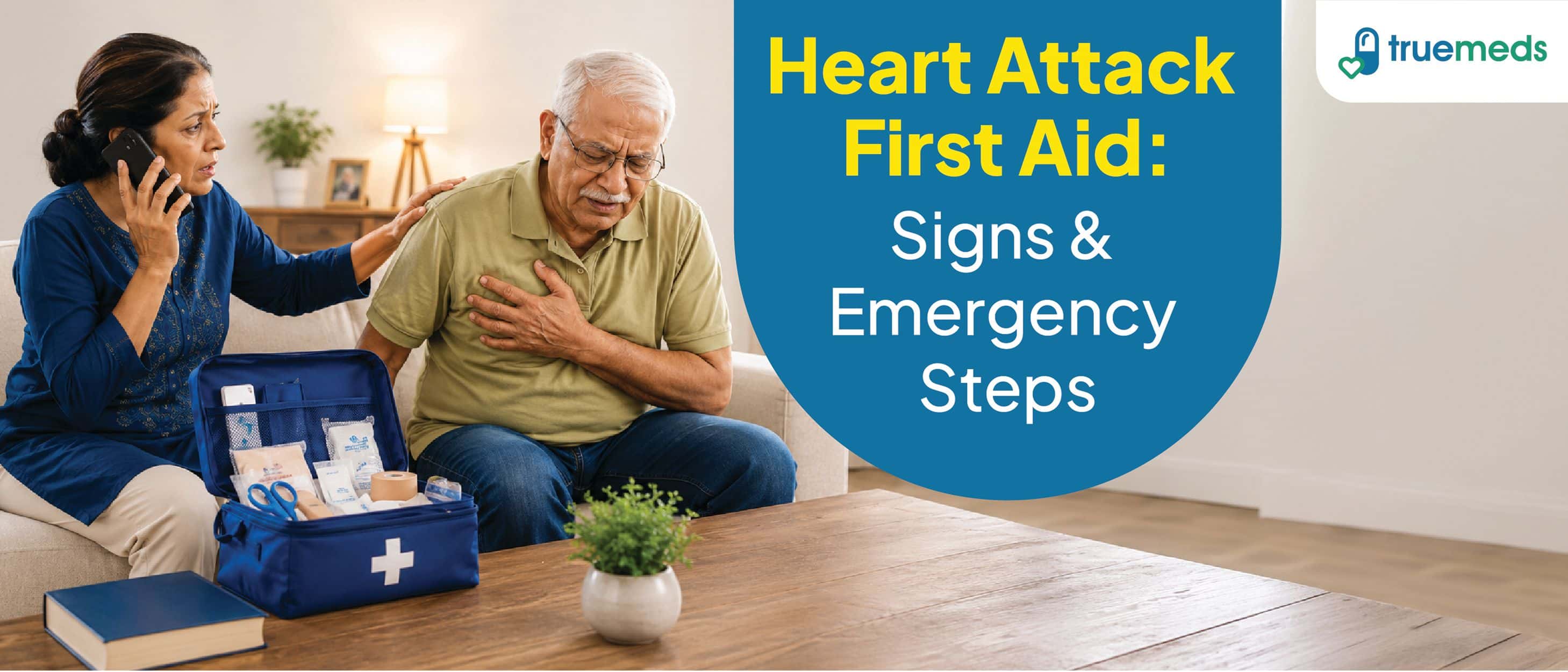
If you suspect a heart attack, act immediately. Do not wait to see whether symptoms settle on their own. Call emergency medical services right away. Symptoms may start slowly, come and go, or seem less serious, but every minute matters[2].
While waiting for help, have the person sit and rest, keep them calm, and closely monitor their breathing and responsiveness.
Early Signs of a Heart Attack You Should Never Ignore
Recognising symptoms quickly is the first step in providing first aid for a heart attack.
Common Warning Signs That May Appear First
The following symptoms may signal a heart attack[2]:
- Chest pain, heaviness, or discomfort
- Pain spreading to the arms, back, shoulders, neck, jaw, or upper belly
- Shortness of breath
- Sweating
- Nausea
- Dizziness
- Irregular heartbeat
- Unusual fatigue (more common in women)
Symptoms That People Often Mistake for Other Conditions
Symptoms may start slowly, come and go, or be mild enough to be mistaken for indigestion or ordinary tiredness[2]. This is one reason people delay calling for help, which can worsen outcomes.
How Early Signs May Differ in Women, Men, and Older Adults
Classic chest pain is common, but symptoms vary. Women more often report unusual tiredness, indigestion-like discomfort, upper back or neck pain, nausea, dizziness, and shortness of breath[3]. Silent heart attacks, which occur with mild symptoms or no chest pain at all, are more common in older adults and people with diabetes[2].
When Early Symptoms Become a Medical Emergency
Any symptom that could suggest a heart attack should be treated as an emergency from the moment it appears. Do not try to assess severity at home or wait for symptoms to worsen before calling for help[2].
When Should You Call for Emergency Help?
Calling for help is the single most important action you can take. This section explains who to call, when to call, and what to say.
1. Situations That Need Immediate Medical Attention
Call for emergency help the moment heart attack symptoms are suspected. Do not wait to see if symptoms improve on their own [2].
2. Why Delaying Help Can Be Dangerous
Ambulance transport is safer than travelling by private vehicle, and emergency staff can begin assessment and lifesaving treatment earlier when they are called promptly[2]. Every minute of delay means more heart muscle may be affected.
3. What Information to Share With Emergency Services
When calling for help in India, use 112 or the ambulance-linked numbers 102 and 108[4]. Clearly share your exact location and describe the emergency. Stay on the line and follow any instructions given by the operator.
What is Heart Attack First Aid, and Why Does It Matter?
First aid for a heart attack aims to keep the person safe, resting, observed, and connected to emergency care as quickly as possible. Acting quickly reduces the risk of further deterioration and improves the chance of survival[5].
How Quick Action Can Make a Difference
Every minute without treatment allows more heart muscle to be affected. Recognising symptoms and calling for help immediately gives the person the best possible chance of recovery[1].
Heart Attack First Aid: Step-by-Step Actions to Take Immediately
These steps are designed to be practical and easy to remember under pressure.
Step 1: Call Emergency Medical Services
This is always the first action. Do not attempt any other step before calling for help[5].
Step 2: Help the Person Sit and Rest
Have the person sit in a comfortable position, such as on the floor with their back supported, and stop all physical activity[5].
Step 3: Keep the Person Calm and Comfortable
Loosen tight clothing around the neck and chest. Speak calmly and reassure the person that help is coming[5].
Step 4: Monitor Symptoms and Responsiveness
Watch for changes in breathing, worsening pain, or loss of responsiveness. If the person already uses prescribed nitroglycerin, you may help them take it as directed for their own condition[5]. Do not give them medication that has not been prescribed for them.
Step 5: Stay With the Person Until Help Arrives
Do not leave the person alone unless you must briefly step away to call for help or retrieve an automated external defibrillator (AED)[5].
First Aid for Heart Attack at Home
First aid treatment for heart attacks at home follows the same core steps, with a few additional practical points.
1. What to Do If a Family Member Has a Heart Attack
Call emergency services first. Keep the person calm, seated, and under close observation. Do not attempt home treatment in place of professional emergency care[2].
2. What to Do If You Are Alone
If you have symptoms yourself and are alone, call emergency services right away. Do not drive yourself to the hospital unless there is genuinely no other option[2].
3. Preparing for Emergency Medical Assistance
Keep the front door unlocked or accessible so the ambulance team can enter quickly. Gather any medicines the person takes to share with the emergency team[2].
What Should You Do While Waiting for Medical Help?
Waiting time should be active and attentive, not passive.
1. Monitoring the Person's Condition
Watch for worsening chest pain or breathlessness, and note any change in the person's level of awareness[5].
2. Responding to Changes in Symptoms
Do not allow the person to dismiss symptoms or refuse care. If symptoms worsen or the person becomes unresponsive, be ready to act immediately[5].
Heart Attack First Aid Dos and Don'ts
This section separates evidence-based actions from risky habits and common myths.
Aspirin and Prescribed Medicines: What the Evidence Says
Evidence-based first aid supports giving aspirin to an alert adult with non-traumatic chest pain, but only if they have no known aspirin allergy and no prior medical advice against it[6]. If there is any uncertainty, it is reasonable to wait for emergency services rather than give aspirin. Prescribed nitroglycerin is different and is only for people who have already been told by their doctor to use it[5].
Actions That May Help During a Heart Attack
Here are the steps[5]:
- Call emergency services without delay
- Help the person rest in a comfortable seated position
- Loosen tight clothing
- Assist with the person's own prescribed nitroglycerin if they use it, and if appropriate, have them chew and swallow aspirin for faster absorption
- Stay calm and keep the person calm
- Prepare access for responders
Mistakes That Can Delay Treatment
Avoid the following[5]:
- Waiting to see if symptoms go away on their own
- Driving the person to the hospital yourself instead of calling an ambulance
- Leaving the person alone
- Giving aspirin without medical guidance
Common Myths About Heart Attack First Aid
A common myth is that heart attacks always involve severe, unmistakable chest pain. As covered earlier, symptoms can be mild, atypical, or even silent[2]. Another myth is that aspirin is always the right first step. In reality, aspirin is appropriate only in specific situations and should be guided by a medical professional or emergency operator[5].
What If the Person Becomes Unresponsive?
If the person stops responding, the emergency may have progressed to cardiac arrest.
1. Recognising Cardiac Arrest
If the person becomes unresponsive and is not breathing normally or is only gasping, this may indicate cardiac arrest rather than a heart attack alone[6].
2. When and How to Start CPR
Call emergency services immediately if you have not already done so. For an adult who suddenly collapses and is unresponsive, hands-only CPR means pushing hard and fast in the centre of the chest[7].
3. Using an AED if Available
If an automated external defibrillator is nearby, use it as soon as possible by following the device prompts[6]. AEDs are designed to guide users through the process step by step. However, calling emergency services remains the priority regardless of AED availability.
What Happens After a Heart Attack Emergency?
Hospital care begins as quickly as possible after arrival.
1. Medical Evaluation and Tests
Initial evaluation commonly includes an ECG within minutes along with blood tests such as troponin to assess heart muscle injury [8].
2. Treatment and Monitoring in the Hospital
Treatment may begin even before all test results are confirmed and may include medicines, oxygen if blood oxygen levels are low, and urgent procedures such as percutaneous coronary intervention or, in some cases, coronary artery bypass grafting[9]. Treatment must be determined by a healthcare provider.
3. Early Recovery and Follow-Up Care
Early recovery usually involves cardiac rehabilitation, medicines to help prevent another heart attack, heart-healthy lifestyle changes, and monitoring for possible complications[10].
FAQs
What are the early signs of a heart attack?
Common early signs include chest discomfort, pressure, or heaviness, pain spreading to the arms, back, neck, or jaw, shortness of breath, sweating, nausea, and dizziness. Symptoms can sometimes be mild or unusual, especially in women, older adults, and people with diabetes.
What is the first thing to do when someone has a heart attack?
Call emergency medical services immediately. Do not wait to see if symptoms improve. Ambulance care can begin earlier than hospital care, and every minute without help may cause additional harm.
How can I provide first aid for a heart attack at home?
Call for help first, then have the person sit and rest, loosen tight clothing, and keep them calm. Assist with their own prescribed nitroglycerin, if applicable. Monitor breathing and responsiveness closely, and prepare access for emergency responders.
Can a heart attack happen without chest pain?
Yes. Some heart attacks are silent or involve only mild or unusual symptoms. This is more common in women, older adults, and people with diabetes, who may experience fatigue, nausea, upper back pain, or breathlessness rather than obvious chest pain.
What should not be done during a heart attack?
Do not wait for symptoms to pass, drive the person yourself, leave them alone, or give food or water. Do not give aspirin to someone with a known aspirin allergy or who has been advised by a healthcare professional not to take it.
How quickly should emergency help be called?
Immediately, at the first suspicion of a heart attack. Even if symptoms seem mild or unclear, do not wait. Emergency staff can begin assessment and treatment earlier when called promptly, which may improve outcomes.
Medical Disclaimer
This article is for informational purposes only and does not constitute medical advice. The information provided should not be used for diagnosing or treating health conditions. Always consult a qualified healthcare provider for diagnosis, treatment, and personalised medical advice. Do not disregard professional medical advice or delay seeking it because of information found in this article. If you have a medical emergency, contact your doctor or emergency services immediately.
References
NHLBI/NIH. (2022). Heart Attack. National Heart, Lung, and Blood Institute. https://www.nhlbi.nih.gov/health/heart-attack
NHLBI/NIH. (2022). Heart Attack - Symptoms. National Heart, Lung, and Blood Institute. https://www.nhlbi.nih.gov/health/heart-attack/symptoms
CDC. (2024). About Women and Heart Disease. Centers for Disease Control and Prevention. https://www.cdc.gov/heart-disease/about/women-and-heart-disease.html
National Portal of India. (2026). Helpline. Government of India. https://www.india.gov.in/directory/helpline