Key Takeaways
- Hydration helps regulate body temperature, transport nutrients and maintain normal bodily functions.
- Adequate fluid intake is important during exercise and hot weather, when dehydration can affect physical performance and the body’s ability to cool itself.
- Drinking enough fluids supports kidney function and can help reduce the risk of kidney stones.
- Dehydration may contribute to headaches, although evidence that increasing water intake reduces headaches remains limited.
- Daily fluid requirements differ according to individual needs, activity levels, climate and health status. Water-rich foods and other beverages also contribute to fluid intake.
- Simple habits, such as keeping water accessible and drinking fluids regularly, can help maintain hydration throughout the day.
- Thirst, darker urine, dry mouth, tiredness and dizziness can indicate dehydration. Seek medical advice if symptoms are severe, persistent or accompanied by confusion or fainting.
Water makes up about half to two-thirds of your body weight, and is essential for normal bodily functions. Staying hydrated helps your body regulate its temperature, carry nutrients and remove waste[1]. Not drinking enough can cause thirst, headaches, tiredness, poor concentration and constipation, and adequate fluid intake may help reduce the risk of kidney stones[2].
How much you need depends on your age, sex, activity, climate and health. Daily total water intake varies between individuals; general estimates for healthy adults range from about 2 to 3.5 litres, including water from food and drinks. For most healthy people, thirst and pale yellow urine are useful indicators, although they are not definitive measures of hydration status. This guide explains why hydration matters, how much to drink, how to tell if you are drinking enough, when to take extra care, and when people advised to restrict fluids should seek medical guidance before changing their intake.
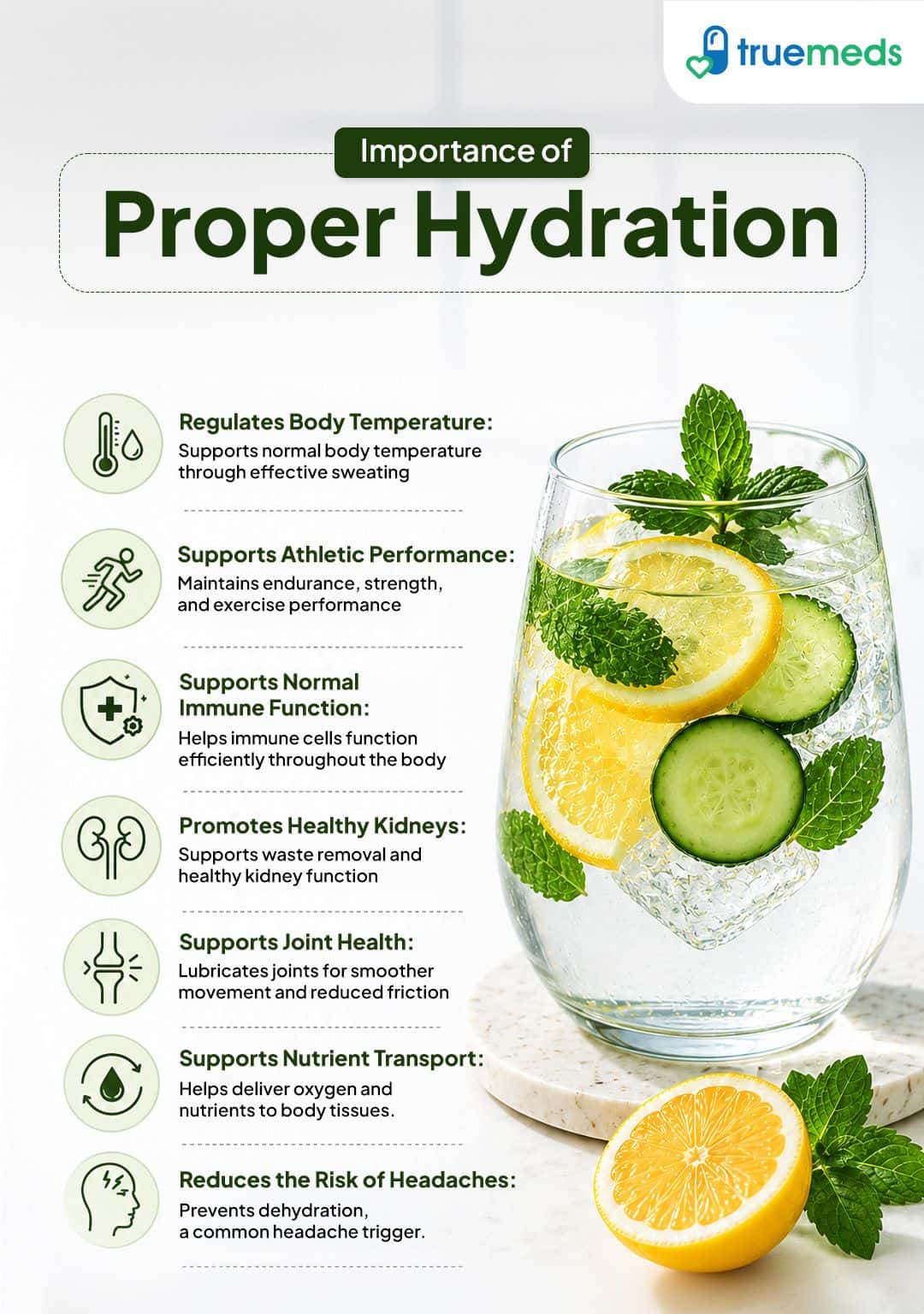
Importance of Proper Hydration
Water is an essential nutrient needed every day to maintain normal body functions[1]. It plays a key role in processes such as temperature control and nutrient delivery. The importance of hydration extends beyond quenching thirst, as it may influence energy levels, cognitive function, and long-term health outcomes. Daily water requirements can be met by drinking water and other beverages. Below are some of the benefits of hydration.
1. Regulates Body Temperature
Your body regulates its temperature using a cooling system that depends on proper hydration. When you engage in physical activity or are exposed to heat, dehydration can increase heat storage. This happens because dehydration reduces the sweating rate and skin blood flow responses for a given core temperature[3].
Proper hydration helps your body regulate temperature through sweat production. Approximately 22% of body heat is lost through the evaporation of sweat, and each gram of sweat evaporated removes approximately 0.58 kilocalories of heat from the body[4]. This mechanism is particularly important during exercise or in hot climates, where maintaining proper body temperature may help prevent heat-related illnesses.
2. Supports Joint Health
Joint cartilage contains about 60–80% water, making adequate hydration important for maintaining joint function and comfort[5]. When your body becomes dehydrated, overall tissue hydration may decrease, which could affect cartilage resilience and potentially increase joint discomfort.
Adequate hydration supports overall fluid balance, which contributes to normal joint lubrication. This is particularly important for individuals with arthritis or those who engage in regular physical activity. Proper hydration may support joint comfort and mobility.
3. Improves Immune System Function
Proper hydration helps support the body’s natural defence system. Dehydration may affect immune function by disrupting how immune cells communicate and move, reducing their ability to respond effectively to infections[6].
Animal studies have suggested that inadequate water intake may reduce immune cell counts and alter T cell function in the digestive system[7]. Maintaining optimal hydration may help your immune system function more effectively to protect against infections and illnesses.
4. Promotes Healthy Kidneys
Your kidneys perform the critical function of filtering waste products from your blood, a process that requires adequate water. Water helps the kidneys remove waste from the blood in the form of urine. It also helps keep blood vessels open, allowing blood to flow freely and carry nutrients to the kidneys[8].
Severe dehydration can lead to kidney damage. Higher fluid intake dilutes stone-forming substances like calcium, oxalate, and uric acid in urine. Kidney stones form less easily when there is enough water to prevent crystals from sticking together[8]. Regular hydration may support kidney function and help prevent kidney stones, urinary tract infections, and other kidney-related issues.
5. Improves Athletic Performance
Hydration status significantly affects physical performance across various types of exercise. Research suggests that dehydration can impair physical performance and reduce exercise capacity. Additionally, mild dehydration can reduce physical performance by lowering strength and power, and it may have a greater impact on high-intensity endurance[9]. Athletes and physically active individuals should pay particular attention to hydration before, during, and after exercise to maintain optimal performance levels.
6. Enhances Nutrient Transport and Absorption
Water helps break down food during digestion, allowing nutrients to be absorbed efficiently into the bloodstream and supporting normal physiological function[10]. This demonstrates the importance of hydration for nutrient absorption and cellular function.
7. Reduces the Risk of Headaches
Dehydration can trigger headaches through several physiological mechanisms. Not drinking enough fluids can make bodily fluids more concentrated and reduce hydration in the brain, which may stress pain-sensitive tissues and blood vessels and potentially trigger headaches. Some evidence suggests that increasing water intake may reduce headache intensity and frequency; however, the findings remain inconsistent[11]. While hydration may not stop all headaches, maintaining proper fluid balance may help prevent frequent ones.
How Much Water Should You Drink Each Day?
There is no single answer, because water requirements depend on age, sex, physical activity, climate and health. Total water intake includes water from drinking water, other beverages and food. A glass is about 250 mL.
Note: These are general reference values, not fixed requirements for every individual. Your needs may vary depending on your health, medicines and activity level. If you have been advised to limit fluids, follow your healthcare professional's guidance.
How to Stay Hydrated Throughout the Day
Maintaining good hydration is an important part of supporting your overall health. Your daily fluid needs vary depending on factors such as your age, sex, physical activity, climate and general health. Adopting a few simple habits can help you maintain an adequate fluid intake throughout the day. Here are some practical ways to stay hydrated:
- Keep water within easy reach. Carry a reusable water bottle so you can drink fluids throughout the day.
- Drink fluids with meals and between meals. Spreading your fluid intake across the day can make it easier to meet your daily needs.
- Choose water as your main drink. Unsweetened drinks, such as plain tea or coffee, can also contribute to your daily fluid intake.
- Include water-rich foods such as watermelon, cucumber, oranges, tomatoes and soups as part of a balanced diet.
- Increase your fluid intake when needed. You may need more fluids during hot weather, physical activity, and if you have a fever, vomiting or diarrhoea.
- Make hydration part of your daily routine. Having a glass of water after waking up, with meals or after physical activity can help you develop consistent hydration habits.
- Use reminders if helpful. Setting reminders on your phone or using a water-tracking app may help if you often forget to drink fluids.
If you have a medical condition such as kidney disease, heart failure or liver disease, or have been advised to limit your fluid intake, follow the advice of your healthcare professional, as your fluid requirements may differ from those of the general population.
Signs You May Not Be Drinking Enough Water
Your body needs adequate fluids to function properly. When you do not drink enough fluids or lose more fluids than you replace, you may develop signs of dehydration. Recognising these early signs can help you increase your fluid intake before dehydration becomes more severe. Common signs that you may not be drinking enough water include:
- Feeling thirsty, which is often one of the earliest signs that your body needs more fluids.
- Dark yellow urine, as well-hydrated people typically produce pale yellow urine.
- Dry mouth or dry lips, which may indicate reduced fluid levels.
- Headache, which can occur with mild dehydration in some people.
- Feeling tired or lacking energy, particularly during daily activities.
- Dizziness or light-headedness, especially when standing up quickly.
- Passing urine less often than usual, which may suggest that your body is conserving fluids.
These symptoms can also have causes other than dehydration. If they are severe, persist despite increasing your fluid intake, or are accompanied by confusion, fainting, or an inability to keep fluids down, seek medical advice promptly.
When Should You Consult a Doctor for Hydration Issues?
While mild dehydration can generally be managed by increasing fluid intake, certain situations require medical attention. Severe dehydration needs immediate medical care and may cause confusion, rapid heartbeat, low blood pressure, sunken eyes, or minimal sweating.
People with kidney disease, heart failure, or on dialysis may need fluid limits and should consult their healthcare team. Certain medications may lead to fluid loss, requiring medical supervision of hydration levels. If dehydration persists despite increased fluid intake, or if you have health conditions that affect fluid balance, consult your doctor for guidance.
This is not medical advice. Always seek professional guidance for persistent hydration issues or underlying health conditions.
FAQs
What are the best ways to stay hydrated throughout the day?
Drink water regularly, even before you feel thirsty. Carry a reusable water bottle, drink water with meals, and consume water-rich foods like fruits and vegetables. Set reminders on your phone if you often forget to drink water throughout the day.
Can I drink too much water?
Yes, though rare, drinking excessive water can dilute sodium levels in your blood, causing hyponatremia. Most people do not need to worry about overhydration. However, athletes engaging in prolonged endurance activities and individuals with certain medical conditions should monitor fluid intake carefully.
How does hydration affect my metabolism?
Proper hydration may support enzyme activity needed for metabolic reactions. Cellular enzymes rely on proper fluid balance to function efficiently. When you are dehydrated, these metabolic processes can slow down, potentially affecting energy production and nutrient utilisation in your cells.
What are the first signs of dehydration?
Early signs include thirst, dry mouth, darker coloured urine, decreased urine output, fatigue, and headache. You may also experience dizziness or lightheadedness. Mild dehydration can occur before strong feelings of thirst develop, so regular fluid intake is important throughout the day.
Does coffee or tea count as hydration?
Yes, other beverages, including tea, coffee, and milk, contribute to your daily fluid intake. While caffeinated drinks have a mild diuretic effect, they still provide net hydration benefits. However, water remains the most effective choice for maintaining optimal hydration levels.
How can I make my hydration routine more enjoyable?
Add lemon, cucumber, or mint slices to your water for flavour. Try herbal teas, eat water-rich fruits like watermelon and oranges, or use sugar-free water enhancers. Tracking your intake with apps can also make hydration feel more engaging and rewarding.
How much water should I drink per day?
Daily water needs vary depending on age, sex, activity level, climate and health. Water intake includes fluids from beverages and water-rich foods. Increase fluids when needed, unless your healthcare provider has advised a restriction.
What should I drink when I have diarrhoea or vomiting?
Oral rehydration solution (ORS) helps replace fluids and electrolytes lost through diarrhoea or vomiting. Take frequent, small sips, especially if you feel nauseated. Seek medical care for severe dehydration, persistent vomiting or inability to keep fluids down.
Medical Disclaimer
This article is for informational purposes only and does not constitute medical advice. The information provided should not be used for diagnosing or treating health conditions. Always consult a qualified healthcare provider for diagnosis, treatment, and personalised medical advice. Do not disregard professional medical advice or delay seeking it because of information found in this article. If you have a medical emergency, contact your doctor or emergency services immediately.
References
Lorenzo, I., Serra-Prat, M., & Yébenes, J. C. (2019). The role of water homeostasis in muscle function and frailty: A review. Nutrients, 11(8), 1857. https://doi.org/10.3390/nu11081857
Centres for Disease Control and Prevention. (2025, March). About water and healthier drinks. Centres for Disease Control and Prevention. https://www.cdc.gov/healthy-weight-growth/water-healthy-drinks/index.html
What effect does hydration status have on body temperature during Exer. (2024, June 1). Taylor & Francis. https://www.taylorfrancis.com/chapters/edit/10.4324/9781003526124-42/effect-hydration-status-body-temperature-exercise-matthew-tucker-matthew-ganio
Brioschi, M. L., Macedo, J. F., & Macedo, R. A. C. (2023). Physiology, temperature regulation. StatPearls. https://www.ncbi.nlm.nih.gov/books/NBK507838/